All Categories

Subcategories

  • ARGENTINA: Milei plays to anti-immigrant sentiment

    Patrick de Courcy 05 December 2024 Hits: 1892

    Argentina’s far-right President Javier Milei, perhaps emulating US President-elect Donald Trump, has sharply stepped up his government’s anti-immigrant rhetoric. On 4 December the presidential spokesman, Manuel Adorni, stated “the truth is that thugs, squatters, and opportunists should stay on the other side of the border, and not come to Argentina to harm the citizens here”. He added that foreign born criminals would be deported. 

    For decades Paraguayans, Bolivians, Venezuelans, Peruvians, and others have come to Argentina in pursuit of jobs and higher living standards or to escape political persecution. According to the 2022 census, there were 1.93m foreign-born residents in Argentina, equivalent to 4.2% of the total population. The government’s main initial aims appear to be to charge foreigners for their use of higher education and health services, both of which are currently free to all residents.

    State-funded universities have been suffering major budget cutbacks as the government withdraws funding to meet its fiscal targets. The government is keen to suggest that charging foreign students could be a new market-led way to restore university finances. But this looks unlikely: foreign-born students constitute only 4.1% of the total, and 10% of postgraduates (who already have to pay for their courses). Universities enjoy relative autonomy, so they cannot be forced to charge their foreign students. They are unlikely to see charging as a sufficient solution to their current financial shortfall.

    On public health access, Adorni said the government would end “health tourism” through which foreigners are reputed to come to the country purely to take advantage of free medical treatment or procedures. The government spokesperson did not provide any details on foreigners’ use of the public health system.

    Prime responsibility for dealing with this issue lies with Argentina’s northern border provinces, who fund local health provision. The province of Salta, on the border with Bolivia, introduced a charging system for foreigners earlier this year. Governor Gustavo Sáenz of the opposition Partido Justicialista (PJ, Peronists), said the decision came in response to central government budget cutbacks and the discovery that 5%-10% of the provincial budget was being spent on non-residents. 

    Mid-term congressional elections will be held in October next year. The ruling far-right party La Libertad Avanza (LLA) would like to base its campaign on solid economic achievements: lower inflation and a substantial economic recovery.

    But those benefits may fail to materialise in time for the elections when the government is determined to increase the weak presence of the LLA in both chambers of congress significantly. Early opinion polls suggest the LLA is on course to pick up a significant number of seats, but with over half of the population now living beneath the poverty line (52.9% according to the latest measurement by the national statistics institute [Indec]), Milei may struggle to maintain support. In that context the government may resort to more anti-immigrant rhetoric to boost electoral appeal.

    Some believe that anti-immigrant sentiment is latent in Argentine society: a survey by the Universidad de Buenos Aires (UBA), published in August this year, found that the highest levels of prejudice in the country are aimed at Latin American immigrants, followed by prejudice against people with intellectual or physical disabilities.

    Fernández denies pact

    For her part, former president Cristina Fernández said she was taken aback when she heard the PRO’s allegation that she had struck a pact with President Milei to enable her to seek re-election. She said it was “some cheek” for the party that has consistently supported the Milei administration and prevented the UP from blocking its legislative initiatives to allege that the UP had suddenly teamed up with the government.

    Opposition to immigration

    A poll of various countries by the Pew Research Center, a US think tank, found that 61% of Argentines opposed further immigration, much higher than in the US (29%).

    Government allies clash over anti-corruption bill

    President Javier Milei’s most reliable ally in congress tore into the ruling far-right La Libertad Avanza (LLA) last week for failing to support a bill ostensibly designed to crack down on official corruption. The ‘Ficha Limpia’ bill sponsored by the right-of-centre Propuesta Republicana (Pro), of former president Mauricio Macri (2015-2019), would have barred anyone convicted of corruption by two separate courts from standing for election. It fell short of making quorum twice in a matter of days, with the eight LLA deputies failing to turn up for a congressional session to debate it on the second occasion on 28 November.

    Deputies representing the largest party in the lower chamber, the main opposition Peronist coalition Unión por la Patria (UP), boycotted the session en masse, arguing that it had been tabled with the sole purpose of preventing former president Cristina Fernández (2007-2015), from standing in the mid-term congressional elections in 2025. Fernández, the current president of the Partido Justicialista (PJ), by far the largest party in the UP, would have been excluded under the bill as she was convicted of corruption in the Vialidad case in December 2022, sentenced to six years in prison and handed down a lifetime ban from holding public office. The conviction was upheld last month [WR-24-45]. Under existing rules she could still seek election while lodging an appeal with the supreme court.

    The PRO released a statement accusing congress of having “passed up a historic opportunity to prevent corrupt politicians convicted by the judiciary from entering congress, guaranteeing impunity”. It accused the Milei administration of having “decided to take the other side”. Some muttered resentfully that the government had even reached a deal with Fernández to enable her to stand in next year’s mid-terms, allowing Milei to stoke polarisation in the LLA’s election campaign. The LLA vehemently denied the claim, arguing that “opportunism as an instrument of political action is disgusting”, and insisting that the bill “lacked consensus and was destined to fail”.
  • ECONOMIC HIGHLIGHTS

    Patrick de Courcy 20 February 2026 Hits: 703

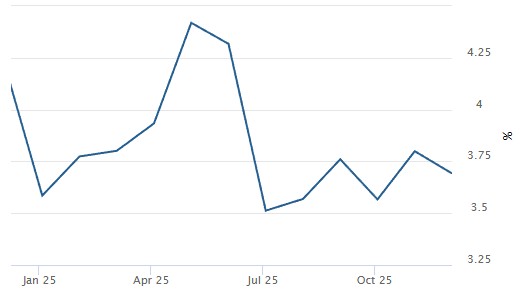
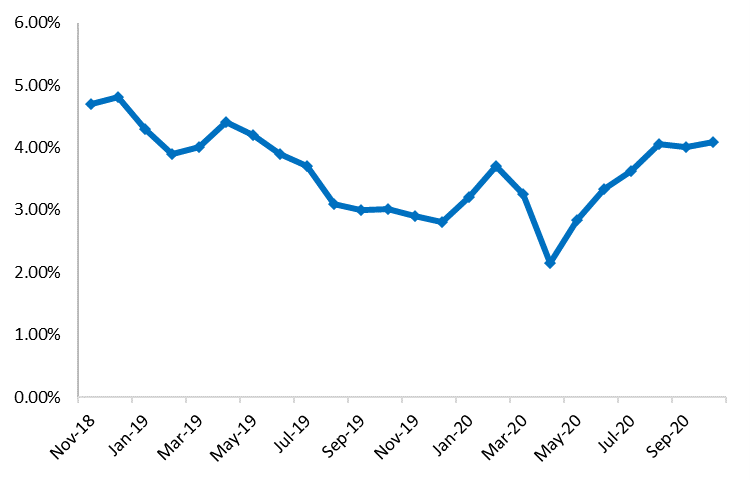
    MEXICO | Inflation edges up in January. On 9 February Mexico’s national statistics institute (Inegi) released the latest figures for its consumer price index (INPC), which put monthly inflation in January at 0.38% and annual inflation at 3.79%. Both rates saw slight increases from the previous month: monthly inflation rose from 0.28% in December, and the annual rate rose from 3.69%. Core inflation, which excludes volatile items like food and fuel, stood at 0.60% in monthly terms and 4.52% in annual terms, up from a monthly core rate of 0.41% in December when the annual core rate was 4.33%.

    MEXICO | Banxico pauses rate cutting cycle. On 5 February Mexico’s central bank (Banxico) voted to maintain its benchmark interest rate at 7.0%, following over one-and-a-half years of consecutive rate cuts. The bank’s governing board announced the pause in its rate-cutting cycle, which began in August 2024, citing rising inflation and persistent trade tensions. Banxico noted that forecasts for headline and core inflation had been adjusted upwards for this year and next. Both the headline and core inflation rates are now expected to converge to the 3.0% target by the second quarter of 2027, rather than the third quarter of 2026 as forecast in December.

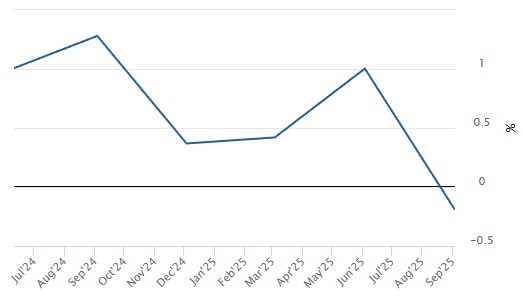
    MEXICO | Economic growth rebounds in Q4. On 30 January Mexico’s national statistics institute (Inegi) released preliminary figures on the country’s economic activity in the fourth quarter of 2025, estimating quarterly growth of 0.8%, compared with the 0.3% contraction in the previous quarter. In yearly terms, Inegi estimates that GDP grew by 1.6% in the final quarter of 2025. For all of 2025, GDP rose 0.7% compared to 2024. In Q4 2025, activities in the primary sector (agriculture) were down by 2.7% in quarterly terms, while those in the secondary sector (manufacturing) and tertiary sector (services) were both up by 0.9%.

    Mexico: GDP growth
    Percentage variation (year-on-year)

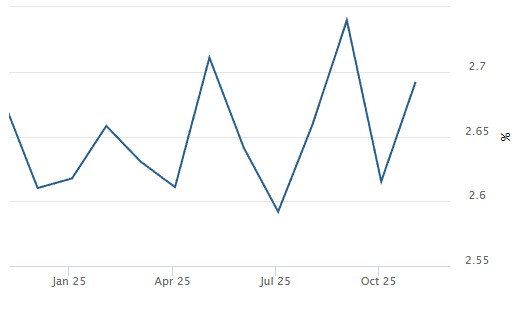
    Mexico: unemployment rate
    Economically active population

    Mexico: inflation rate
    Percentage variation (year-on-year)

    Source (all graphs): National Statistics Institute (Inegi

  • TRACKING TRENDS

    LatinNews 01 November 2012 Hits: 482

    ECUADOR | Economic growth slows in second quarter. On 24 October the central bank revealed that year-on-year economic growth in the second quarter of the year was 5.2%, continuing a downward trend that started in the last quarter of 2011, when it recorded growth of 9.2%. In the whole of last year the Ecuadorean economy posted year-on-year growth of 8%. However, in the first quarter of this year, this figure has dropped to 6.3% as activity in the key oil sector experienced a slump.

    According to the latest central bank report, although economic activity in the second quarter increased by 1.2% compared with the first quarter on the back of increased non-oil related economic activity which increased by 1.48%, activity in the oil sector continued to decline contracting by 0.14%.

    Oil is Ecuador’s main export product but, according to the central bank, in the second quarter overall production continued to fall even though in the first eight months of the year state-owned oil firms increased their production by 2.2%. The central bank explained that this increase in state-run firms was largely counteracted by the 1.2% decrease in production registered in private oil firms.

    More positively the central bank pointed out that despite lower oil production, in the second quarter exports increased by 5.1% year-on-year on the back of a better-than-expected performance in the aquiculture sector. In addition there were also significant increases in public and private investment (13.2%) and domestic consumption (5.4%), all of which helped to reduce the negative impact of the slowdown in the oil sector.

    Indeed while the second quarter growth rate confirms the economy is slowing down, it is still above the bank’s year-end 2013 forecast of 4.8%. In fact the release of the central bank’s report prompted ratings agency, Fitch, to change its perspective on Ecuador from ‘stable’ to ‘positive’ as a result of its economic performance.

    Fitch pointed out that the current high level of public investment could help improve the country’s potential for growth. However, the agency added that medium-term growth will also depend on the government’s capacity to promote “more sustainable” economic growth that is less dependent on oil production and allows for the private sector to play a larger role.

    PERU | Country risk reaches historic low. Peru’s risk rating reached 91 basis points on 18 October, the lowest ever, the country’s central bank (BCRP) announced last week. According to the BCRP the rating, the lowest since June 2007 when Peru’s country risk stood at 95 basis points, was registered in the EMBI+ emerging markets bond index compiled by US bank, JPMorgan Chase. The EMBI+ measures the average quotes of bonds from various emerging economies from Latin America, Asia and Eastern Europe.

    Given that every 100 basis points of difference in a country’s risk rating is equivalent to a one-percentage-point increase in a country’s bond yields compared to a similar bond issued by the US Treasury, it means that Peruvian bonds are now valued just marginally less than a US Treasury bond and can offer a yield of less than a percentage point higher.

    Currently US Treasury bonds offer an annual yield of 0.75% which means that if Peru were to issue a new series of bonds now it could offer a yield as low as 1.75% per year. In fact the BCRP highlighted that Peru’s rating was currently the lowest rating for any country in Latin America followed by Colombia (96), Chile (117) and Brazil (133). In contrast at the other end of the ranking are situated Venezuela (907), Argentina (862) and Ecuador (766).

    In fact Peru’s rating is less than one-third of the regional average of 336 basis points. The BCRP said this further confirms that despite the uncertain international economic environment, investors’ perspectives on the Peruvian economy continue to be positive which has led its country risk to fall by 127 basis points since the beginning of the year.

    “Peru continues to show it has solid macroeconomic fundamentals, growing at close to its potential, the lowest inflation in the region, a stable financial system, a good level of international reserves and a solid fiscal position,” the BCRP stated.

    • Chinese credit

    Chinese loans to Venezuela total over US$40bn, Venezuela’s finance minister, Jorge Giordani, revealed. According to Giordani some US$23.84bn of the US$24bn joint fund created in 2007 have been used to finance 201 different projects in the agriculture, electricity, transport, industrial and oil & mining sectors. Meanwhile, Giordani added that a new long-term credit line created in 2009 has been provided with an initial amount of US$20bn, which will be used to finance an additional 40 new projects that are to be carried out in the next six years. He said that China and Venezuela have developed a “strategic relationship on all fronts”.

  • TRACKING TRENDS

    LatinNews 11 February 2016 Hits: 1097

    URUGUAY | Venezuelan non-payment. Uruguayan farmers and dairy producers are refusing to give up in their fight for compensation for sales to Venezuela. In January they took to the streets in protest. The sector has now formally requested a meeting with President Tabaré Vázquez to discuss the matter, according to Rodolfo Braga, president of the national association of milk producers (ANPL).

    As per a proposal by former president José Mujica (2010-2015), the ANPL wants the government to compensate the farmers now using its own funds, and then negotiate directly for itself with the Venezuelan government for the outstanding debt. In September 2015 Vázquez and his Venezuelan counterpart, Nicolás Maduro, signed an agri-supply deal worth an estimated US$300m for the provision of 235,000 tonnes of foodstuffs. According to Ricardo de Izaguirre, president of the the Instituto Nacional de la Leche (Inale), the outstanding debt with dairy producers alone is in excess of US$80m, with a total outstanding of US$100m.

    On television this week, Mujica, now a senator for the ruling leftist coalition Frente Amplio (FA), called on the government to “take care” of the debt, stating that while the state should not assume responsibility for private sector debts, “there are always exceptions”.

    The Vázquez government has been very lukewarm towards this idea. Officials from the economy & finance ministry (MEF), controlled by the moderate FA leader Danilo Astori, were having none of it. “The producers knew the risks when they agreed to sell to Venezuela. The state cannot assume responsibility,” said Martín Vallcorba, an economist at the MEF.

    BRAZIL | Mulling assistance. Brazil’s foreign minister Mauro Vieira recently met his Venezuelan counterpart Delcy Rodríguez to discuss a Caracas government request for new supplies to help cope with the ‘economic emergency’. Bilateral trade between the two, heavily dominated by Brazilian exports, fell to US$3.7bn in 2015, from a US$5bn peak a few years ago, a drop Vieira said was “significant”. He said that Brazil was “willing to evaluate ways to revive trade”, without elaborating.

  • St Lucia: St Lucia still in US black book

    LatinNews 03 May 2017 Hits: 422

    When the United Workers’ Party (UWP) won the June 2016 general election, incoming prime minister Allen Chastanet pledged to mend fences with the United States. Ten months on, the US Department of State has confirmed that sanctions imposed against the Royal St Lucia Police Force (RSLPF) in 2013 under the Leahy law are still in place.

    The problem with the RSLPF dates back to a crackdown on serious crime in 2010-2011 during which time the police were accused of carrying out 12 extrajudicial killings (or 17, according to some sources). The Leahy law prohibits the provision of security-related assistance to foreign entities that have been involved in serious human-rights violations.

    The alleged killings happened during an initiative called Operation Restore Confidence (ORC), an operation that was conceived in response to a surge in homicides and other violent crime in 2008-2009. The ORC was launched by the UWP government led by Stephenson King. At the time of its launch he declared: “There will be no refuge, no stone will be left unturned, and there will be no hiding place for anyone.”

    After the June general election, the US issued a statement saying: “We have made it clear to the current St Lucian administration and prior administrations that the government of St Lucia’s failure to bring to justice those responsible within the RSLPF for gross violations of human rights through credible judicial processes and prosecutions, where appropriate, prevents the United States from reconsidering the suspension of assistance to the RSLPF.”

    One of the perceived problems is that Chastanet was in the government that orchestrated the alleged killings, as tourism minister, and Stephenson King, then prime minister, is back in the new UWP government.

    In April, it was reported locally that the authorities were preparing to launch prosecutions against those alleged to have participated in extrajudicial killings. However, the prospect for meaningful prosecutions is doubted by campaigners. They say that a lot of the physical evidence has disappeared, and there are even allegations that some of the potential witnesses have been murdered over the past 2-3 years.

    Another area of controversy for the present administration is its stewardship of the citizenship by investment programme (CIP). According to the opposition SLP, which introduced the CIP, the present government has weakened its safeguards, including with regard to the annual cap of 500 applicants, the proof of net worth, and the required level of investment. At the beginning of April, the SLP issued a statement saying: “Without hesitation, when the Labour Party resumes office, we will reinstate the net worth requirement and will undertake another due diligence assessment on each and every application granted under the UWP.”

    The statement added that the next SLP government will “demand that all citizens who did not donate the full contribution amount of US$200,000 will be compelled to top up the contribution that they made at the time of becoming citizens. For the sanctity of our citizenship, we do not tolerate any applicants who do not meet the first-class standard that we expect from individuals seeking citizenship in St Lucia.”

    SLP parliamentarians attempted to reverse the changes to the CIP in parliament in early April but were prevented from debating the issue by a procedural manoeuvre that prompted them to walk out. The statement warning current CIP applicants about a future revisiting of their applications was issued after that.

  • Venezuela: US hits Venezuela with more sanctions

    LatinNews 06 September 2017 Hits: 526

    The US government pledged decisive action if the Venezuelan government went ahead with controversial elections for a constituent assembly at the end of July, and it is showing signs of following through on that promise. After expanding targeted sanctions against specific individuals in the aftermath of the elections, including against President Nicolás Maduro himself, the US government followed up with broader economic measures. On 25 August, the US levied financial sanctions that prevent Venezuela from issuing dollar-denominated bonds in international capital markets. The measures also complicate the trading of some existing bonds and thereby raises further questions about the government’s ability to stave off default.

    The US was widely expected to take some kind of economic action against the Venezuelan government. The options reportedly on the table included a blanket ban that would prevent US financial institutions from trading in all bonds issued by the Venezuelan public sector (which would apply to both primary issuance and secondary trading-on), as well as some form of energy sanctions, whereby the US would replace Venezuela with other source markets for oil imports.

    In the end, the sanctions announced on 25 August were relatively moderate compared with the more radical policy options being mooted. Secondary trading of most bonds remains permitted, with US institutions and individuals prohibited only from direct financial transactions with the Venezuelan state, either in terms of primary debt issuance or repurchasing already-issued bonds (similar to the US bank Goldman Sachs’ controversial purchase of bonds issued by the state oil company PDVSA in May, at a discounted price).

    US imports of Venezuelan oil remain unaffected, although the US government is continuing to scale down its reliance on the Venezuelan market, with oil imports from Venezuela falling by 11% year on year in June, according to the latest US data.

    Indirectly pushing Venezuela towards default

    The US has attempted to carve out a middle way in terms of its policy response, steering clear of harsher measures that would bring the Venezuelan government to its knees (and also evoke criticism that the US government was deepening the humanitarian crisis), but seeking to introduce measures that will make it more difficult for the Maduro government to remain in office.

    Given that it is proving extremely difficult for the opposition to dislodge Maduro by political means, the US is likely to be hoping that a further deterioration in Venezuela’s creditworthiness will prompt a default, which would likely bring down the Maduro administration.

    The newly-introduced sanctions are showing some success in this respect. Although secondary trading remains permitted in most cases, the perception that Venezuela is becoming more of an international pariah is prompting many brokers to steer clear of any trade in Venezuelan debt instruments. Reportedly, several US firms, including the financial service firms Depository Trust Company (DTC) and Cantor Fitzgerald, have introduced a ban on any Venezuelan bond trades, citing rising reputational risk.

    The Venezuelan opposition coalition, Mesa de la Unidad Democrática (MUD), has repeatedly warned that newly-issued external debt would not be recognised by any successor opposition government, given that the current Maduro government has failed to request congressional approval in recent years, as required by law. This will add to investor concerns about holding Venezuelan debt.

    Running out of financing options

    These developments will complicate Venezuela’s already-reduced financing options. Primary debt issuance is no longer an option, while another restructuring deal with bondholders would be extremely difficult given the ban on direct debt transactions between the US and the Venezuelan state. Some of the unusual financing deals struck in recent years, including the Goldman Sachs purchase and also a 2015 gold swap that allowed Venezuela to monetise some of its gold reserves, will also no longer be possible under the US sanctions.

    This raises serious questions about how the government will be able to make scheduled sovereign debt repayments of US$1.6bn in October and US$1.9bn in November. Fitch Ratings has lowered Venezuela’s junk bonds further into speculative territory, cutting the sovereign’s long-term foreign and local currency ratings from CCC to CC, just two notches from default. The agency said the imposition of US sanctions reduced the government’s financing options, making default “probable”.

    Russia and China to the rescue?

    Yet just as an imminent default looks increasingly likely, there has been speculation about a last-minute bail-out by China and/or Russia. US President Donald Trump’s aggressive rhetoric towards Venezuela, including a veiled threat of military action, and the imposition of financial sanctions has evoked criticism from several foreign leaders, including both the Chinese and Russian authorities.

    The Chinese government, which extended tens of billions of dollars to the Venezuelan government under the Hugo Chávez’s tenure as president (1999-2013), is not believed to have lent fresh funds to Venezuela for some time. However, there has been speculation that the Venezuelan government may be negotiating a fresh loan package, in the hope of securing a vital life-line ahead of the large debt repayments in the fourth quarter of the year. Meanwhile, the Venezuelan energy minister, Eulogio del Pino, is set to visit Russia in September; this could potentially result in Russia providing what it describes as ‘advance payments’ to Venezuela for future oil supplies.

    Venezuela’s ability to continue servicing its debt will hinge in large part on whether this foreign assistance is forthcoming. Oil prices remain low, with Venezuelan oil selling for around US$45/barrel in recent weeks, little changed from earlier in the year. Oil production volumes have fallen, according to the International Energy Agency, which will also be dragging on overall government revenue. International reserves fell below US$9.8bn in late August, but with around three-quarters of this comprising illiquid gold, cash reserves remain insufficient to fund the scheduled debt repayments.

    In the meantime, other economic indicators are continuing to deteriorate. The Venezuelan firm Ecoanalítica monitors inflation levels, constructing its own consumer price index based on the central bank’s weightings for various goods and services. According to these calculations, monthly inflation hit a new high of 31.9% in August, driven by sharp rises in food and beverages prices. This was up from 26% month on month in July, and took accumulated inflation to 281% in the first eight months of the year. The firm believes that year-on-year inflation is well over 700% and could reach 1,500% by the end of the year.

    Although this problem of hyperinflation has little direct impact on the government’s ability to make debt repayments, it will continue to present a significant challenge to the government in the coming months, as it will worsen the humanitarian crisis and could spark renewed public protests.

  • Brazil: Pension reform back on the agenda

    LatinNews 10 November 2017 Hits: 305

    On 25 October, the Chamber of Deputies voted 251-233 to dismiss the latest corruption charges against President Michel Temer, making it highly likely that he will be able to complete the remaining 14 months of his term in office. The decision means that pension reform – considered essential to reduce the country’s endemic fiscal deficit and rising debt levels – is back on the agenda. But the outlook for pension reform remains cloudy.

    Pension reform is looking like “the big one” – perhaps the single most important issue determining Brazil’s immediate economic future. The existing defined benefits state pension system is over-generous and is relentlessly clocking up unfunded liabilities. According to Planning Minister Dyogo Oliveira, pension payments already absorb 57% of primary government spending and represent 13% of GDP, one of the highest levels in the world. Brazil already spends more on pensions in GDP terms than Japan, a country with a more elderly population.

    The national statistics institute (IBGE) projects that the elderly will represent one-third of the Brazilian population by 2060 and, absent any reforms, pension spending will have risen to 23% of GDP. A crunch point is likely to be faced much earlier, by the next government. General elections are due in October 2018 to choose an administration that will serve a four-year term in office (2019-2023). That administration will inherit a key constitutional amendment passed during the Temer presidency: a 20-year freeze on government spending (which cannot by law exceed the previous year’s inflation rate).

    That freeze is intended to place a ceiling on Brazil’s rising debt levels, currently around 71% of GDP. The next government will not be able to honour both the spending cap and meet existing current pension commitments. One or the other will have to give. Jim Barrineau, joint head of emerging debt at Schroders, has commented that “pension reform is a key to Brazil getting its medium term fiscal house in order. Without it, there is almost no path to stabilising debt-to-GDP ratios over a five-year time frame, and we would expect the country to be a candidate for a credit rating downgrade.”

    But the politics of delivering pension reform under the current government is looking difficult. There have already been two versions of the pension reform bill. The first more far-reaching version implied achieving fiscal savings of around 2% of GDP over each of the next ten years. A second watered-down version cut that to around 1.2%.

    Congressional support for the government has been eroding, and a third and further diluted version may be on the cards. Even then, its passage is not assured.

    The bill has the status of a constitutional reform, meaning that a special majority is required: 308 of 513 votes in the Chamber of Deputies and 48 of 81 votes in the Senate. Since only 251 deputies voted to preserve Temer’s presidential immunity from prosecution over the corruption charges, mustering the extra votes to reach the minimum of 308 required will be a challenge.

    There is also an extremely limited window of opportunity in terms of timescale. The Temer administration says it is hoping to have a vote in the lower chamber during the course of November, and to get it through the Senate before the last session of the year, which falls on 22 December. The expectation is that with the general election campaign effectively kicking off in January, it will be impossible to get pension reform approved in 2018. So, if it can’t be done before the upcoming December deadline, pension reform will be kicked onto the sidelines for the next government to deal with in 2019.

    Government officials say they are consulting with the parties in congress as to the best way forward. The finance ministry says any new version of the pension reform must preserve three key elements: first, the introduction of minimum retirement ages of 65 for men and 62 for women (most Brazilians currently retire earlier); second, a minimum paying-in period of at least 25 years’ in order to qualify for a full pension; and third, a viable transition regime between the old and the new systems. Many analysts are sceptical of a successful outcome, meaning that the problem may end up being postponed. The credit ratings agency Moody’s Investor Services believes that a major pension reform is not now looking likely, and that any fiscal savings at best will be around half of what was originally sought. Consultancy Capital Economics said in early November that the odds of the reform going ahead, previously at 50-50, had worsened. In similar vein, the Brasilia-based consultancy Arko Advice commented: “It is clear that a broad pension reform will not be approved in Congress by the Temer administration. But some changes are possible.”

  • NICARAGUA: Nicaragua’s inter-oceanic canal flounders as China turns its attention to Panama

    LatinNews 14 June 2018 Hits: 542

    In 2013, the decision by the Nicaraguan government led by President Daniel Ortega to award the Hong Kong Nicaragua Canal Development (HKND) Group a build-operate contract for a 171-mile canal that would span the country, linking the Pacific and Atlantic oceans, made headlines due to the massive scale of the project and the fact that it presaged greater Chinese involvement in Central America. Due to be completed by 2020, the project envisaged free-trade zones, international ports, tourist resorts, and an international airport, and was trumpeted as Nicaragua’s express ticket out of poverty. Five years on, the project’s future seems increasingly uncertain after the telecoms business owned by Wang Jing, the Chinese tycoon behind the HKND Group, took a plunge on the Chinese stock market and China began to shift the focus of its attention to Panama, with which it initiated diplomatic relations in 2017. Since then reports in April 2018 that HKND had abandoned its offices have further fanned speculation regarding the project’s future.

    From the start, Nicaragua’s Inter-Oceanic Canal was shrouded in mystery: feasibility studies were carried out but were never published; Wang refused to disclose the identity of the investors willing to foot the US$50bn bill for the project; and although work on the access roads started in 2014, the digging of the waterway itself never began, making it increasingly unlikely that the 2020 deadline will ever be met. One of the first questions that came to mind was why Wang, who was listed among the 200 richest people in the world in the Bloomberg Billionaires Index, would wish to back the construction of a canal in Nicaragua, especially when he had little or no experience in infrastructure projects?

    According to reports published by The Associated Press (AP) and BBC in 2015, Wang became interested in the canal project after Nicaragua’s telecoms minister Orlando Castillo visited his office in September 2012 to ask whether his telecoms company, Xinwei Telecom Enterprise Group, would be interested in bidding for a broadband contract in Nicaragua. Suspiciously, Xinwei was awarded the contract two months later for US$20m after three rival companies dropped out. Although Wang claimed Xinwei had secured deals worth over US$5bn, in Cameroon, Ukraine, Cambodia and other countries, AP found that in 12 of the 20 countries where Xinwei had done business, there was no sign of successfully completed large-scale projects.

    A high-tech wireless project in Cambodia had failed to launch after a series of delays, Xinwei’s local partner in Zimbabwe had its licensed revoked by government regulators, and Xinwei’s partner in Cameroon has been accused of making false performance claims. What Xinwei did appear to have, though, was a very close relationship with the Chinese government and Communist Party leaders, who regularly visited his company’s headquarters, according to the BBC. Most importantly, Xinwei had access to credit lines from China’s state-owned banks and in 2011 the China Development Bank granted the telecoms giant a US$2.1bn credit to fund its overseas expansion.

    All of this served to fuel suspicions that the Chinese government was behind Nicaragua’s Inter-Oceanic Canal, which would have been deep enough to allow Chinese submarines to cross from the Pacific to the Atlantic Ocean, with the aim of breaking into a region that has been considered the US’ ‘back yard’. However, Wang always dismissed claims of Chinese geopolitical interests driving the project. “Now the global economy is so developed, you can't say anything is anybody’s backyard,” he told the BBC in March 2015. “This canal will benefit the US economy. I think Americans will be happy to see it.”

    Iran also expressed an interest in the canal, with Iran’s foreign minister Mohammad Javad Zarif stating that the project opened up a whole array of opportunities for cooperation with Nicaragua, as he led a delegation of 120 Iranian business people and economic officials on a tour of Latin America that included Cuba, Ecuador, Chile, Bolivia, and Venezuela, in September 2016.

    Environmentally unsound

    From the outset, the project was dogged by massive opposition from the indigenous and rural farming communities that would be displaced by the construction of the canal (27,000 according to HKND and up to 100,000 according to opponents, out of a population of six million).

    These communities created the protest group Consejo Nacional para la Defensa de la Tierra, Lago y Soberanía (‘Consejo Nacional’) in November 2014, a coalition that demands the repeal of Law 840 that authorised the development of the canal and associated projects. The council claims there was never any genuine consultation with the affected communities, which violates international treaties such as International Labour Organization (ILO) Convention 169 on the Rights of Indigenous and Tribal Peoples and has reported repeated threats and harassment against its members.

    As a result, in July 2017, rural organisations that oppose the canal took their case to the Inter-American Commission on Human Rights (IACHR), alleging that thousands of Nicaraguan people’s rights had been violated. Nicaraguan political scientist José Dávila told LatinNews on 3 March that such widespread opposition to the canal was “a key factor that contributed to the collapse of the project” as environmentalists and opposition leaders from both ends of the political spectrum rallied behind the peasant movement in opposition to the canal.

    Wang’s fortune evaporates and with it hopes of building the canal

    In October 2015, Wang’s US$10bn fortune suffered an 84% drop on the Chinese stock market, the worst recorded in the index. As Xinwei’s shares came tumbling down, so did the Inter-Oceanic Canal project. A month later, HKND’s environmental studies for the canal were approved by the Nicaraguan government. However, HKND said the construction of the locks and excavation work had been delayed until the end of 2016, remaining tight-lipped regarding the reasons for the delay. The excavation of the waterway never began.

    Derek Scissors, a resident scholar at the US-based public policy institute American Enterprise Institute (AEI), where he focuses on the Chinese and Indian economies and on US economic relations with Asia, says the project was “fraudulent from the beginning” and disputes the theory that the Chinese government was behind the project all along. “The purpose of the project was for Wang Jing to become more important than he was, by marketing an idea and bringing in a state-owned enterprise, like China Railway Engineering, who could actually do the work,” Scissors told LatinNews on 2 March. “It [the project] was stifled because the Chinese entity had nothing close to the capital or engineering expertise to conduct the project and those few Chinese companies that did have the capability never had any interest.”

    The Beijing Consensus in Central America

    Over the past 15 years, China has become a major trading partner and source of foreign direct investment to an increasing number of Latin American countries, a trend that has also extended to Central America. In April 2018 the Dominican Republic became the latest country in the sub-region to make the switch from Tapei to Bejing, following in the footsteps of Panama in June 2017 and Costa Rica, which became the first country to establish diplomatic ties with China in 2007. In 2017, China signed 19 trade accords with Panama, a country that had inaugurated the expanded version of its canal a year earlier.

    Sophie Wintgens, an expert on China’s foreign policy towards Europe, Africa and Latin America at the private, Belgium-based Université Libre de Bruxelles, believes relations between China and Latin America show evidence of what she calls the “Beijing Consensus”, a Chinese model of development based on innovation and self-determination. “Within the context of [US President Donald] Trump’s protectionist trade agenda, China could use steadily increasing trade and investment to obtain access to Central America’s emerging markets, gain political partners, and increase its normative influence,” Wintgens writes in an article published in November 2017 by the London School of Economics (LSE) academic blog. Panama’s new diplomatic ties with China would seal the fate of Nicaragua’s Inter-Oceanic Canal. “The enlargement of the Panama Canal as well as the fact that Panama began diplomatic relations with China dealt a huge blow to Nicaragua’s Inter-Oceanic canal project. China, very pragmatically, swapped Nicaragua for Panama,” says Dávila.

    Can Nicaragua’s Inter-Oceanic Canal ever be revived?

    Panama’s enlarged canal has faced its own problems – the inauguration of the project was delayed for more than a year as a result of an acrimonious cost dispute between the canal administrator and the Spanish-led building consortium and even two years after the expanded canal was inaugurated, tugboat operators continue to express concern about the fact that ships rub against the canal’s walls and wear out defences designed to protect both shipping and the waterway.

    One of the most serious incidents occurred a few weeks after the expanded canal opened in June 2016, when a Chinese ship hit a lock wall and made a hole in the side of the ship, forcing a delay in the trip.

    With increasing traffic through the canal, the construction of larger ships, and unresolved technical issues affecting the performance of the Panama Canal, is it possible that Nicaragua’s Inter-Oceanic Canal could be revived? Dávila is convinced that “the Inter-Oceanic Canal project, as it was conceived by Wang Jing, is dead” and predicts Ortega will try to save face by saying the Canal is going to happen even if only a handful of secondary projects, such as an airport, a few hotels or a port, actually come to fruition.

    Nevertheless, as long as Law 840 authorising the development of the canal and associated projects is not repealed, indigenous and peasant communities continue to feel threatened by the possibility that the government might expropriate their land to make way for such projects, and have vowed to keep fighting their case in the highest international courts.

    According to Dávila, the Inter-Oceanic Canal is just one more project that Ortega can add to his administration’s list of failures, which also includes: 1) a huge oil refinery named El Supremo Sueño de Bolívar on Nicargua’s Pacific coast that was supposed to be funded by the Venezuelan government and was also dogged by fierce opposition from environmentalists (Ortega and the late Venezuelan President Hugo Chávez (1999-2013) laid the symbolic first stone in 2007 but after ten years the first phase is yet to be completed); and 2) the Tumarin hydroelectric plant that was supposed to be funded by the Brazilian government and floundered after the scandal involving Brazilian construction and engineering firm Odebrecht broke. The construction of the plant was supposed to begin in 2015 with an inauguration date set for 2019 but never happened. In an attempt to save face, the Ortega administration has set 2023 as the new date for the construction to start so that the plant is up and running by 2030, claims that have been met with scepticism and derision by Ortega’s opponents.

    Scissors, on the other hand, doesn’t rule out the possibility that Nicaragua’s Inter-Oceanic Canal might be resurrected in the future but stresses that “any future attempt will have nothing to do with the original plans”.

  • MEXICO: Anti-corporate tax evasion drive compounds challenges for businesses

    LatinNews 15 July 2020 Hits: 2012

    Since taking office on 1 December 2018, Mexico’s President Andrés Manuel López Obrador has repeatedly emphasised that one of his objectives is for Mexico’s largest companies to pay their taxes, which he claims they have been avoiding for years. Following the approval by the federal congress of an amendment to constitutional article 28 which forbids tax exemptions, the López Obrador administration has stepped up its efforts to tackle corporate tax evasion. While only a few voices questioned the move, its timing –amid the coronavirus (Covid-19) pandemic—has been widely criticised as it has compounded the challenging situation that businesses of all sizes are currently facing.

    In April the government announced that it had sent a list of 15 companies that had the largest unpaid tax bills to the Consejo Coordinador Empresarial (CCE), Mexico’s main business lobby, so it could support the government with collecting those taxes. By the mid-June, at least five major companies had paid outstanding tax bills amounting to some M$30.3bn (US$4276m).

    These included América Móvil, the telecoms giant owned by Carlos Slim, which had paid its outstanding income tax bill and related fines by January, as well as retailers Walmart de México, Femsa (which owns Oxxo supermarkets and is Coca-Cola’s main distributor), IBM de México and mining company Minera Fresnillo, which paid their bills in May. Car manufacturer Toyota cleared its debts with the tax authorities (SAT) on 9 June.

    While these are major successes for the López Obrador administration, the SAT is also going for lower profile companies that sell false invoices, a practice that has spread significantly in the last ten years and allows businesses to artificially inflate their expenses in order to reduce their profits and, consequently, their tax bills. SAT head, Raquel Buenrostro, announced on 23 June that the government had identified 43 companies suspected of tax evasion amounting to some M$55.1bn.

    Buenrostro added that these operations are at the heart of corrupt practices and are particularly prevalent among service companies. According to Carlos Romero Aranda, a tax prosecutor at Mexico’s finance ministry (SHCP), the government will give these companies three months to regularise their tax situation. Should they fail to pay their outstanding bills, the seven corporate groups that encompass the identified companies will be sued for tax fraud and money laundering, which is a serious offense on a par to organised crime. 

  • ECONOMIC HIGHLIGHTS

    LatinNews 11 December 2020 Hits: 831

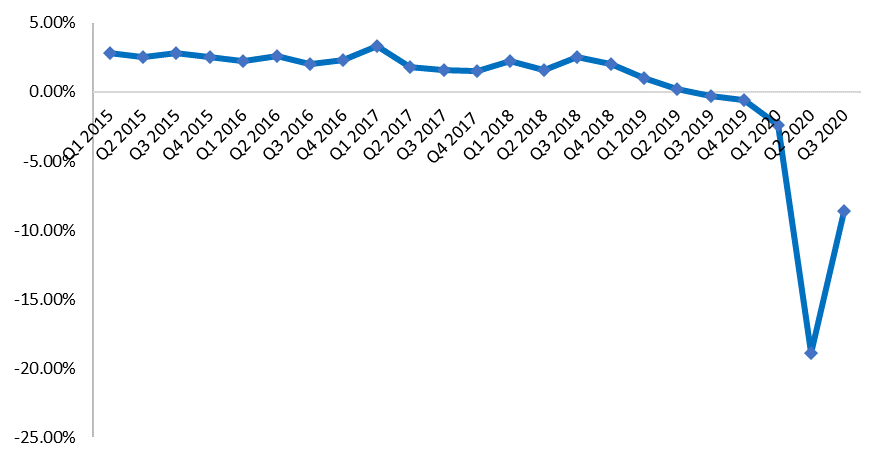
    Third quarter growth: On 26 November Mexico’s national statistics institute (Inegi) published figures for third quarter growth which confirmed preliminary figures indicating that GDP grew 12.1% in the quarter compared with the previous quarter. This follows the deep 17.1% quarterly contraction recorded in second quarter of the year, when economic activity ground to a halt amid attempts to contain the coronavirus (Covid-19) pandemic. The latest figures show that the secondary sector (industrial activity) performed particularly well in the third quarter, with 21.7% quarter-on-quarter growth, while the primary sector (agriculture) expanded by 8%; and activities in the tertiary sector (services) grew by 8.8%. This recovery in the third quarter was stronger than expected. However, Inegi’s figures show that third quarter GDP contracted by 8.6% year-on-year, with the tertiary sector down 8.9% and the secondary sector down 8.8%, while the primary sector grew 7.4%. Mexico is still forecast to post a record GPD contraction this year. Mexico’s central bank (Banxico) calculates that GDP will fall by between 8.7% and 9.3% this year, the worst yearly result in 90 years. The International Monetary Fund projects that it will fall by 9%, below its projected average of 8.1% for Latin America and the Caribbean. Meanwhile the Organisation for Economic Co-operation and Development (OECD) estimates the fall will be of 9.2%, the fifth deepest contraction among G-20 economies.  

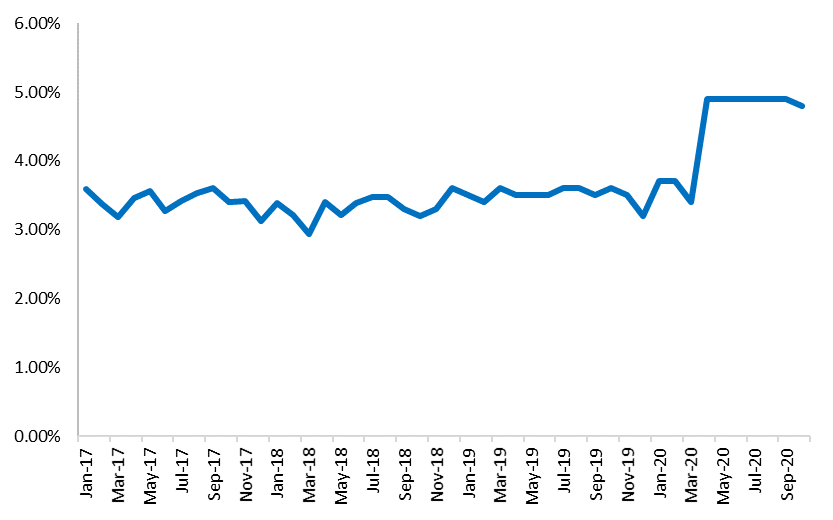
    Unemployment: On 17 November Mexico’s national statistics institute (Inegi) released the results of its national employment survey (Enoe) for the third quarter, which show that the employed population fell by 4.2m people year-on-year, from 55.2m in the third quarter of 2019 down to 51m people this year. This represents a 1.4 percentage point increase in the national unemployment rate, from 3.7% up to 5.1%. The Enoe was not conducted in the second quarter of 2020, due to restrictions imposed to stop the spread of the coronavirus (Covid-19) pandemic. However, monthly data suggests that the unemployment rate has fallen gradually since peaking at 5.5% in June. The Enoe also highlighted that job losses have disproportionately affected the urban population, with an unemployment rate of 6.4% recorded in the country’s 39 largest cities.

    Mexico: GDP Growth
    Percentage variation (year-on-year)

    Mexico: Unemployment Rate
    Econimically active population

    Mexico: Inflation Rate
    Percentage variation (year-on-year)

  • TRACKING TRENDS

    Patrick de Courcy 10 November 2022 Hits: 1986

    ARGENTINA | Massa expands portfolio of exchange rates. The economy minister, Sergio Massa, announced yet another new exchange rate on 7 November. The latest addition to Argentina’s burgeoning range of exchange rates is designed to promote exports from regional economies and compensate for losses suffered by local producers as a result of unseasonably inclement weather.

    The temporary new ‘agriculture dollar’ joins the ‘soy dollar’, introduced in September to boost exports and earn foreign exchange to bolster international reserves held by the central bank (BCRA), and other more recent additions to the government’s exchange rate arsenal, such as the ‘Coldplay dollar’ and the ‘Qatar dollar’ [WR-22-42].

    Massa announced the new ‘agriculture dollar’ during a visit to Luján de Cuyo in the western province of Mendoza. It will provide a preferential exchange rate, which has not yet been revealed, to benefit local producers who have lost part of their crops, for instance fruit and grapes for winemaking, to drought followed by a late frost, particularly in the historic western region of Cuyo, comprising the modern provinces of Mendoza, San Juan, and San Luis, in addition to Río Negro, Neuquén, and Catamarca. The latest exchange rate will apply from 20 November to 30 December.

    Eligibility for the new exchange rate will require signing up to the ‘Precios Justos’ price controls programme, which was negotiated last month with the private sector for around 65% of the staples that Argentinians consume, as well as participating in a protection programme for local producers. The latter so that incentives granted by the state do not solely benefit exporters but also reach producers.

    Massa also announced support totalling Ar$1.5bn (US$9.4m) to each province affected by the climate crisis, as well as 18-month zero-interest loans from the Banco Nación and Banco de Inversión y Comercio Exterior (BICE) to tide local producers over to the next production cycle and beyond.

  • TRACKING TRENDS

    Patrick de Courcy 01 December 2022 Hits: 2245

    BRAZIL | Spending waiver bill presented to congress. The proposal for a constitutional amendment (PEC) that would allow the government of the incoming president Luiz Inácio Lula da Silva to spend beyond Brazil’s constitutional spending cap was presented to congress on 28 November and now needs to be discussed and voted on by Brazilian legislators.

    The PEC proposes that the social welfare programme Bolsa Família (rebaptised Auxílio Brasil under the outgoing government) should be excluded from the spending cap for four years, although some legislators have argued that this waiver should not exceed two years. The text of the bill also allows the future government to spend beyond the ceiling on environmental projects financed with donations.

    The PEC is seen as crucial to allow Lula to fulfil some of his key campaign promises, such as to keep the value of Bolsa Família at R$600 (US$116) per month. Without this measure, the benefit would fall to R$400 in January.


    CHILE | Truckers’ strike ends. Chile’s powerful truckers’ unions ended a nine-day strike on 29 November to demand cheaper fuel and better security. The deputy interior minister, Manuel Monsalve, led negotiations for the government in the presidential palace La Moneda on 26 November, which paved the way for an accord with the national truckers’ unions Confederación Nacional de Transporte de Carga (CNTC) and Fedequinta, as well as four other regional unions, the following day.

    The government agreed to freeze the price of diesel for 120 days; to restrict increases in the price of a litre of petrol; to make a payment of an additional US$1.5bn into Mepco, the special fund created to subsidise fuel prices; and to improve road security.

    Two smaller unions, Confederación Gremial de Transportistas Fuerza del Norte (CGTFN) and the Federación de dueños de camiones del Sur (Fedesur), initially refused to end the strike, accusing the CNTC, in particular, of betrayal, but they eventually followed suit on 29 November.

  • ECONOMIC HIGHLIGHTS

    Abbi Dicker 15 November 2024 Hits: 1391

    PANAMA | Panama Canal posts revenue growth despite drought. On 25 October the Panama Canal Authority (ACP) reported total revenues of US$4.99bn for fiscal year (FY) 2024 (October 2023-September 2024), up 1% on FY 2023, despite a severe drought last year. According to an ACP statement, one of the most noticeable impacts of the drought on Canal operations was the decrease in the FY24 deep-draft transits, which totalled 9,944 (2,856 Neopanamax vessels and 7,088 Panamax), down 21% on FY23 due to the water-saving measures temporarily adopted last year. The ACP highlights as key financial strategies implemented to achieve projected revenue, despite reduced ship transits, “the Freshwater Surcharge (Cargo por Agua Dulce or CAD), improved water yield through structural and operational upgrades, system enhancements for reservations and auctions, and maritime service operations, which ensure safe and efficient transits”. The ACP notes that operating costs were down by 5% and tonnage totalled 423m PC/UMS (Panama Canal/Universal Measurement System) tonnes. This is down from 511.1m PC/UMS tonnes in FY 2023. For FY2025, the ACP is predicting 12,582 transits, tonnage of 520m PC/UMS tonnes, and revenues of US$5.62bn.

    HONDURAS | Trade deficit widens. On 21 October Honduras’ central bank (BCH) released new figures which show the country’s exports in the first eight months of 2024 totalled US$7.66bn, down 5.3% on the same period in 2023. Meanwhile imports totalled US$13.09bn, up 1.6% on 2023. The 2024 figures leave a trade deficit of US$5.43bn, an increase of US$633.6m (13.2%) on the same period of 2023.

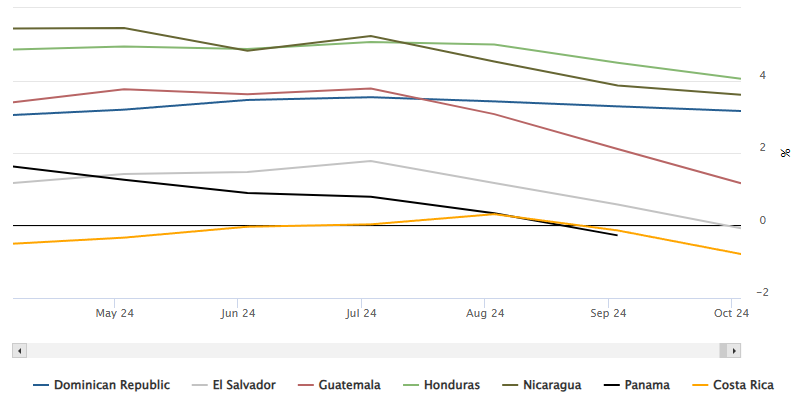
    Central America & Caribbean: inflation rate
    Percentage variation (year-on-year)

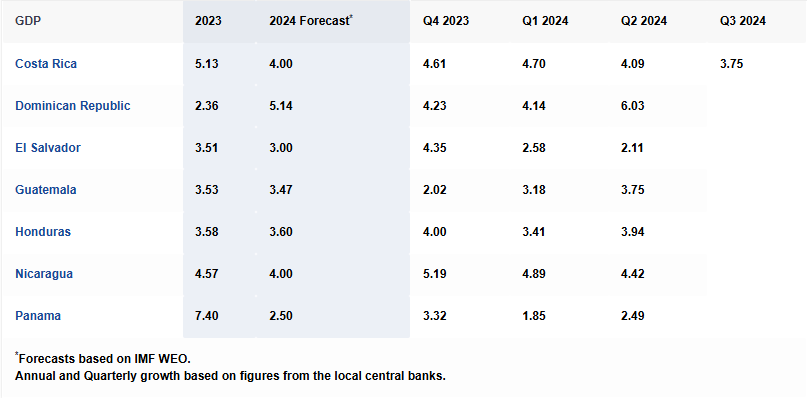
    Central America & Caribbean: GDP growth (%)
    Quarterly figures are year-on-year growth

  • Risk pointers

    LatinNews 03 April 2014 Hits: 330

    *** Russian S-400s for China.  On 28 March, Russia’s Kommersant newspaper reported that President Vladimir Putin had given his consent in principle to the supply of the S-400 missile system to China.  Talks are said to be ongoing with regard to numbers and cost.  Delivery, however, would not be for two years.

    According to Russian sources, earlier plans to sell the S-400 to China were blocked by Russia’s military top brass as well as by the Federal Security Service.  The former wanted to wait until the Russian military itself had received a certain number of the S-400s into service; the latter was concerned about Chinese reverse engineering of the system.  Russian sources say the S-400 “is capable of shooting down all enemy aerial targets that are known today”.

    *** Chinese protest deaths.  On 2 April it was reported in Hong Kong that a protest against a planned petrochemical plant in southern China’s Guangdong Province had led to 15 deaths, with 300 people injured.  It is thought that up to 20,000 people have been involved in the protests.  China’s Internet communications office is said to have ordered censorship of media reports of the protest.

    The government has so far only admitted to one person being killed as a result of the protest.  The protest is against a plant that would manufacture a toxic petrochemical product called paraxylene.

    *** Neck-and-neck in Euro polls.  The left and right are neck-and-neck in opinion polls ahead of the 22-25 May EU parliamentary elections.  PollWatch 2014 says that the Socialists & Democrats Group and the centre-right Group of the European People’s Party will both win 212 seats on current predictions.  The Alliance of Liberals and Democrats for Europe Group is in third place on 62 seats, followed by the European United Left/Nordic Green Left Group on 55.  The European Conservatives and Reformists Group (which includes the British Conservatives and Poland’s Law and Justice party) are set to win 46 seats.

    The Greens/European Free Alliance Group look set to win 38 seats, with the Europe of Freedom and Democracy Group on 36 seats.

    Non-attached members are expected to win 90 seats, of which 18 are forecast to go to France’s National Front and 19 to Italy’s Five Star Movement.

  • DOMINICAN REPUBLIC: Paying off Petrocaribe debt

    LatinNews 10 February 2015 Hits: 1758

    The government led by President Danilo Medina has paid off 98% of its debt to Venezuela’s state-owned oil firm, Petróleos de Venezuela (Pdvsa), (which exceeded US$4bn), incurred under the Petrocaribe concessional oil provision scheme, thanks to a debt renegotiation agreement. The deal comes as Venezuela’s chronic economic crisis continues to deepen due to the crash in international oil prices, with renewed speculation that the Venezuelan government led by President Nicolás Maduro may seek a general renegotiation of Petrocaribe’s terms or even move towards terminating the scheme altogether in the near future. The DR’s move looks like an attempt to prepare for either of these scenarios.

    Venezuela’s growing economic crisis had already fuelled all sorts of speculation in the DR about the future of Petrocaribe. In November 2014 the Dominican media was awash with rumours that, in a bid to alleviate its foreign currency shortage, the Maduro government was looking to secure a substantial cash debt payment from the DR. Unlike most of Petrocaribe’s beneficiaries, the DR has posted healthy economic growth in recent years and thanks to the Medina government’s adept management of the economy, the DR is currently in a relatively solid financial position [RC-14-01]. This makes it one of the few Petrocaribe beneficiaries that can safely be asked to pay its debt in cash rather than in kind. That the DR is one of Petrocaribe’s largest beneficiaries also makes the prospect of it paying in cash attractive for Venezuela.

    One of the various rumours in the media suggested that as part of its bid to secure a significant cash inflow, the Venezuelan government was considering selling the sizable US$4.12bn outstanding debt (maturing in 25 years) that the DR had with Pdvsa to a third party prepared to pay a discounted but still substantial price for it. By December 2014, the international press was reporting that Venezuela was negotiating the sale of the DR’s Petrocaribe debt to US investment bank, Goldman Sachs, for 41% of its face value. The prospective deal was viewed with unease by some in the DR amid fears that Goldman Sachs could prove less pliant than Venezuela when it came to servicing the debt both in terms of how it is paid and the payment schedule.

    With these negotiations still rumoured to be taking place, on 29 January the DR’s finance minister, Simón Lizardo, revealed that the Medina government and Pdvsa had agreed that US$4.02bn of the DR’s outstanding debt would be written off in exchange for a US$1.93bn cash payment. Lizardo said the deal was the fruit of debt renegotiation discussions “initiated by the Dominican government” over a year ago. He said that the funds came from the successful US$2bn issue of sovereign Dominican bonds in international markets conducted on 20 January (see sidebar), adding that the deal was beneficial for the DR as it managed to secure a 51% discount on the face value of the Petrocaribe debt, allowing the country to reduce its public debt levels. According to Lizardo, the deal means that the DR’s non-financial public sector debt will be reduced by US$2bn (the finance ministry estimates that the DR’s non-financial public sector debt rose to US$23.8bn, or 37% of GDP, in 2014).

    Lizardo also highlighted that under the terms of the Petrocaribe agreement, the DR can currently pay up to 50% of its debt with Pdvsa over 25 years with a 1% interest rate but this could change in the near future. Lizardo added that the Petrocaribe agreement stipulates that if the price of Venezuelan oil falls below US$50 per barrel (/b), then Petrocaribe beneficiaries can only finance 40% of their debt, with the remaining 60% to be paid up front. With the price of West Texas Intermediate (WTI), the reference barrel for Venezuelan oil, currently hovering around the US$52/b mark, Pdvsa could soon move to start collecting its debts from Petrocaribe beneficiaries. Such a prospect is now much less daunting for the DR, whose total debt with Pdvsa now stands at a much more manageable US$96.5m.

    • A good deal

    Commenting on the renegotiation of the country’s Petrocaribe debt, on 3 February, Economy & Planning Minister Temístocles Montás said that the government had secured “a good deal”. Montás rejected the argument that by paying off the Petrocaribe debt by issuing sovereign bonds, the DR was swapping debt with a low interest rate for one with higher interest rates (the 30-year bonds offered a yield of 6.8% and the 10-year bonds a yield of 5.5%). He said that the interest rate to be paid on the debt was less important now that its principle had been reduced by over 50%; and that the government’s main aim is to reduce the country’s overall debt levels of around 50% of GDP to “a more manageable level”.

  • Brazil’s pension reform a done deal

    LatinNews 17 October 2019 Hits: 458

    The Brazilian senate approved the government’s pension reform bill on 2 October, with the votes of 56 out of 81 senators. A second and decisive vote in the upper chamber is expected before the end of the month. Does this long-awaited breakthrough transform Brazil’s economic outlook? Here we look at some of the arguments.

    Because pension reform requires constitutional amendment, to be approved the bill needs to achieve special three-fifths majorities in a total of four votes – two in the chamber of deputies and two in the senate. By early October the bill had passed three of these four tests. Although another small delay is expected (many senators are travelling to the Vatican for the canonisation of the late Sister Dulce of the Poor, who is set to become Brazil’s first female saint) the fourth vote is expected to be held on or around 22 October. The result is not guaranteed, but approval is almost certain, given the comfortable margin on the first senate vote (the government needed 49 votes but achieved 56).

    There is broad agreement on why pension reform is critical. With an ageing population the burden of public pensions has been rising sharply. Brazil spends 13% of GDP on social security (versus 8% on average in the G20 countries). Pension spending on its own is 8.6% of GDP. Last year’s pension system deficit was around R$218bn (US$53.7bn). In short, pension spending is on an unsustainable path, and plays a major role in widening the overall fiscal deficit, increasing the public debt-to-GDP ratio and scaring off potential investors in the country.

    The bill seeks to tackle the problem mainly by doing two things. For the first time it introduces minimum retirement ages, set at 65 for men and 62 for women (the current system allows some people to retire on generous pensions in their early 50s). In second place it modifies the minimum paying-in periods, which rise to 15 years for women and 20 years for men. The government’s initial aim was to pass a bill that would deliver cumulative savings of R$1tn (US$246.5bn) over 10 years, although it acknowledged that some of the proposals would be diluted as part of congressional negotiations. Concessions were indeed made. Economy Minister Paulo Guedes had to drop proposals for a move to Chilean-style privatised pension funds based on individual accounts and defined contributions; he also conceded that state and municipal pensions would be exempt from the reforms. Senators further diluted the savings by voting to keep an annual bonus for low-paid workers as part of the pension calculations. The result is that total savings are now calculated at around R$870bn (US$214.5bn) over 10 years, some 13% lower than originally sought.

    Despite the dilution, it is clear that passing the pension reform is a major step forward and is likely to encourage investor sentiment. One of the optimists, Oscar Decotelli, head of DXA Investments, a private equity fund based in Rio de Janeiro, says, “The stabilisation of the fiscal situation should lead to a positive, structural shift in the economy, and we think that the ground is being laid for stronger growth that should continue for a decade or more.” However, others note that other areas of mandated government spending remain high and difficult to reduce without further constitutional amendment. Alberto Ramos of Goldman Sachs has warned that public debt dynamics have yet to stabilise. Although lower interest rates have reduced debt servicing costs, the primary deficit remains above 1% of GDP and gross debt as a proportion of GDP is currently 79.8% and poised to exceed 80% before stabilising. Ramos says, “The high level of public debt leaves the fiscal picture and the economy at large, vulnerable to adverse domestic and external shocks.” From this perspective it will take time before Brazilian economic growth can pick up speed (GDP growth hovered around 1% in 2017 and 2018 and is now predicted at around 0.8% in 2019).

    Privatisations

    Investors and markets are now likely to focus on how quickly Guedes follows up on promises to reform the complex tax system, increase the ease of doing business in the country, and step up the pace of privatisations. On the latter, the government says it has raised US$23.5bn in asset sales up to September, already exceeding its US$20bn target for the year. The bulk of the money (US$19.2bn) was raised though privatisations and the sale of government stakes in private companies, with the balance coming in through concession agreements. Plans for the privatisation of power company Eletrobras and Correios, the postal system, are progressing. However, a poll in September shows that public support for privatisation is limited. According to Datafolha, only 25% of respondents favour the selloffs. Guedes has said he favours privatising all state-owned companies but noted that the sales require congressional approval.

  • VENEZUELA-COLOMBIA: Maduro and Petro boost ties

    Patrick de Courcy 01 June 2023 Hits: 3369

    On the sidelines of this week’s presidential summit in Brazil, Presidents Nicolás Maduro of Venezuela and Gustavo Petro of Colombia continued their push for closer collaboration.

    Under the terms of a document signed in Brasília by the two foreign ministries, a new bilateral ‘Neighbourhood and Integration’ accord has been reached to pursue a range of development and cooperation projects in border areas.

    The two countries re-established diplomatic relations in August last year. Business sources say that there has been a modest recovery in once-vibrant bilateral trade, but it is still limited by the effects of US sanctions against Venezuela. On a politically sensitive issue, Petro said the two governments would jointly search for the remains of victims who were killed by Colombian paramilitaries and reportedly buried in Venezuela. The decision came after testimony before Colombia’s transitional justice court (JEP) by former paramilitary leader Salvatore Mancuso who gave details of the killings.

    Maduro also welcomed Petro’s support for Venezuela’s stalled government-opposition dialogue, which aims for a political settlement and agreement on the terms of the elections due in 2024. Although the Venezuelan opposition says progress has been minimal and doubts whether Maduro is prepared to negotiate in good faith, the Venezuelan president was upbeat about Colombian involvement, saying “Petro is very committed, you could say he is becoming a guarantor of progress in the talks”.

    Displacement crises in Colombia and Venezuela

    The Norwegian Refugee Council (NRC), a humanitarian NGO, has stated that Colombia has the world’s third-most neglected displacement crisis. Colombia was ranked behind Burkina Faso and the Democratic Republic of the Congo in the NRC’s annual list of neglected displacement crises, published on 1 June. Venezuela was listed as having the world’s fifth most neglected displacement crisis, behind Sudan. The other Latin American country to make the NRC’s list was El Salvador, which was ranked ninth.

  • TRACKING TRENDS

    LatinNews 21 November 2013 Hits: 712

    ARGENTINA | A gradual devaluation. On 18 November the official government-set exchange rate in Argentina reached Ar$6/US$1, a fall in value of more than 20% since the start of the year when it traded at Ar$4.92/US$1. As part of its heterodox economic policies, since 2011 the government led by President Cristina Fernández has imposed increasingly strict currency controls in a bid to keep domestic products competitive in international markets. Inevitably, however, such a strategy has resulted in high levels of inflation. It has also stoked domestic demand for scarce US dollars giving rise to a black (locally known as ‘blue’) US dollar market that operates based on a parallel exchange rate that tends to be much higher than the official rate. This situation has created a vicious cycle in which currency controls beget increased demand for foreign currency, which feeds into inflation, fuelling even more demand for foreign currency.

    The rising level of the ‘blue’ dollar rate (believed to be much closer to the peso’s actual value than the official rate) has forced the central bank (BCRA) into intervening in the local currency markets in order to control the widening gap between the official and the ‘blue’ rates. This has decimated BCRA’s foreign reserves, which hit a six-year low [WR-13-42] after the ‘blue’ rate breached Ar$10/US$1 (double the official rate) in May. This prompted the government to deploy (the now former) domestic trade secretary Guillermo Moreno, who met with financial sector representatives, with whom he struck a deal under which the government agreed to allow for a controlled depreciation of the official exchange rate if the sector agreed to keep the ‘blue’ rate in check (see sidebar).

    • Official and ‘blue’ rates

    Guillermo Moreno said that the official and ‘blue’ rates in Argentina should converge to Ar$6/US$1 by year end. However, President Fernández’s recent 40-day convalescence and the political uncertainty that this created once again caused the ‘blue’ rate to surge past the Ar$10/US$1 mark by 15 November and it has hovered around that since.

  • RASTREANDO TENDENCIAS

    LatinNews 27 June 2014 Hits: 1221

    PERÚ | El turismo es un punto fuerte. El 19 de junio el ministerio de comercio exterior & turismo del Perú (Mincetur) reveló que 1,04m de turistas extranjeros visitaron el país en el primer trimestre de este año, un 3,4% más que en el mismo periodo del año pasado. El desempeño positivo del sector turístico debería proveer cierto aliento al gobierno peruano en momentos en que la economía interna está experimentando una marcada desaceleración, especialmente en los sectores de la minería y la construcción.

    Una declaración de Mincetur, expresa que el incremento en el número de visitantes fue conducido primariamente por un mayor número de turistas bolivianos que ingresaron al país. De acuerdo con datos de Mincetur 19.000 ciudadanos bolivianos ingresaron a Perú en el primer trimestre del 2014, comparado con el mismo periodo del año pasado, un incremento del 65,2% año en año. Sin embargo, los datos también muestran que hubo incrementos año en año en el número de visitantes provenientes de España (13%), Ecuador (7,2%), EU (6,4%), y Colombia (4,6%). Aunque las cifras aún muestran que la mayoría de los turistas extranjeros que ingresan a Perú provienen de Chile (29,5%) seguidos por EU (14,8%) y Ecuador (6,7%). La ministra de turismo, Magali Silva, dijo que ella espera que el flujo de turistas se incrementara aún más en la segunda mitad del año, debido a las varias campañas promocionales lanzadas por Mincetur. Según Silva, este año las campañas se han concentrado en países tales como Alemania, Francia, Brasil, Argentina, México, y Colombia.

    COLOMBIA | Fuerte crecimiento en el primer trimestre. La economía interna de Colombia creció un 6,4% durante el primer trimestre del 2014, comparado con el mismo periodo del 2013, la tasa de crecimiento más alta registrada para el periodo desde el 2007, informó el Departamento Nacional de Estadísticas (Dane) el 19 de junio. Los resultados del primer trimestre fueron mucho más elevados que los anticipados por los economistas locales y por el banco central, que habían predicho que la cifra sería de alrededor del 4,3%.

    De acuerdo con el informe del Dane, mientras que todas las áreas de la actividad económica exhibieron crecimiento durante el primer trimestre, el incremento general fue conducido principalmente por el dinamismo del sector de la construcción (17,2%), en parte gracias al ambicioso plan de inversión en infraestructura que está siendo implementado por el gobierno [IL-14-21]. Otros sectores también experimentaron significativo crecimiento, incluyendo los servicios sociales y personales (6,3%); agricultura y ganadería (6,1%); servicios financieros y actividades en bienes raíces (6,0%); minería (5,6%), y ventas minoristas, restaurantes y hoteles (5,6%). El informe también destaca que la ingeniería civil (24,8%), servicios de administración pública (8,3%), producción de café (14,9%), y petróleo y extracción de carbón (0,5% y 33,3% respectivamente) fueron las actividades líderes en cada sector.

    El informe del Dane también muestra que incluso la actividad en el sector de manufacturas se incrementó por un respetable 3,3%; un resultado similar no había sido logrado desde el último trimestre del 2011. El ministro de finanzas, Mauricio Cárdenas, destacó el sólido crecimiento en los sectores de la agricultura y la construcción, los cuales él dijo que son los dos “pilares” de la economía colombiana, y la recuperación del sector de manufacturas después de seis meses de caídas. Cárdenas también dijo que las cifras de crecimiento económico de Colombia en el primer trimestre hacen del país el segundo de mayor crecimiento entre las grandes economías del mundo, detrás de China, que registro una tasa de crecimiento del 7,4% durante el periodo.

    ECUADOR | Celebrando el retorno a los mercados internacionales deuda. El 24 de junio ministro de finanzas de Ecuador, Fausto Herrera, anunció en una conferencia de prensa que Ecuador había concluido exitosamente la venta de US$2mm de bonos de deuda soberana a 10 años con un cupón de 7,95%, la primera vez que Ecuador emite deuda en los mercados financieros internacionales desde su ‘selectivo’ default de deuda soberana en el 2008. Herrera dijo que los fondos recolectados por la venta de bonos serán usados en su mayor parte para financiar el gasto público y el servicio de la deuda. Herrera también explicó que la operación fue desarrollada para lograr tres objetivos fundamentales: la diversificación de las fuentes de financiamiento, el financiamiento del programa de inversión anual, y la reducción del rating de riesgo del país, lo que a su vez permitirá al sector privado obtener mejor acceso al capital.

    La estrategia a largo plazo de Ecuador, según Herrera, es diversificar sus fuentes de financiamiento lo suficiente como para construir las plantas hidroeléctricas, petroquímicas y de acero, necesarias para renovar su infraestructura energética y productiva. En apoyo de esta estrategia, el Banco Central del Ecuador (BCE) ha conducido un acuerdo de canje de oro de US$580m con Goldman Sachs, que podría producir entre US$16m y US$20m en ganancias para el país. En una operación separada, Goldman Sachs le prestó US$400m a Ecuador, con una tasa de interés del 4,3%.

    Patricio Rivera, el ministro de política económica, remarcó durante la conferencia de prensa que el éxito de las recientes operaciones financieras eran un signo de la “confianza” que los operadores financieros internacionales tienen en el país.

    • CAN frena una resolución contra Ecuador

    El 24 de junio la Comunidad Andina de Naciones (CAN) temporalmente suspendió una resolución emitida contra Ecuador después de que el país introdujera regulaciones a la importación, consideradas como una “restricción al comercio” por la CAN [IL-14-24]. Francisco Rivadeneira, el ministro de comercio exterior de Ecuador, dijo que la CAN había aceptado su pedido de suspender la resolución que requería que Ecuador levantara ‘la resolución 116’, que exige que ciertos productos obtengan “certificados de reconocimiento” para poder ser importados a Ecuador. Rivadeneira señaló que Ecuador continuara regulando las importaciones y ahora tendrá la oportunidad para presentar una apelación formal con la CAN para la revisión de su política comercial. La puesta en vigencia de la ‘resolución 116’ hizo que Perú plantee restringir la importación de productos ecuatorianos; según Rivadeneira, las conversaciones ahora están avanzadas para resolver esta cuestión.

  • HONDURAS: Cleaning up the police - again

    LatinNews 14 April 2016 Hits: 1102

    President Juan Orlando Hernández has been forced to declare an emergency in the national police (PNH) in response to serious new allegations of criminality in the force. The move underlines the ongoing failure by successive Honduran governments to deal with longstanding allegations of rampant corruption and impunity in the police.

    On 11 April, Hernández approved an executive decree to accelerate a new police purge, and reform both the PNH and the national security ministry. Five days earlier, on 6 April, Hernández had sent congress a request for emergency decree powers to clean up the PNH, following allegations that senior officers murdered the country’s top anti-drugs prosecutor, his former advisor and another senior prosecutor between 2009 and 2013.

    The decree would allow for the expeditious removal of officers against whom there is evidence of illicit activities. Hernández said that the decree would establish that the relationship between the state and the police force be “exclusively administrative”. The decision could affect an estimated 1,500 officers, local security analysts estimated. The US ambassador to Honduras, James Nealon, said the US supported the latest move.

    President Hernández was forced to act in response to the publication by the daily newspaper El Heraldo of an investigative report suggesting that senior officers were responsible for the assassination in December 2009 of the country’s former drugs czar, Julián Arístides González, head of the Dirección de Lucha Contra el Narcotráfico (DLCN); followed by the murder two years later (December 2011) of his former advisor, Alfredo Landaverde; and the death in 2013 of a senior anti-corruption prosecutor, Orlan Chávez.

    In response to the report, prosecutors raided police buildings in the capital Tegucigalpa, removing large amounts of evidence after eight hours on the premises. Explosively, the El Heraldo report alleged that the former director of special investigations in the PNH was the author of the plot against the DLCN, accusing the official in question of links to drug trafficking (see sidebar).

    Purge and reform

    The 11 April decree authorised the security minister, Julián Pacheco Tinoco, to proceed immediately with the police purge and reform process. The government has yet to unveil full details of the reform process, but it did say that the process would be accompanied by a special commission of three ‘honorables’ (yet to be named), with input also from civil society sectors. In a press release, the president said the process could take a year, and confirmed the earlier media reports that some 1,400 PNH officers could be removed, of a total force of 12,500.

    As well as the purge, Hernández also said that the process of selecting and training officers would be made more rigorous. Officers will also receive more social benefits – such as housing – in an effort to prevent them from being corrupted by criminal elements. And, in a bid to signal the seriousness of its intent, the Hernández government is enlisting external help. According to the minister for the presidency, Reinaldo Sánchez, the national defence and security council and the G-16 group of countries and donors will meet to discuss a roadmap for international support.

    While the Hernández administration reacted swiftly to the latest allegations and the national police commander, Leonel Sauceda, issued a public apology, there remains a serious question over the inability of the Honduran State, over successive administrations, to deal with rampant corruption in the police force, and the widespread infiltration by organised crime and transnational drug trafficking gangs of both the security forces and the judiciary. This latest case comes just weeks after the murders of two high profile environmental activists in the country, in which corrupt police elements have also been implicated.

    Efforts by Hernández’s predecessor, President Porfirio Lobo (2010-2014), to clean up the force failed, running into legal obstacles. At the time, Hernández was the (hard-line) president of congress, gaining a reputation for himself after he moved in December 2010 against the supreme court’s constitutional chamber, which was minded to block Lobo’s security plans. Nonetheless, the Lobo government’s efforts to tackle the country’s widespread insecurity and improve policing, which included rolling out a new military police force, Policía Militar de Orden Público (PMOP, Public Order Military Police) and the creation of an élite rapid-response police unit specialised in fighting organised crime and terrorism, Tropa de Inteligencia y Grupos de Respuesta Especial de Seguridad (Tigres, Intelligence & Special Response Security Groups), appear to have made little difference, ultimately, to the ongoing institutional corruption problem in the PNH. The country’s security situation has improved, at least as far as officially reported homicide figures are concerned, but citizens and businesses still exist under severe threat from organised crime and/or corrupt official elements.

    The Hernández administration will be under serious pressure to demonstrate that it can take control of the situation, not least because President Hernández last year controversially rejected widespread public and political calls for an internationally-sponsored commission against impunity for Honduras, similar to the United Nations (UN)-backed mission in Guatemala (Cicig).  Instead, he negotiated with the main hemispheric Organization of American States (OAS) and OAS-supported Mission for Support against Corruption and Impunity in Honduras (Maccih), whose remit is advisory only, much to the disappointment of some, and to the consternation of the president’s fiercest critics, who have dubbed the whole thing a whitewash.

    • Maradiaga Panchamé

    El Heraldo did not name the senior police official accused of being the author of the deaths of Arístides González, Landaverde and Chávez, but several other local media outlets later identified him as one René Maradiaga Panchamé. He previously had been linked to a notorious police battalion (Battalion 316) accused of responsibility for an estimated 300 forced disappearances in the 1980s. According to Honduran media, Maradiaga Panchamé was brought into the police by the interim president Roberto Micheletti after the June 2009 coup. Reportedly, he was put on leave in October 2012, having failed new police confidence tests.

    • Maccih

    The Organization of American States (OAS)-supported Mission for Support against Corruption and Impunity in Honduras (Maccih) has only just begun to operate, and so only time will tell as to its effectiveness, but relatives of the best known of the killed environmentalists (Berta Cáceres) have already rejected Maccih assistance for their efforts in the case on the grounds that the body “lacks the capacity to fully investigate”. Instead, the Cáceres family has signalled that it will seek assistance from the Inter-American Commission on Human Rights (IACHR).