Date: 30 November
Type: Presidential, legislative (128 national deputy candidates representing the country’s 18 departments), local (298 mayoral candidates, 298 vice mayoral candidates and more than 2,000 town councillors), plus 20 candidates for the Central American parliament (Parlacen).
Main contenders (presidential pre-candidates): Rixi Moncada, Rasel Tomé (Partido Libertad y Refundación, Libre); Nasry Asfura, Ana Rosalinda Carías, Carlos Urbizo, Jorge Zelaya Munguía (Partido Nacional, PN); Jorge Cálix, Salvador Nasralla, Maribel Espinoza, Luis Zelaya (Partido Liberal, PL).
Broken promises open door to political alternatives
In 2021, Xiomara Castro of the ruling Libre party came out on top in a hotly contested presidential election, replacing Juan Orlando Hernández (2014-2022) of the PN. Castro became the country’s first-ever female president, while Hernández, who had ruled for two consecutive four-year terms in contravention of a constitutional ban on presidential re-election, was convicted in March 2024 in the US of drug and weapons-related charges and in June was sentenced to 45 years in prison.
Despite promising to overhaul Honduran politics and society after 12 years of PN rule, Castro has had only limited success in enacting her agenda. Attempts to deal with day-to-day concerns such as street crime, public services, and welfare programmes have a mixed record: while the government has expanded the popular Red Solidaria social programmes and improved access to healthcare, Castro’s security policies have come under fire.
A controversial state of exception first imposed by the Castro government in 2022 has remained in place and has failed to tackle extortion as promised. In fact, a report by local civil society group Asociación Para una Sociedad Más Justa published 3 December revealed a rise in the number of households affected by extortion, with 11.6% of the population affected in November 2024, up from 11.1% in November 2023. And while the government highlights a fall in the homicide rate from 41.7 per 100,000 inhabitants in 2021 to a projected 26.8 per 100,000 in 2024, it remains the highest in Central America while the state of exception has been linked with alleged human rights abuses by security forces.
Voters have also become disillusioned by a lack of progress in delivering on the lofty promises with which Castro entered office, such as restoring constitutionality and clamping down on corruption by implementing a proposed anti-corruption commission backed by the United Nations (UN) known as CICIH. This can be partly explained by legislative paralysis in congress, as Castro’s fragile legislative coalition fell apart soon after she came to power, leading to gridlock. With the opposition PN as the largest single party, holding 43 of 128 seats, Castro has sought controversial alternative methods to force through policies. For example, the government turned to the supreme court to annul the legal basis for special development zones known as ZEDEs after failing to pass the necessary legislation in congress.
Castro has not made the same kind of efforts to implement a CICIH, and in December the UN criticised the government over the slow pace of necessary legal reforms. One possible explanation is that Castro is dragging her feet to avoid putting her allies at risk of prosecution. The president is herself part of the country’s political elite: she is married to former president (2006-2009) Manuel Zelaya, who was forced out in a coup in 2009 and who is part of an extended political clan. A recent scandal linking members of her extended family to illicit campaign financing from drug traffickers has raised further questions about her anti-corruption bona fides.
With relations with the US already strained over issues such as the controversial appointment of attorney general Johel Zelaya in 2023, and establishment of diplomatic relations with China in 2022, Castro’s handling of the revelations also further damaged ties with Washington, after the president cancelled a longstanding extradition treaty shortly after the scandal broke. This led to accusations of hypocrisy as observers speculated that the move was designed to protect members of her family from facing justice in the US, which Castro had applauded in the case of her predecessor, former president Hernández.
The suggestion of links between Castro’s family and organised crime have fed into growing disillusionment with politics in Honduras, particularly as the president presented herself as an anti-corruption crusader. Polling undertaken in February-March 2024 by Jesuit research team Equipo de Reflexión, Investigación y Comunicación (ERIC-SJ) revealed that 78% of respondents had little or no interest in politics, and recent scandals have not led to the kind of mass protests that the country has seen in years past.
Despite this feeling of apathy, there is still a heightened risk of political violence as election day approaches. There were 64 documented cases of electoral violence from October 2020-November 2021, and a series of reforms designed to strengthen independence and transparency of electoral institutions have still not been implemented, meaning that similar conditions remain in place this time around. US officials have requested permission to observe the primary elections which are due to take place in March, as they did in 2021.
Castro has resisted calls for her to resign in the wake of recent scandals, maintaining the ability to use her office to help the cause of her chosen successor Rixi Moncada, a lawyer by training who was named defence minister in September 2024.
Libre’s election hopes will undoubtedly be affected by Castro and her family’s alleged links to drug traffickers, but Moncada will benefit from being a fresh face. There is still time for Castro to make some moves towards her promise to create a CICIH, thereby creating a positive narrative around anti-corruption efforts by the party.
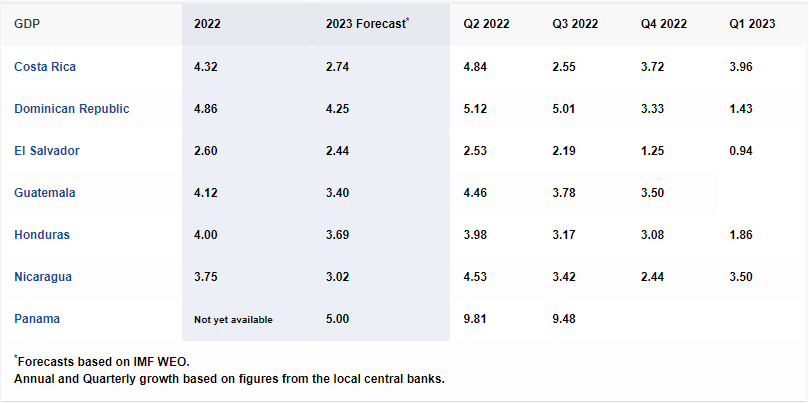
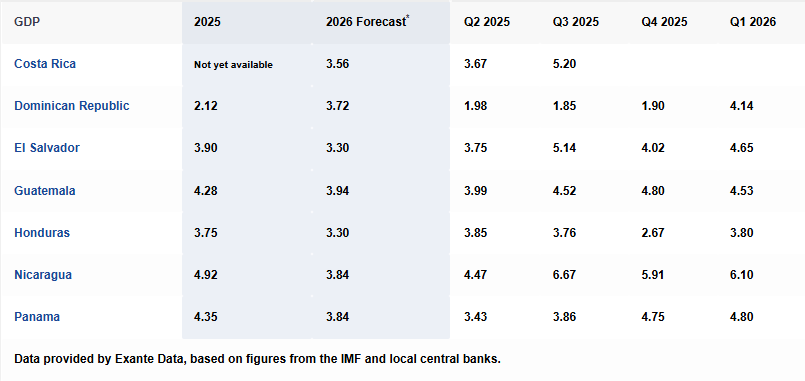
Her economic record is also relatively strong, with the latest (December 2023) estimate by the Economic Commission for Latin America and the Caribbean (Eclac) projecting that Honduras posted 3.6% GDP growth in 2023, above the 3.1% average for Central America and Castro earned praise from the International Monetary Fund (IMF) in October, for agreeing to implement “prudent” macroeconomic policies as part of a funding agreement.
GDP growth has proven “broadly resilient,” said the IMF, which also highlighted improved economic management and lent its support to Castro’s proposed Ley de Justicia Tributaria tax reform, which has caused tensions with the country’s private sector. Libre officials will be hoping that this record, as well as increased social spending, will be enough to outweigh continued concerns over corruption in the minds of voters.
As regards voter preferences, polls suggest the race remains wide open. One survey published on 20 January by local pollster Paradigma shows that Moncada would face off against Asfura of the PN and Nasralla of the PL, with 16.0% of the 2,370 respondents saying they would vote for Nasralla if the elections were held that day, followed by 13.6% for Asfura and 8.7% for Moncada. However, the same poll also showed that 36.9% of those surveyed would not vote for any of the candidates, and 16.2% said they didn’t know who to vote for or didn’t answer at all, indicating a high level of uncertainty.