All Categories

Subcategories

  • TRACKING TRENDS

    LatinNews 02 August 2018 Hits: 522

    URUGUAY-CHILE | Extended FTA with Chile finally approved. On 31 July Uruguay’s chamber of deputies voted in favour of ratifying an extended free trade agreement (FTA) with Chile, which will now cover services as well as goods.

    The new agreement, which was signed by the two governments in October 2016, will also update clauses related to labour rights, gender equality, and the promotion of small and medium-sized enterprises (SMEs).

    It took almost two years for Uruguay’s ruling Frente Amplio (FA) coalition of leftist parties to get the agreement ratified by congress due to opposition from some FA member parties such as the Partido por la Victoria del Pueblo (PVP) and the Partido Socialista (PS), which had argued that the agreement would be harmful for Uruguay’s economy by exposing Uruguayan service providers to unrestricted competition from their larger counterparts. However, the PVP and PS benches ultimately voted in favour of the agreement after the FA leadership imposed “party discipline” on the matter.

    The total value of trade between Uruguay and Chile has fallen from US$482m in 2012 to US$263m in 2017, with an average annual decline of 11%.

    In 2012, Chilean exports to Uruguay were worth US$205m but by 2017 that figure had fallen to US$123m. The value of services exported fell from US$128m to US$51m over the same period.

    Supporters of the new FTA hope that it will boost bilateral trade with Chile and send a message to other potential partners that Uruguay is open for business. The implementation of the updated deal now depends on its ratification by Chile’s congress, which is seen as a formality.

    CHILE | Moody’s downgrades credit rating. On 26 July the international ratings agency Moody’s, downgraded Chile’s sovereign credit rating from ‘Aa3’ to ‘A1’, following similar downgrades by Fitch Ratings and Standard & Poor’s last year.

    President Sebastián Piñera and his government had predicted that the rating would remain stable due to recent improvements in economic indicators. Moody’s claims that Chile’s credit profile has been worsening for some time, but the effect had been masked by high economic growth rates. The rating agency predicts that medium-term economic growth will be around 3%, compared to 3.7% predicted accumulated growth for 2018.

  • GUATEMALA: IMF praises economic “resilience”

    Sarah Sheldon 24 April 2023 Hits: 1001

    The International Monetary Fund (IMF) has praised “the achievements made in economic policy” following a recent visit to Guatemala, and it has highlighted the “resilience” of the country’s economy in 2022.

    In the statement, published on 14 March, the IMF hailed Guatemala’s economic performance. “Guatemala’s prudent macroeconomic policies - reflected in low fiscal deficits, low debt-to-GDP ratio, a stable currency, and large international reserves - have helped shelter the economy from the challenging global environment and the tightening of global financial conditions,” it said, underlining that economic growth had exceeded its potential.

    The IMF predicted that growth would hit 3.4% of GDP in 2023, and it also highlighted the recovery of the labour market and new foreign direct investment (FDI) projects as “positive signs of strength”. The organisation also mentioned a recent credit rating upgrade; in February, international credit ratings agency Fitch Ratings upgraded Guatemala’s Long-Term Foreign and Local Currency Issuer Default Ratings (IDRs) to BB from BB- with a stable outlook. In addition, the IMF highlighted Guatemala’s low sovereign debt spreads and the positive effects of tax administration reform on collection rates.

    Moving forward, the IMF recommends further tax administration reforms in order to continue improvements in collection rates and to pay for development programmes. Other recommendations to boost growth include expanding the formal labour market, investing in human capital, and reducing regulatory uncertainty, as well as improving governance and legal certainty. The IMF would also like to see independent anti-corruption institutions, as well as Anti-Money Laundering legislation that would bring the country up to international standards.

    The IMF says that Guatemala has “strong fundamentals,” but it adds that the country is at a “critical juncture”. While it paints a broadly positive picture, the IMF also points out Guatemala’s exposure to the US economy and reliance on remittances from migrants living in the US. 

    The country is preparing for general elections on 25 June, which may be one reason why the IMF presents the country as being at something of a crossroads. Under President Alejandro Giammattei the country has suffered democratic backsliding, and the electoral authority has moved to exclude candidates associated with the fight against corruption, such as Thelma Cabrera of the leftist Movimiento para la Liberación de los Pueblos. Concern over the direction of the country is mounting, with seven US senators recently criticising what they say is an “insufficient” response from the US government to the “continuing deterioration of democracy and the rule of law in Guatemala”.

    According to the IMF, there is plenty of work needed to build on Guatemala’s solid economic fundamentals. “Addressing gaps in infrastructure, education, and health, improving governance, and the fight against corruption remain of the first order,” it writes. “Reforms are not only needed to attract foreign direct investment, but to secure a sustainable and inclusive growth.” Unfortunately, the country’s elites have long appeared more concerned with cementing their grip on power, even at the cost of democracy, and a continued descent into authoritarianism may make it harder to attract sorely needed investment at a time when Environmental, Social and Governance standards are an increasingly important consideration for investors.

    Remittances

    In March, Guatemala’s central bank (Banguat) released new figures which show the country received a total of US$1.38bn in family remittances in February 2023, up from US$1.26bn on the same month in 2022. This brings the total this year to US$2.77bn, up from US$2.44bn in the same period in 2022. Guatemala received a record US$18bn in remittances in 2022. The World Bank estimated that remittances accounted for 17.9% of Guatemala’s GDP in 2021.

  • GUYANA: Largest budget yet

    Abbi Dicker 19 March 2026 Hits: 852

    At the end of January Guyana’s Finance Minister Ashni Singh presented the largest budget yet to parliament, totalling G$1.558tn (US$7.45bn).

    The oil boom is enabling government spending to surge ahead. This is the first budget since the Peoples’ Progressive Party/Civic (PPP/Civic) was re-elected by a landslide in September last year. Dubbed the “Putting People First” budget, it sets out a 12.7% increase in spending on the preceding year. Singh said it “is designed to translate sustained economic expansion into tangible investments that improve livelihoods, strengthen communities, and modernise national infrastructure”. The finance minister said the economy had grown 19.3% in 2025, one of the fastest rates in the world. The non-oil economy, including agriculture, mining, construction, and services, expanded 14.3%. The budget projects overall GDP growth to be 16.2% in 2026.

    This year’s government spending plans are dominated by housing (G$159.1bn), education (G$183.6bn), and agriculture (G$113.2bn). A total of G$119.4bn is set aside for infrastructure investment including roads, bridges, and national connectivity. There is also significant social spending, including another pay-out of the National Cash Grant, which transfers around G$100,000 to each Guyanese citizen as a way of ensuring the benefits of the oil boom are shared. The budget also includes tax cuts. The income tax threshold is raised, removing 5,000 people from the tax net. Net property tax on individuals is removed and there are value-added (VAT) reductions for various types of vehicles.

    Funding all these payouts is the rise in oil revenues. In less than 10 years Guyana has become Latin America’s fifth largest oil exporter after Brazil, Mexico, Venezuela, and Colombia. In a 20 February press release by Guyana’s department of public information (DPI), Guyana’s natural resources minister, Vickram Bharrat noted that from 2020 to 2025, Guyana, where the discovery of oil in 2015 led to an unrivalled surge in national wealth, was able to raise oil production from 120,000 barrels per day (bpd) to over 900,000 bpd.

    The budget was well received, although government critics suggested that revenue projections are over-optimistic. Opposition leader Azruddin Mohamed of We Invest in Nationhood party was cited by the media as saying that approving the largest budget in Guyana’s history will “not automatically produce the best outcomes”. He accused the government of not doing enough to address cost of living pressures (inflation closed 2025 at 2.5%, but food price inflation is higher, at 4.4%). Sherod Duncan, a member of parliament for the A Partnership for National Unity (APNU) opposition party, claimed a detailed investigation of the budget revealed “glaring limitations in transparency, reporting, and governance”.

    Analysts question why, despite surging revenues, the government has opted to run a non-financial sector deficit which is equivalent to 5.4% of GDP in 2025 on figures cited by accounting firm Ernst & Young. In an editorial in Guyanese daily Stabroek News published on 30 January, Vishnu Bisram, an independent economist, sounded a note of caution on borrowing to fund the budget deficit. Such borrowing he said, is currently sustainable because of long-term projected revenues from oil and mining, “But government has to be careful because the debt is now US$10.3bn and interest payments are climbing rapidly”. He called for a more strategic approach to borrowing, saying the country should borrow less and seek out lower-interest rate loans. 

  • RASTREANDO TENDENCIAS

    LatinNews 17 October 2011 Hits: 325


    URUGUAY | Depósitos de gas y petróleo. El objetivo de autosuficiencia energética del Presidente José Mujica ya no luce como un sueño imposible. En verdad, Uruguay podría convertirse en exportador de energía. Dos informes recientes de agencias del gobierno de EU indican que Uruguay tiene potencialmente grandes y comercialmente viables depósitos de gas.

         El US Geological Survey, que trabaja con el Departamento de Estado de EU, estima importantes volúmenes de 13,4 trillones pies cúbicos (368bn de metros cúbicos) de potencial técnicamente recuperable esquistos de gas y 508m de barriles de técnicamente recuperables esquistos de petróleo en la cuenca del norte, que abarca los departamentos de Salto, Tacuarembó, Paysandú, Artigas y Rivera, fronterizos con Brasil.

         La US Energy Information Administration estima el potencial de Uruguay en reservas de gas recuperables en 20,6 trillones de pies cúbicos (588bn de metros cúbicos), que sería el sexto más grande de la región.

         La firma de EU, Schuepbach ha estado sondeando la cuenca del norte para la compañía estatal de energía, la Administración Nacional de Combustibles, Alcoholes y Portland (Ancap) por dos años. Ancap comenzará la exploración en Salto y Tacuarembó en diciembre.


  • RASTREANDO TENDENCIAS

    LatinNews 29 September 2013 Hits: 395

    ARGENTINA | Firmas extranjeras interesadas en Vaca Muerta. El 23 septiembre dos firmas extranjeras de hidrocarburos firmaron contratos con firmas controladas por el Estado argentino para desarrollar el vasto depósito de petróleo y gas de esquistos bituminosos de Vaca Muerta en la provincia de Neuquén, Argentina.

    El gobierno provincial de Neuquén anunció que había acordado los términos de un contrato con el mayor productor de petróleo y gas de Alemania, Wintershall, que cooperará con Gas y Petróleo de Neuquén (GyP), la compañía provincial de petróleo, en la exploración y explotación de los 97km2 del yacimiento Aguada Federal, con una inversión que totaliza US$3,35mm. El acuerdo otorga a Wintershall, que ya tiene operaciones en Neuquén, el acceso a las concesiones de Vaca Muerta en poder de GyP antes de que la provincia lance una licitación internacional el próximo año.

    El mismo día, Yacimientos Petrolíferos Fiscales (YPF), la firma petrolera de propiedad del Estado, reveló que había firmado un acuerdo con Dow Argentina, una subsidiaria de Dow Chemical Company, con base en EU, para desarrollar los 45km2 del yacimiento de gas El Orejano, en una empresa conjunta, con un valor de US$188m. En ambos acuerdos, las partes establecieron una participación igualitaria.

    Vaca Muerta es uno de los más grandes yacimientos de esquistos bituminosos del mundo, con una reserva total comprobada de cerca de 927m de barriles equivalentes. Estos dos acuerdos siguen a un acuerdo anterior entre YPF y la mayor compañía petrolera de EU, Chevron, anunciado en julio que verá la última invirtiendo más de US$1,2mm en el desarrollo de Vaca Muerta.

    URUGUAY | Soros lanza su apoyo detrás de la ley del cannabis. El 23 de septiembre el Presidente de Uruguay, José Mujica, se reunió con el multimillonario empresario y filántropo de EU, George Soros, en Nueva York, para discutir los planes de Uruguay para legalizar el uso del cannabis, con su venta siendo controlada exclusiva y estrictamente por el Estado.

    Soros es un renombrado defensor de las causas socialmente liberales y una sociedad más ‘abierta’, con la despenalización y la legalización de ciertas drogas siendo una causa particular que el defiende. Él está de acuerdo con el gobierno de Mujica acerca de la racionalidad de que la actual ‘guerra a las drogas’ global, no ha dado resultado, y que un nuevo enfoque de legalización de drogas tales como el cannabis, a fin de cuidadosamente regular el mercado y asumir su control de las manos de los delincuentes es necesario.

    Sin embargo, los planes del gobierno de Mujica que actualmente están siendo analizados por el congreso de Uruguay, han probado ser altamente controversiales, y han esparcido amplias preocupaciones en la arena internacional. Con ese fin, durante la reunión Soros dijo que para que tenga lugar un cambio paradigmático en la ‘guerra a las drogas’ a escala global, mucho dependerá del éxito del “experimento” uruguayo, y ofreció apoyo financiero para programas de educación para enseñar a los uruguayos acerca de los riesgos del consumo y la adicción a las drogas.

    La reunión se realizó en medio de duras críticas, particularmente de la oposición del Uruguay, que dijo que la descripción de Soros de Uruguay, como un “laboratorio” para el mundo era “ofensiva”. Verónica Alonso, una diputada nacional por el opositor Partido Nacional (PN, Blancos) de centro-derecha, advirtió que este era un caso de un especulador financiero como Soros para “entreteniéndose” con un experimento, y planteó la posibilidad de que Soros, un accionista en la firma de biotecnología agrícola, Monsanto, este apoyando el proyecto de ley de legalización para que el pueda producir y obtener ganancias de la marihuana  transgénica en Uruguay.

    CHILE | Comercio exterior en alza. En agosto, el comercio exterior se incremento un 8% año en año, llegando a un total de US$13,3mm, de acuerdo con las últimas cifras del servicio nacional de aduanas de Chile, difundidas el 16 de septiembre. El informe mensual sobre comercio exterior, reporto un incremento del 16% en las exportaciones, comparado con el mismo periodo del año pasado, por un valor extra de US$900m, pero con sólo un 1% de incremento en las importaciones.

    El comercio entre Chile y Asia disfrutó de un incremento anualizado del 10%, conducido por un incremento en el comercio con Japón e India, dos de los cinco mayores socios comerciales de Chile en esa región.

    Las cifras del comercio con China, el más importante socio comercial de Chile gracias a su rol en la importación de cobre, fueron menos impresionantes, con apenas un 0,2% de incremento, comparado con el mismo periodo del 2012. El comercio con el resto de las Américas se elevó un 3%, con el Mercado Común del Sur (Mercosur) asumiendo la mayor parte de este incremento. En particular, el comercio de Chile con Argentina se expandió un 23%. Por otra parte, el comercio con EU se incrementó un 9%, contribuyendo un 2% al incremento con toda la zona del tratado de libre comercio de América del Norte (Nafta). Finalmente, la cifra que corresponde a Europa fue un 5% más alta, con el Reino Unido, Bulgaria, Holanda, y Alemania entre los principales contribuyentes en ese incremento.

    • Industrias automotrices expanden sus inversiones

    El 17 de septiembre el fabricante de autos alemán, Audi, anunció planes para invertir  US$500m durante dos años en Brasil, para construir una nueva planta ensambladora, parte de sus planes para acceder al creciente mercado interno del país. El jefe ejecutivo (CEO) de Audi, Rupert Stadler, fue recibido por la Presidenta Dilma Rousseff en Brasília, donde él anunció la inversión. Stadler dijo que la firma había realizado estudios que muestran que es probable que el mercado de autos de lujo en Brasil crezca un 170% para el 2020. El día siguiente, el fabricante de automotores japonés, Toyota, anunció que invertiría US$800m en su fábrica en la ciudad argentina de Zárate, con el objetivo de incrementar la producción por más de un 50%, de los actuales 92.000 vehículos al año. Los planes de expansión generarán 1.000 empleos e impulsarán las exportaciones anuales por US$1,2mm, de acuerdo con el gobierno de Argentina.

  • TRACKING TRENDS

    LatinNews 07 May 2015 Hits: 1058

    BOLIVIA | Keen interest in potassium plant. On 4 May the Bolivian government revealed that firms from China, Peru and Spain had presented proposals for the construction of an industrial potassium plant in the south-east of the country at an estimated cost of US$178m. The plant is to be located in the Uyuni salt flats, in the Andean department of Potosí, which also harbours large lithium reserves, and it is expected to produce 700,000 tonnes (t) of potassium salts annually.

    The general manager of Bolivia’s state-owned firm Corporación Minera de Bolivia (Comibol), Luis Alberto Echazú, said that China’s Camc Engineering, Peru’s Graña Montero and the Spanish-Bolivian consortium, Tecna Bolivia, had all expressed their interest in the project. Echazú added that the government hopes that the plant will come on stream by mid-2018.

    Last April Bolivia’s President Evo Morales announced that the country would invest US$617.9m in the development of the lithium and potassium industries in the Uyuni area. There are also plans to construct an industrial lithium carbonate plant, for which a German and a Swiss company have submitted proposals.

    COLOMBIA | Exports fall in first quarter. Colombia’s exports in the first quarter of the year totalled US$9.42bn, 30.2% less than in the same period of 2014, the national statistics agency (Dane) reported on 5 May. According to the Dane report, the quarterly fall in exports came on the back of a significant 22.8% year-on-year fall in overall exports in March from US$4.4bn to US$3.4bn.

    The report points out that the quarterly fall in exports answered “principally to a 42% reduction in external sales of the fuel and extractive industries sector, 46.1% [fall] in ‘other sectors’ and 7.3% in manufacturing”. This as the fall in international oil prices continues to affect Colombia’s hydrocarbons sector. Colombia’s hydrocarbon exports account for 67% of all of the country’s exports. In fact, Dane’s report shows that a fall in shipments to India, the US and China, contributed the most to the fall in overall exports, accounting for 24.9% of the fall. These countries are some of the top consumers of Colombia’s hydrocarbon sector output.

    Still, the Dane figures show that the US remains the main market for Colombian exports, accounting for 26% of total exports. Behind the US are Panama (8.5%), Spain (4.7%), Ecuador (4.1%) and the Netherlands and Aruba (3.7%).
    Bucking the downward trend, exports of farming, food and drink appear to be rising, with shipments from these sectors rising by 12% to US$623.9m in March, according to Dane.

    During a public event on 5 May President Juan Manuel Santos said that through innovation, Colombia could boost its export levels. Speaking at the ceremony in which he awarded the trade, industry & tourism ministry’s entrepreneurial innovation award (Innova), Santos said that innovation could allow Colombia to reach its goal of exporting some US$30bn in goods and services from sectors other than the hydrocarbons and extractive industries by 2018.

    The winner of this year’s Innova award was Industrias Acuña, for its development of a palm oil extraction plant that uses new technology; that does not leave behind any residue; and reduces water and energy waste.

    COLOMBIA | Shoring up investment and trade ties with Portugal. On 5 May the Colombian and Portuguese governments announced that they will continue to increase bilateral trade and investment, which has already increased significantly over the last few years.

    The announcement was made by Colombia’s foreign minister, María Angela Holguín, and Portugal’s deputy prime minister, Paulo Portas, during a visit by the latter to the Colombian Caribbean port city of Cartagena de Indias. The two officials pointed out that over the past four years Portuguese investment in Colombia has increased from €5m (US$5.6m) to almost €500m (US$564m) and bilateral trade between the countries has expanded by 120%.

    Holguín said that, “what we have been doing is forming a new partnership where they [Portugal] have found a new partner in Latin America and we have found a great new partner in Europe”.

    • Air Canada Rouge links Lima to Toronto

    On 2 May Air Canada Rouge conducted its first flight from Toronto’s Pearson International Airport to the Jorge Chávez International airport in Peru’s capital, Lima. Peru’s ministry for tourism & foreign trade (Mincetur) said that the new flight route will not only increase connectivity between the two cities but will improve tourism as well as promote greater bilateral trade between Canada and Peru. The 280 passengers were presented with Peruvian gifts made of cotton as well as being treated to a show of Peruvian dancing prior to boarding, organised by the Peruvian foreign trade office (Ocex) in Toronto.

  • HONDURAS: Opposition goes for unity candidate

    LatinNews 18 January 2017 Hits: 829

    On 15 January, the Honduran left-wing opposition party Libertad y Refundación (Libre) ratified former president Manuel Zelaya (2006-2009) as its leader (‘general coordinator’) and confirmed an alliance for the 2018 general election with two left-leaning minority parties, Partido Anti Corrupción (PAC) and Partido Innovación y Unidad Social Demócrata (PINUSD).

    The LIBRE-PAC-PINUSD alliance aims to put a stop to the second-term ambitions of the incumbent, Juan Orlando Hernández of the conservative traditional Partido Nacional (PN). Hernández is running anew after the Honduran supreme court in April 2015 ruled “inapplicable” the constitutional ban on re-election on the grounds that it breached the right to seek election. The electoral court later accepted this ruling. The rest of the political parties in the country remain united in their opposition to re-election and have yet to accept the supreme court’s move, arguing that it has no legitimacy because the specific articles banning re-election can only be reformed or removed via constituent assembly, and not by the supreme court or the legislature. Furthermore, there is a question as to whether enabling legislation for the supreme court ruling needs to be approved by the unicameral national congress, in which the PN lacks a majority. The PN at one point suggested that no such legislation was required to give the supreme court ruling effect. The opposition strongly argued the contrary and the issue still remains unresolved. As such, there is some question over the entire 2017 presidential process, with some legal experts warning that the contest could yet be subject to legal challenge.

    Nonetheless, despite the legal ambiguities around the presidential contest preparations continue apace for the scheduled (but non-obligatory) March primaries to select the candidates for the 26 November ballot, in which the electorate will also select 128 new national deputies to represent the country’s 18 departments, 298 new municipal mayors and 20 representatives to the Central American Parliament (Parlacen).

    Libre has already put forward Zelaya’s wife, Xiomara Castro, as its preferred presidential nominee. Clearly a proxy candidate for her husband, Castro, a political novice who has never held office, came second to Hernández in the 2013 contest. Meanwhile the leader of the PAC, Salvador Nasralla, who also ran in 2013, also has fresh ambitions this year. It is unclear as yet whether the new alliance will come together behind a single ticket. While Libre has more national deputies, who therefore will want to see Castro on top of the ticket, opinion polls indicate decent support for Nasralla, a TV personality who turned to politics in protest at the entrenched corruption in the country. Speculation also continues as to Zelaya’s plans. Currently the outspoken Libre bench leader in congress, he had threatened to run again to challenge Hernández if the latter decided on a second bid. All will be revealed in March.

    Accompanied by the visiting secretary general of the Organization of American States (OAS), Luis Almagro, on 17 January President Hernández promulgated the new campaign financing law (Ley de Fiscalización, Transparencia y Financiamiento de Partidos Políticos). Approved by congress in October last and backed by the OAS-sponsored Mission to Support the Fight against Corruption and Impunity in Honduras (Maccih), the law creates an independent financial control unit to monitor campaign finances, sets limits on campaign spending, and puts a ceiling on private donations, in addition to other measures aimed at keeping ‘dirty money’ out of politics. Hernández declared it “a historic day for transparency” and “an important step in strengthening democracy in the country”, noting that there was wide consultation in drafting the legislation. Yet as Honduras heads into its 10th general election since the return to democracy in 1982, the functioning of its system remains under considerable question.

    • Another high-profile assassination

    In a 17 January statement, the security ministry suggested the involvement of criminals and mara gangs in the death of another journalist in the country. A reporter for the independent TV news channel Hable Como Hable (HCH), Igor Padilla, 38, was assassinated in the crime-ridden northern city of San Pedro Sula, that same day. A cameraman accompanying Padilla said he was shot by men in police uniform. Eduardo Maldonado, director of HCH, said that Padilla – who covered police in the city – was sprayed with at least 20 bullets and demanded that the Hernández government respond. The well-known Padilla also hosted a children’s TV program on HCH and was a popular media figure. According to the Honduran national human-rights commission, 69 journalists or media workers have been killed in Honduras since 2003, with only four cases investigated.

  • Nearshoring elsewhere in Latin America

    Patrick de Courcy 16 May 2023 Hits: 1953

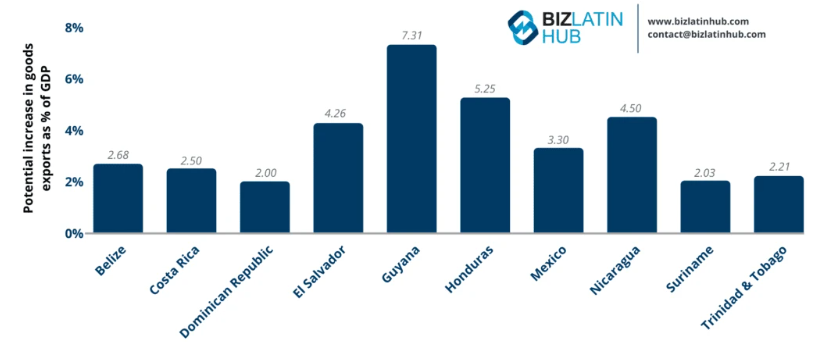
    While nearshoring will be a significant trend in Mexico and Brazil it will also be present to varying degrees in the rest of the region. It is worth noting that although some countries will be at the lower end of the ranking in terms potential gross nearshoring investment value, they are higher up when investment is expressed as a proportion of their GDP. In fact, the biggest potential beneficiaries from nearshoring relative to GDP include Guyana (benefits equivalent to 7.3% of GDP), Honduras (5.3%), Nicaragua (4.5%), and Mexico (3.3%). 

    Nearshoring in Latin America: biggest potential beneficiaries

    Source: IDB/World Bank

    Proximity to the home base will be one of many factors in play. Geographic proximity to the US will loom large for Mexico and Central American countries. But as we have seen, there are various other types of proximity. Brazil may be able to benefit from being closer to the European Union in terms of achieving a free trade agreement, giving it improved market access, and despite remaining physically in a different hemisphere and on the other side of the Atlantic Ocean. Other countries are looking at time-zone closeness along with knowledge of English as a business language or various other cultural factors. It is also worth noting that some companies are speaking of closeness in the form of ‘friend-shoring’, referring to national security considerations and shared rule-based democratic or liberal values. The concept is therefore likely to play out in different ways by country and by economic sector.

    In Argentina, Martin Rappallini of business lobby Unión Industrial Argentina (UIA) says that there are nearshoring opportunities in energy, minerals, agri-business, and IT sectors. Andy Vior of the Buenos Aires IT hub (PoloIT) says the country has a wealth of highly trained software engineers able to work remotely at highly competitive rates. Given widespread knowledge of English, Argentina also has hopes of attracting investments in call centres offering CRM (customer relations management) and BPO (business process outsourcing). It may help that the time zone difference between Buenos Aires and New York is only 1-2 hours.

    Other analysts are more cautious, pointing to the country’s high inflation rate and continuing policy uncertainty (politics remains highly polarised on left-right lines, with presidential elections due in October). Some analysts suggest that Argentina may in fact in some cases be relegated to a kind of second nearshoring tier, receiving inward foreign investment essentially because of its proximity to Brazil. In this perspective Argentina-based automobile plants or a recently launched assembly line making Whirlpool washing machines are primarily focused on serving the Brazilian market rather than the more distant US market. Trade specialist María Victoria Bruno says nearshoring will be led by Mexico and Central America where trade and regional value chains are ‘better oiled’. She fears that Argentina may lag behind, noting for example that neighbouring Chile has done much more to open up its economy to foreign investment.

    In Colombia, according to a report by newspaper La República, the country attracted 60 companies with total nearshoring investments of some US$1.07bn in 2020-2022. Among them were enterprises involved in agribusiness, chemical production, life sciences, and engineering. Also involved were call centres providing BPO services. In total, a further 105 companies told investment promotion agency ProColombia that they were actively considering nearshoring investments. “Colombia has stood out in the region for maintaining political stability and solid institutions. In addition, its strategic location in the middle of the Americas positions our country as the best point for the regional supply of goods and services throughout Latin America, offering companies competitive logistics,” Flavia Santoro, president of ProColombia, said.

    Colombia also benefits from a favourable location. It does not share a land border with the US as Mexico does, but it has multiple short daily flights into US cities, as well as major Atlantic and Pacific ports enabling it to act as a maritime cargo hub. While Colombia shares Mexico’s problem of high levels of violence and has experienced a decades-long guerrilla insurgency, it has maintained broadly market-friendly macro-economic stability, with the US State Department noting its legal and regulatory systems are “transparent and consistent with international norms” including “a comprehensive legal framework for business and foreign direct investment”.

    Less positive from Colombia’s point of view is that, like Brazil, it remains a largely inward-focused economy, with relatively less experience in aggressively expanding its external trade volumes. In fact, Colombian trade as a proportion of GDP is 41%, meaning it too is about half as open as the Mexican economy is. Professor Andrés Velasco, of the London School of Economics (LSE) and a former finance minister of Chile (2006-2010), told the Financial Times in a 2020 interview that the country “uniquely positioned to benefit from nearshoring in the Americas is Mexico. If you are making car parts in China, you can make them in Mexico instead. But it is difficult to go from zero to 20. Colombia is near zero right now in manufacturing.”

    In Central America Costa Rica seems particularly well positioned to benefit from the nearshoring trend. This is in part because it already has an open economy, with strong democratic traditions and a highly skilled labour force. Roughly 40% of Costa Rican exports of goods and 65% of exports of services go to the United States under preferential tariff arrangements. The country has also attracted investment in manufacturing and IT products and services designed for the US market. More than two decades ago, in 1997, US based Intel opened a local subsidiary to design, prototype, and test integrated circuits and related software, as well as providing back-office services to the rest of the global company, including in areas such as finance, human resources, procurement, and sales marketing support. More recently Boston Consulting Group (BCG) has opened an office in San José which will employ 400 staff remotely serving the consultancy’s US-based customers. Local staff will include IT professionals and data scientists.

    In 2021 Azofras, an agency that represents Costa Rica’s free trade zones, said it was aware of 103 nearshoring projects underway. Roughly a third of them were led by companies new to the country. Local economists say the process accelerated due to the combined impact of US-China trade tensions in 2018-2019 and the Covid-19 pandemic in 2020-2021. Investments have gone into sectors such as textiles and medical devices, led by companies seeking to service their US, but also European and Asian home markets. The country’s free trade zones, which offer tax breaks to companies that set up operations within them, are also seen as helping develop the nearshoring wave.  Another plus factor has been the trained work force. Federico Campos, a consultant for Deloitte says: “The country’s human capital is one of its great competitive advantages, since for many years bilingual personnel have been trained in the four basic areas: science, mathematics, engineering, and technology.”

    Other Central American and Caribbean countries located near to the US are also poised to benefit from increased nearshoring. The wealthier and more stable include Panama and the Dominican Republic. The so-called Northern triangle republics (El Salvador, Honduras, and Guatemala) are on the other hand somewhat handicapped by political instability, crime, and corruption, but the current US administration is eager to support their economies and raise living standards not least as a way of diminishing undocumented migration back into the US itself. These countries have attracted investment in textile and finished garment industries, and in automobile components such as electric wiring harnesses. Overall, in the northern triangle nearshoring is seen as a potential solution to problems of inequality, poverty, violence, and emigration. There is however something of a chicken and egg situation, since those same problems can also act as disincentives to new inward investment flows.

  • URUGUAY: Resilient exporters

    LatinNews 09 July 2013 Hits: 3105

    In spite of the economic problems of three of its major trading partners – Argentina, Brazil and the European Union (EU), Uruguay’s economy has shown resilience in the recent past. Stubborn inflation is the main challenge, and one that can be solved in the medium term.

    Over recent weeks, foreign policy initiatives by the administration led by President José Mujica have emphasised a reduction in economic dependence on Uruguay’s partners in the Mercosur trading bloc, in particular Argentina and Brazil. In late May, President Mujica led a large delegation on a four-day tour of China, during which he signed seven accords with China’s President Xi Jinping. Among other things, Mujica secured Chinese investment for an extension of Uruguay’s railway system and construction of a new deep-water port in the department of Rocha. While Mujica was out of Uruguay, Vice-President Danilo Astori gave an interview in which he advocated Uruguay’s full membership of the Pacific Alliance trading bloc, which comprises Chile, Peru, Colombia and Mexico.  At present, Uruguay has observer status in the Pacific Alliance. However, under Mercosur rules, the member states cannot individually negotiate free trade deals, preventing them from signing bilateral agreements with third parties. Mercosur must negotiate free trade talks as a bloc; to date it has inked FTAs with only Israel, Palestine and Egypt. It has been in protracted talks with the European Union (EU) for about 15 years.

    From the point of view of the Uruguay government, the attractions of the Pacific Alliance are very clear. The member countries share its commitment to free trade, the pursuit of deeper trade and investment ties with the Asia-Pacific region and sound economic and monetary policies. In contrast, the governments of the Mercosur countries Argentina (especially), Brazil and Venezuela have run policies on an ad hoc basis: they have clearly placed far greater importance on domestic fiscal and economic challenges than on seeking benefits from greater trade and regional integration.

    The last year has been a challenging one for Uruguay’s exporters. On one hand, exports of Uruguayan goods and services (especially tourism) have been disrupted by the severe restrictions imposed by Argentina’s government on its citizens’ access to foreign exchange. On the other, Brazil’s government has from time to time attempted to talk down the Real, while having to deal with a combination of economic stagnation and stubborn inflation. In the meantime, only slow progress is being made in dealing with the Custo Brasil – the higher costs of trading with and doing business in that country that come from official red tape and inadequate infrastructure. All this has coincided with strength in the Uruguayan peso, which appreciated from around UYU22/US$ in mid-2012 to UYU19/US$ in early June, at which point Economy Minister Fernando Lorenzo announced measures to curb speculative inflows of US dollars. Over the same period, both the Argentine peso and the Brazilian Real depreciated by around 10% against the US dollar.

    As the chart Uruguay’s external linkages shows, Mujica and Astori’s desire to reduce the country’s dependence on Mercosur makes sense. In 2011, Argentina was the destination for 7% of Uruguay’s exports. Argentine visitors generated 57% of Uruguay’s tourism receipts. Argentina was also the source of just over one quarter of Foreign Direct Investment (FDI) inflows. For Brazil, the corresponding figures were 21%, 21% and 5%. The next most important trade and investment partner was the EU, most of whose members have been in or near recession for the last two years.

    Aspects of Uruguay's trade account, year ending
    (US$mn)

    Mar-12 Mar-13 Var.
    Exports of Goods 9,454 9,725 3%
    Exports of Services 3,537 3,263 -8%
    Total Exports 12,991 12,988 0%
    Imports of Goods 11,087 12,004 8%
    Imports of Services 2,198 2,507 14%
    Total Imports 13,285 14,511 9%
    Source: BCU


    An analysis of how elements of Uruguay’s trade account have varied over the last year or so, relative to the previous corresponding is instructive. As the chart Variation relative to the pcp % shows, exports of goods held up well for the nine months to the end of 2012. It was only in Q113, the most recent period for which the central bank has published information, that goods exports actually fell relative to the same quarter of the previous year. In contrast, the restrictions on outbound travel by Argentines contributed to a double-digit slump in services receipts in both Q312 and Q412. In Q113, though, services receipts were only 9% lower than they had been in the last three months of 2012. Meanwhile, imports were rising for most of last year.

    Variation relative to previous corresponding period %


    2Q12 3Q12 4Q12 1Q13
    Exports of Goods 1% 14% 3% -8%
    Exports of Services 13% -11% -17% -9%
    Total Exports 3% 9% -3% -8%


    Imports of Goods 15% 16% 12% -8%
    Imports of Services 10% 12% 8% 26%
    Total Imports 14% 15% 12% -3%
    Source: BCU


    In short, total export revenues have been resilient – in spite of the problems. Further, as the chart Aspects of Uruguay’s trade account indicates, the overall deterioration in the country’s trade balance, with exports of US$13.0bn and imports of US$14.5bn, has only been minor. The obvious implication is that Uruguay’s exporters have achieved reasonable success in finding alternative markets outside the Mercosur and EU countries.

    Uruguay's external linkages, 2011
    % of total

    Exports Tourism FDI
    Argentina 7.4% 56.8% 25.7%
    Brazil 20.5% 20.5% 4.7%
    China 6.6%
    EU 14.5% 8.0% 8.5%
    USA 3.1% 6.6% -1.6%
    Other 47.8% 8.1% 62.7%


    Total (US$mn) 7,914 2,187 2,289
    % GDP 20.1% 5.5% 5.8%
    Source: BCU, cited in IMF 2012 Article IV Cons.


    For its part, the International Monetary Fund (IMF) was reasonably upbeat in its assessment of Uruguay’s economy as a part of its 2012 Article IV Consultation (made public in April this year). The IMF looked for real annual GDP growth to slow to its potential (of 3.9% in 2012), and observed that ‘external risks cloud the outlook’. Otherwise, the Fund suggested that the main challenge is inflation, which at just over 8% in the year to May 2012, is and for a long time has been stubbornly above the central bank’s annual target range of 4%-6%.

    A key development in recent weeks was central bank’s announcement on June 6 that it would cease using the reference rate as the key tool to combat inflation. Instead, it said it would focus on other variables, including the level of bank deposits and the money supply – as it did between 2003 and 2007. The bank will then adjust its open market operations accordingly. From July 2014, the bank will also widen its target inflation band to 3%-7%. The reference rate has been at 9.25% since December 2012.

    The coming months should show if these latest measures will have the desired effect. Inflation expectations in Uruguay have been boosted by the indexation of wages and possibly also by the relative lack of central bank communication (in comparison with overseas peers) to financial markets. As noted above, inflows of portfolio investment capital have also complicated the central bank’s task. Given the general orientation of the government and exporters towards markets in the Asia-Pacific, where inflation rates are generally well below those of Uruguay, it is important that the bank succeeds in its fight against inflation. For now, we are cautiously optimistic.

  • ECONOMIC OVERVIEW: NICARAGUA

    LatinNews 15 January 2014 Hits: 2398

    Delay to Nicaragua Canal: On 6 January, Nicaragua’s canal authority, set up to oversee the massive US$40bn project to construct a new inter-oceanic canal (‘Gran Canal’) through Nicaragua, announced that work on the project (approved in June 2013) would start "at the end of 2014", and not in May 2014, as initially proposed. This appeared to contradict an announcement two days previously by president of the canal authority, Manuel Coronel, who told reporters that the project would begin in 2015, once the feasibility studies had been completed, with a definitive route for the canal to be decided in the third quarter of this year. On 18 December, the project got the definitive green light from Nicaragua’s supreme court (CSJ) – which is controlled by President Daniel Ortega’s ruling Frente Sandinista de Liberación Nacional (FSLN) – after the court rejected 32 appeals against a June 2013 law granting the Hong Kong-based HKND Group the 50-year concession to build and operate the ‘Gran Canal’. The appeals were lodged by various sectors including the parliamentary opposition bench, Bancada Democrática Nicaragüense (BDN), which alleged that the law violated Nicaragua’s sovereignty and property rights legislation. Indigenous representatives from the Región Autónoma del Atlántico Sur (RAAS) also alleged property rights violations. Nicaragua’s influential private sector lobby, Cosep, also objected on similar legal grounds.

    Inflation: On 6 January Nicaragua’s central bank reported that monthly inflation for December 2013 was 1.08%, bringing the accumulated rate for the year to 5.54%, less than the 6.62% registered in 2012. Meanwhile Eclac put Nicaragua’s GDP growth at 4.6% in 2013, down from 5.2% in 2012. Eclac expects GDP growth of 5.0% in 2014.

    • Ortega one step closer to indefinite rule

    On 10 December Nicaragua’s 92-member unicameral legislature approved a package of constitutional reforms proposed by President Daniel Ortega that among other things removes the ban on consecutive presidential re-election, further concentrates power in the hands of the executive and enhances the role of the military. The package, watered-down slightly [RC-13-12], awaits further voting in the current legislative session, which began on 10 January 2014.

  • ECONOMIC OVERVIEW: NICARAGUA

    LatinNews 14 September 2016 Hits: 507

    “Mining for All”. On 16 and 17 August, Managua hosted the II International Mining Congress. Entitled “Mining for All”, the event was organised by the Nicaraguan mining chamber (Caminic), with the support of the energy & mining ministry and the country’s official investment agency, ProNicaragua. The event aimed to highlight the importance of responsible mining practices with the participation of public and private institutions that promote mining as a factor of social and economic development. It was held as part of efforts by the Frente Sandinista de Liberación Nacional (FSLN) government led by President Daniel Ortega to attract investment to the sector which, on official figures, represented 3% of the country’s GDP in 2015.

    According to the state mouthpiece el19digital, in 2006, the year before Ortega took office again, gold and silver production amounted to 109,000 and 94,000 troy ounces respectively. By end of 2015, gold and silver production reached 274,000 and 586,000 troy ounces, respectively.

    According to Nicaragua’s export agency (Cetrex), in the first eight months of 2016, gold was the country’s third leading export, accounting for US$229m of the total US$1.6bn. This was behind coffee (US$360m) and beef (US$279m). While gold was up on the same period the previous year (when it reached US$213m), overall exports were down from US$1.8bn over the same period.

    Meanwhile, the need to attract investment to the mining sector (and other sectors) was indicated by a June 2016 report by the United Nations (UN) Economic Commission for Latin America & the Caribbean (Eclac) which showed that foreign direct investment (FDI) flows to Nicaragua declined by 5% in 2015, to US$835m. The report noted that since 2014, the country’s maquiladora (assembly plant) industry had felt the effects of the change in US policy, which entailed removal of the tariff preference level (TPL) provisions. It is estimated that some 3,000 jobs have been lost and textile exports have fallen by 5% as a result of this change. The same Eclac report noted that to counter the effects of this measure, the Nicaraguan government was in trade talks with Canada and Korea which, if successful, could bring in some US$160m in new investment.


    • Growth

    On 29 August, the president of Nicaragua’s central bank (BCN), Ovidio Reyes, presented a report which forecast that Nicaragua’s GDP would grow between 4.5%-5% for 2016, with inflation expected to close at between 4.5%-5%. A July 2016 report by the United Nations’ Economic Commission for Latin America & Caribbean (Eclac) notes that Nicaragua posted 4.9% GDP growth in 2015 – the third highest rate in Central America after the Dominican Republic (7%) and Panama (5.8%).

  • DOMINICAN REPUBLIC: Police injure deputies protesting Medina re-election

    LatinNews 27 June 2019 Hits: 1529

    The rift within the long-ruling Partido de la Liberación Dominicana (PLD) deepened significantly this week. Several PLD deputies loyal to former president Leonel Fernández (1996-2000, 2004-2012) were injured by police outside congress on 24 June after they joined protesters seeking to erect a permanent tarpaulin outside the building to oppose a constitutional amendment to allow President Danilo Medina to seek re-election once again. The pro-Medina president of the lower chamber of congress, Radhamés Camacho, ordered the deployment of the police and military to preserve order.

    Supporters of Fernández had gathered outside congress, where they were joined by deputies assisting them in their efforts to erect a tarpaulin to express opposition to any attempt to reform the constitution to President Medina’s benefit. The constitution was amended in 2015 precisely to allow Medina to seek re-election in the presidential contest a year later, with the addition of a transitory article barring him from standing as a presidential or vice-presidential candidate again. But the faction of the PLD loyal to Medina is intent on removing this impediment in order to permit him to stand once more.

    Television images showed Deputy Henry Merán, from the PLD faction aligned with Fernández, suffering from the effects of tear gas while several of his colleagues remonstrated with the police as they moved against protesters amassed outside congress. Protesters claimed to have a license from the mayoralty of Santo Domingo to install the tarpaulin there, but police were unimpressed.

    Several hours after the incident, Fernández emphatically condemned the police action, which he described as an “unacceptable and violent violation of our country’s democratic principles”. Responding on Twitter, Fernández insisted that there would be “no backing away from defending the constitution”. Former presidential candidate Luis Abinader, of the main opposition Partido Revolucionario Moderno (PRM), said he would not allow the PLD leadership “to trample on the constitution again”, promising to stand on the front line in public demonstrations outside congress.

    The PLD has held uninterrupted power since 2004 and would be the overwhelming favourite to extend its stranglehold in the 2020 general elections. This has fuelled the internal party tensions between Fernández and Medina loyalists. Time is running short. The deadline for parties to register pre-candidates to participate in October’s primary elections is 22 August. Medina said last August that he would take a firm decision on re-election by March this year, but he is yet to do so.

    The main public concern heading into the electoral period is corruption. Large-scale protests have been held over the course of the last two years against the Medina administration’s handling of the corruption case involving Dominican government officials and the Brazilian construction firm Odebrecht, which saw bribes totalling US$92m handed out to secure public works contracts between 2001 and 2014.

    On 21 June a supreme court judge, Francisco Ortega Polanco, ordered the trial of six out of seven people against whom the public prosecutor’s office brought charges of embezzlement and illicit enrichment linked to Odebrecht, including former public works minister Víctor Díaz Rúa (2007-2012); a PLD senator, Tommy Galán Grullón; and two former PRM senators, Andrés Bautista and Roberto Rodríguez.

    • Political tensions

    There is no sign of tensions defusing with the ruling PLD. On 25 June 21 deputies loyal to former president Leonel Fernández abandoned the lower chamber and refused to return until the president of the body, Radhamés Camacho, ordered the military to be removed from the front of the national congress.

  • BOLIVIA: Massive pro-government demonstration riles opposition

    Patrick de Courcy 02 December 2021 Hits: 3366

    Massive pro-government demonstrations were held in the Bolivian capital, La Paz, on 29 November, with President Luis Arce’s administration claiming that over 1m citizens took to the streets in support of the ruling left-wing Movimiento al Socialismo (MAS). The demonstrations were held at the culmination of a 180km march by MAS supporters from the town of Caracollo, in the department of Oruro, which was staged in response to nine days of opposition protests earlier in November [WR-21-45]. The latest demonstration saw flame-fanning in an already volatile political climate, with Arce warning on 30 November that “the right is regrouping” in order to carry out a “coup d’état”, and union leaders urging disruption and nationalisations in the opposition stronghold of Santa Cruz.

    The pro-MAS march is the latest in a string of recent mass demonstrations both in support of and against the government. It follows nine days of major unrest by anti-government protesters from 8-16 November, which saw roadblocks and clashes in a number of the country’s main cities. This latest demonstration was intended as a rebuke of those protests, which the Arce administration claims were orchestrated to use anger at a contentious financial crimes law as a pretext to topple the government.

    The government’s claim of 1m demonstrators may have been an overstatement, but the outpouring of support for MAS nonetheless eclipsed the recent anti-government protests. The march was peaceful, but the rhetoric of the public speakers hostile. Allegations that the Bolivian right is plotting a coup were ubiquitous. Former president Evo Morales (2006-2019) declared that members of the opposition who did not cooperate with the government’s agenda would be viewed as “traitors who would put their country up for sale”. President Arce warned that this demonstration was just the first of a series of actions that would make the opposition “tremble”.

    However, the comments that received the most pushback from the opposition were those of Juan Carlos Huarachi, the leader of the trade union Central Obrera Boliviana (COB), who urged protesters to march on Santa Cruz and “nationalise all its industries and businesses”. The targeting of Santa Cruz for its broadly anti-MAS political culture was slammed by the right-wing opposition group Comité pro Santa Cruz for “generating a climate of hatred, division, and convulsion”. Former president Carlos Mesa (2003-2005), who leads the main centre-right opposition party Comunidad Ciudadana (CC), tweeted that “not even the worst dictatorships or the most infamous governments have stooped so low as to promote hatred against the inhabitants of a department and threaten them with generalised aggressions”.

    Opposition legislators also called for Argentina’s ambassador to Bolivia, Ariel Basteiro, to be expelled from the country after he joined the start of the march from Caracollo. Basteiro told a cheering crowd that it was “a badge of honour…to bring the support of Argentina to this march”. The congressional leader of the right-wing Creemos party, José Carlos Gutiérrez, slammed Basteiro’s presence at the demonstration, warning that “we won’t allow the political interference that he is carrying out from the embassy…and for that reason we are in contact with our counterparts in Argentina to request his expulsion”.

    There is a strong possibility that the cycle of unrest could continue with counterprotests by the opposition. In Bolivia’s fevered political climate, these would almost certainly be matched with another show of support for MAS.

    Radical action against airport strike

    Bolivia’s minister of public works, Édgar Montaño, announced on 1 December that the state company that administers airports (AASANA) will be dissolved and replaced by a new entity, Navegación Aérea y Aeropuertos Bolivia (Naabol), following the decision by AASANA workers to go on strike over unpaid wages and discontent with the company’s director, Arminda Choque. Montaño said that despite “making every possible effort” to reach an agreement with AASANA’s employees, the strike “jeopardises air transport operations”. He said that new leadership would be introduced to run Naabol, and that disruptive workers would be replaced. The AASANA union has called for workers to join a hunger strike to pressure the government to reverse course and agree to its demands.

  • CHILE: Mining companies fret over new constitution

    Patrick de Courcy 13 July 2022 Hits: 2014

    At the end of June, Chile’s popularly elected constitutional convention (CC) completed its work on a new draft constitution, which will now be subject to a referendum due to be held on 4 September. It is not clear whether the draft will be approved, but mining companies have nevertheless found it a difficult document to read.

    The CC, dominated by left-wing and independent members, has produced a draft constitution which reduces the previously central role of the private sector, asserts rights to state-funded education and health, and protects indigenous and environmental rights. Although more radical proposals – such as the nationalisation of all mineral deposits – were rejected, the industry is still worried by the implications of the new draft. It states that the state has “absolute, exclusive, inalienable, and imprescriptible control of all mines and mineral substances [...] without prejudice to ownership of the land on which they are situated.”

    The granting of concessions to private sector operators is not excluded (this is significant since over some 72% of copper and lithium mining output comes from private companies). But the companies are worried that that there is no specific reference to concessions in the draft. They fear that if the constitution is adopted following the September referendum, a mining code might subsequently be passed opening the door to other contractual mechanisms, such as administrative authorisations, which might be on less favourable terms.

    In general, the draft constitution calls for environmental protections, but some executives say these do not differ very much from regulations already in effect. There is specific concern, however, over measures to prevent mining near glaciers, which on some calculation could affect 20%-25% of national copper production. Boundaries will need to be agreed, a difficult process since it is not clear exactly where a glacier zone begins or ends.

    Another concern relates to water usage. The draft constitution defines water as “a natural common good” which is not subject to traditional property rights. Along with the sea, beaches, and air, water is declared to be an “inappropriable” good, which must be protected and managed by the state in a democratic manner, guaranteeing “access” and balance between eco-systems. Mining companies would therefore face restrictions on their potential water usage, with the needs of local communities being prioritised instead. An additional issue is that, in parallel to the new constitution, mining royalties are likely to be introduced, raising the overall tax burden. At the beginning of July, the government submitted a wide-ranging tax reform bill that would allow mining royalties, while a separate stand-alone bill introduced in 2018 remains lodged with the senate finance commission.

    Joaquín Villarino, president of the Consejo Minero, Chile’s mining council, told the Financial Times that “spaces of uncertainty are opening up” for the mining industry – which represents 12% of Chilean GDP and around half of exports. Depending on how the new constitutional articles are interpreted, regulations could become more restrictive and complicated, with bureaucracy leading to higher production costs, he said. Other executives have noted that regional governments are granted greater regulatory powers, and that indigenous communities will need to be consulted (some believe they will have a de facto right to veto projects), meaning companies will have to deal with various levels of government to get any project approved. Some experts say the problem is being over-dramatised. “No one thinks this is the end of mining in Chile”, said Jorge Bande of Cesco, a copper and mining think tank, while adding: “The outlook is uncertain whichever way the constitution vote goes, which makes it difficult for investment this year.”   

  • TRACKING TRENDS

    Patrick de Courcy 30 March 2023 Hits: 3137

    BRAZIL | Interest rate battle continues. On 22 March the monetary policy committee (Copom) of the central bank opted to hold the benchmark Selic interest rate unchanged at 13.75%. The decision had been expected but the accompanying press release showed the central bank to be in a hawkish mood saying it would keep rates high “until the disinflationary process consolidates”. Failing that the bank said it “would not hesitate to resume the tightening cycle”. Minutes from an earlier Copom meeting also warned of the “possible adoption of expansionary parafiscal policies”. 

    The bank’s stance seems to have set off another round in the war of words with President Luiz Inácio Lula da Silva. Lula continues to press for lower rates. Just before the bank’s announcement he said keeping the Selic at 13.75% would be “irresponsible” and promised to “keep bashing” the bank.

  • RASTREANDO TENDENCIAS

    LatinNews 05 September 2014 Hits: 802

    EL SALVADOR | Entra en vigencia nuevo controversial impuesto. Un nuevo impuesto a las transacciones financieras entró en vigor en El Salvador el 1 de septiembre. El impuesto del 0,25% será aplicado a las transacciones de más de US$1.000 hechas por cheque, tarjeta de crédito, o transferencias electrónicas, con la excepción de salarios, remesas, servicios públicos, fondos de pensiones, o retiros de los cajeros automáticos.

    Junto con un mínimo impuesto corporativo a las ganancias equivalente al 1% de los activos netos de las compañías que ganan más de US$150.000 al año, que entró en efecto el mes pasado, el gobierno liderado por el Presidente Salvador Sánchez Cerén calcula que el impuesto a las transacciones financieras producirá  US$160m adicionales al año para financiar los programas sociales para reducir la pobreza.

    El sector privado se levantó en armas. El presidente de la poderosa Asociación Nacional de la Empresa Privada (Anep), Jorge Daboud, dijo que el nuevo impuesto provee un “obstáculo” al crecimiento y pone en “riesgo” la competitividad de El Salvador; desalentando la inversión y empujando a las empresas hacia el sector informal.

    Sánchez Cerén insiste en que los impuestos no afectarán a los sectores más pobres de la sociedad, pero el presidente de la cámara de comercio, Luis Cardenal, sostiene que conducirá a precios más altos para bienes y servicios, pues el sector empresarial simplemente pasara el costo a los consumidores. Daboud y Cardenal habían presionado al ministro de finanzas, Carlos Cáceres, para que posponga la entrada en vigencia del nuevo impuesto –pero fue en vano.

    HONDURAS | Aprueban financiamiento para el ‘canal seco’. El Presidente de Honduras, Juan Orlando Hernández, celebró esta semana la firma de un contrato para construir una autopista uniendo los océanos Pacífico y Atlántico en Honduras. Hernández presumió de que el proyecto de L2,5mm (US$120m), que será financiado por el Banco Financiera Comercial Hondureña S.A. (Ficohsa); Metrobank de Panamá  (Davivienda Honduras); y la Concesionaria Vial de Honduras (Covi), proveería “una importante alternativa al Canal de Panamá”.

    La autopista de 391kms irá desde la municipalidad de Goascarán en el departamento hondureño de Valle, a través del Golfo de Fonseca, hasta el puerto caribeño de Puerto Cortés, con la etapa inicial de construcción generando 1.200 empleos, de acuerdo con Hernández. El nuevo ‘canal seco’ convertirá a Puerto Cortés en “el puerto más importante en Centroamérica y un referente para América Latina”, Hernández agregó.

  • EL SALVADOR: Saca seeks re-election

    LatinNews 13 March 2013 Hits: 2991

    Former president Elías Antonio (Tony) Saca (2004-2009) has officially launched his presidential campaign for March 2014. Saca was elected on the ticket of the right-wing Alianza Republicana Nacionalista (Arena) in 2004 but now is seeking to break the political duopoly which has maintained a stranglehold on El Salvador’s political system since the end of the 1980-1992 civil war at the head of a right-of-centre coalition. Coming to power as the chosen candidate for Arena, with its powerful electoral machinery and broad support base, is one thing; defeating Arena and the ruling left-wing Frente Farabundo Martí de Liberación Nacional (FMLN), who between the two of them tend to squeeze out those who pursue a third way, is quite another.

    Saca became El Salvador’s youngest president in 2004, at just 39, and the fourth to have been elected democratically - as well as the fourth consecutive Arena president. His background as a broadcaster and radio entrepreneur ensured a greater emphasis on communication with the public than his Arena predecessors had managed. He also broke the mould of traditional party stalwarts in top positions. The FMLN learnt from his election to rally behind Mauricio Funes, himself a popular television presenter in 2009 with left-wing sympathies but not a member of the party.

    Saca fell out with the Arena hierarchy, the executive leadership committee (Coena) when the party struggled to readjust to life in opposition in 2009. He was expelled from Arena because he was closely associated with the 12 dissident Arena legislators who dramatically broke away from the party shortly afterwards to form a splinter group called Gran Alianza por la Unidad Nacional (Gana). Saca was widely considered to have encouraged the breakway. Gana defined itself as a more moderate, “centrist” option, aiming to promote “modern capitalism with social justice”.

    Saca formally declared his intention to run for election on 25 February, for the newly formed Unidad coalition that includes Gana, and two right-wing political parties, the centre-right Partido Demócrata Cristiano (PDC) and conservative Partido de Conciliación Nacional (PCN).

    Gana’s decision to team up with the PDC and PCN, long-established parties with a decent following and established structure, means that it stands a far better chance than previous splinter groups of making a splash in the elections. The PCN held the presidency between 1962 and 1979 and the PDC between 1984 and 1989. And in Saca the new Unidad coalition also has a candidate who has been there and done it rather than a political neophyte. Saca drew attention to this fact himself, arguing that El Salvador could not afford to elect a president without experience when it was faced with serious economic difficulties (stagnant GDP growth) and security problems.

    Saca will certainly take some votes away from the Arena candidate, Norman Quijano, the mayor of San Salvador, and this division on the Right will benefit the FMLN candidate, veteran guerrilla and Vice-President, Salvador Sánchez Cerén. Roberto Lorenzana, the FMLN spokesman, gleefully noted that “the only certainty brought about by Antonio Saca’s candidacy is that the Right is divided”. His candidacy also means that the election is likely to go to a second round as it will be very difficult for any single candidate to amass 50% plus one of the vote required to win at the first time of asking.

    On 21 February Coena made the slightly bizarre choice to select René Portillo Cuadra, a little-known academic (he is the secretary general of El Salvador’s private Universidad Tecnológica [Utec]), to run as Quijano’s running mate. Sánchez Cerén, meanwhile, chose the popular mayor of Santa Tecla, Oscar Ortiz, a move which unified the radical and moderate wings of the party, at least for the purpose of the elections, and might attract swing voters who would not have voted for Sánchez Cerén.

    The selection of Portillo Cuadra had caused a rift within Arena between those who wanted a party loyalist and those who wanted a party outsider to run as Quijano’s running mate. Two days before he was selected, the president of Coena (and former president of the Republic), Alfredo Cristiani, stepped down, an indication of the divisions plaguing the party. He was replaced by Jorge Velado. A CID-Gallup poll published at the end of January put Saca on a respectable 17% of the vote, with Quijano out front on 33% and Sánchez Cerén on 28%. The poll, which surveyed 1,208 people nationwide, was carried out between 16 and 21 January, just before Saca confirmed his candidacy.

    Mourning the loss of Chávez

    The FMLN held a mass on 8 March in honour of Venezuela’s President Hugo Chávez who died three days earlier after succumbing to a two-year battle with cancer. FMLN deputies and mayors and senior party officials attended the mass, which was followed by an event in Simón Bolívar park to coincide with the funeral of Chávez in Caracas which was shown on a giant screen.

      El Salvador’s national assembly decreed a day of mourning for Chávez, although, in a sign of how politically polarising a figure Chávez was, neither Arena nor the PDC voted in favour of it.

      The FMLN was keen to cultivate a close relationship with Chávez and would almost certainly have joined his integration movement Alianza Bolivariana para los Pueblos de Nuestra América (Alba) if it were not for the opposition of President Mauricio Funes who decided that this would jeopardize El Salvador’s pivotal relations with the US, where more than 2m Salvadorean expatriates live.

    Alba Petróleos to be investigated

    Venezuelan cooperation vis-a-vis El Salvador has recently come under scrutiny. Last month El Salvador’s competition regulation agency, Superintendencia de Competencia (SC), announced that it would investigate whether Alba Petróleos, a joint Salvandorean-Venezuelan venture, was infringing the competition regulatory framework. Comprising Enepasa, a fuel distribution company, and PDV Caribe, a subsidiary of the Venezuelan state oil company, Petróleos de Venezuela (Pdvsa), Alba Petróleos was set up in 2006 to operate a fuel terminal and distribution centre in El Salvador.

      The SC’s announcement follows a request by the main private sector lobby, Asociación Nacional de la Empresa Privada (Anep), which argues that the company, which has expanded its activities in recent months, failed to request authorisation from the SC to set up these new ventures. Anep is closely aligned with Arena. PDV Caribe was formed by FLMN mayors. Ahead of the next general election in 2014, the opposition suspects that these ventures, whose funding sources are not transparent, are FMLN campaign vehicles.

      Last year Alba Petróleos set up Alba Alimentos, which provides loans to small peasant farmers and since then has launched a string of other new ventures. These include ‘Tu Financiera’, created on 15 January, which provides small and medium sized businesses with loans of up to US$50,000; Alba Becas, launched on 6 February with US$2.2m to provide scholarships for 3,400 young people in 44 of the country’s 262 municipalities; and Funda-Alba, a non-profit foundation launched on 4 February with the rather vague aim of contributing to the country’s development.

      Private sector representatives cited in the conservative national daily, La Prensa Gráfica complain that Alba Petróleos has not updated its general balance and results with the national companies’ registry (CNR) since 2010.

    • Bible and the Constitution

    Tony Saca’s main campaign promises are to create more jobs and to maintain the social programmes implemented by the administration of President Mauricio Funes. Saca said he would “govern with the Bible and the Constitution as guides”. He also promised to provide financial support for sports programmes in order to give El Salvador the best possible chance of reaching the football World Cup finals in Russia in 2018.

    • Migrant vote approved

    On 24 January El Salvador’s 84-member national assembly passed a bill allowing nationals living abroad to vote. The new law was a campaign promise by President Mauricio Funes, whose left-wing Frente Farabundo Martí para la Liberación Nacional (FMLN) took office in June 2009 and takes effect ahead of the next presidential election in 2014. The initiative, which dates back to 1994, was approved by 82 votes in a show of cross party support (the FMLN has 31 seats).

  • CARIBBEAN POINTERS

    Sarah Sheldon 24 April 2023 Hits: 1005

    *** GUYANA-SURINAME BORDER DISPUTE FLARES UP. A Guyana Defence Force (GDF) operation in mid-February in the Tigri area, an area over which Suriname claims sovereignty, produced a strong reaction in Suriname in the first week of March. The GDF operation on 19 February targeted unauthorised and illegal mining activities in the area. It was reported that a Brazilian helicopter was intercepted, and two Brazilian nationals detained.

    On 2 March, Suriname’s main opposition Nationale Democratische Partij (NDP) raised the issue in parliament. The Nationale Partij Suriname (NPS), now also in opposition, issued a statement saying: “It is striking that so far no clear action has been taken [by the government] to hold the government of Guyana accountable for the unsolicited entry into the Sipaliwini district in the southwest of our country. It is unheard of and wrong for a neighbouring country to behave in this way for the government to remain silent about it.” In response, Defence Minister Krishna Mathoera told parliament: “This case has definitely not passed the government by. The government immediately took action.”

    The disputed area, which Suriname says is part of the Coeroenie district of Sipaliwini, amounts to some 60,000 square kilometres.


    *** GUYANA OPPOSITION WARNS OF EARLY ELECTION. Aubrey Norton, the leader of Guyana’s People’s National Congress Reform (PNCR)-led opposition coalition, A Partnership for National Unity+Alliance for Change (APNU+AFC), has warned that the People’s Progressive Party/Civic (PPPC) government might be planning to spring a surprise election. Speaking at an opposition rally in Georgetown on 5 March, Norton warned that the powerful vice president, Bharrat Jagdeo, “is seeking to make you complacent and believe that elections aren’t going to be until 2026, and once you become complacent he will call elections earlier. We must see through his strategy and prepare for elections next year. I want to say to you  that the PPP is calling elections next year. We must continue to work and be ready this year.” Local government elections are scheduled for 12 June 2023.


    *** BELIZE SEEKING TO STRENGTHEN ANTI-CORRUPTION REGIME. Belize was not listed in NGO Transparency International (TI)’s 2022 Corruption Perception Index (CPI) due to a lack of data. The government, led by Prime Minister John Briceño, has said that it wants to rectify this and that he has tasked the Good Governance Unit to continue talks with TI over the lack of data.

    On the separate Worldwide Governance Indicator produced by the World Bank, Belize’s level of Control of Corruption is listed at 45.67%. In a press release dated 22 February, the government said that this indicates “that Belize ranks around 47th-52nd of 180 countries and territories ranked by Transparency International’s CPI”.

    A 2021 poll on Rule of Law perceptions, conducted by the World Justice Project (WJP), an international civil society organisation, found that only 22% of Belizeans thought that a high-ranking government official would be prosecuted and punished if they were to embezzle public funds. This was significantly below the findings from neighbouring countries which ranged from 38%-51%. The same poll found that 50% respondents thought that “most or all” members of parliament were involved in corrupt practices, with 45% believing that police officers were similarly engaged.


    *** ST LUCIA TO MAKE CCJ FINAL COURT OF APPEAL. On 28 February, St Lucia’s parliament voted to adopt the Caribbean Court of Justice (CCJ) as the country’s final court of appeal rather than Britain’s Privy Council. St Lucia becomes the fifth Caribbean Community (Caricom) country to make the CCJ its final court, along with Barbados, Belize, Guyana, and Dominica.

  • TRACKING TRENDS

    LatinNews 05 March 2015 Hits: 973

    URUGUAY | Falling exports. Uruguay’s exports fell by 3.3% year-on-year in February to US$564m, the investment and exports promotion institute, Uruguay XXI, revealed on 2 March. This is the first fall in Uruguay’s overall export levels by value since 2013 and it comes on the back of an identical 3.3% yearly decrease recorded in January, suggesting that this could be the start of a new downward trend. Indeed, the February results bring the cumulative export figure so far this year to US$1.1bn, 0.9% less than during the same period last year.

    According to the Uruguay XXI report, the fall in exports is primarily explained by this year’s long Carnival period, which extended from the tail end of January and for most of February. However, a report released by the international business & integration department at Universidad Católica del Uruguay, released on 19 February, calculated that Uruguayan exports to China fell by 15% (to US$533m) in the second half of 2014 compared to the previous year. It is likely that this trend of lower exports to China will continue this year, given that the Chinese economy is expected to continue to slow down.

    In this scenario it is unlikely that Uruguay will be able to post a positive trade balance this year and reverse the negative trade balances it has posted for the past nine consecutive years. This fact was underlined in a 20 February report by Uruguay’s national chamber of commerce, which called on the new government led by President Tabaré Vázquez to work towards improving the country’s competitiveness.
    The chamber report says that, “The goal of Uruguay’s trade policy should be to have a global focus... Uruguayan products have to be competitive at a global level... to recover and incorporate new markets that have greater dynamism and more stability than our current regional partners”. The report was alluding to Uruguay’s two main regional trading partners - Argentina and Brazil - both of which have also been underperforming economically recently.

    • End Mercosur protectionism

    On 2 March Uruguay’s new foreign minister, Rodolfo Nin Novoa, publicly called on all the members of the Southern Common Market (Mercosur) trade bloc to “sincerely” pursue regional integration and abandon all protectionist measures. Speaking to journalists after being sworn-in, Nin Novoa said that it was time for the Mercosur partners (Argentina, Brazil, Paraguay, Uruguay and Venezuela) to “abandon all empty rhetoric and take concrete steps” to promote greater integration. Nin Novoa then rejected the adoption of increasingly protectionist measures within the bloc, stating that “If we have rejected them when they were implemented by powerful countries, they are even more inadmissible when they emerge between brother nations”.