All Categories

Subcategories

  • NICARAGUA: Troubles ahead with the private sector?

    LatinNews 11 January 2012 Hits: 863

    As President Daniel Ortega took office earlier this week for a second consecutive five-year term (and his third in total), despite the doubts surrounding the legality of his candidacy and the extent of his November victory [RC-11-12], he provided further signs that his new found control of the legislature will not translate into the kind of radical economic changes associated with the 21st Century Socialism of his close ally, Venezuela’s President Hugo Chávez. His declared plans to seek a new deal with the IMF once again exposes the gap between his left-wing rhetoric and the reality of his economic policy-making, which prioritises good government-private sector ties. Ironically, the IMF deal could prove a strain on this relationship.

    Retaining good relations with the IMF has been essential to Ortega’s efforts to reassure the local private sector and international investors. In late October 2011, the multilateral completed the seventh and final review of Nicaragua’s economic performance under its Extended Credit Facility (ECF) arrangement, approved in 2007 [RC-11-11]. The announcement by the head of the central bank, Antenor Rosales, at the end of 2011 that, as of March 2012, the new Ortega administration would be seeking another deal with the IMF was accompanied by reports of other government achievements vis-à-vis the economy. This includes a “minimum” of 4% GDP growth projected for 2011 (which, in a December report, the UN Economic Commission for Latin American and the Caribbean (Eclac) raised it to 4.5%, second only to Panama in Central America) and inflation of “no more” than 8.5%. As well as record foreign direct investment (see sidebar), Rosales pointed to a new record for the export sector which, led by coffee and beef, reached US$2.3bn in 2011, up 23% on 2010 (although this was due to higher prices as export volumes were actually down by 1.37%).

    Having previously appeared to back Ortega throughout the controversy over his candidacy by appearing at official events and providing reassurances regarding the business climate, prominent private sector representatives had become more critical in the immediate run-up to - and following - the contentious election. At the end of October, a leading business figure who lent his approval at this earlier stage, José Antonio Baltodano (president of the CISA-Café Soluble group and the president of the board of directors of the private sector think-tank, Nicaraguan Foundation for Sustainable Development, Funides), underlined as a priority for the government the need to strengthen institutions and the rule of law. Local commentators had seized on this unprecedented comment on the political situation as a warning to Ortega.

    Yet it is the recommendations contained within the IMF’s November 2011 report marking the completion of the final review of the ECF arrangement, (likely to provide the basis for negotiating a new deal), which could prove the biggest point of contention with the private sector. This friction has already been revealed in relation to one of these issues, upon which the government has already acted - increasing energy rates. In its report, the IMF flagged up the “deterioration” in the sector’s financial situation during 2011 “as sharp increases in oil prices combined with a tariff freeze, created a gap between generation costs and tariffs of about 1½ percent of GDP.” Ortega was able to keep energy costs down thanks to financial support from the Venezuela-led regional grouping, Alianza Bolivariana para los Pueblos de Nuestra América (Alba). According to David Castillo, the director of Nicaragua’s state energy institute (INE), Venezuela/Alba “helped fund the electricity sector to the tune of US$6m in 2010 and US$108m in 2011”.  However, the IMF said that “transfers of this magnitude are not sustainable”. While the INE called for a 20% increase to cover the costs, after strong resistance from the private sector, on 5 January, a 9% increase was approved with the remainder to be subsidised with Alba funds.

    Other possible sources of government-private sector friction include the IMF’s demands for a “fundamental reform” of the social security system (INSS), coverage of which, it notes, is among the lowest in Latin America, “with less than a ¼ of the total working-age population contributing to it, and benefits mostly directed to high-income workers”. Also unlikely to be viewed favourably by the private sector is the IMF’s call for further tax reform. (A minimal amendment in 2009 increased revenues by 1.14% of GDP to end-2011). In its report, the IMF advocated for the elimination of “numerous tax exemptions and loopholes, particularly on VAT…and corporate income taxes”.

    • Land registration

    In December, Funides presented a report which cited the lack of legal security surrounding land ownership as a “fundamental obstacle preventing the dynamisation of the agri sector and the promotion of investment in the country”.

        Funides highlights the fact that 36% of ranches in the country, or some 76,000 productive units, of which 85% are less than 50 manzanas (or 84 acres), are in “legal limbo” due to different land reform efforts undertaken in the 1960s, 1980s and 1990s. The think-tank also cites the latest World Bank Ease of Doing Business report for 2012, which ranks Nicaragua as the worst country in all of Central America for the ease of registering property – at 122 of 183 countries (down from the regional average of 50 for Latin America and the Caribbean).

       While the report notes that the area of cultivable land in Nicaragua has increased from 5.4m manzanas (9.07m acres) in 1963 to 8.9m manzanas (14.95m acres) in 2011, its author, Dr Horacio Rose, highlighted the impact of the legal chaos on crop yield and productivity. He points out that the average yield of beans for the 2010/2011 harvest was 13.7 quintales (100lb bags) while in mechanised plantations, which had seen increased investment levels, this rises to 41. The same goes for corn with an average of 24 quintales, increasing to 120 in mechanised areas.

    • Attracting FDI

    According to the government, foreign direct investment (FDI) grew 80% in 2011 to total US$900m. The growing appeal of Nicaragua for foreign investors has been attributed to the country’s cheap labour costs: in lamenting the recent relocation of sportswear companies Adidas and Nike from Honduras to Nicaragua, Daniel Facussé, the president of the Honduran Association of Maquiladoras, said the minimum wage in Nicaragua was 50% less than in Honduras. The increase in FDI has also been explained by a comparatively better internal security situation: Nicaragua had a relatively stable homicide rate of some 13 per 100,000 inhabitants in 2010 compared with 82.1 per 100,000 in Honduras (2010), 66.0 in El Salvador and 41.1 in Guatemala.
     

  • PARAGUAY: Rebuilding regional relations

    LatinNews 19 September 2013 Hits: 3181

    Following his inauguration on 15 August as Paraguay’s new president, Horacio Cartes has taken the first steps towards mending the country’s fraught relations with its regional neighbours. Achieving this, while obtaining ironclad assurances from these same neighbours that Paraguay’s sovereignty henceforth is respected fully, is the most complex and challenge immediately facing the novice administration and one that could make or break President Cartes’s five-year term.

    After Paraguay’s congress in June 2012 impeached former president Fernando Lugo (2008-2012), the country was ostracised from both the Union of South American Nations (Unasur), the main regional political talking shop, and from the Southern Common Market (Mercosur), the main regional trade bloc. Brazil and Argentina (which along with Paraguay and Uruguay founded Mercosur and also play key roles in Unasur), maintained that the lightening (yet constitutional) impeachment represented “a break in the democratic order” that went counter to the respective Unasur and Mercosur democratic clauses. On that basis, Paraguay was temporarily politically suspended from the blocs, pending ‘restoration’ of the democratic order.

    These decisions were fiercely contested by the interim administration that replaced the Lugo government. Led by Federico Franco, the new Asunción administration rejected that the democratic order had been interrupted and took the line that the suspensions were arbitrary and illegitimate. Unasur and Mercosur were not swayed. The regional blocs chose not to recognise the Franco administration and suspended diplomatic relations, warning that relations would only be restored upon the establishment of a new elected government. (A scheduled general election was due in April 2013).

    Cartes’s August inauguration meant that the necessary political conditions for Paraguay’s political rehabilitation, as demanded by its neighbours, were met. The general ‘assumption’ in the region was that a line could quickly be drawn under the whole affair.

    However, even before he took office Cartes took a strong line and adopted Franco’s argument in warning that Paraguay’s full return to the regional fold would only take place upon assurances from Paraguay’s neighbours that its sovereignty would be better respected in the future; and that all the issues that had led to and resulted from Paraguay’s suspension be appropriately addressed and resolved in regional forums.

    To start with, Cartes demanded that Venezuela’s “irregular” entry as a full Mercosur member be annulled, given that it was hastily approved and without Paraguay’s consent, just after its suspension. Mercosur rules stipulate that all decisions must be unanimously approved by member states before they can be adopted. Paraguay had blocked Venezuela’s full Mercosur membership for years on the grounds that the Andean country failed to meet the bloc’s democratic standards.

    Secondly, Cartes demanded that Mercosur’s pro-tempore presidency, which was stripped from Paraguay upon Lugo’s impeachment, should be returned as a token gesture. Problematically, Mercosur’s presidency (lasting six months) currently is held by Venezuela. Cartes maintained that Paraguay would not return to Mercosur under Venezuelan leadership of the group.

    The region reaches out

    Despite Cartes’s tough rhetoric, South American leaders have made clear efforts to reach out to Paraguay in a bid to try to normalise relations. Brazil’s President Dilma Rousseff, Argentina’s President Cristina Fernández, Uruguay’s President José Mujica and Peru’s President Ollanta Humala (who at the time was presiding over Unasur) all attended Cartes’s inauguration, restoring diplomatic relations in the process. Pointedly, Venezuela’s President Nicolás Maduro (who has been declared persona non grata by Paraguay’s congress) was not invited. This prompted Maduro’s closest allies to cancel their attendance at the last minute (see sidebar). However, Maduro himself sent a congratulatory letter to Cartes in which he expressed hopes that the two countries could begin rebuilding relations.

    While both Fernández and Rousseff previously had said that Cartes’s demands on Mercosur would be “impossible” to meet, the two held private conversations with Cartes in Asunción before the inauguration in which they expressed their willingness to find a concerted solution. In his inauguration speech, Cartes effusively thanked both women for their presence and said he had a “clear disposition to maintain and enhance the cordial and fruitful bilateral relations with our neighbours”. Soon afterwards, Fernández, Rousseff and Mujica each invited Cartes to visit for further discussions. Uruguay, for instance, suggested that Paraguay could take on the pro tempore Mercosur presidency for the first half of 2014.

    Hedging his bets

    Cartes welcomed these diplomatic overtures but stood his ground, reiterating that although the suspension had been lifted, he could not yet foresee Paraguay’s formal return to the bloc. This is important – as it means that at the moment Mercosur cannot make any decisions (for instance in trade talks), as Paraguay, though no longer technically suspended, is not sitting in on Mercosur meetings, and so the consensus-making decision process is effectively paralysed.

    Cartes added that his government would seek to ‘de-Mercosurise’ Paraguay’s foreign relations, meaning that he would look beyond Mercosur to develop closer political and commercial ties with other countries and trade blocs, namely the Pacific Alliance, at which Paraguay secured observer status during its suspension from Mercosur (see below).

    Taking decisive steps

    Shortly after his inauguration, Cartes had an early opportunity to pursue his foreign policy aims at the 30 August Unasur heads of state summit in Paramaribo, Suriname. Cartes’s attendance marked the effective end of Paraguay’s suspension from Unasur; and while he failed in his efforts to include a clause in the final summit declaration pledging respect for member countries’ sovereignty over their domestic affairs, he used the summit to engage with his peers, including Venezuela’s Maduro.

    Cartes’s followed up the Suriname trip with his first official visit: to Argentina. In a one-day visit on 10 September he and President Fernández revised the bilateral agenda and discussed Paraguay’s full rehabilitation in Mercosur. In a joint press conference, Fernández said that Cartes’s decision to accept her invitation was a “gesture that will help to reconstitute Mercosur”. Cartes said the visit was a “fundamental step” towards mending bilateral and regional relations; and he commended Fernández’s “political will” to find a concerted solution to the Mercosur controversy. However, he was clear that from his point of view the issue would only be resolved by “fully respecting the legal rules and not via any sort of bartering or backroom deal”- an allusion to rumours that the current differences could be resolved by offering certain concessions to Paraguay in exchange for its recognition of Venezuela as a full Mercosur member.

    While Cartes returned to Asunción after just a few hours in Buenos Aires; his foreign minister Eladio Loizaga remained on for a meeting with his Argentine counterpart Héctor Timerman. Afterwards Loizaga suggested that it might be “possible” for Paraguay to reincorporate into Mercosur by year-end (when Venezuela’s pro-tempore presidency ends), although like Cartes he was clear that it would be on Paraguay’s terms.

    What does Cartes want?

    Ultimately, in return for retroactive approval by Paraguay of Venezuela’s membership, Paraguay (possibly backed by Uruguay) seems to be angling for some kind of reform package, potentially to put the two Mercosur minions on a more equal footing with the (now three) sharks (Argentina, Brazil and Venezuela). One key suggestion is for a potentially ground-breaking reform to allow individual member states to negotiate their own bilateral free trade deals with third parties, which is not currently permissible under Mercosur rules but has long been a demand of Uruguay, Paraguay and also some Brazilian industrialists frustrated by Argentina’s stance in long stalled trade talks with the likes of the European Union and the US, for instance.

    Significantly, for his next visit Cartes chose Chile over other Mercosur partners (see sidebar). While Paraguay was suspended from Mercosur, the Franco administration applied to be and was accepted as an observer at the Pacific Alliance trade bloc (comprising Chile, Peru, Colombia and Mexico), which since its formal launch in June 2012 has quickly emerged as the main rival regional integration project to Mercosur, to some nervousness in Brazil. At the time, Franco’s move was taken as sign that Paraguay was preparing to leave Mercosur. Chile’s President Sebastián Piñera, who also attended Cartes’s investiture, invited him to Santiago after Cartes expressed an interest in further developing relations with the bloc. On 16 September Cartes went to Chile for a two-day State visit. In contrast with his trip to Argentina, which produced no concrete results, he and Piñera inked a new agreement aimed at boosting bilateral trade and facilitating Paraguay’s access to Pacific ports/trade routes. The message from Cartes to Mercosur – ‘make me an offer’.

    • Last minute snub

    Cartes’s refusal to invite Maduro to his inauguration prompted Bolivia’s President Evo Morales and Ecuador’s President Correa (both of whom want to follow Venezuela into Mercosur), to decline their invitations, indeed failing to dispatch any representatives at all in their stead. Bolivia gave no official explanation but Ecuador’s foreign minister, Ricardo Patiño, complained: “We believe that not inviting a sister nation (i.e. Venezuela) is not healthy to improving the level of understanding in South America”.

    • Mercosur talks to continue

    On 13 September, Foreign Minister Eladio Loizaga confirmed that President Cartes had accepted a formal invitation from President Dilma Rousseff to visit Brasília on 30 September. He will also visit Uruguay’s President José Mujica in Montevideo in October, date unspecified.

  • POINTERS

    LatinNews 09 October 2013 Hits: 1754

    *** BARBADOS TOURISM DOWNTURN. For the nine months to 30 September 2013, long-stay arrivals in Barbados were down by 6.3% over the same period last year. This in turn fed a decline in retails sales of up to 20% during the period. Arrivals from the US were down by 9.6% and Canadian arrivals were down by 7.3%. The British market was slightly more resilient, declining by 2.9%. The biggest shortfall came from Trinidad & Tobago, which recorded a 17.2% decline. Trinidad traditionally provides Barbados with the most amount of visitors from the Caribbean region.

    *** DRUG LINK FOR BOUTERSE. According to Dutch media outlets, the US Drug Enforcement Administration (DEA) has details of phone records linking Suriname President Desi Bouterse with Guyanese drug baron Roger Khan, currently serving a 40-year sentence in the US for cocaine trafficking. The alleged phone calls between Bouterse and Kahn took place from end-2005 until mid-2006 when Khan was arrested. In August, Desi’s son Dino was arrested in Panama and handed over to the US authorities on charges of conspiring to import cocaine into the US. In late September, the Dutch evening newspaper NRC Handelsblad reported links between the Bouterses, Khan and Piet Wortel, alleged to be one of Holland’s biggest drug traffickers, who is to stand trial in December when more might be made public.

  • TRACKING TRENDS

    LatinNews 21 December 2017 Hits: 420

    BRAZIL | Economy picking up. Data from Brazil’s central bank (BCB) shows economic activity was up in October, in another sign that Brazil has emerged from its two-year recession. Activity increased by 0.29% on the previous month, following a 0.27% decline between August and September. In the month of October, economic activity grew by 2.92% compared to the same time last year. This is driven by lower interest rates and inflation rates, which have increased investment and consumer purchasing power.

    Improved confidence in the Brazilian economy has prompted the government to upgrade the country’s growth forecasts for 2017 and 2018. In 2017, Brazil’s economy is expected to expand by 1.1%, up from the previous estimate of 0.5%, and for 2018 GDP is forecast to grow by 3%, up from the previous estimate of 2%, according to Finance Minister Henrique Meirelles. However, Brazil’s economic growth could be hampered if the government is unable to pass key structural reforms. This includes a vote on pensions to cut the fiscal deficit, which President Michel Temer was forced to postpone until February 2018, reducing the chances it will go through at all.

    BRAZIL | Brain drain. The number of Brazilians who permanently left the country has increased by 165% over the last seven years, according to statistics from Brazil’s federal revenue service (RFB), a secretariat of the ministry of finance. Over 21,700 Brazilians emigrated in 2017 (up to 13 December), more than double the 8,100 who left in 2011. This follows an uptick in emigration during the economic crisis, which rose by 40% between 2015 and 2016. Some analysts are concerned that this trend could lead to a brain drain at home.

    Brazilians who emigrate tend to be “qualified people”, said Jorge Botrel, partner at JBJ Partners which specialises in entrepreneurship and expatriation to the US in an interview with local daily G1. “The profile of an immigrant…tends to be a high-level executive, who is leaving a career to open a business, someone with a PhD. It is a sad phenomenon, because Brazil is losing resources,” he said. Botrel told G1 that his typical client is someone aged between 30 and 55 who is looking to immigrate along with a family.

  • PARAGUAY: Abdo Benítez upsets agricultural sector

    LatinNews 19 September 2019 Hits: 3457

    Paraguay’s President Mario Abdo Benítez decided to make an additional change to his ministerial cabinet this week following the resignation of his justice minister. But the move to replace the head of the agriculture & livestock ministry (MAG) has been criticised by the agricultural sector, which complains that the new broom is not qualified for the post. This is serving to erode Abdo Benítez’s already falling levels of public support.

    Julio Javier Ríos tendered his resignation as justice minister on 11 September over the escape of a drug trafficker after the police convoy that was taking him to prison was attacked by an armed commando. In the incident that same day, unidentified armed men attacked the convoy that was transporting Jorge Teófilo ‘Samura’ Samudio from Asunción to the Emboscada prison located north of the capital. After shooting dead one police officer, the attackers succeeded in releasing Samudio and making a quick escape. The incident produced serious concerns about the increased presence and growing power of organised criminal organisations in the country; and the authorities’ apparent inability to get to grips with this. Against this backdrop the departure of Ríos, who was already under fire over recent prison riots, was largely expected.

    There was also some speculation that President Abdo Benítez would take advantage of the opportunity afforded by Ríos’s resignation to conduct a cabinet reshuffle and replace other under fire cabinet members, such as Finance Minister Benigno López and Interior Minister Juan Ernesto Villamayor. However, no one anticipated Abdo Benítez’s decision to replace MAG head Denis Lichi. In the post since the start of Abdo Benítez’s term in August last year, Lichi has faced some criticism over his handling of peasant farmers’ protests in June and more recently over those by tomato producers complaining about the authorities’ failure to stop tomato smuggling from Argentina and Brazil. But Lichi was not an unpopular minister like Villamayor or López.

    Yet, on 12 September, the government announced Abdo Benítez had decided to replace Ríos with Éber Ovelar and that Lichi would be replaced by Senator Rodolfo Friedmann. The choice of Friedmann for MAG head raised eyebrows and elicited an angry response from the agricultural sector. Friedmann, a member of the ruling Asociación Nacional Republicana-Partido Colorado (ANR-PC), became one of the main in-party opponents to former president Horacio Cartes (2013-2018) after he accused Cartes of being behind the attempts to oust him from his post of elected governor of Guairá department in 2017 [WR-18-45]. This turned Friedmann into a close political ally of Abdo Benítez last year when he succeeded in challenging Cartes’ leadership within the ANR-PC by winning the presidential nomination and then retaining the presidency.

    Friedmann has remained a resolute opponent to Cartes since then. After winning election to the senate, Friedmann vowed that he would never be in favour of allowing Cartes to swear-in as an elected senator, as he has attempted to do even though this goes against the constitution. This is an issue that still divides the ANR-PC. But following the recent impeachment attempts against Abdo Benítez, the president has been forced to seek a rapprochement with Cartes to secure his position [WR-19-33]. Against this backdrop, there was intense media speculation that Friedmann’s appointment (and departure from the senate) was a major concession to Cartes by Abdo Benítez as part of a political agreement. Friedmann himself has all but admitted this.

    • Sacrificing for the sake of unity

    Asked during a radio interview whether his ministerial appointment was part of a political deal reached between President Abdo Benítez and former president Cartes, Rodolfo Friedmann admitted that the move had been agreed by the ANR-PC party leadership and that it formed part of the efforts to close the internal divisions and promote party unity. Friedmann went on to say that he was prepared to “sacrifice” himself for party unity insisting that this was good for the country. But Friedmann warned that this unity must be sincere and not “cynical”.

    However, Friedmann’s appointment has been rejected by a group of 20 agricultural sector organisations, including the influential Asociación Rural del Paraguay and the Cámara Paraguaya de Exportadores y Comercializadores de Cereales Oleaginosas, which groups soya producers. In a 12 September statement they complained that Friedmann, a career politician with no prior experience in the agricultural sector, is not qualified to lead such an important portfolio that requires technical knowledge. They expressed doubts that he could help the sector overcome a difficult year marked by a poor harvest that has negatively impacted the national economy.

  • COLOMBIA: The politics of tax reform

    LatinNews 01 April 2021 Hits: 4989

    The government led by President Iván Duque has announced its third package of tax reforms, designed to raise around US$8bn or the equivalent of 2.2% of GDP.

    The argument for tax reform is strong. In order to preserve its investment-grade credit rating, Colombia needs to fund the large and ongoing costs of the coronavirus (Covid-19) pandemic, narrow its fiscal deficit, and reduce its debt-to-GDP ratio.

    To achieve all of this the government is planning to widen the scope of value added tax (VAT) - more items will be taxed at the standard 19% rate rather than the concessional 5% - and lower the threshold at which personal income tax becomes payable. It is also proposing that a temporary 1% asset tax be raised to 3% and be made permanent.

    The problem facing the Duque administration is that, with congressional and presidential elections due to be held next year, the idea of higher taxes is politically unpopular. Getting them approved in congress will therefore present a challenge. Members of Duque’s own right-wing Centro Democrático (CD) party have baulked at the idea of raising VAT on basic necessities. The pro-government coalition is unenthusiastic about widening the scope of personal income tax. Centre-left opposition parties sense an opportunity: they have already begun to describe the proposals as an attack on the middle classes and lower income sectors.

  • ECONOMIC HIGHLIGHTS

    Abbi Dicker 18 August 2024 Hits: 1828

    COSTA RICA | Exports up. On 24 July Costa Rica’s official export promotion agency (Procomer) released new figures showing Costa Rica’s goods exports totalled US$9.69bn in the first half of 2024, up 7% on the same period in 2023. It highlights medical devices as the leading export sector, accounting for 43% of total exports and posting 13% growth year-on-year. This was followed by agricultural, which accounted for 19% of exports and posted 3% growth. Figures released at the start of 2024 show Costa Rica’s goods exports totalled US$18.24bn in 2023, up 15.5% on 2022, a growth rate which Procomer described as the “second most significant” of the past five years. At the time a Procomer statement cites its general manager, Laura López, as saying the export sector represents 40.5% of the country’s GDP, with over 2,500 products exported to over 150 destinations, and provides jobs to over 690,000 people.

    NICARAGUA | Strengthening ties with China. On 12 July Nicaragua’s government led by President Daniel Ortega announced the signing of various agreements with China to boost bilateral cooperation. The documents signed include a memorandum of understanding (MoU) for development cooperation between 2025-2027, an economic and technical cooperation agreement, and a note exchange regarding the supply of buses for public transport in Nicaragua. According to the Ortega government, the agreements, which were signed during the Second High-Level Conference of the Global Shared Action Forum, organised by China, reflect “ongoing cooperation in sectors such as health, energy, housing, food security, transportation, and human resource training”. The two countries established bilateral relations in December 2021 after the Ortega government severed ties with Taiwan.

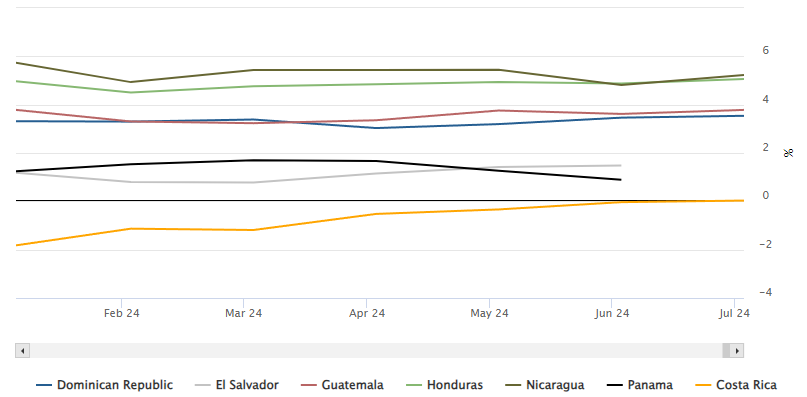
    Central America & Caribbean: inflation rate
    Percentage variation (year-on-year)

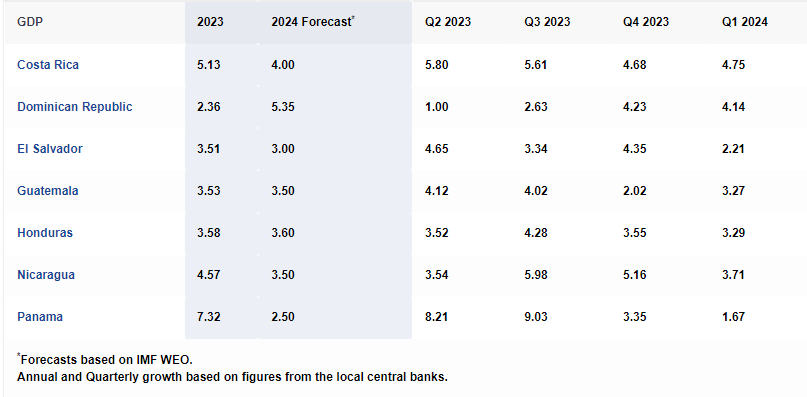
    Central America & Caribbean: GDP growth (%)
    Quarterly figures are year-on-year growth

  • Intelligence Research highlights - 7 September 2007

    LatinNews 08 September 2011 Hits: 6

    INTELLIGENCE RESEARCH HIGHLIGHTS

    TO: All Strategic Intelligence Forum members

    DATE: 7 September 2007

    The Strategic Intelligence Forum is part of the Intelligence Research group, and as a member of the Strategic Intelligence Forum I am very pleased to send you from time to time a selection of reports published recently by Intelligence Research Ltd that I consider to be of particular STRATEGIC significance. Please find below my latest selection of Intelligence Research articles:

    1. LATIN AMERICA: Neo-liberalism in Latin America: what has survived - Latin American Special Report, September 2007

    SUMMARY: The abandonment of neoliberalism in Latin America has become particularly strident since the tail-end of the 1990s, when Hugo Chávez was elected president of Venezuela. It is not, however, a new phenomenon: almost as soon as neoliberal policies - or 'reforms' as they were called by their proponents - began to be introduced, politicians began to campaign, if not for their outright rejection, at least for giving the policies "a human face". Much of the ensuing disillusionment with politics and politicians arose from neoliberalism not delivering what it had initially promised, and from the failure of critics to give it that 'human face'...

    Link to full article: http://www.latinnews.com/lsr/secure/sec.pdf

    2. COLOMBIA: Deep infiltration of military by narcos & Farc - Latin American Security & Strategic Review, August 2007

    SUMMARY: Between late July and early August the Colombian government has had to admit that its military have been seriously infiltrated by drug traffickers and guerrilla organisations for two purposes: to obtain sensitive intelligence about military operations and to recruit officers about to retire into an élite 'hit' team similar to Mexico's notorious Zetas. The investigation into the narco connection has already resulted in a wave of arrests, but the source of the intelligence leaks to the Farc does not appear to have been detected yet...

    Link to full article: http://www.latinnews.com/lss/LSS15134.asp?instance=2

    NOTE: Links to these - and other - reports can also be found in the Strategic Intelligence Monitoring Centre, which you may access on a 24/7 basis by going to www.stratintforum.com, logging in as a member, and selecting the Strategic Intelligence Monitoring Centre option.

    With best regards

    JKC de Courcy
    Chairman
    Strategic Intelligence Forum

    P.S. You may sign up for a free evaluation of any Intelligence Research Ltd services by visiting the following websites, or you may contact our Business Development Director: [email protected].

    www.intelligenceresearch.com
    www.stratintforum.com
    www.asiaint.com
    www.latinnews.com

  • RASTREANDO TENDENCIAS

    LatinNews 11 February 2013 Hits: 760

    BRASIL-ARGENTINA | Eliminando aranceles sobre importación de trigo. El 5 de febrero, el gobierno brasilero anunció que removía temporalmente el arancel del 10% aplicado a las importaciones de trigo desde fuera del Mercado Común del Sur (Mercosur). Esta es la última en una serie de medidas adoptadas por el gobierno de la Presidenta Dilma Rousseff como forma de mantener la inflación bajo control. El ministerio de desarrollo, industria, y comercio exterior de Brasil (MDIC) explicó que la decisión de suspender los aranceles desde el 1 de abril hasta el 31 de julio respondía al hecho de que hubo una caída en la producción de trigo en Brasil así como también en Argentina, de donde Brasil se abastece de una gran proporción de su trigo. El MDIC explicó que al eliminar los aranceles, la esperanza del gobierno era aliviar algunas de las presiones inflacionarias, pues la actual escasez había causado que los precios del cultivo básico se elevaran.

    De acuerdo con la asociación de la industria del trigo de Brasil, Abitrigo, que cita datos del instituto geográfico y estadísticas de Brasil (Ibge), la producción local ha sido afectada por el clima adverso en el sur del país lo que resultó en una caída del 23% en la producción general de trigo, de 5,69m de toneladas (t) a 4,37m t. Mientas tanto, Abitrigo señaló que la caída en la producción en Argentina había causado que el precio de las importaciones de trigo del vecino país trepara de US$245,68/t a comienzos del 2012 a US$330,85/t para diciembre. Abitrigo explicó que estos incrementos en los precios han tenido un importante impacto en el mercado brasilero, pues el 76,9% de las importaciones de trigo de Brasil provienen de Argentina. El año pasado estas importaciones llegaron a 5,06m t, con un valor de US$1,4mm.

    El ministerio de agricultura de Argentina ha indicado que mientras que el país produjo 13,8m t durante la cosecha 2011/2012, espera que la cosecha 2012/2013 será de 115m t, o un 16,6% menor. De acuerdo con el ministerio, esto se debe principalmente a cuestiones climáticas y al hecho de que el área plantada para el trigo se ha reducido un 20%, a 3,7m de hectáreas este año. Los productores de Argentina han señalado que muchos se habían mudado del trigo hacia otros cultivos debido a las dificultades que tienen en vender su producto con una ganancia en el mercado interno como resultado de las medidas puestas en vigencia en Argentina para controlar el precio del trigo en su mercado interno.

    REGION | TLC Mercosur-Canadá. El 5 de febrero el canciller de Uruguay, Luis Almagro, anunció que durante su presidencia pro-témpore del Mercosur, Uruguay intentará negociar un tratado de libre comercio (TLC) con Canadá. Almagro hizo el anuncio después de firmar un nuevo acuerdo de intercambio de información fiscal con la embajadora de Canadá en Uruguay, Claire Poulin. Según Almagro, la firma del nuevo acuerdo es parte de planes más amplios de parte de Uruguay de iniciar negociaciones sobre un TLC Mercosur-Canadá.

    Poulin manifestó que después de su visita a Argentina el año pasado, el ministro de comercio exterior de Canadá, Edward Fast, indicó que la profundización de los vínculos con economías de rápido crecimiento como aquellas del Mercosur, era un elemento clave en la política económica a largo plazo del gobierno canadiense. De acuerdo con cifras presentadas por Poulin, el comercio bilateral entre el Mercosur y Canadá  totalizó C$9,7mm (US$9,73mm) en el 2011. Esto podría proveer suficiente incentivo para países miembros del Mercosur (Argentina, Brasil, Paraguay, Uruguay, y Venezuela) para considerar la posibilidad de buscar un TLC con Canadá. Sin embargo, tales negociaciones con el Mercosur han sido notoriamente difíciles y el hecho de que Venezuela ahora se ha unido al grupo, mientras Paraguay permanece suspendido del mismo, sólo se agregará a las complicaciones. De hecho, cuánto progreso puede hacerse antes de que Uruguay pase la presidencia pro-témpore a Venezuela para mediados del 2013, aún está por verse.

    PARAGUAY | Descubrimiento de depósito de hierro. El 31 de enero, la firma minera EU-Chilena, Darmatal, anunció que había descubierto un importante depósito de hierro en el norteño departamento de Boquerón, en el Chaco paraguayo, cercano a la frontera con Bolivia. El vocero de Darmatal, Carlos Parra, explicó que la compañía había venido a Paraguay para hacer prospecciones en busca de petróleo, después el descubrimiento de petróleo el pasado noviembre en la región del Chaco Paraguayo [IL-12-47], armado con estudios preliminares conducidos por la firma petrolera de EU, Pennzoil, en los ’70. Sin embargo, dijo Parra, al realizar perforaciones en el terreno tropezaron con hierro, no petróleo.

    Darmatal cree que el depósito de “clase mundial” podría producir entre 5-10m de toneladas de hierro por año y ya ha expresado su interés de explotarlo al gobierno paraguayo. Según Parra, la firma buscaría hacer una inversión de US$2,5m. Parra agregó que la compañía no descarta la posibilidad de hallar otros minerales, como cobre y níquel.

    La producción minera de Paraguay actualmente es insignificante, y el ministerio de minas y energía ha confirmado que Darmatal ya ha presentado una solicitud para una nueva licencia a fin de conducir más esfuerzos de exploración en el área.

    • El crecimiento de Chile supera a los gastos

    El gasto total del gobierno central en el 2012 fue de US$58mm, un 4,7% más que en el 2011y menor que la tasa de crecimiento registrada por la economía chilena, del 5,5%. Las cifras fueron presentadas por la directora de presupuesto de Chile, Rossana Costa, quien dijo que este era el segundo año consecutivo en que el gasto público en Chile había sido menor al crecimiento económico, permitiendo al país mantener una muy sólida posición fiscal. Costa apuntó que el resultado permitió al gobierno reducir su déficit fiscal general a 0,6% el año pasado, gracias a menores gastos y altos ingresos fiscales, que se incrementaron un 4,8%. Pero el hecho de que el gobierno central otra vez no logró usar todas las asignaciones del presupuesto (el 97,6% de todos los fondos asignados fueron ejecutados) a pesar de las varias demandas sociales, podría exponer al gobierno a las críticas.

  • ECONOMIC HIGHLIGHTS

    LatinNews 19 February 2021 Hits: 1831

    Eurobond issue: On 18 January, Mexico’s finance ministry (SHCP) announced that it had issued two euro-denominated bonds worth a total of €1.8bn (US$2.1bn) in international markets. The two bonds offered were €1bn in a 12-year bond, and €800m in a 30-year bond. The SHCP said that demand for the securities reached €6.8bn, 3.78 times the original amount, with the operation involving 243 international institutional investors, which the SHCP highlights “reaffirms the confidence of foreign investors in Mexico”. According to the SHCP, the funds raised by the new bonds will be used to repurchase euro-denominated debt that matures in 2023, reducing repayment commitments by 36%. The ministry said that this is the first stage of a three-part refinancing operation, which aims to “improve the profile” of external market debt maturities, and to optimise the portfolio’s financial position.

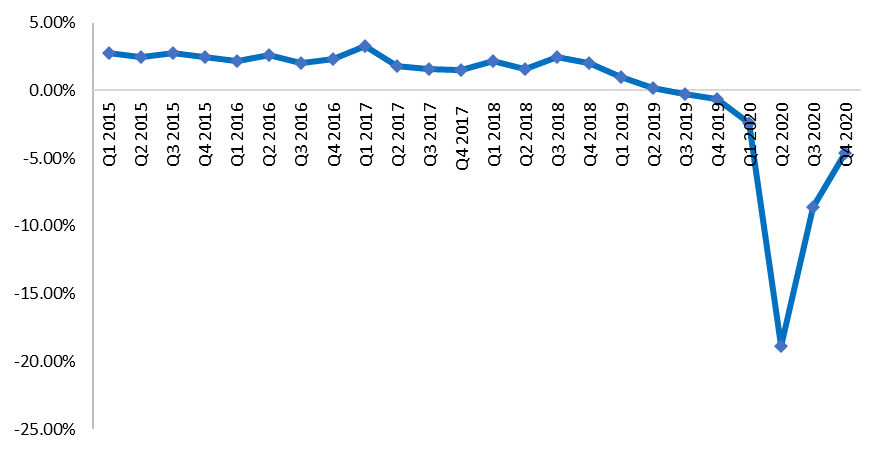
    Economic reactivation plan: On 19 January Mexico’s Economy Minister Tatiana Clouthier has unveiled a new economic reactivation plan to address the impact of the coronavirus (Covid-19) pandemic, which caused Mexico’s GDP to contract some 8% in 2020. The plan includes four strategic components: “the domestic market, jobs & business; facilitating investment; international trade; and regionalisation & sectors”. Regarding the first component, Clouthier revealed plans to work with innovative sectors, and “above all” the so-called ‘fourth industrial revolution’ based on the development of robotics, nanotechnology, biotechnology, and artificial intelligence. More generally, Clouthier said that her ministry is looking into how to increase “local added value” and revealed plans to work with the finance ministry (SHCP) to identify mechanisms to promote growth and to support small and medium-sized enterprises (SMEs). As regards investment and trade, Clouthier said that the government was looking into how to improve procedures and reduce investment costs, as well as how to promote Mexico’s trade interests and boost exports to existing and new markets. Regarding the final component, Clouthier said that the government was looking into the needs for economic reactivation in the country’s different regions and considering possible infrastructure projects to achieve this.

    Mexico: GDP Growth
    Percentage variation (year-on-year)

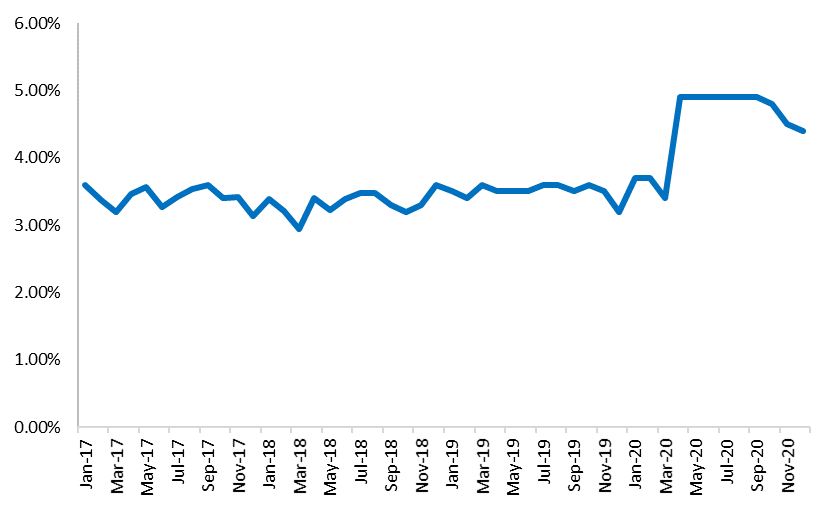
    Mexico: Unemployment Rate
    Econimically active population

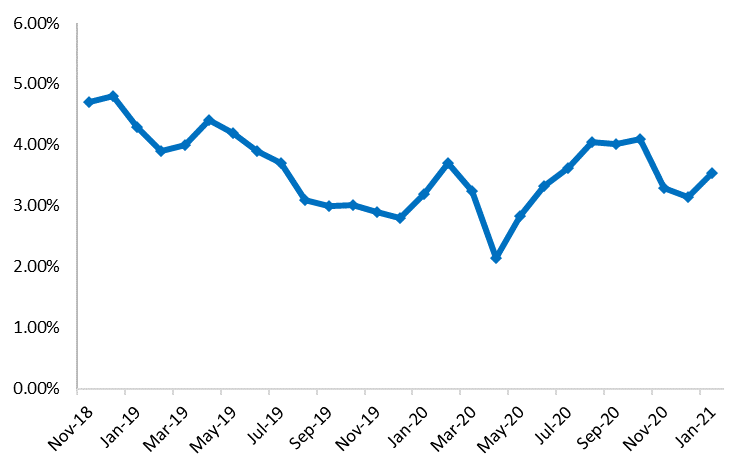
    Mexico: Inflation Rate
    Percentage variation (year-on-year)

  • REGION: A small step towards resolution of Mercosur stalemate?

    Patrick de Courcy 14 October 2021 Hits: 4209

    Argentina and Brazil, the two economic heavyweights in the Southern Common Market (Mercosur) regional trade bloc, have agreed to reduce the bloc’s high common external tariff (CET). Concessions were made on both sides in order to reach this agreement.

    The announcement was made following an 8 October meeting in Brasília between Brazil’s foreign minister Carlos França and his Argentine counterpart Santiago Cafiero, during the latter’s first trip abroad since taking up the post in September. According to a joint statement, Brazil and Argentina have agreed to reduce Mercosur’s CET by 10% (safeguarding existing exceptions, such as for automobile imports) and said they will work with Uruguay and Paraguay, the other members of Mercosur, to secure a “prompt agreement” from the bloc’s council. The tariff reduction “is an important step to increase the competitivity of member states and to strengthen regional production processes, in order to promote the beneficial insertion of Mercosur production in global value chains,” the joint statement reads. 

    The two countries have had to meet somewhere in the middle to reach this position. Bringing down the CET – which is high, averaging 14% – has been a priority for the Brazilian government led by President Jair Bolsonaro. When he took office in 2019, Economy Minister Paulo Guedes had ambitions to cut the CET by 50%. Meanwhile, under President Alberto Fernández, protectionist Argentina has opposed tariff reductions, fearing these will hurt domestic industry.

    That França and Cafiero managed to reach a consensus might seem all the more surprising given the rocky relationship between their respective governments. Presidents Bolsonaro and Fernández are scarcely on speaking terms, testament to their mutual antipathy. And in late September, Guedes pointedly suggested that if Argentina is unhappy with efforts to modernise Mercosur, it should leave the bloc. But the two neighbours have no choice but to sustain a working relationship, particularly as they both deal with the consequences of a severe drought.

    • Water crisis

    Foreign Ministers França and Cafiero also discussed the effects of the drought in the Paraná River basin and agreed to work together to “mitigate its effects on [fluvial] navigation, water use for human consumption, hydroelectrical generation, and the environment”. Linked to the energy impact of the water crisis, the two ministers stressed the importance of their cooperation on energy: Argentina is exporting thermoelectric energy to Brazil, allowing Brazil to save water in its reservoirs, “to the mutual benefit of both populations”. Meanwhile, discussions are underway for Brazil to supplement its energy supply by purchasing natural gas from Argentina.

    Although yet to be confirmed, the agreement on the tariff reduction is a much-needed jolt for the 30-year-old Mercosur, which has been paralysed with inertia and sometimes acrimonious discussions over its future [WR-21-13]. However, from Uruguay there is the view that Argentina has partially ceded to Brazil only to guarantee its support against Uruguay’s plans to flexibilise Mercosur rules on seeking free trade agreements (FTAs) with a third party.

    Mercosur members cannot currently pursue an FTA unilaterally, something against which Uruguay’s President Luis Alberto Lacalle Pou has campaigned relentlessly. Brazil has previously expressed its support for Uruguay’s efforts to revise and relax the rules on negotiating FTAs. 

    But Lacalle Pou is now in effect forcing the bloc’s hand on the issue: in September he announced that his government is moving forward on pursuing an FTA with China [WR-21-36]. By putting his fellow members before the fait accompli, he leaves them with few options: either they accept a change of rules, or they agree to pursuing an FTA with China as a bloc – something which Argentina, Brazil, and Paraguay all oppose to varying degrees and for different reasons.

    The alternative would be the disbandment of Mercosur, which is highly unlikely. Brazil’s current position vis-à-vis Uruguay’s push for more flexible trading rules may become clearer next week, when França is due to meet Uruguay’s foreign minister, Ernesto Bustillo.

  • Ruling FA succumbs to stresses and strains

    LatinNews 14 July 2011 Hits: 665

    President José Mujica fired his social development minister, Ana Vignoli, this week in the midst of serious internal tension within the ruling Frente Amplio (FA) coalition, pitting radicals against moderates. Vignoli hails from the Partido Comunista Uruguayo (PCU), which is stepping up its attacks on the government’s economic policy. The PCU dominates the country’s main trade union, Plenario Intersindical de Trabajadores-Convención Nacional de Trabajadores (PIT-CNT), which is threatening to stage a strike later this month over the government’s approval of a key “neoliberal” public-private participation law to help overhaul the country’s creaking infrastructure.

    Vignoli’s dismissal was the first cabinet change since Mujica took power in March 2010. It came shortly after the opposition, and parts of the FA, had denounced her ministry’s handling of plummeting temperatures in Uruguay, which claimed the lives of six homeless people. Mujica said that he did not expect his cabinet ministers to be perfect but he did expect them to throw their soul into the job. Daniel Olesker, the health minister and a member of the Partido Socialista (PS), replaces Vignoli. Mujica said Olesker was “more economically minded” than Vignoli (the clear implication being “less politically minded”) to help solve the country’s social problems. He said the amount of social spending the government intended to make meant that an economist was needed at the helm to improve efficiency.

    Mujica did preserve the delicate balance of party representation in his cabinet: Olesker’s deputy Jorge Venegas (PCU) picked up the vacant health portfolio. But, stripping the PCU of the social development ministry will have stung the party and looks very much like a call to order from Mujica. The PCU felt it owned the ministry because of its unswerving commitment to improve income distribution through focused social policies.

    Mujica denied it but it is difficult to dissociate the dismissal of Vignoli from the PCU’s open opposition to the government’s flagship public-private participation law. Congress unanimously approved the law this week but a PCU deputy walked out in defiance of the FA leadership, leaving his alternate, a member of Mujica’s Movimiento Participación Popular (MPP), to cast his vote instead. The PCU shares the PIT-CNT’s suspicions that the law will lead to privatisation of public sector companies by the backdoor. There is a power struggle between the PCU and the MPP which has been holding crisis meetings to come up with ways to buttress the Mujica administration.

    Mujica’s rebuke of the PCU is a clear gesture to his Vice-President Danilo Astori, the architect of Uruguay’s economic policy, whose chosen successor at the economy ministry, Fernando Lorenzo, has been on the receiving end of the PCU’s criticism. It is not clear whether Mujica obtained a quid pro quo from Astori to back his additional land tax on big landowners (publicly opposed by Astori) which would provide a sop for the PCU [WR-11-22].

    • Public-private partnership

    The public-private partnership (PPP) law will enable the state to attract private capital for infrastructure projects, such as building roads, bridges, prison facilities and schools. The PCU argues that the left-wing Frente Amplio coalition has always maintained that this “strategic sector” should be run by the state, and that the FA is betraying its roots. It suspects that the PPP is a stepping stone to full privatisation of public companies. President Mujica has long contended that one of the biggest obstacles to sustained development in Uruguay is deficient infrastructure.

  • COSTA RICA: New UCR survey points to deepening gloom

    LatinNews 30 September 2015 Hits: 2284

    A wide-ranging opinion poll carried out by the Centro de Investigación y Estudios Políticos (CIEP) of the Universidad de Costa Rica (UCR) in August and September found Costa Ricans increasingly pessimistic about the country’s future. Over 60% of respondents said the country was on a bad or very bad trajectory; a similar percentage rejected the government of Luis Guillermo Solís. Fears over the state of the country’s economy are on the rise: around 70% think the scenario is bad or very bad, with unemployment the chief concern. Amid the gloom, however, there are some positive points for the government, including broad support for fiscal reform, as long as it is accompanied by a crackdown on tax evasion.

    The telephone survey of 800 people was carried out between 10 August and 3 September. Over 80% of respondents said that their main source of information was the television news. Among the main problems cited, 29.4% mentioned unemployment, followed by the country’s high cost of living (18.3%) and the poor performance of the government (16.5%). Interestingly insecurity, a rising problem in recent years, was some way behind in the list of overall concerns, with only 9.4% citing it as their main worry.

    There has been a sharp spike in the number of Costa Ricans who feel worried about the country’s economic prospects. From April 2013 to April of this year, the number of those who believed Costa Rica’s economic situation is bad remained at around 40%. In the most recent survey, however, that number has risen to 48.6%. The number of those who describe the situation as “very bad” also rose, from 19.9% in April to 23.3% now. A majority (55%) believe the country’s economic situation is worse than it was one year ago.

    In terms of the country’s institutions, the UCR poll found that the UCR was the Costa Rica’s most valued. Other public universities also fared well, as did the Judicial Investigation Department (OIJ), a branch of the country’s supreme court. The government languished near the bottom of the table, beaten only by the low opinion respondents have of Costa Rica’s legislative assembly.

    In contrast to the overall assessment of the Solís administration, the government’s handling of foreign affairs was broadly supported. Just over 48% of those surveyed thought the administration was doing a good job, versus just 15.1% who thought it was doing badly. Opinion was much more evenly divided on the government’s handling of its permanently difficult relations with its northern neighbour, Nicaragua. While 27.3% thought it was doing a good job; 30.4% disapproved. Those who disagree with the government’s approach want to take a more aggressive tack with Nicaragua over its border disputes. Those who approve endorse the Solís administration’s more diplomatic tactics and use of international bodies, such as the International Court of Justice in The Hague.

    The government is in the midst of attempting to push through a tax reform in order to try to tackle the country’s widening fiscal deficit. But the opposition-dominated congress is unwilling to back any tax rises without significant spending cuts. The survey, however, showed broad public support for tax reform, providing it coincided with an effort to crackdown on tax evasion. In that scenario, 64% of respondents would approve of tax reform. A more progressive tax system, one in which those who earn the most bear the most of the tax burden, was supported by 74.4%. Close to 90% of those questioned would also back the tax reform if it resulted in improved public services.

    • Same-sex marriage sidelined

    The government of Luis Guillermo Solís was obliged to sideline a legislative project to legalise gay marriage due to the expiry of the bill’s legal time-frame. The technical obstacle allowed the government to avoid implementing an unpopular measure: the UCR survey found that over 60% of Costa Ricans disapprove of same-sex marriage, while 34% endorsed the idea.

  • Peru: Potato troubles

    LatinNews 13 February 2018 Hits: 679

    Protests and clashes spread out across parts of central Peru in early February, as farmers reacted to a fall in potato prices. As a result of demonstrations, roadblocks and ensuing clashes between farmers, police, and truck drivers, two people were killed. By 5 February potato growers from Junín, Pasco, Huancavelica, Ayacucho, and Apurimac had ended their strike following the announcement of government concessions. But farmers from Huánuco were still holding out, saying that they were not party to the deal.

    On 1 February the agriculture ministry, in a bid to end the protests, said it would buy stocks of unsold potatoes at a price of one Sol (US$0.31) each potato, and up to a maximum of 7,000kg per farm. Agriculture minister José Arista said this concession would cost the government around PEN50m (US$15.6m) and was being made on the understanding that all roadblocks would be lifted. Arista said political issues were inter-twined with the farmers’ economic protest, as many farmers’ leaders were also candidates in upcoming local elections. The ministry said it was looking in to the feasibility of other measures to help the farmers. These included a reduction in administrative charges on potato sales in the Lima wholesale market; easier access to credit; and a review of import tariffs on frying potatoes.

  • TRACKING TRENDS

    Abbi Dicker 04 December 2025 Hits: 498

    BRAZIL | Industrial production up in monthly terms. The national statistics institute (Ibge) reported on 2 December that the country’s industrial production registered a monthly rise of 0.1% in October, although in year-on-year terms production was down 0.5% compared with October 2024. The accumulated production in the 12 months through October 2025 was up 0.9% on the preceding 12-month period. Of the 25 product categories measured by the Ibge, 12 saw a monthly rise in production.

    BRAZIL | Oil and gas production increases. The federal oil and gas regulator (ANP) released new figures on 2 December showing that national production of oil and natural gas totalled 5.26m barrels of oil equivalent per day (boepd) in October. This is a record monthly figure, surpassing the previous record of 5.16m boepd registered in July this year. Oil production totalled 4.03m barrels per day (bpd) in October, up 2.9% year-on-year, while natural gas production totalled 194.78m cubic metres per day (m3/d), up 22.5% compared to October 2024.

  • ARGENTINA: La huelga de los maestros continúa sin aplacarse

    LatinNews 28 March 2014 Hits: 470

    Los representantes del gobierno de la provincia de Buenos Aires no lograron llegar a un acuerdo con los sindicatos de maestros en huelga, el 26 de marzo. Miguel Díaz, el líder de un sindicato provincial de maestros (UDOCBA), dijo ante los periodistas que la administración del gobernador de la provincia, Daniel Scioli, no presentó una nueva propuesta, agregando que “ellos solamente nos prometen que continuarían discutiendo y negociando de nuevo en septiembre”. Los sindicatos están exigiendo un aumento salarial del 35%; hasta ahora, el gobierno ha ofrecido sólo un 30,9% pagable en dos plazos.

    Hablando luego de romperse otra ronda de conversaciones, Díaz dijo: “Ellos deben otorgarnos 6.400 pesos [US$800] que es lo que exigimos. El gobierno tiene los recursos  para igualar las ofertas salariales en Santa Fe, Capital, y Córdoba”. En respuesta la ministra de educación de la provincia, Nora de Lucía, urgió a los maestros a que retornen a sus aulas y cumplan con la orden judicial emitida por el juez provincial, Francisco Terrier, el 23 de marzo.

    El juez confirmó que la oferta del gobierno consiste en un aumento del 30,9% en dos plazos, con la posibilidad de reiniciar las negociaciones hacia agosto. “Nosotros le enseñamos a todos nuestros alumnos como ejercer sus derechos y por eso es que debemos dar el ejemplo”, dijo De Lucía, habiendo fracasado en convencer a los maestros a que pongan fin a la huelga.

    Roberto Baradel, el líder del Sindicato Unificado de Trabajadores de la Educación de Buenos Aires (Suteba), por otro lado, también confirmó la continuación de la huelga y subrayó: “Hemos venido a esta negociación con una propuesta del 35% y hemos recibido la repetición de la oferta anterior”. Los sindicalista pidieron una “propuesta dignificada” de las autoridades provinciales, sosteniendo que los maestros estaban dispuestos a encontrar una solución. “Sabemos todo acerca de los inconvenientes que esto ha creado, pero para que abran las escuelas, deben garantizarse salarios dignos”, Baradel declaró.

    Buenos Aires es la provincia más populosa de Argentina, y alrededor de 3,5m de alumnos están siendo afectados por la huelga, que comenzó el mismo día en que estaba programado el inicio del año escolar el 5 de marzo. Pese a la orden judicial que ordena a los maestros a que vuelvan a sus tareas, la huelga continúa. El inicio del año escolar en el 2013 también fue retrasado por una huelga de maestros por niveles de pago.

  • NICARAGUA: Financial sanctions a risk

    LatinNews 16 May 2018 Hits: 561

    The most widespread civil unrest in decades, and the brutal response of the security forces, has exposed the Frente Sandinista de Liberación Nacional (FSLN) administration led by President Daniel Ortega to fierce international condemnation, ranging from the Vatican and the European Union (EU) to the White House. 

    While Ortega quickly moved to repeal the unpopular reforms to the social security system (INSS) that ignited the discontent [see our sister publication Latin American Weekly Report for further discussion, WR-18-16] the protests have snowballed to include demands for a crackdown on corruption, democratic reform and even Ortega’s resignation. Corruption – including in the INSS itself – was a critical driver of the pent-up public anger at the government.

    This could have serious implications for the government’s efforts to encourage much-needed foreign investment into the country under the banner of its low-cost, business-friendly and (to-date) stable operating environment.

    Most significantly, following the robust US government response, Capitol Hill may now see fit to implement the Nicaragua Investment Conditionality Act (NICA), which would impose a damaging embargo on new multilateral lending, and could upset the externally-dependent country’s fragile financial stability.

    Most observers think Ortega’s departure is unlikely at this point, albeit the situation remains volatile. He and the FSLN still wield very strong institutional control, including of the 92-member unicameral legislature, the judiciary, and the military. However, the country’s influential Catholic bishops and leading private sector chambers, including COSEP, have distanced themselves sharply from the presidential couple, signalling an unprecedented break in the longstanding working relationship between the FSLN government, the Church hierarchy, and the business sector.

    As such, Ortega and the ruling FSLN now will be under intense pressure to move beyond the largely-cosmetic political reforms implemented to date – which were primarily aimed at preventing implementation of the NICA Act – towards more meaningful gestures in support of institutional change in the country.

    With the protest movement emboldened, and the formal political opposition lacking space in the national assembly protracted civil unrest is now possible.

    Nicaragua, Latin America’s second-poorest country in GDP per capita terms (after Haiti), has been one of the fastest growing economies in the region. Unlike his left-wing counterparts in Venezuela and Ecuador, Ortega has taken an orthodox macro-economic policy stance since returning to office in 2007, and has implemented a largely business-friendly administrative, legal and regulatory framework. The government works proactively to encourage Foreign Direct Investment (FDI).

    While strategic ally Venezuela was a key economic and financing partner between 2007 and 2015/16, the Ortega government also made sure to maintain a reasonably diversified portfolio of external investors and trading partners, led by the US – traditionally the country’s main commercial partner. Annual FDI inflows have averaged US$874m since 2011, significantly up from just US$394m on average in 2005-2009.

    Now that preferential cooperation from Venezuela has all but dried up, the country is heavily reliant on multilateral lending for its financing needs. Despite the drop in Venezuelan financing and cooperation, Nicaragua’s fiscal position was adjudged stable by the International Monetary Fund (IMF) in its latest review of the country in February. On the (preliminary) IMF estimates, the consolidated public-sector (CPS) deficit was stable at 2.5% of GDP in 2017. Total fiscal revenues (excluding grants) were worth around 28% of GDP, versus expenditures of almost 32%. As the Fund put it, “a continuing deterioration in the financial position of the INSS was partially mitigated by slightly lower budget deficits for the central government and the main municipality of Managua”.

    Nonetheless, the Fund noted that it expected the CPS deficit to rise to 3.3% of GDP in 2018 – pressured by rising oil import costs – and with efforts to trim central government spending offset by planned capital expenditures elsewhere (largely on infrastructure and transport development, in support of the country’s bid for more foreign investment).

    The national tax law was updated by the FSLN government in December 2014 to modernise and simplify the tax system, with changes to income and capital gains taxes and reforms to broaden the tax base and improve collection. Other recent adjustment measures have focused on better targeting electricity subsidies and eliminating some VAT exemptions.

    The IMF noted that the authorities appeared “fully aware” of the need to create fiscal buffers for Nicaragua’s small, open and oil import-dependent economy. To this end, the aim was to trim expenditure, rationalise subsidies (largely for utilities) and – most importantly – reform the INSS.

    The public-sector debt ratio was an estimated 42.6% in 2017, which, the Fund noted, is relatively high given the country’s limited debt servicing capacity. Largely comprising non-concessional lending from multilateral lenders, the IMF said it expected the ratio to remain stable, thanks to steady economic growth of about 4%, with no immediate payment risks on the horizon.

    External ratings agencies agreed. In July 2017, Moody's reaffirmed its B2 rating for the sovereign, and improved its outlook to ‘positive’ from ‘stable’, citing “fiscal stability and favourable economic prospects relative to peers”, as well as “orthodox policy moves to protect against external risks”.

    Yet political risk is never far away in Latin America, something the IMF and external agencies either fail to spot – or properly take account of – time and time again. And certainly, US approval of the NICA Act could result in substantial fiscal and balance of payments risk, as outlined below.

    Investing in infrastructure

    With significant multilateral support, Nicaragua has been investing heavily to improve its infrastructure, with a particular focus on transport. With a US decision on the NICA Act still up in the air, the Ortega government has been keen this year to quickly expedite approval of pending credits from regional and other multilaterals. On 10 April, the national assembly fast-tracked approval of a US$238m highway infrastructure loan from the Central American Bank for Economic Integration (Cabei) for instance, creating some consternation in the opposition about a lack of proper debate around the loan.

    Box Deficit

    As a fuel import-dependent country, Nicaragua has traditionally run a structural current account deficit of up to 10% of GDP. This, in turn, has been funded by multilateral lending and annual remittance inflows, also worth around 10% of GDP. More recently, rising FDI has also helped to finance the current account gap. Growing agricultural exports, rising tourism receipts and higher remittance earnings helped offset the impact of higher oil prices in 2017, allowing the current account deficit to decline sharply to 6.1% (from 8.6% in 2016), on IMF estimates. Growth in the maquila sector (which operate within Special Export Zones), as well as new mining developments, is also driving export growth. However, rising oil prices will weigh on import costs in 2018-2020, pushing the current account deficit back up. Thanks to its safe reputation (Nicaragua had the fourth-lowest homicide rate in Latin America in 2017), the tourism sector is going from strength-to-strength, underpinning a services account surplus. The transfers surplus, which rests on remittances, could be at risk of changes in US immigration policies. Absent these critical dollar inflows, Nicaragua would become even more dependent on international lending to finance its external deficit.

    The controversial INSS changes, announced on 16 April, would have increased both worker and employer payments, lifting costs for the thousands of small and medium-sized companies (SMEs) that account for the vast majority of companies in Nicaragua, while reducing future pensions, sick pay, and maternity benefits. While the IMF has had regular access to Nicaraguan authorities and government policymakers under Ortega, it is unclear as to whether the Fund had any input into the particulars of the INSS reform in this instance. It has not commented on the latest political and social crisis in the country.

    The intense public anger at the reform announcement was torch-lit by the fact that the INSS has been at the centre of extensive corruption problems since 2011, linked to the FSLN and Ortega’s cronies, resulting in a gaping black hole in the system. The proposed reform thus was not merely galling but, as it turned out, the final straw for many. Indeed, while the president was quick to retract the reform, it may yet come to be seen as a fatal political misstep by Ortega and his wife and powerful second-in-command, Vice President Rosario Murillo.

    Young Nicaraguans – disillusioned and rebellious

    To consolidate its fiscal position for the long term (and that of the INSS), Nicaragua will also need to better educate and gradually formalise its labour force, the IMF notes. Despite a young population and steady increases in primary and secondary education enrolment rates in recent years, vocational training and tertiary education levels remain quite low, and there are limited opportunities for new labour market entrants. While the government has sought to create employment through FDI, most positions are low skilled.

    Moreover, the country’s minimum wage range is the lowest in Central America (the lowest rate in 2017 was US$123/month, for agricultural workers). Exacerbating this, the high rate of dollarisation in the country erodes real earnings.

    The central bank (BCN) in October 2017 reported an official unemployment rate of just 3.8% but reported under-employment of 43.7%. And it is clear that the official youth unemployment rate of 10% would be higher but for emigration. Nicaragua’s labour informality rate is very high, at roughly 70%. According to COSEP, about 80% of businesses also operate informally.

    Investors likely to steer clear

    Mounting accusations of serious abuses against civilian protestors by the state security forces (and loyalist militant armed groups), almost certainly will result in legal actions at the Inter American Court of Human Rights (IACHR), risking lasting reputational damage to the government, and a curb on investor sentiment towards the country. It is also the case that any foreign businesses and investors that have signed deals with the Ortega government in recent years may also run the risk of being perceived as ‘complicit’ in unlawful or extra-judicial killings, potentially damaging their reputation in Nicaragua and elsewhere, and almost certainly deterring other investors from entering the country for now until the situation clears, and until the US position on the NICA Act is clarified.

  • CHILE: Military seeks to reassure on various fronts

    LatinNews 15 November 2018 Hits: 3700

    Chile’s military has conducted the biggest overhaul of its high command since the return to democracy in 1990. The changes, which were linked to a major corruption scandal, come days after a former commander-in-chief of the army, Juan Emilio Cheyre (2002-2006), became the most senior figure to be convicted of human rights crimes committed under the dictatorship led by Augusto Pinochet (1973-1990). Chile’s military published a statement in the local media stating that its new command comprises officials who entered military school between 1980 and 1988 and so have “no links” with human rights violations committed under Pinochet.

    Cheyre sentenced

    On 9 November Mario Carroza, an investigating judge, convicted Cheyre to three years and a day under house arrest for complicity in the deaths of 15 people during the early days of the Pinochet dictatorship. With 10 others sentenced, Cheyre was convicted in relation to the notorious ‘Caravan of Death’, a military death-squad charged with eliminating opponents of the military regime.

    • Human rights

    Human rights groups such as Agrupación de Familiares de Ejecutados Políticos (Afep) welcomed the decision against former commander-in-chief of the army, Juan Emilio Cheyre (2002-2006), albeit while complaining that it did not go far enough.

    The conviction comes, however, amid mixed messages regarding the military and justice which have emerged since President Sebastián Piñera and his right-of-centre Chile Vamos coalition government took office in March.

    Earlier this year, the Piñera government trumpeted convictions for the murder of singer-songwriter and political activist Víctor Jara, one of the most emblematic human-rights violation cases that took place under Pinochet, as evidence of progress with regard to addressing past impunity. Yet in June Piñera faced major controversy over his decision to pardon a late, retired army colonel, René Cardemil, convicted in 2013 of the murder of six people during the dictatorship – the first time a presidential pardon has been given to someone condemned for human rights violations.

    Piñera similarly courted controversy over human rights with his call in August for the creation of a ‘museum of democracy’, accusing the government under President Salvador Allende (1970-1973) of having “validated violence and undemocratic mechanisms” [WR-18-33]. Meanwhile, his choice of Mauricio Rojas as culture minister in August also raised eyebrows – Rojas was forced to quit just four days into the job over past remarks about the museum of memory and human rights in Santiago.

    Overhaul of military high command in Chile

    The reassurances offered by the military were in response to changes to the military high command announced on 8 November which saw 21 generals go into retirement. The changes were linked to the investigation into the wider corruption case involving the military known as ‘Milicogate’ which first made headlines in 2015.

    The allegations related to a corruption ring involving officers and other military personnel suspected of embezzling millions of pesos of state funds between 2010 and 2014 under the first Piñera administration. Those implicated include John Griffiths, the second-in-command in the Chilean army, who resigned on 16 October in relation to the case. Griffiths faces charges concerning irregularities that he allegedly committed between 2009 and 2015 in relation to five trips he carried out to the US, along with his family, costing a total of Cl$44m (US$65,000).

    In a statement in response to the announced changes, Defence Minister Alberto Espina said it would be “incorrect and unjust to deduce that all the generals called into retirement are involved in the incidents currently under investigation”. Espina did acknowledge, however, the “particular judicial situation” facing the military.

    • Jara

    In July nine retired military officials received prison sentences for the 1973 deaths and kidnappings of the singer-songwriter and political activist Víctor Jara and the then-national director of prisons Littré Abraham Quiroga Carvajal. The court also ordered the state to pay US$1.2m in compensation to the families of the victims.

  • The crusade against 'cultural Marxism'

    LatinNews 17 January 2020 Hits: 1365

    One of the principal criticisms that Bolsonaro levies at the leftist PT administrations that preceded him is their ideologisation of government agendas. And yet, despite his claims to the contrary, Bolsonaro has gone on to do the same, merely shifting the ideological bias to the right. 

    Education

    The education ministry (MEC) stands out as one of the principal victims of these ideological culture wars. The first education minister, Ricardo Vélez Rodríguez, a Colombian philosopher naturalised Brazilian, was forced to resign in April after failing to contain disputes between the military and ideologue factions in his ministry. His replacement Abraham Weintraub has equally failed to distinguish himself, attracting the ire of students, teachers, and education organisations with his comments frequently dismissing Brazil’s (well-regarded) public universities as hotbeds of communism and depravity.

    A project to increase the number of military schools and an ill-designed policy to encourage alphabetisation have formed the bulk of the MEC’s work under Weintraub. With Brazil lagging in international ratings, particularly where primary education is concerned, the education sector is worried that the current administration’s failure to implement needed reform will have lasting consequences.

    Foreign policy

    The foreign ministry (Itamaraty) has been leading the charge on the ideological agenda, under the aegis of foreign minister Ernesto Araújo, a self-confessed anti-globalist who is an admirer of US President Donald Trump and considers climate change to be a Marxist plot.

    Pragmatism has sometimes prevailed, as has been the case over relations with China (which have come a long way since Bolsonaro accused the country of buying up Brazil during his election campaign) and, more recently, Argentina under new President Fernández. But overall, ideological alignment has been the driving force behind the current administration’s foreign policy. Bolsonaro has shown a clear preference for building ties with populist strongmen who share his conservative views, such as Trump in the US and Hungary’s Prime Minister Viktor Orbán, and picked fights with foreign leaders who criticise him, such as France’s President Emmanuel Macron. 

    Brazil has also shifted its position in international fora. Bolsonaro’s attack on globalism during his speech at the United Nations General Assembly (UNGA) in September and the Brazilian delegation’s reportedly aggressive and unconstructive negotiations at the COP25 climate talks in December crystallise this. The country’s image has taken a hit as a result, and Brazil has for now lost its reputation as a respected and pragmatic player in multilateral discussions.

  • BRAZIL: Police brutality in São Paulo

    LatinNews 07 February 2020 Hits: 1354

    Brazil’s police force is notoriously violent, with the high number of homicides committed by the police in Rio de Janeiro usually held up as an example of this. The phenomenon is not restricted to Rio city and state, however. São Paulo, the country’s largest metropolis with a very low (by Brazilian standards) homicide rate of 5.47 deaths per 100,000 inhabitants, is also suffering from a surge in police brutality.

    • Rio’s homicide statistics

    Rio de Janeiro state’s Instituto de Segurança Pública (ISP) has released crime statistics which show a persistent and sharp increase in lethal police violence over recent years. The homicide rate for deaths at the hand of the police in the state stands at 10.5 deaths per 100,000 inhabitants in 2019, up from 3.9 deaths in 2015 and 6.6 in 2017, the year wilful homicides and overall lethal violence peaked at a rate of 31.6 and 40 deaths per 100,000 inhabitants, respectively. The rate for wilful homicides fell to 23.2 deaths per 100,000 inhabitants in 2019. Public security experts stress that the drop in violent crime cannot be attributed to increased police lethality.  

    On 1 December 2019, nine young people aged between 14 and 23 years old were trampled to death during a ‘baile funk’ party in Paraisópolis, one of São Paulo’s largest favelas. The confusion which led to the deaths was the result of an operation by the military police (PM), who reportedly entered the baile funk in pursuit of armed individuals, and allegedly used rubber bullets and tear gas against partygoers in self-defence.

    Police accounts of what happened of course differed from those of residents and partygoers, who say the police ambushed them and used unnecessary force. But the operation was met with widespread criticism of police tactics, and notably of their systemic criminalisation of favela culture. The police officers concerned have been confined to desk duty while an investigation into their actions is underway, and São Paulo state governor João Doria was eventually forced to admit that a review of police protocols was necessary.  

    The tragic episode opened up an opportunity for dialogue between favela residents and the authorities over policing tactics, as well as drawing attention to the Brazilian police’s socio-racial bias in their use of excessive force – which is increasing, even as crimes in general are falling. Data released by the São Paulo state public security secretariat on 24 January shows that the state recorded 2,778 homicides in 2019, its lowest figure ever and down from 2,949 in 2018. The homicide rate for the whole state now stands at 6.27 deaths per 100,000 inhabitants. However, deaths at the hands of the police have increased by 11.9% to a total of 733 in 2019.

    The first weeks of 2020 have also seen incidents of non-lethal police brutality. Human rights groups denounced the police’s response to protests demanding free public transport in São Paulo city, organised by the Movimento Passe Livre (MPL) throughout the month of January and which have been marked by the police’s rough handling of demonstrators and arbitrary detentions.

    Following repression at an MPL demonstration on 16 January, human rights organisations Article 19, Conectas Direitos Humanos, the São Paulo state council for the defence of human persons (Condepe) and the Instituto Brasileiro de Ciências Criminais (IBCCRIM) released a statement in which they “strongly condemn the police violence used against protestors and communicators”, noting in particular the use of force against women and raising concerns over the impact of this violence on the freedom of expression and right to demonstrate.