All Categories

Subcategories

  • GUATEMALA: Morales’ anti-corruption pledge under unprecedented scrutiny

    LatinNews 12 October 2016 Hits: 942

    The possible implication of President Jimmy Morales’ son, José Manuel, and brother, Samuel Everardo, in a corruption scandal is serving as just one of various complications for the President whose Frente de Convergencia Nacional (FCN-Nación) government took office in January after winning the 2015 election on an anti-corruption platform.

    Known as the ‘Botín Registro de la Propiedad’ case, the scandal broke on 1 September when Attorney General (AG) Thelma Aldana and the head of the United Nations-backed International Commission against Impunity in Guatemala (Cicig), Iván Velásquez, revealed the existence of a criminal structure in the national property registry office (RGP) under the previous Partido Patriota (PP) government led by Otto Pérez Molina (2012-2015), who was forced to resign last year over corruption. According to Aldana and Velásquez, the criminal structure comprised at least 27 people. So far 22 people have been arrested, including a former RGP director, Anabella de León. According to a Cicig press release, the investigation is looking into the creation of false employment posts (for which more than Q$3m [US$399,000] was paid out), and anomalous payments worth some Q$150,000.

    The problems for President Morales, however, came with a subsequent press release issued by Cicig on 13 September which noted that his son and brother had appeared before investigators at the specialised AG unit against impunity (Feci) on 7 and 12 September respectively over false invoices allegedly presented for reimbursement worth Q$90,000 to benefit a restaurant, Fulanos y Menganos, for a meal which had not taken place. On 15 September, public ministry (MP) spokesperson, Julia Barrera, announced that an order had been issued, prohibiting both Morales’ son and brother from leaving the country.

    At the time, local investigative daily elPeriódico reported that the restaurant owner of Fulanos y Menganos was Gilmar Othmar Sánchez, an FCN-Nación legislator for the Central American parliament (Parlacen), whose friendship with Morales, (a former actor and comedian), dates back to the time when he would perform at the restaurant, with his brother.

    These are not the only corruption-related problems facing President Morales who has assured reporters that he will not intervene in the investigation. An interview with Aldana, published by the Spanish language version of the New York Times (NYT) on 30 September, reported that Jafeth Ernesto Cabrera Cortés, the son of Vice-President Jafeth Cabrera Franco, was being investigated over reports that he had allegedly requested money and an armoured vehicle from a local drug trafficker, identified by other local media as Marlon ‘El Fantasma’ Francisco Monroy. Three days earlier, national daily Prensa Libre cited the head of the AG’s electoral crimes unit, Óscar Schaad, as saying that the AG was investigating some of the FCN-Nación founders for irregular campaign financing as a result of some “pending legal cases”. The daily also reported that the AG is currently analysing the possibility of investigating a campaign donation from Cabrera Jr.

    Meanwhile, the ruling FCN-Nación, which has 37 seats in the 158-member unicameral legislature, ahead of the main opposition Unidad Nacional de la Esperanza (UNE) which has 31, is also under pressure after the supreme court (CSJ) announced on 2 September that it had requested legal action against eight FCN-Nación legislators. The request came two days after the CSJ called for the deputies’ immunity from prosecution to be stripped in relation to accusations of discrimination, abuse of authority, extortion, and influence trafficking presented by the indigenous governor of Alta Verapaz department, Estela Ventura. The allegations related to an incident which took place in May 2016. Ventura, who the local media report has since retracted her complaint, had accused the legislators of attempting to get her to award contracts to companies with which they had ties, claiming that when she refused they insulted her, reportedly calling her a “stupid Indian”.

    Judicial reform initiative presented

    On 5 October, President Morales; the president of the national legislature, Mario Taracena (UNE); and the president of the judiciary, Ranulfo Rojas, unveiled a judicial reform initiative before congress which would reform 20 articles of the 1985 constitution and six transitory articles.

    A congressional press release notes that the reforms are based on five structural issues: recognition of the legal system of indigenous peoples (who account for 44% of the population on national statistics institute figures); guarantees and principle guidelines for the system of justice administration; separation of administrative and jurisdictional functions of the supreme court; creation of a professional career path for justice officials; and strengthening the mechanisms for the exercise of power through adopting a system of inter-organic control for the selection of the highest judicial authorities.

    The proposed reform initiative, which Taracena trumpeted as an unprecedented sign of coordination between the three branches of government, is the culmination of a national dialogue process launched at the end of April with the technical assistance of the AG, Cicig, the human rights ombudsman, and the Office of the UN High Commissioner for Human Rights (OHCHR) in Guatemala among other organisations.

    The proposal now goes to congress for discussion before being submitted to a popular referendum.

    • Valdés

    The election on 26 September of supreme court (CSJ) magistrate Silvia Patricia Valdés Quezada as the new CSJ president for 2016-2017 has been slammed by local civil society groups after she responded to a 14 September tweet by Carmen Aída Ibarra, the director of ProJusticia, a local human-rights group, that was critical of President Morales. According to the local press, Valdés came to Morales’ defence, tweeting in response to Ibarra’s remarks “He is trying to do things well. Leave him to govern in peace. As if he were Harry Potter with a magic wand!” which has left these civil society groups questioning her impartiality. Valdés takes office on 13 October.

    • Another scandal

    On 27 September AG Thelma Aldana and Cicig’s chief Iván Velásquez announced the discovery of another criminal structure under the previous Partido Patriota (PP) administration led by former President Otto Pérez Molina (2012-2015) which dealt in contraband. Known as ‘El Bodegón’, the case dates back to 2014, when the PP government declared a state of calamity due to heavy rains and flooding. The scandal involves a local company Empacadora el Bodegón, which sold the government some Q$492.93m (US$65m) worth of contraband corn and beans, some of it unfit for human consumption. So far eight people have been arrested in relation to the case for illicit association, contraband, dereliction of duty, and money laundering, including former agriculture minister Elmer Alberto López Rodríguez.
  • THE BAHAMAS: Opposition disarray ahead of general election

    LatinNews 17 January 2017 Hits: 879

    The Bahamas is due to hold a general election no later than May this year. On the face of it, the Progressive Liberal Party (PLP) government led by Prime Minister Perry Christie has a difficult economic record to defend, but the opposition Free National Movement (FNM) is in considerable disarray, with a split between the parliamentary party and the party in the country over the leadership.

    The PLP won the 2012 election by a sizeable 29-9 seat majority, ousting an FNM government led by then-prime minister Hubert Ingraham. Ingraham had led the FNM to a 21-19 victory in the 2007 election and had previously served as prime minister from 1992-2002. However, he went into the 2012 election with unemployment at 15% and following a 30% rise in the number of murders in 2011. On the other hand, GDP growth in 2012 was 3.1%.

    The economic cycle has not treated the PLP well. The country experienced zero growth in 2013 and suffered two years of contraction in 2014 (-0.5%) and 2015 (-1.7%). Many of the economic problems have been caused by the travails of the Baha Mar megaresort, with a close-to-direct hit from category four Hurricane Matthew in September 2016 completing the misery.

    This was all reflected in a downgrading of the country’s sovereign credit rating to ‘junk’ status by Standard & Poor’s in December. In what was the fourth downgrade from a major ratings agency since the current Christie administration took office, S&P dropped the credit rating to “BB+/B” from “BBB-/A-3”. It also threatened to lower the rating further over the next two years if public finances continue to deteriorate. However, the country’s outlook was raised from negative to stable, partly no doubt because of the planned phased opening of the Baha Mar resort following its emergence from bankruptcy and the finding of a purchaser.

    Just before Christmas the prime minister announced that the resort had been sold to CTF BM Holdings, a subsidiary of Hong Kong conglomerate Chow Tai Fook Enterprises Ltd (CTFE). One of the positives about the new agreement was the settling of nearly 2,000 claims by laid-off workers and hundreds of claims by unpaid suppliers. Making the announcement, Christie said that he expected 1,500 people to be hired by the resort in the New Year and that a phased opening would begin in April 2017.

    There is continuing controversy, however, with the news that the government has exempted the resort’s lead construction company, China Construction America (CCA) Bahamas Ltd, from paying value added tax (VAT). All subcontractors and suppliers of CCA have been told by the government that they have the benefit of the full exemption and need not include VAT in any invoices related to work on Baha Mar.

    The FNM’s response has been to describe the deal with CTFE as being “of questionable value for the Bahamian people”, noting that the government has also waived stamp tax on the deal. The original developer of the resort, Sarkis Izmirlian, added his own criticism. He was quoted in the local media as saying: “What is the country getting from this deal? Don’t say jobs, because we need more than that after giving away 1,000 acres of Crown land, beachfront property, to a Communist state which now has complete control over our tourism product. It’s clear as day that the Chinese got everything they wanted to facilitate an opening right before the general election.”

    The government says that the VAT exemption was a justifiable trade-off for the US$100m that had been allocated to settle some 2,000 claims by unpaid subcontractors and former Baha Mar employees. The government adds that 1,500 people are due to be hired in early 2017 to work on the project, and a phased opening will begin in April.

    The FNM’s chances of capitalising on the PLP’s mixed economic record appear to have been significantly reduced by a vitriolic contest for the leadership of the party. The official party leader remains Dr Hubert Minnis, who took over from Ingraham. There was a challenge to his position in the summer which was meant to have been resolved by bringing forward the party’s convention from November to July. The three-day convention duly opened on 27 July in the full expectation that a vote would be taken on the leadership. But then, on the third day of the convention, the leadership challenger, Long Island MP Loretta Butler-Turner, and her proposed deputy, Dr Duane Sands, withdrew their challenge, and this was followed swiftly by a conciliatory statement by Minnis. He said he was offering “the olive branch once again to our sister and brother”, and he was reported to have offered Butler-Turner the post of leader of opposition business in the House of Assembly, a prominent role in the FNM’s general election campaign, and a senior position in the cabinet should the FNM win the election.

    But that was far from the end of the matter. Four days later, on 2 August, Butler-Turner suddenly declared that her support was “not for sale”. She declared: “There are a lot of offers on the table and I want to state emphatically…that Loretta Butler stands on principle and on conviction. I am not a pawn that can be bought and sold.” The next day she repeated the statement, saying: “I am not for sale and if in fact the leadership of this party feels that they are so secure in their win, then why is it so important to offer me gifts?”

    This all seemed very categoric, and not at all helpful to the FNM’s cause. But then came yet another dramatic U-turn. On 7 August, Butler-Turner issued a press statement saying: “Those of us who offer for public service must acknowledge error, learn from our mistakes and then set out to become better public servants. In this spirit, I take account of public criticism and hope that any errors of mine will be forgiven. My commitment to the common good of our country and to the greater good of the Bahamian people and the FNM remains unshakeable.” So all seemed settled, except that Butler-Turner had made no mention of her attitude towards, or the current status of, the other offers made by Minnis immediately after she had withdrawn her leadership challenge. It was a sign, and an accurate one, that not all was well.

    The next major development came in December, when seven out of the FNM’s nine sitting members of parliament voted to accept Butler-Turner as their leader in parliament despite the fact that Dr Minnis continued to hold on as leader of the party.

    Minnis responded by saying: “As the duly elected leader of the Free National Movement, I wish to assure our faithful, dedicated, hardworking and committed members that I am not moved by these tactics. I remain steadfast in my duty to you, our supporters and the Bahamian people, to return good governance to this country and to rid the Bahamas of this inept, arrogant PLP administration. That is and will always be our primary focus…. To our supporters in these seven constituencies, many of whom have contacted the party over the last few days expressing a sense of deep betrayal and disappointment in these representatives; please be assured that your party has not abandoned you. Indeed, we are energised and committed more than ever to ensure that you and our beloved Bahamians, receive what you truly deserve: the highest quality representation, with impeccable integrity.”

    The result of all this is total confusion, not least in the minds of the voters. Many well-placed analysts believe the FNM was on target to win the election but that such a win must now be in doubt.

  • REGION: AML efforts in English-speaking Caribbean constrained by capacity issues

    LatinNews 15 March 2017 Hits: 830

    One of the issues that has increasingly been worrying small Caribbean nations has been the contraction of correspondent banking. Speaking last year, CV Hope Strachan, the minister of financial services of the Bahamas, said that the main reasons for this are “risks in anti-money laundering and counter-terrorism financing (AML/CFT) and customer due diligence and know your customer (CDD/KYC) related concerns”. It is therefore of some significance that 12 countries in the English-speaking Caribbean are still listed in the 2017 International Narcotics Control Strategy Report (INCSR) as “countries of primary concern”.

    Antigua & Barbuda is cited as being “susceptible” to money laundering and other financial crimes because of its relatively large financial sector and internet gaming industry. The other main cause for concern is Antigua’s Citizenship by Investment Program (CIP) which, the INCSR says, increases its susceptibility to money laundering. The problem is, according to the report, that Antigua’s CIP “remains among the most-lax in the world”.

    An individual can gain economic citizenship with a US$400,000 investment in real estate and a contribution to the National Development Fund of US$200,000. An alternative route is an approved business investment of US$1.5m.

    With regard to money-laundering, the report says that while Antigua has achieved technical compliance with international Anti-Money Laundering (AML) standards, “the government has prosecuted few cases of money laundering and official corruption, and reports of corruption are endemic”.

    The Bahamas is listed as a country of concern primarily because of its role as a transit point for illegal drugs bound for the US and other international markets. The report says that the major sources of laundered proceeds are drug trafficking, firearms trafficking, gaming, and human smuggling.

    Money laundering trends “include the purchase of real estate, large vehicles, boats, and jewellery”. In addition, money is processed through “a complex web” of legitimate businesses and International Business Companies (IBCs) operating in the offshore financial sector.

    The INCSR states: “Drug trafficking and other criminal organisations take advantage of the large number of IBCs and offshore banks registered in The Bahamas to launder money” despite requirements to report suspect transactions. The report concludes that The Bahamas has the requisite institutional and legal framework to combat money laundering but that “greater emphasis should be placed on enforcement and effective implementation of the AML regime”.

    Barbados has a sizeable IBC presence, and its susceptibility to money laundering “is primarily associated with the domestic sale of illegal narcotics and the laundering of foreign criminal proceeds”. The INCSR lists as AML deficiencies the fact that Barbados’ criminal law “limits the government’s ability to seize assets acquired through criminal activity without conviction”. It urges the government to “continue developing new non-conviction-based asset forfeiture laws to increase the efficacy of asset recovery procedures”.

    Other than that, the main recommendation is that the government allocate more resources to law enforcement and supervisory agencies. The report adds: “The government should consider taking a more aggressive approach to conducting examinations of the financial sector and asserting more control over vetting and licensing of offshore entities.”

    Belize is not a key regional financial centre, however it is still vulnerable to money laundering “due to lack of enforcement of its laws and regulations, strong bank secrecy protections, geographic location, and weak investigatory and prosecutorial capacity”.

    The INCSR says: “The Government of Belize continues to permit financial activities that are vulnerable to money laundering, including offshore banks, insurance companies, trust service providers, mutual fund companies, and IBCs.”

    However, the report acknowledges, Belize has made efforts to strengthen its AML regulatory regime, including in 2016 addressing issues related to the financing of terrorism. Capacity is said to be a problem for Belize’s Financial Intelligence Unit (FIU). The INCSR says: “The FIU’s mandate to conduct its AML enforcement responsibilities far exceeds its capacity”. Limited human resources and a high turnover of staff are the main problems.

    Dominica “is an offshore centre with a considerable IBC presence and internet gaming”, according to the INCSR. It adds: “Money laundering cases involve external proceeds from fraudulent investment schemes, advance fee fraud schemes, and the placement of euros related to questionable activities conducted in other surrounding jurisdictions. Domestic money laundering is chiefly linked to narcotics activities.”

    Part of Dominica’s vulnerability seems to derive from its location close to French-speaking islands of Guadeloupe and Martinique. Another concern is its CIP programme that is said to have “vulnerabilities that present AML and regional security risks and that may make it susceptible to abuse by criminal actors”.

    The CIP enables individuals to acquire citizenship for US$100,000 or US$200,000 for a family of four. An alternative route is to make an investment in real estate for US$200,000. There is no residency requirement, and passport holders are able to travel visa free to most Commonwealth and European Union (EU) countries.

    Grenada is close to drug shipment routes from Venezuela to the US and Europe, and as such it is vulnerable to money laundering related to narcotics trafficking by local organised gangs. However, it is not a financial centre, nor does it have casinos or internet gaming sites. Corruption and a lack of trained personnel are said to contribute to money-laundering activities.

    Guyana is identified as being vulnerable to both human and drug trafficking because of its geographical location. The INCSR says: “It continues to be a transit country for South American cocaine destined for Europe, the United States, Canada, West Africa, and the Caribbean.”

    One identified vulnerability is the “culture of using informal networks to move money between Guyana and the diaspora”. Guyana also has a large cash-based economy. “Many criminals use cash couriers of familial networks to move large sums of money between Guyana and the United States”. Unregulated currency-exchange houses are also identified as posing a risk.

    However, Guyana has now been removed from the Caribbean Financial Action Task Force (CFATF) list of countries with significant strategic difficulties in combating money laundering. It was listed in 2013, but after passing suitable legislation it was removed from the list in 2016.

    Jamaica “continues to experience a large number of financial crimes related to advance-fee fraud (lottery scams), corruption, and cybercrime”, according to the INCSR. Illegal narcotics trafficking is the other main source of funds that require laundering.

    The report notes that while the 2007 Proceeds of Crime Act has been used to seize approximately US$20m in assets believed to have been derived from criminal activities, the act “is still not being implemented to its fullest potential due to difficulties prosecuting financial crime and achieving convictions in these cases”.

    St Kitts and Nevis “remains susceptible to corruption and money laundering because of the high volume of narcotics trafficking around the islands”. The report adds that the growth of SKN’s offshore sector “coupled with unusually strong bank secrecy laws” remains problematic. The CIP is also highlighted as having “significant deficiencies in vetting candidates and conducting due diligence on passport and citizenship recipients”. Citizenship can be acquired for a US$400,000 investment in real estate. An alternative is for the applicant to make a donation of between US$250,000 and US$356,000 (depending on the number of dependants) to the Sugar Industry Diversification Foundation.

    Nevis is highlighted as a particular problem. The report says: “Financial oversight in Nevis remains problematic due to SKN allowing the creation of anonymous accounts, strong bank secrecy laws, and overall lack of transparency of beneficial ownership of legal entities.” It concludes: “The ambiguous regulatory framework regarding customer due diligence makes Nevis a desirable location for criminals to conceal proceeds.”

    Money laundering in St Lucia, the INCSR says, “primarily relates to drug trafficking”. The report says that illicit drug trafficking by organised crime rings and “the laundering of drug proceeds by domestic and foreign criminal elements remain serious problems for St Lucia”. The INCSR says that financial institutions “unwittingly engage in currency transactions” involving international drug traffickers.

    St Lucia’s CIP offers citizenship for US$100,000 for an individual or US$160,000 for a couple. There is no residency requirement, and an in-person interview is not required.

    St Vincent & the Grenadines “remains vulnerable to money laundering and other financial crimes” according to the INCSR. SVG is a “small but active” offshore financial centre. There are two casinos on in SVG. The INCSR highlights the fact that SVG had not yet conducted a national risk assessment by the end of 2016.

    Trinidad and Tobago’s “close proximity to drug producing countries, relatively stable economy, and developed financial systems make it a target for criminals looking to launder money”. Proceeds from drug trafficking, illegal arms sales, fraud, tax evasion, and public corruption are all listed as sources of laundered funds, “derived from both domestic and international criminal activity”.

    The report notes that there have been no money-laundering convictions to date and that “the AML regime continues to be challenged due to capacity and resource constraints”. In the view of the INCSR, “sustained capacity building, ensuring adequate legislation, regulating the gaming industry, and increasing cooperation among law enforcement entities, the FIU, and the judiciary would greatly improve AML investigations and the rate of convictions”.

    The report also notes that the failure to prosecute financial crimes successfully “has a corrosive impact on the integrity of public finances and may encourage others to engage in financial crimes”.

  • Region: Corporate Radar

    LatinNews 10 October 2018 Hits: 514

    Walmart buys Cornershop: US based retail chain Walmarket International said it was buying online grocery company Cornershop, which has a strong presence in Mexico and Chile, for US$225m. The purchase appears to be part of a move into e-commerce in Latin America. The Mexican and Central American operations of Cornershop will be put under the control of Walmart de México (Walmex), which holds the number one slot in the retail market in that country. The company recently hired Ignacio Caride, former chief executive of online retailer Mercado Libre, to help develop its e-commerce operation in Latin America. Walmart said it had been particularly interested in Cornershop’s “innovative crowdsourced delivery platform: with its own assets to accelerate growth for both companies”.

    Juan Valdéz shuts down in Mexico: Juan Valdéz, the Colombian coffee shop chain, closed down its Mexican outlets in September. The surprise move came after Procafecol, the Colombian coffee growers’ company that owns the brand, terminated its franchising agreement with Mexican company Kaffeehaus. Procafecol said the closure came because of a contract dispute. It is clear that initially ambitious plans to develop Juan Valdéz across Mexico, which envisaged setting up 100 coffee shops, hit obstacles: there are only ten retail outlets in the country, all concentrated in the financial district in the west of Mexico City. By comparison US-owned Starbucks, which has been operating in Mexico for 16 years, now has a total of 687 outlets across the country. Mexican rivals include Cielito Querido, Punta del Cielo, and The Italian Coffee Company. According to Euromonitor, the Mexican coffee house sector has annual sales of US$560m.

    Salar Blanco goes for Maricunga lithium: Salar Blanco, a joint venture between Lithium Power International of Australia, Minera Salar Blanco of Chile, and Bearing Lithium of Canada, said it was planning to invest US$527m to develop a lithium mining project at the Maricunga salt flat, 740km north of Santiago at a height of 3,700 metres above sea-level. The company envisages gaining necessary environmental permits in time to allow construction to begin in 2020. Salar Blanco will have an annual capacity to produce 20,000 tonnes per year (tpy) of lithium carbonate, and 58,000tpy of potassium chloride. Lithium reserves are reportedly plentiful, meaning production levels could eventually be ramped up to higher volumes.

  • ECONOMIC HIGHLIGHTS

    Patrick de Courcy 08 December 2023 Hits: 660

    PARAGUAY | Successful green light for US beef exports. On 9 November, Paraguay’s President Santiago Peña announced the reopening of the US market to Paraguayan beef after 25 years. This makes Paraguay one of just 18 countries that can export fresh beef to the US according to US Ambassador to Paraguay Marc Ostfield. The announcement was made after President Peña met with the US Undersecretary of State for Economic Growth, Energy and Environment Jose Fernandez, who was visiting Paraguay. In a statement, President Peña said that the news represented “a milestone in commercial bilateral relations and reflects the continuing commitment of both countries to strengthen cooperation on economic matters”, adding that it was the result of “arduous work and the dedication of Paraguayan producers”. The final decision was published by the US Department of Agriculture (USDA) in the federal register on 14 November and comes into force on 14 December. According to the USDA, Paraguay exported around 65% of its beef production between 2018 and 2022.  

    BRAZIL | Petrobras unveils big investment plan. Brazil’s state-controlled oil company Petrobras on 23 November announced that it will invest US$102bn over the next five years under its strategic plan for 2024-2028. This represents a 31% increase on the company’s previous five-year investment plan. The US$102bn total includes US$73bn for investment in oil exploration and production; US$17bn in refining, transport, and commercialisation; US$9bn in gas and low carbon energies; and US$3bn in corporate investments. Petrobras CEO Jean Paul Prates highlighted the investments directed to low-carbon projects, which make up less than 9% of the total: “The energy transition will unfold gradually and responsibly as we will invest in new energy sources along with our ongoing investments in oil production. This approach is still necessary to meet global energy demands and finance the energy transition,” he said.

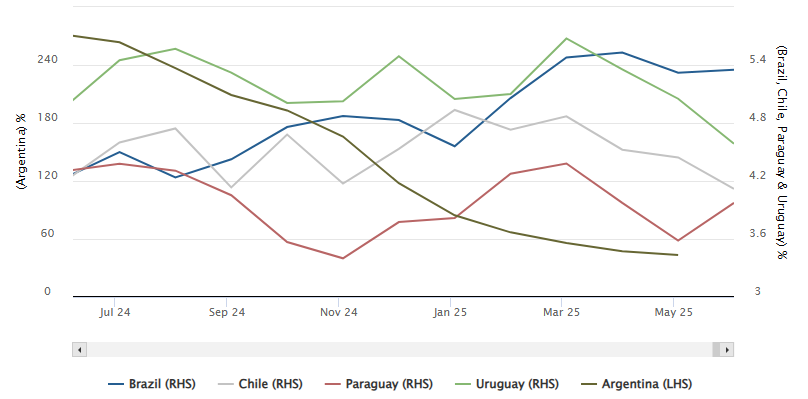
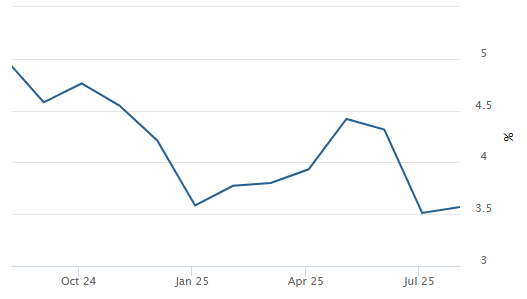
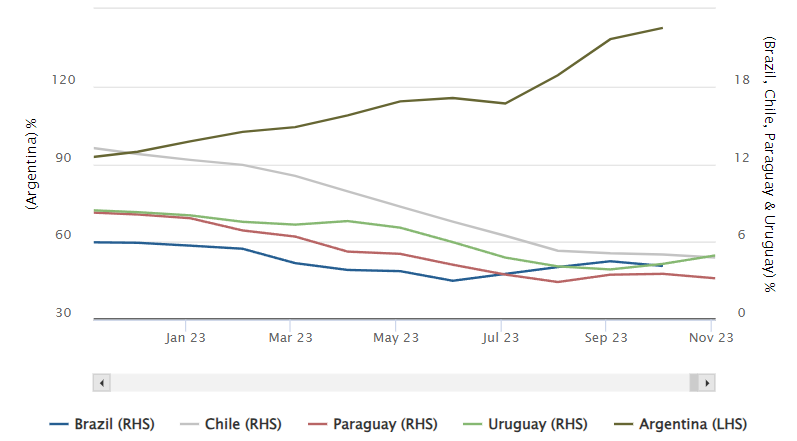
    Brazil & Southern Cone: inflation rate
    Percentage variation (year-on-year)

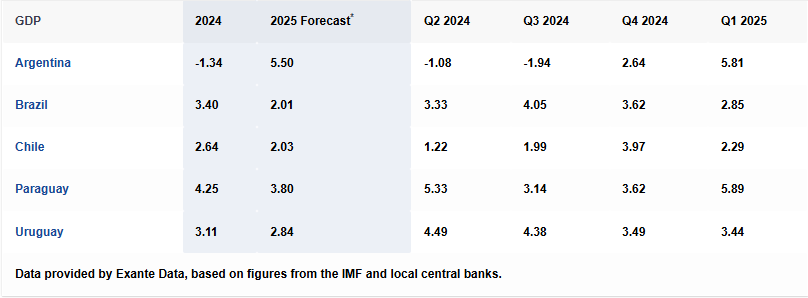
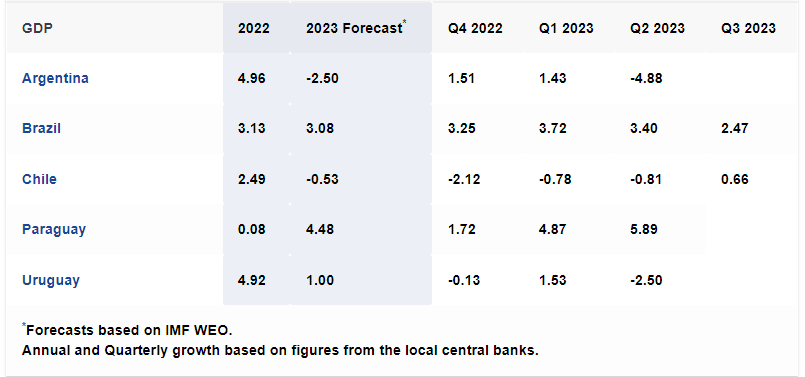
    Brazil & Southern Cone: GDP growth (%)
    Quarterly figures are year-on-year growth


  • MEXICO: Sheinbaum advances constitutional reform on GM corn

    Abbi Dicker 21 February 2025 Hits: 4117

    On 26 January President Claudia Sheinbaum announced that she had submitted a reform bill to congress which would prohibit the cultivation of genetically modified (GM) corn in Mexico.

    Sheinbaum has vowed to “protect Mexican corn” using the bill, which modifies articles 4 and 27 of the constitution to establish corn as part of Mexico’s national identity and specifying that it should be grown ecologically, as well as prohibiting the planting of GM corn. The aim is to protect biodiversity in corn, which has 59 different varieties in Mexico. The reform is likely to pass given the fact that congress is dominated by Sheinbaum’s left-wing Movimiento Regeneración Nacional (Morena) and its allies.

    The bill follows a 2023 decree published by former President Andrés Manuel López Obrador (2018-2024), which banned the use of GM corn in tortillas and dough. Under that decree, GM corn could still be imported and used in industry. Although López Obrador’s decree replaced and watered down another decree issued in 2020 that ordered the phasing out of the use and import of all GM products, it still remained a bone of contention between Mexico and the US, where 90% of the corn grown is GM. Washington successfully won a dispute on the matter under the US-Mexico-Canada Agreement (USMCA) in December last year. Sheinbaum’s constitutional reform is likely to provoke similar criticism from the US, adding to trade tensions caused by President Donald Trump’s tariff threats and the looming renegotiation of the USMCA.

    Sheinbaum has also faced criticism over the fact that her bill would only ban the planting of certain kinds of GM corn, rather than banning corn that has been modified using technology such as gene editing. David Rivero, who represents an NGO named Demanda Colectiva de Maíz, told local media outlet Animal Político that Sheinbaum’s reform represents a backwards step compared to López Obrador’s 2023 decree. “I think things are better as they are right now, without a reform than with a reform that only includes GM corn,” said Rivero in an article published on 3 February.

    César Ocaña Romo, director of agriculture industry consultancy NexusAgronegocios, told local media outlet El Economista on 4 February that the bill maintains the status quo as it doesn’t ban the importation of GM corn, which is widely used in food products and to feed livestock. In 2024, Mexico imported almost 24m tonnes of corn, equivalent to around 50% of the total used. A ban on GM corn imports would likely increase prices of Mexican staples such as tortillas, as well as livestock feed, with a knock-on effect on food prices, constituting a political risk for Sheinbaum. Sheinbaum’s bill could therefore be interpreted as an attempt to protect native corn varieties by preventing the cultivation of GM corn, which could contaminate native varieties growing in neighbouring fields, while keeping food prices down and heading off further disputes with the US over imported GM corn and its use in food products. 

    Congress had been expected to discuss the bill soon after returning from a scheduled break on 1 February. However, on 4 February Ricardo Monreal, leader of the Morena bloc in the lower chamber, announced that discussions would be delayed in order to allow lawmakers a chance to speak to various ministers and properly analyse the proposal at hand. Sheinbaum has also reportedly met with experts to discuss concerns over the bill in its current form, indicating that there could be some changes to its final text.

  • PARAGUAY: How safe?

    Abbi Dicker 28 August 2025 Hits: 2875

    The US government and the Paraguayan administration of President Santiago Peña have announced plans to sign a Safe Third Country Agreement (STCA) intended to relieve migration pressures on US borders. Paraguay’s foreign minister Ruben Ramírez sought to assuage concerns domestically by insisting that it would not result in “massive migration”.

    A Memorandum of Understanding (MOU) was signed in Washington on 14 August by Ramírez and his US counterpart, Secretary of State Marco Rubio. It will allow asylum seekers currently in the US the “opportunity” to continue pursuing their claims from Paraguay. Rubio said this would allow the two countries to “share the burden of managing illegal immigration while shutting down the abuse of our nation’s asylum system”.

    However, details of how the system will work, how the financial costs are to be distributed, and what numbers of asylum seekers might take part were scanty. STCAs signed by the US and European countries have been subject to intense litigation in the courts.

    Appearing on local TV network La Tele, President Peña was at pains to say the agreement will not force Paraguay to take asylum seekers it would not otherwise admit. “I do not receive tutelage from anyone, so they can ask for whatever they want, but I am not going to give something that I do not think is convenient for Paraguay,” he emphasised.

    The foreign ministry took the same line, explaining that the national commission for stateless persons and refugees (Conare, in the Spanish acronym) will evaluate each application in line with current legislation and have the final say. Both signatories also committed to undertake to honour the 1951 Convention on Refugees.

    What is clear is that Paraguay is doing the US a big favour and is hoping to reap some benefits in return. Bilateral trade between the two countries is approximately US$3.5bn with a large surplus favouring the US side as Paraguay imports a lot more from the US than vice-versa. As such, unlike other Latin American countries, President Donald Trump’s administration has imposed relatively light trade tariffs on Paraguayan goods (10%).

    Foreign minister Ramírez said Paraguay was looking to expand bilateral relations in security, trade, investment, and defence cooperation. In a press conference on 20 August, Ramírez said that the STCA entailed “a substantive advance” in bilateral relations with the US. He added that Rubio had assured him that the US viewed ties with Paraguay as “a high priority strategic relation”. Ramírez also stressed that there would be no “massive migration” and that “in no way” would the STCA mean that “people are going to invade our country in a disorderly manner”.

    Passenger air travel rises year-on-year

    The ministry of ports and airports reported on 20 August that July saw a total of 11.6m passengers travel on domestic and international flights, up 7.5% compared with July 2024. The latest figure is also the highest on record for the month of July. Around 9m passengers travelled on domestic flights, up 6.0% year-on-year, while 2.6m travelled on international flights, up 13.6% from July last year. In the first seven months of 2025, 73.4m passengers travelled on domestic and international flights, up 9.6% compared with January-July 2024.

    US positivity

    A press release from the US Department of State said “we are deepening cooperation across security, diplomatic, and economic fronts”. US Deputy Secretary of Homeland Security Troy Edgar, who was also present at the signing of the Memorandum of Understanding, said “We look to Paraguay as a law enforcement and border security partner”.

  • PARAGUAY: Familiar name takes over interior ministry

    LatinNews 06 September 2011 Hits: 3756

    Senator Carlos Filizzola was sworn in as the new interior minister in the administration of President Fernando Lugo on 26 August. Filizzola, a member of Partido País Solidario (PPS), a party in the left-wing Frente Guasú coalition, replaces Federico Acuña, who resigned for health reasons. Acuña only assumed the post on 17 June from Rafael Filizzola, a cousin of the new broom, who had been dismissed by Lugo in strange circumstances.

    Lugo had accused Rafael Filizzola of failing to dedicate himself exclusively to his job, the implication being that he had become consumed by ‘politicking’, possibly with his sights on running for the presidency in 2013; Filizzola claimed Lugo had maintained that whoever opposed re-election was against him [WR-11-25]. Carlos Filizzola, a former mayor of Asunción and a doctor by profession, was one of the main proponents of a signature-gathering drive for a petition to congress to allow re-election, which was roundly rejected in July: he accused opposition senators, who dominate congress, of turning their backs on the people [WR-11-29]. Rafael Filizzola confined himself to expressing surprise about his cousin’s appointment, but Desirée Masi, a deputy for Rafael Filizzola’s Partido Democrático Progresista (PDP), a rival party in the Frente Guasú, claimed that Carlos Filizzola lacked authority and was the archetypal “yes man”.

    Carlos Filizzola immediately set about trying to disprove this claim by stamping his authority on the ministry. He promised a policy of “zero tolerance” for police corruption or ‘trigger happy’ officers. His comments came after a four-year old boy was killed on 28 August in Ciudad del Este by a bullet fired by police while travelling in a car driven by his parents. The police officers responsible claimed to have made a mistake while attempting to pursue “a suspicious” vehicle.

    • EPP

    The obvious challenge for Carlos Filizzola will be to land some kind of blow on the guerrilla group Ejército del Pueblo Paraguayo (EPP), which has dipped beneath the radar in recent months. EPP guerrillas operate in the northern departments of Paraguay, bordering Brazil, but with the exception of two separate bombing attacks in January, they have been largely inactive since this time last year when police killed the organisation’s reputed third-ranking leader, Gabriel Zárate Cardozo.

  • In Brief – Bolivia

    LatinNews 26 September 2012 Hits: 1093

    POLITICS | Cooperative miners prove cooperative. On 25 September the government of President Evo Morales reached a deal with the national confederation of mining cooperatives (Fencomin), whereby the latter agreed to call off the national blockades that started yesterday in response to the current dispute with salaried miners over the nationalisation of the tin/zinc Colquiri mine in La Paz. The deal followed more than 36 hours of talks between the mining representatives and the mining and labour ministers, Mario Virreira and Daniel Santalla, as well as César Navarro, the deputy minister for coordination with social movements. With the full details of the agreement yet to be released, it reportedly includes provisions relating to guarantees of jobs for the cooperative miners and legal security to prevent the seizure of mines. However, Hermo Pérez, the secretary general of the Central Obrera Boliviana (COB), which backs the salaried miners, announced a 72-hour strike to begin today (26 September) in support of the latter’s calls for the mine to be handed over in its entirety to the state mining company, Comibol.

  • Risk pointers

    LatinNews 30 January 2013 Hits: 374

    *** India-Pakistan border tension takes its toll.  Border tension along the Line of Control (LoC) dividing Indian from Pakistani-controlled Kashmir has been high since 6 January when the Pakistani shelling of an Indian border village led to an Indian military raid on a Pakistani border post.  One Pakistani soldier was killed and another badly injured.  Pakistan then retaliated with a similar raid in which two Indian soldiers were killed (one of whom was allegedly beheaded).

    Following these incidents, on 12 January India’s Air Force chief NAK Browne warned: “We are monitoring the situation carefully because if these things continue to be the way they are and these violations continue to take place, then perhaps we may have to look at some other options for compliance.”

    Pakistan has tried not to respond to the Indian rhetoric, with Foreign Minister Hina Rabbani Khar saying: “A successful and independent foreign policy does not mean emulating someone else’s behaviour.  It does not mean being reactive to somebody else’s irresponsible behaviour.”  However, a plan agreed in November 2011 to give India Most Favoured Nation (MFN) status  as  from the New Year has been postponed and is unlikely to be implemented before the general election in May.  Ministerial trips and various cultural exchanges have been called off or postponed.

    *** Egypt’s Black Bloc.  A group calling itself the Black Bloc, apparently modelled on European protesters from Germany in the 1970s and at later anti-globalization protests, appeared in Tahrir Square in Cairo and in Alexander on the 25 January anniversary of the 2011 revolution.  A video from the group issued on 23 January says: “We had to appear officially to fight against the regime of the fascist tyrants the Muslim Brotherhood, and their military wing.”  The groups has claimed various arson attacks on Muslim Brotherhood premises.  In an interview with Al-Watan on 27 January, one of the Black Bloc founders, Sharif al-Sirfi, said: "We seek to get the rights of martyrs, and this cannot be achieved except through fair revenge, which is the execution of those who killed the martyrs."

    *** German terror warning.  German media outlets have quoted an official security document warning of increased terror attacks in Germany as a result of France’s military intervention in Mali.  It is said that some 50 Islamist militants from Germany received training in terror camps last year and that probably another 100 received training earlier.  About half of this number are now back in Germany.  According to the document: “Fanaticized lone operators or small groups could use the involvement of Germany in Mali, where the Bundeswehr has deployed two Transall transport aircraft to provide logistical assistance for France, as an opportunity to carry out attacks.  They may choose to target German facilities both at home and abroad.”

  • VENEZUELA: Sicad hará su debut con US$200m

    LatinNews 02 April 2013 Hits: 1542

    El nuevo organismo de tasa de cambio secundaria de Venezuela,  el Sistema Complementario de Administración de Divisas (Sicad), se prepara para ofrecer US$200m en su primera subasta el 27 de marzo. El ministro de finanzas anunció la subasta con dos días de antelación, aunque con pocos detalles sobre qué compañías o sectores podrían tomar parte. El ministro de finanzas, Jorge Giordani, quien tiene la última palabra sobre esto, advirtió la semana pasada que solamente serían elegibles las compañías de los sectores 'productivos'. Sin embargo, el ministerio confirmó que la tasa mínima en la subasta sería de BF6,30/US$1, la recientemente devaluada tasa oficial de cambio de moneda extranjera, y estipula que los participantes en la subasta deben hacer sus ofertas sobre un mínimo de US$30.000, y no excederse del 1% del monto total de la subasta (es decir, no más de US$2m).

    El Sicad reemplaza al recientemente abolido Sistema de Transacciones con Títulos en moneda extranjera (Sitme), que solía proveer unos US$40m por día en cambio de divisas (en su mayor parte dólares estadounidenses) en el mercado local. La principal agencia de cambio de divisas, la Comisión de Administración de Divisas (Cadivi), provee alrededor de US$100m por día, y el mercado negro (ilegal) unos US$25m estimados. La cantidad inicial de oferta de dólares de Sicad podría sugerir que las autoridades están dispuestas a suministrar más divisas al mercado local, donde la aguda escasez de productos básicos está ejerciendo presión en la inflación. La tasa del mercado negro paralelo estaba en BF23,4/US$1 el lunes 25 de marzo, y en BF22,86 el martes, en general alrededor de cuatro veces más que la tasa oficial.

    El ministerio de finanzas anunció que cualquier ganancia que produzca el sistema Sicad irá a un nuevo fondo especial llamado fondo nacional de ganancias petroleras, aunque sin decir exactamente quién controlaría ese fondo. Asumiendo que el banco central (BCV) proveerá los dólares EU a una tasa menor que la tasa oficial –los economistas locales en Venezuela esperan una tasa de unos BF10,0/US$1– el Sicad actuará efectivamente como otra devaluación, generando en el proceso los muy necesitados ingresos fiscales adicionales para el ministerio de finanzas, que ahora está manejando un déficit fiscal estimado en 7% del PIB (cayendo de unos estimados 12% - 15% del PIB antes de la devaluación 'oficial' a mediados de febrero).

    Por último, esas movidas están motivadas por la profunda urgencia de abordar las distorsiones creada por la miríada de precios y controles en la tasa de cambio impuestos por el ex presidente Hugo Chávez desde el 2003 en adelante. Antes de su intento por la confirmación electoral el 14 de abril, el Presidente Encargado Nicolás Maduro, dice que el gobierno está actuando contra "burgueses parásitos especuladores de moneda". Esto solamente trata de disfrazar con una retórica radical una solución bastante ortodoxa para esas distorsiones –su (gradual) remoción.

    • Cambios en lo alto de Cadivi

    Eudomar Torres, el primer vicepresidente del banco central, ha reemplazado a Manuel Barroso como presidente de Cadivi, anunció el gobierno el 25 de marzo. Barroso había retenido el cargo desde el 2006. Curiosamente, la prensa opositora ha asociado previamente a Barroso con el presidente d la asamblea nacional, Diosdado Cabello. Torres, un tecnócrata, es un graduado en economía de la Universidad de Carabobo y tiene un par de MA de la Universidad de Venezuela (en economía, finanzas y economía política); mientras que también es un especialista en aduanas y comercio exterior. Otro economista, José Salamat Khan, ha sido nombrado vicepresidente de Cadivi. Khan tiene vínculos con los sindicatos y es considerado cercano al Presidente Maduro. Coincidencia o no, la oficina del fiscal general ha anunciado al día siguiente una gran investigación sobre el tráfico ilegal de monedas en el país.

    Cuentas bancarias en dólares

    Simultáneamente, el gobierno también ha publicado nuevas regulaciones permitiendo el uso limitado (por compañías e individuos) de cuentas bancarias en dólares de EU en el país. Tales cuentas fueron hechas ilegales por el ex presidente Hugo Chávez en el 2003. Esta no es una medida enteramente nueva –fue anunciada por primera vez como 'Convención de Cambio Nº 20' en julio del 2012, pero hasta ahora los detalles no habían sido definidos por el BCV (tales como el requerimiento mínimo de depósito de apertura y declaraciones juradas sobre la fuente de los fondos). Los bancos locales que probablemente tienen que retener los dólares en el BCV, incrementando de este modo su cantidad de reservas internacionales líquidas. Los poseedores de cuentas bancarias en dólares podrán usar sus fondos en el exterior de igual manera que tarjetas para las ATM (máquinas expendedoras de dinero o cajeros automáticos), cheques, o transferencias bancarias, y las cuentas serán elegibles para recibir pequeños montos de interés. Esto sugiere que la administración post-Chávez está avanzando hacia un mercado local de monedas más viable. Cuando la medida fue anunciada por primera vez a fines de julio del 2012, Armando León, un miembro de la junta de directores del BCV dijo a la estatal Radio Nacional de Venezuela: "Deseamos facilitar tales operaciones, y también es una señal a largo plazo para aquellos deseosos de trabajar en Venezuela".

    • Pelea por tesoro hundido

    El 25 de marzo, James Delsordo, un abogado que representa a la firma de EU, Sea Search Armada (SSA), presentó los argumentos de SSA en favor de sus reclamaciones sobre el tesoro hallado en el galeón español, San José. El San José, que transportaba varias toneladas de oro, plata, joyas, y piedras preciosas, fue hundido por piratas ingleses en la costa caribeña de Colombia en 1703. Los restos del barco fueron descubiertos por SSA en 1984; y la compañía aseguró un acuerdo con el gobierno colombiano liderado por el ex presidente, Belisario Betancur (1982-1986), permitiéndole extraer el tesoro. Sin embargo, el ex presidente César Gaviria (1990-1994) decidió cuestionar el reclamo de SSA del tesoro. La disputa parecía haber sido resuelta en el 2007, después que la corte suprema de Colombia dictaminó que SSA debía ser premiada con la mitad del tesoro. Sin embargo, el gobierno colombiano ha rehusado hacer caso del dictamen, provocando que SSA lleve su caso ante una corte federal de EU, que ha comenzado a revisarlo en el 2011.

  • POINTERS

    LatinNews 16 January 2019 Hits: 4669

    ST VINCENT & GRENADINES | Railing at European Union and lack of Caricom unity. Prime Minister Ralph Gonsalves has been complaining bitterly about the European Union’s attempts to get offshore centres to adjust their tax regimes.

    During a debate in late December on the International Business Companies (Amendment and Consolidated) (Amendment) Bill, 2018, Gonsalves pointed the finger at other Caribbean Community (Caricom) members when he said: “It appears as though some have surrendered or are inclined to surrender. Others have compromised and accommodated but without any or much resistance.”

    However, Gonsalves added that, in his opinion, it was not too late for “coordinated creative resistance on a broad range of issues where our interest and those of the European Union do not coincide”.

    And in comments directed at the EU, Gonsalves said: “Europe must not take the small states and the Caribbean for granted but our actions must speak louder than words.”

    Grenada seems to be one of the Caricom members that Gonsalves sees as having been insufficiently robust in the face of EU pressure. St Kitts & Nevis (along with Barbados), on the other hand, was given partial approval by Gonsalves, who said: “I hear the language of the minister responsible for international financial services in the St Kitts and Nevis government; in some respects, strong language. Maybe not as robust as what I am issuing here, but, nevertheless, strong language.”

    JAMAICA | Prime Minister targets murder rate of 16/100,000. Jamaica’s murder rate for 2018 came in at 47 per 100,000, which is three times the average for Latin America and the Caribbean. However, 2018 did show an improvement. There were 1,287 murders, which was 22% less than in 2017 and 5% less than in 2016.

    Speaking in parliament on 8 January, Prime Minister Andrew Holness said that the government’s ‘Plan Secure Jamaica’ would see a reduction in murders to below the regional average of 16 per 100,000 within the next 10 years, which would bring the annual total of murders in Jamaica to below 500. This would be a major achievement, although Holness acknowledged that it would still leave Jamaica with a much higher rate than the global average of six per 100,000.

    Separately, the Jamaica Labour Party (JLP) government is in discussion with the opposition People’s National Party (PNP) on national security following parliament’s vote against any further extensions of the states of emergency (SOEs) imposed in three areas of the country. An SOE was imposed in St James in January 2018 and subsequently in St Catherine North and in Kingston Western and St Andrew.

    BAHAMAS | A better year on crime. Murders in the Bahamas increased more or less continuously between 2006, when there were 61, and 2017 when there were 122. In 2018, this dropped by 26% to 90 murders, the lowest figure since 2009 when there were 85 murders reported.

    This is a significant achievement for Prime Minister Hubert Minnis and his Free National Movement (FNM) administration which came to power following its general election victory in May 2017.

  • URUGUAY: Reform bill sparks public security debate

    LatinNews 05 June 2020 Hits: 3430

    Uruguay’s President Luis Alberto Lacalle Pou delivered on a campaign promise on 23 April when he presented a wide-ranging reform bill containing more than 500 articles to congress. Known as the ‘ley de urgente consideración’ (LUC), this extensive piece of legislation must be debated by congress within 90 days, or it will take effect in its original form. The LUC’s largest chapter concerns public security, with around a quarter of the total articles dedicated to this issue.   

    Lacalle Pou owes his election last year at least in part to Uruguay’s deteriorating public security situation and his promise to address Uruguayans’ concerns on rising crime rates [SSR-19-12]. His interior minister, Jorge Larrañaga, is known for his hardline security stance, and was behind a referendum staged last year proposing tougher measures against crime [SSR-19-03]. The proposal fell short of the necessary 50% threshold to pass into law, but still garnered support from 47% of voters.

    The public security reforms in the LUC reflect these tough-on-crime views and general concern with insecurity. As first the senate, and then the chamber of deputies, hear expert opinions and discuss the bill, Uruguay now faces the debate on ‘mano dura’ versus a more holistic approach to tackling crime and violence that has long divided much of Latin America. This adds to more general criticisms of the LUC, which has been slammed by the political opposition for its timing, as it forces an urgent debate by congress in amid the coronavirus (Covid-19) pandemic.

    Being tough

    After rising sharply in 2018, the number of homicides in Uruguay actually fell last year. But with a total 391 homicides (down from 416), 2019 remains the second most deadly year in the last three decades, with a homicide rate of 11.1 per 100,000 inhabitants. Robberies were also down last year, but incidences of aggravated theft (which involve the use of force) increased by 2.5% on 2018.

    The country has also seen a wave of attacks against law enforcement officials, with early 2020 (before Lacalle Pou took office) being particularly bad: 78 police officials were the victims of an attack in the first five weeks of the year, two of which were fatal. This is believed to be linked to the activity of criminal organisations, highlighting another growing problem in Uruguay.

    • Active criminals

    On 9 May, a low-intensity explosive device went off outside the headquarters of Uruguay’s anti-narcotics brigade in Montevideo. It caused only minor material damage. A police investigation found the explosive used was a military grenade, with Interior Minister Jorge Larrañaga saying it had probably been stolen from military barracks some years ago. The attack is believed to have been committed by a local, small-scale drug trafficking group. Larrañaga said it was clearly a “narco warning”, which did not warrant an uproar but should be taken seriously, and that it strengthened the government’s resolve to be tough on crime. Such attacks are rare in Uruguay and could point to emboldened criminal networks

    These factors can help explain why the Lacalle Pou administration has opted for a public security strategy focused on tougher punishments and expanded police powers. The LUC’s chapter on security is presented as necessary to address the “urgent” concern of citizen security, and to guarantee the “peaceful coexistence” of Uruguayans, through an updated legal and institutional framework.

    The LUC would introduce changes to the penal code and penitentiary procedures, implementing tougher sentences (notably for teenage offenders), expanding the use of preventative detention, and reducing the possibility of temporary or early release for perpetrators of crimes such as robbery and aggravated theft. The bill also moots the possibility of all prisoners being put to work, and of monitoring prisoners on parole through electronic devices. It would loosen the concept of legitimate defence for police officers, expand their powers to detain and interrogate suspects, including minors, and harden punishments for those who disrespect the police’s authority. The LUC also tables the creation of a national registry of rapists and sexual abusers, which would be retroactive. 

    Criticisms

    Opposition lawmakers have raised general concerns with the public security aspects of the LUC, notably regarding the defence of police officers who commit crimes while on duty, and the increasing of sentences. But the strongest criticisms have come from public security experts and researchers, who fear that the LUC would mark a setback on human rights and the rights of prisoners (with particular concern as to the treatment of minors), as well as generally worsening the public security landscape. During an online discussion organised on 9 May by political collective Más Igualdad, the LUC was even slammed as promoting an “authoritarian” penal law.

    Much of the criticism has centred on concerns that the LUC’s proposed changes to the penal code would overburden Uruguay’s prison system, which is already approaching 100% capacity. According to the World Prison Brief, based on the interior ministry’s data as of January 2020, Uruguay has an incarceration rate of 337 per 100,000 people, the second highest prison population rate in South America after Brazil (in absolute terms, Uruguay’s prison population numbers 11,755).

    Increasing sentences and reducing opportunities for early release would increase overcrowding and thus risk tensions in prisons, while the proposals fail to address chronic problems such as recidivism and in-prison abuses. So argue the NGO Instituto de Estudios Legales y Sociales del Uruguay (Ielsur), as well as Denisse Legrand, a journalist and coordinator of a local health and education prison project, Nada Crece en la Sombra. Legrand, who argues that the LUC would worsen rather than improve Uruguay’s security crisis, further notes that trust in the police grew in Uruguay following a 2016 police reform, but that the LUC’s changes would likely reverse that by reducing accountability, and increasing the scope for police abuse. 

  • ECONOMIC HIGHLIGHTS

    Abbi Dicker 18 July 2025 Hits: 3108

    REGION | Mercosur reaches trade deal with Efta bloc. The Southern Common Market (Mercosur) regional trade bloc announced on 2 July that it had concluded negotiations for a free trade agreement with the European Free Trade Association (Efta), comprising Iceland, Liechtenstein, Norway, and Switzerland. The announcement was made on the first day of Mercosur’s latest leaders’ summit in Buenos Aires. South American leaders hailed the conclusion of talks as a boost for Mercosur, whose founding members – Argentina, Brazil, Paraguay, and Uruguay – had been negotiating the Efta deal for nearly a decade. An exploratory dialogue with a view to possible trade talks began in 2015 and the first round of official negotiations were launched in 2017. After the conclusion of the talks, the Mercosur and Efta countries announced that the deal would create a free-trade zone of almost 300m people and a combined GDP of more than US$4.3trn. They said both sides would benefit from improved market access for more than 97% of their exports. Before it can be ratified, the deal still requires parliamentary approval and a legal review from members of both blocs

    BRAZIL | Government increases funding for agribusiness. On 1 July President Luiz Inácio Lula da Silva and Agriculture Minister Carlos Fávaro launched the 2025/2026 ‘Plano Safra’ (harvest plan), the annual financing plan for the agricultural sector. This cycle will provide a record R$516.2bn (US$94bn) in loans and credit for agribusiness companies. The government highlighted that this latest investment marks an increase from the R$508.6bn of the 2024/2025 Plano Safra and from R$471.2bn for 2023/2024. The day before the launch of the Plano Safra for large-scale food producers, Lula held a separate event with his minster for agrarian development, Paulo Teixeira, to announce the Plano Safra da Agricultura Familiar, a related funding mechanism for small-scale, family-run farms, which will receive R$89bn in credit for the 2025/2026 harvest cycle.

    Brazil & Southern Cone: inflation rate
    Percentage variation (year-on-year)

    Brazil & Southern Cone: GDP growth (%)
    Quarterly figures are year-on-year growth

  • ECONOMIC HIGHLIGHTS

    Abbi Dicker 19 September 2025 Hits: 1376

    MEXICO | Annual inflation edges up. On 9 September Mexico’s national statistics institute (Inegi) released the consumer price index (INPC) for August, reporting that monthly inflation stood at 0.06% and annual inflation at 3.57%. Monthly inflation was down from a rate of 0.27% in July while annual inflation was up from 3.51% the previous month. Core inflation, which excludes volatile items like food and fuel, stood at 0.22% in monthly terms and 4.23% in annual terms, compared to a monthly core rate of 0.31% and an annual core rate of 4.23% in July.

    MEXICO | GFCF continues downwards trend. On 4 September Mexico’s national statistics institute (Inegi) announced that gross fixed capital formation (GFCF) in June was down by 1.4% in monthly terms and by 6.8% year-on-year. This followed a monthly increase of 1.2%. It represents the tenth consecutive month of annual decreases. The annual decline in June was the result of a 3.3% decrease in investment in construction and 11.4% drop in investment in machinery and equipment. The monthly result was driven by a 0.8% decline in investment in construction and a 1.6% drop in investment in machinery and equipment.

    MEXICO | Remittances fall again. On 1 September Mexico’s central bank (Banxico) announced that remittances sent to the country in July totalled US$5.33bn, representing a year-on-year decrease of 4.7%. This followed yearly drops of 16.2% in June, 4.6% in May, and 12.1% in April. Accumulated remittances received over the first seven months of 2025 totalled US$34.89bn, down 5.5% on the US$36.92bn received in the same period of 2024. Remittance flows from the US have come under pressure from a new remittance tax of 1% and the hardline anti-migration measures being implemented by the government of President Donald Trump.

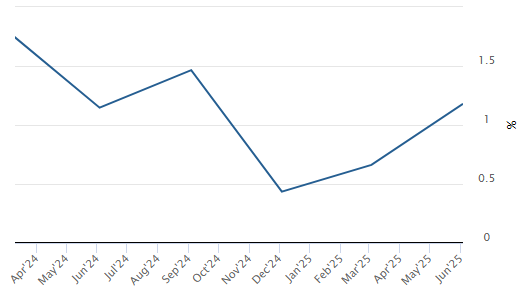
    Mexico: GDP growth
    Percentage variation (year-on-year)

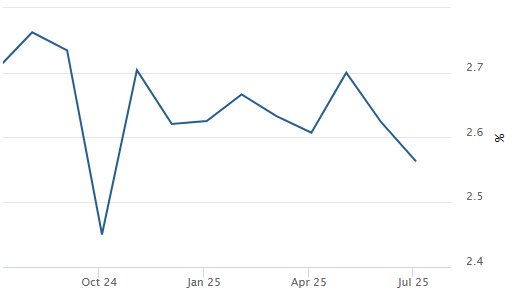
    Mexico: unemployment rate
    Economically active population

    Mexico: inflation rate
    Percentage variation (year-on-year)

    Source (all graphs): National Statistics Institute (Inegi)

  • BOLIVIA: Latest fuel crisis sparked by contamination issue

    Abbi Dicker 19 March 2026 Hits: 1384

    Bolivia is facing yet another fuel crisis, after revelations in early February that contaminated fuel was distributed by state-owned hydrocarbons company Yacimientos Petrolíferos Fiscales Bolivianos (YPFB). The company’s president, Yussef Akly, acknowledged that of the approximately 3m vehicles in Bolivia, around 2,000 may have been damaged by contaminated fuel, saying that the problem is mostly concentrated in the departments of Santa Cruz, Beni, and Oruro. The contamination was apparently caused by rubber and manganese residue in storage tanks. However, transport unions in the capital La Paz have complained that hundreds of their vehicles have also been affected. The Bolivian mechanics’ association, CIMB, said on 3 February that as many as 60% of vehicles being seen by mechanics were having problems due to poor quality fuel.

    President Rodrigo Paz has claimed that the contamination is the result of sabotage by YPFB employees opposed to his economic liberalisation programme. A legislative commission has also been set up to investigate any potential irregularities in the contracts involved in importing fuel, amid speculation that the problems may have arisen after Paz liberalised fuel import rules after taking office in November to address shortages.

    YFPB has launched a digital platform that can be used to report damage to vehicles caused by the contaminated fuel, with the promise that those affected will be eligible for compensation. However, drivers’ unions have continued to express their displeasure, calling for the government to put measures in place to ensure that all fuel sold in Bolivia is safe.

  • COMMODITIES: Banking on Brazil

    LatinNews 19 January 2012 Hits: 1093

    The world coffee industry is expecting a bumper Brazilian crop in 2012/13. The Conab, the agriculture ministry’s research arm, was forecasting a crop of just over 50m (60kg) bags before Christmas. Now, it expects a crop of over 52m bags. The expectation of a bumper Brazilian crop is keeping a lid on prices for arabica (the main Brazilian coffee type), which have been steady at US$2.27 per pound since mid-December. Prices peaked in April and May 2011 when they bounced between US$3 and US$2.70 a pound.

    Bulls are starting to suggest that coffee prices could jump again because the market has not factored in the likelihood of increased domestic consumption in Brazil in 2012. If that happens, global demand for coffee could exceed supplies and stocks, especially as Latin America’s second biggest producer, Colombia, seems to be in an unstoppable decline.

    Unlike the rest of the world’s coffee producers, Brazil does not work on an October to September coffee year. Its year is July to June, but the size of the crop should become clear in March/April, when picking starts.

    In the 2011 crop year, long finished in Brazil, though not in Central America or Colombia, the world coffee crop came to 132.4m bags, of which Brazil provided 43.5m bags, down from 48.1m in 2010.

    Brazil’s coffee crop has a two-year cycle, with every even-numbered year producing a crop that is between 10% and 25% higher than the previous year’s crop. Over the past five years, Brazil’s annual output has been on a steep upward trend. The previous “off” year of 2009 saw production of 39.5m bags. So the 2011 “off” year saw a crop that was 10% higher than the previous “off” year.

    “On” year production is also rising, though not as impressively. In 2010 the “on” year production of 48.1m bags was just under 5% higher than the previous “on” year output of 45.9m bags. The main variation in Brazilian production is caused by a variation in Arabic output: robusta output is much steadier, year-to-year.

    In 2011 Brazil harvested 32.2m bags of Arabica coffee and 11.3m bags of robusta coffee. In 2012 the forecast is for at least 37.7m bags of arabica and 12.9m bags of robusta (which are mostly used for instant coffee).

    The other big change in Brazil is the increasing domestic coffee consumption.  In calendar 2010 Brazil consumed 18.9m bags of coffee, up 4% on 2009. This rate of increase, however, was lower than overall GDP growth. As wages continued to outstrip inflation in 2011, Brazil’s coffee consumption may have increased rather faster in 2011 than it did in 2010, though no official figures are yet available.

    The International Coffee Organization (ICO) argues that the world coffee market continues to remain tight. The main imponderables are Vietnamese production (which is large but low-quality and depends on large amounts of water and fertiliser, so is vulnerable to sudden changes) and Brazilian domestic consumption. The ICO reckons that in calendar 2010 world consumption amounted to 135m bags, with exports of 87.7m bags, worth around US$17bn.

    In 2011 the ICO estimates that the volume of coffee traded increased to 104m bags and the value of this business shot up to US$23.5bn.

    • In 2011 Brazil exported a record 33.46m bags (up 1% on 2010), according to the country’s Coffee Exporters Council (Cecafé). The value of these exports came to US$8.7bn, according to Cecafé, up 54% on 2010. By value, coffee accounted for 3% of Brazil’s total exports and 9% of its agricultural exports. In 2011 a thumping 84% of the coffee exported from Brazil was Arabica, while 13% was instant coffee and 3% was robusta (beans and ground).
  • HAITI: Haiti shakes up internal security

    LatinNews 05 September 2012 Hits: 1333

    Haiti’s President Michel Martelly has replaced his interior minister and appointed a new police chief. The shake-up comes as newly released figures show that the murder rate in Port-au-Prince is escalating alarmingly.

    Prime Minister Laurent Lamothe named Ronsard Saint Cyr to replace Thierry Mayard Paul at the ministry of the interior and territorial collectivities. Saint Cyr, who had been serving as minister of social affairs and labour, was part of a mini cabinet reshuffle on 6 August (see sidebar), which also saw Lamothe pick up the planning portfolio from Josefa Gauthier, who in turn steps into Saint Cyr’s old shoes.

    Some three weeks later, on 29 August, the senate ratified President Martelly’s pick as the new director general of the Haitian national police (PNH). Godson Aurélus, 44, picks up the post from Mario Andrésol, with a constitutional mandate of three years.

    Andrésol had headed the institution for seven years during which time he had worked closely with the UN stabilisation mission (Minustah) to make the PNH a more efficient crime-fighting force. Andrésol’s term officially ended on 18 August when Aurélus took over from him as acting police chief. There were some rumblings of dissent on the senate floor that Aurélus had been permitted to take over the country’s top policing job before his formal ratification, but this did not stop him from winning overwhelming support when it came to the vote: a total of 17 senators voted in favour of his appointment, while just one senator abstained.

    Aurélus spoke frankly during a press conference after his ratification. He said that the PNH performed a dangerous job in Haiti and deserved greater reward as a result. He said police officers were poorly paid and lacked sufficient social security cover, especially in the face of serious risk of injury or worse, and other benefits.

    Aurélus could struggle to get much change out of Martelly who seems more concerned about restoring the disbanded army than beefing up the pay and conditions of the PNH, which has only 10,000 police officers, about one for every 1,000 inhabitants.

    And yet there are signs that the security situation has taken a turn for the worse in Haiti, especially Port-au-Prince. “The crude murder rate for Port-au-Prince increased from 60.9 to 76.2 murders per 100,000 between February and July 2012, with residents of ‘popular zones’ being 40 times more likely to be murdered than other urban dwellers,” according to a report of monthly household surveys carried out by Brazil’s security and development think tank, the Instituto Igarapé, entitled ‘The Economic Costs of Violent Crime in Urban Haiti (August 2011-July 2012)’. Two of the authors of the report, Athena Kolbe of Michigan University and Robert Muggah the research director of Instituto Igarapé, noted that the homicide rate in Port-au-Prince had been as comparatively low as 10 per 100,000 in just 2007.

    The report also found that police bribes had increased between August 2011 and July 2012: “nearly 25 per cent of victims of physical assaults and 19 per cent of victims of property crime said they were asked for or paid a bribe to police to facilitate the progress of their case.” Perhaps most disturbing, however, was the implicit indictment of the efforts to transform the PNH: “Paradoxically, in spite of increased international investment in restoring the capacities of the Haitian National Police, ordinary Haitians struggle to access basic policing services.”

    • Reshuffle

    In further cabinet changes, Prime Minister Lamothe ceded control of the foreign affairs ministry to Pierre Richard Casimir, who was serving as secretary of state at the ministry. Jean Vilmont Hilaire replaced Joseph Ronald Toussaint (who had formed part of the ruptured opposition party Inité) at the environment ministry, while Vanneur Pierre came in for Réginald Paul at the education ministry.

  • PARAGUAY: Confusión en la Izquierda

    LatinNews 15 October 2012 Hits: 613

    La Izquierda política de Paraguay se ha quebrado antes las elecciones presidenciales del  próximo abril. Mario Ferreiro, el favorito para competir por la dispar coalición de izquierda Frente Guasú (FG) que apoyó al ex presidente Fernando Lugo (2008-2012), se ha desprendido del FG, llevándose con él alrededor de la mitad de los 19 partidos que lo conformaban. Lugo siguió esta semana al anuncio de Ferreiro sugiriendo, no por primera vez, que el mismo se candidatearía a la presidencia. Él alega que su destitución por juicio político en junio le negó la posibilidad de completar su mandato y que, como corolario, la prohibición constitucional a la reelección no es aplicable y, por lo tanto, es elegible para competir por la presidencia.

    Ferreiro dijo que él había decidido dejar la coalición debido a las diferencias acerca de la composición de la lista de senadores que se presentarán para las elecciones (y la posibilidad de que Lugo podría encabezar esta lista). Los nueve partidos que se fueron con él, conocidos como Bloque 9 (B9), han tenido diferencias con los otros 10 partidos (B10) por algún tiempo. Por ejemplo, ellos se rehusaron a firmar un documento elaborado por la dirección del FG en agosto, en el que afirman que “La democracia paraguaya está seriamente dañada” y que no existían condiciones para elecciones libres y democráticas [IL-12-33].

    En respuesta a una pregunta durante una corta conferencia de prensa sobre quién podría representar al FG después de la partida de Ferreiro, Lugo dijo “seré Yo”. La prensa nacional señaló rápidamente que Lugo había descartado presentarse a la elección el 4 de septiembre y lo acusó de inconsistencia. Sin embargo, no está claro si Lugo estaba siendo sincero o si simplemente estaba jugando con la prensa. Después de ser preguntado acerca de la prohibición constitucional sobre la reelección, por ejemplo, él respondió lacónicamente: “¿Es que alguien observa la constitución en el Paraguay? ¿Quién dijo que yo no puedo ser presidente?” El senador Sixto Pereira, el líder de Tekojoja dentro del B10, insistió en que no había impedimento legal para que Lugo se presente a la elección.

    • Mercosur

    El Presidente Federico Franco expresó esta semana su confianza en que Paraguay retornaría al Mercado Común del Sur (Mercosur) “más temprano que tarde”. Hablando durante una visita al departamento de Amambay en el nordeste, Franco dijo que otros miembros se habían dado cuenta de la importancia de Paraguay. Sus comentarios llegaron después de que el canciller de Brasil, Antonio Patriota, dijo que Paraguay, que fue sido suspendido del Mercosur poco después del juicio político a Lugo en junio, podría ser reincorporado dentro del bloque antes de las próximas elecciones de abril, siempre que se pueda probar que la democracia estaba “en pleno funcionando”.

  • ARGENTINA: Fernández lashes out

    LatinNews 10 January 2013 Hits: 1355

    Letter-writing appears to feature high up on the list of President Cristina Fernández de Kirchner’s New Year’s resolutions. Since the start of 2013, she has published two; one designed to inflame nationalist sentiment, the other to dampen domestic criticism. First, she wrote a letter to the British Prime Minister, David Cameron, published in The Guardian and The Independent newspapers on 3 January, demanding that he negotiate over the sovereignty of the Falkland Islands (Malvinas). A few days later, she posted on Twitter a link to a letter written to the actor Ricardo Darín, which consisted of an angry response to a question he posed in a recent magazine interview regarding the origin of the Kirchners’ wealth.

    In her letter to Prime Minister Cameron, Fernández argued that “One hundred and eighty years ago on the same date, 3 January, in a blatant exercise of 19th-century colonialism, Argentina was forcibly stripped of the Malvinas Islands, which are situated 14,000km away from London. The Argentines on the Islands were expelled by the Royal Navy and the United Kingdom subsequently began a population implantation process similar to that applied to other territories under colonial rule. Since then, Britain, the colonial power, has refused to return the territories to the Argentine Republic, thus preventing it from restoring its territorial integrity.”

    The letter is the latest attempt by the Argentine government to pressure the UK into dialogue, following Fernández’s address to the United Nations Committee on Decolonisation last June. Both the strong language of the letter, and the fact it was drafted in secret to ensure maximum impact - the presidential press office was not aware of it until the day before publication - mark an escalation in Argentina’s rhetoric over the sovereignty issue, though the UK government reiterated its position that the islanders should have the right to self-determination. A referendum is due on the Islands in March; an overwhelming majority is expected to vote in favour of keeping British sovereignty.

    Despite the letter’s publication in the British press, the real audience was undoubtedly domestic. After a difficult 2012, the latest Management and Fit survey put Fernández’s approval rating at just over 30%. Notoriously thin-skinned, Fernández has become increasingly intolerant of opposition, as demonstrated by her intemperate response to Darín’s criticism. In an interview with the style magazine Brando, the Oscar winner and star of the international hit The Secret in Their Eyes, questioned the source of the Kirchners’ wealth. Fernández’s sarcastic and meandering reply surprised both Darín and political commentators.

    “There have been no public officials more criminally denounced and investigated by the Argentine judiciary regarding enrichment than was my husband (the late Néstor Kirchner, Fernández’s predecessor as head of state) and his lifelong companion, your correspondent,” she wrote. She also questioned one of the actor’s own financial transactions, and took the opportunity to raise questions over, Buenos Aires’ governor Daniel Scioli, over the fact he admitted holding a bank account in dollars.

    In June last year, Fernández announced her decision to convert her dollar savings to Argentine pesos and asked her officials to do the same. A few days before the letter’s publication, Scioli, a member of Fernández’s own Partido Justicialista (PJ, Peronist) with eyes on the presidency in 2015, had antagonised the Casa Rosada by appearing publicly with the opposition mayor of Buenos Aires, Mauricio Macri, at the opening of a waste disposal plant.

    BA subway

    On 1 January, the Buenos Aires city government took over the running of the city’s subway service from the federal government. The next day, Mayor Mauricio Macri said that fares could rise dramatically, up to Arg$6 for a standard fare. The city government has 180 days to decide the price, which currently stands at Arg$2.5. With no public subsidies budgeted for Subte in 2013, Macri has to find ways to cover Metrovías’ operational costs, which are approximately Arg$1.1bn (US$223m) a year. Public subsidies used to cover as much as Arg$720m up until 2011.