All Categories

Subcategories

  • Mexico: Carsten tightens – and leaves

    LatinNews 20 December 2016 Hits: 3048

    On 15 December, Mexico’s central bank (Banco Central de México, Banxico) raised its benchmark interest rate by 50 basis points (bps) to 5.75%, double the 25bps increase expected. The Banxico move came after a 25bps rise in US Prime rate, announced by the Federal Reserve a day earlier, and after news that the long-serving Banxico head, Augustín Carstens, will step down in July 2017 to move to a new role at the helm of the Bank for International Settlements (BIS).

    Everything points to a change of era in Mexican monetary policy. The election of Donald Trump as the new US president has raised uncertainty and increased speculative pressure on the Mexican peso, as investors calculate that the country could be badly affected by shifting US trade and immigration policies. Meanwhile, within the US, Trump’s plans for increased spending and infrastructure investment point to a higher US fiscal deficit and tighter monetary policies. In Mexico, there is concern at Carstens’ departure. Alonso Cervera, chief Latin American economist at Credit Suisse, said that while the move to the BIS was an upgrade for Carstens, “from Mexico’s perspective it is a clear loss, given that he has always been seen as a strong anchor for Mexico’s macroeconomic policies”. Journalist Raymundo Riva Palacio said that Carstens’ departure “adds bad omens to the last third of [President Enrique] Peña Nieto’s presidency”, which ends in 2018.

    While it awaits news of a successor, Banxico seems to be committed to staying a step ahead of the Fed’s tightening curve. The bank cited two reasons for its latest 50 bps increase. One was to contain ‘second round’ inflationary effects from peso depreciation. While inflation remains low (at 3.3% in the year to November), it is expected to break above Banxico’s 2%-4% target range at some point in the next six months. The second reason was the need to “remain vigilant” on the “relative monetary policy positions” of Mexico and the US. Most analysts therefore expect more tightening during 2017. Neil Shearing of the London-based Capital Economics predicts that Mexico’s benchmark rate will rise by a further 100bp to 6.75% by the end of 2017.
  • Argentina: Drug-related political links exposed

    LatinNews 28 March 2017 Hits: 592

    An expansive mapping of drug-traffickers in the northern provinces of Argentina, led by two federal prosecutors from Corrientes, Flavio Ferrini and Carlos Schaefer, and the head of the attorney general’s unit against drug trafficking Procuraduría de Narcocriminalidad (Procunar), Diego Iglesias, has started to deliver results. The mayor of Itatí, located in the north of Corrientes near Paraguay, and his deputy were arrested on 14 March for alleged links to drug traffickers.

    The mayor of Itatí, Natividad Terán, and his deputy, Fabio Aquino, were arrested in an operation conducted by the gendarmerie. A month earlier, Terán’s daughter, Mariela Alejandra, had been detained together with her husband Ricardo Piris, for alleged involvement in drug-trafficking. Mariela Terán and Piris are accused of assisting a drug-trafficking organisation (DTO) led by Luis Saucedo (a fugitive from justice) to distribute marijuana smuggled from Paraguay to seven provinces in Argentina, and allegedly have links to the DTO Los Monos in the city of Rosario, Santa Fe province. Security Minister Patricia Bullrich said after the arrests that the wide-ranging investigation had uncovered the infiltration of local politics by DTOs.

    On 21 February Aquino’s brother Hernán was detained while travelling with 521kg of marijuana together with Vanesa Soledad Sosa, sister of an elected municipal councillor representing the Kirchnerista Frente para la Victoria (FPV), the same political party as the mayor of Terán. Procunar’s investigation has identified three important organisations acting out of Itatí and the city is thought to be a major point of entrance of drugs, due to its strategic location next to the border with Paraguay.

    The local politicians in Itatí distanced themselves from their relatives involved in drug trafficking. On 21 February Mayor Terán insisted that neither he nor his administration had any involvement in drug-related criminality, and deputy mayor Aquino lamented his brother’s involvement, declaring in front of the judiciary in Corrientes his readiness to investigate the drug networks in Itatí. But three weeks later they were both arrested too.

    The federal security secretary, Eugenio Burzaco, said the national government took drug-trafficking very seriously and that anyone involved would be investigated and feel the full weight of the law no matter what their background. Priest Pánfilo Ortega of the local basilica in Itatí expressed his concern about the links between the incumbent local administration and drug traffickers. Ortega added that people ran the risk of persecution by drug traffickers if they spoke out, alluding to another priest who left Itatí. This year the federal police has seized 32 tonnes of marijuana, which, at this rate, is likely to surpass the annual record of 198 tonnes set in 2015.

    Ecstasy smuggled aboard Macri’s plane

    The Argentine judiciary prosecuted a Colombian couple on 9 March who smuggled in 64,000 Ecstasy pills aboard the same Aerolíneas Argentinas plane on which President Mauricio Macri was flying back from Spain on 26 February accompanied by much of his cabinet. Ocampo and Martínez were arrested at the Jorge Newbery metropolitan airport in Buenos Aires while trying to catch another Aerolíneas Argentinas onward flight to Santiago de Chile, when security checks detected the drugs, valued at some AR$12.8m (US$818,000), in their suitcases.

    The security minister, Patricia Bullrich, responded to the prosecutions of Robinson Ocampo and Consuelo Martínez by arguing that Macri should never travel on commercial flights. “Most importantly the drug was confiscated by the airport security police but the worrying thing is that it shows that the president should not be travelling on commercial flights; there are a series of risks that cannot be predicted,” Bullrich said. “It was drugs on this occasion but it could be ‘something else’,” she noted, adding “We have lost the presidential plane and regrettably these are the conditions we are dealing with. We hope to resolve them as soon as possible”.

    Macri ordered the aging Tango 01 Boeing 757, acquired in 1995 by then-president Carlos Menem (1990-2000), to be taken out of service last June because of the high cost of repairs and maintenance.

  • Chile-Bolivia: Contraband controversy raises tensions

    LatinNews 23 June 2017 Hits: 651

    A diplomatic spat between Bolivia and Chile over contraband smuggling has damaged bilateral relations which will deteriorate further if the current frontrunner in Chile’s presidential race, former president Sebastián Piñera (2010-2014), of the right-wing coalition Chile Vamos, triumphs in November’s elections.

    On 14 June Bolivia’s Foreign Minister Fernando Huanacuni denounced the Chilean government before the permanent council of the Organization of American States (OAS) for allegedly torturing two Bolivian military personnel and seven customs officials who had been arrested in Chile in March and subsequently held in preventive detention in the northern city of Iquique. Huanacuni’s Chilean counterpart Heraldo Muñoz accused Bolivia of a “failed act of propaganda”. Bolivia maintains that the nine men were pursuing a convoy of Chilean contraband when they were arrested; Chile, that they were stealing trucks and contraband.

    Days after Bolivia turned to the OAS, Judge Isabel Peña confirmed the crimes of theft with violence and contraband against the seven officials and the illegal possession of weapons by the two members of the military accompanying them, substituting the sentences pertaining to such crimes with expulsion from the country within the next 30 days. Bolivia’s President Evo Morales described the ruling as political on Twitter and “revenge because we took Chile to The Hague”, in allusion to his government’s case before the International Court of Justice (ICJ) over its historic claim to a Pacific coastline.

  • ARGENTINA: Macri strikes fiscal pact with provinces

    LatinNews 23 November 2017 Hits: 908

    In less than one month since his electoral success, President Mauricio Macri has achieved the impressive feat of negotiating a new accord for distributing state resources, breaking the resistance of provincial governors through a mix of compromise and coercion. Representatives of 23 of Argentina’s 24 electoral districts (with San Luis the sole exception) signed a fiscal pact in the Casa Rosada presidential palace, including 13 of the 14 governors of the main opposition Partido Justicialista (PJ, Peronists) chastened by defeat in the federal congressional mid term elections on 22 October.

    “This is a great step forwards,” President Macri said. “A fiscal pact for the systematic reduction of the deficit,” he added. In exchange for greater equity in the distribution of national resources, the provincial governments accepted the 22-page accord committing them over the space of five years to reduce local taxes and keep spending below the inflation rate under the terms of the fiscal responsibility law currently wending its way through the federal congress. This means lowering stamp tax and the rates on gross receipt tax, which is charged on transactions throughout the supply chain, driving up inflation.

    Crucially, the provincial governments also agreed to drop 56 legal cases against the federal government, amounting to a total of Ar$340bn (US$41bn), for underpayment of resources to the provinces as part of the co-participation scheme. The government will compensate the provinces with a Ar$80bn (US$4.57bn) 11-year bond at a 6% rate of interest.

    The province of Buenos Aires agreed to drop a big legal claim against the federal government before the supreme court for US$22bn at today’s rate of exchange owed under the Fondo del Conurbano Bonaerense (FCB), a compensation fund established in 1993 for the country’s most populous province. The FCB, a vexed issue which has hung over successive governments, will now cease to exist. The province of Buenos Aires will henceforth receive 10% of the impuesto a las ganancias, payroll tax, the rest of which will go to the other 23 electoral districts.

    The federal government will transfer Ar$40bn in 2018 and Ar$65bn in 2019 to the province of Buenos Aires, which is presently being run by Governor María Eugenia Vidal who belongs to Macri’s ruling centre-right Cambiemos coalition. Used wisely this will buttress her popularity of 70% and underpin Macri’s probable re-election bid given that the province makes up 40% of the national population.

    “This is an object lesson for the world to see how different political spaces can resolve a problem that is more than 50 years old,” the governor of Tierra del Fuego, Rosana Bertone, said. “We hope that the success is reflected in the lower chamber of congress and senate,” she added. This is the next, pivotal, step for the Macri administration. Although Cambiemos lacks a majority in either chamber, it is the dominant party in the lower chamber, and senators, in particular, traditionally carry out the wishes of the provinces they represent.

    The Macri administration has already sent the fiscal pact to congress for approval along with the detailed labour reform which it signed with the leadership of the country’s largest trade union movement, Confederación General del Trabajo (CGT), last week [WR-17-45]. The government is hopeful that the respective bills will make it through both chambers of congress before the recess on 22 December when extraordinary sessions would end (ordinary sessions finish on 30 November).

    • Economic boost

    Two other bills designed to attract investment and boost national production are presently making their way through congress. The lower chamber approved a ‘Buy Argentine’ bill to favour national producers in the award of state procurement contracts this week. Not only does it provide a margin of preference of 7%-15% for national small and medium-sized enterprises (SMEs) and 5%-8% for larger companies but it also requires a foreign company contracted by the government to subcontract at least 20% of the work to local firms in the hope of advancing the transfer of knowledge and technology, and creating more jobs. A reform of the capital markets law aims to remove excessive regulatory burden, establishing a set of rules to encourage more issuers and greater choice of instruments for investors. Both bills must now pass through the senate.

  • Argentina deepens defence ties with China

    LatinNews 09 October 2019 Hits: 610

    Argentina has been cooperating closely with the US on the security front, for example pursuing coordinated efforts to fight arms trafficking [SSR-19-08] and following the US’s lead by listing Hezbollah a terrorist organisation [SSR-19-09]. This has not, however, prevented President Mauricio Macri’s government from also exploring bilateral defence strategies with China, as exemplified by a recent meeting between Argentina’s Defence Minister Oscar Aguad and his Chinese counterpart, general Wei Fenghe.

    Aguad and Wei met to discuss military cooperation in Buenos Aires on 4 September, a meeting which was described as positive by both parties. President Macri also briefly met Wei, who is reportedly part of President Xi Jinping’s inner circle in China’s Communist Party.

    A protocol for cooperation was established, according to which China has agreed to freely supply Argentina with sanitary equipment in cases of emergencies – including a fully equipped field hospital, which it has already delivered and which Argentina will set up on its northern border, where the armed forces are fighting drug trafficking. The two countries have also agreed to implement annual exchange and training programmes for members of their respective armed forces, with a focus on the management of peace missions. Argentine daily La Nación notes that Argentina’s armed forces already have similar military exchange programmes with countries such as the US, Brazil, and Colombia.

    There was talk of the Chinese government signing contracts with state-owned military equipment companies, plane maker Fábrica Argentina de Aviones (Fadea) and shipbuilder Tandanor, for the construction of Chinese boats and planes, notably a polar vessel for Antarctic expeditions. The defence ministry also noted that Argentina would like to see China take part in a tender for the construction of a planned logistical pole for Antarctica in Ushuaia.

    Aguad confirmed to the press that contracts with Argentina’s military equipment companies had been considered. When asked by La Nación about the space station in the Patagonian Neuquén province, which is operated by China Satellite Launch and Tracking Control General (CLTC), Aguad said that the issue was not discussed. The secretive Chinese space station has been an object of criticism and concern as to its possible use by China for military purposes.

    • Chinese space station

    The construction of a Chinese space station in Argentina’s Neuquén province, signed off between then-president Cristina Fernández and China’s Xi Jinping in February 2015, was always a controversial issue. China has stated that the aim of the space station is peaceful space observation and exploration. But lack of transparency surrounding the now-operational space station, little oversight by Argentine authorities, and the fact that the operating company, CLTC, reports to the Chinese People’s Liberation Army, have raised concerns, not least in US President Donald Trump’s administration, over ulterior military motives.

  • TRACKING TRENDS

    Abbi Dicker 17 October 2024 Hits: 1063

    GUATEMALA | Huge textile factory opens. Guatemala’s President Bernardo Arévalo de León inaugurated a textile factory on the outskirts of Guatemala City on 16 October. The new factory is the result of a Q336m (US$43.5m) investment by the Spanish textile company Grupo Nextil Elastic Fabrics, whose president Alberto Llaneza, was present at the launch.

    Arévalo said the new factory was a sign that Guatemala was “an attractive destination for investment”. He said it was “a cause for celebration” that Nextil, one of the largest European textiles and apparel groups, had chosen Guatemala as the headquarters of its operations in Latin America and would help the national industry with textile technology transfer. He added that Nextil had also constructed a wastewater treatment plant that goes beyond the standards required under Guatemalan legislation.

    Nextil announced the divestment of its US knit production facility subsidiary, Elastic Fabrics of America, in January this year, to cut costs and reduce debt, saying that it would focus on industrial knitting activity in Guatemala but concentrate on supplying the US market. The company began drawing up plans for the fabric production plant in the municipality of Fraijanes four years ago. It will initially employ 50 professionals but expects to double its workforce when ramping up production in 2025.

  • TRACKING TRENDS

    Abbi Dicker 10 April 2025 Hits: 2161

    ARGENTINA | IMF approves loan deal. Argentina’s President Javier Milei celebrated the successful conclusion of a staff-level agreement with the International Monetary Fund (IMF) on 8 April, embracing his economy minister, Luis Caputo, in a social media post. The 48-month arrangement under the Extended Fund Facility (EFF), which totalled US$20bn, still requires approval by the IMF’s executive board but that should follow soon, possibly as early as 11 April.

    In a statement on its website, the IMF said the deal would support “the next phase of Argentina’s homegrown stabilization and reform agenda aimed at entrenching macroeconomic stability, strengthening external sustainability, and unlocking strong and more sustainable growth, while also managing the more challenging global backdrop”.

    The Milei administration is pushing for early disbursement of at least US$8bn of the loan [WR-25-13] in order to bolster the dwindling international reserves of the central bank (BCRA) ahead of a planned easing and eventual removal of foreign exchange controls.

    Argentina owes the IMF more than US$40bn from previous loan agreements, but because its next instalment is not due until 2026 it will gain some respite. If the executive board approves the agreement, as expected, it would be the 23rd agreement between the IMF and Argentina, which has defaulted three times on its debt since 2001 and has been in more recessions than any other major economy since the 1950s.


    BRAZIL | Vehicle production falls, sales rise. The national association of vehicle manufacturers (Anfavea) released its latest production and sales figures on 8 April, which showed that a total of 190,000 vehicles were produced in March. This marks a 12.6% decrease from the 217,400 vehicles produced in February and a 2.9% fall from the 195,800 units in March 2024. Despite the drop in production, domestic sales rose in March, with 195,500 units sold last month, up 5.7% from the 185,000 vehicles sold in February and up 4.2% from the 187,700 units in March last year.


    BRAZIL | Coffee exports down year-on-year. On 9 April the national council of coffee exporters (Cecafé) released the monthly export figures for March, which showed a total of 3.29m sacks of coffee (one sack = 60kg). This marks a 24.9% decrease from the 4.38m sacks exported in March 2024.

    In terms of coffee varieties, arabica exports in March this year totalled 2.81m sacks, down 10.7% year-on-year. Robusta exports saw an even larger decrease, with 138,582 sacks exported in March, down 83.9% compared with the same month last year.

    Cecafé’s figures also showed that total exports in the first quarter of 2025 came to 10.7m sacks, down 11.3% year-on-year. A total of 9.01m sacks of arabica coffee were exported in the first quarter this year, down 2.7% in yearly terms, while robusta exports totalled 703,168 sacks, down 62.8% from the same quarter last year.

  • TRACKING TRENDS

    Patrick de Courcy 25 September 2025 Hits: 815

    BRAZIL | Interest rates to remain high for extended period. The monetary policy committee (Copom) of the central bank (BCB) published meeting minutes on 23 September which explained its decision a week earlier to hold the country’s benchmark interest rate (Selic) at 15.0%. This September decision marks the second meeting in which the Copom has maintained the Selic, and the latest minutes suggest that it will remain at this level for a “prolonged” period.

    The Copom believes that the pace of economic activity, which has slowed in recent months, is in line with expectations. However, the statement highlighted inflation risks that should continue to be monitored, such as the dynamism of the labour market and the potential impact of US tariffs. The latest Copom forecasts show an annual inflation projection of 4.8% for 2025 and 3.6% for 2026.


    BRAZIL | Embraer announces new sale to LATAM airlines. Chile-based airline LATAM announced on 22 September that it has reached an agreement to acquire 74 units of the E2 narrow-body aircraft produced by Brazilian aircraft manufacturer Embraer.

    The order includes 24 firm deliveries and 50 purchase options. Valued at a total of US$2.1bn, the 24 firm deliveries are expected to be made in the second half of 2026, initially to be used by LATAM Airlines Brazil and potentially for other LATAM group affiliates later. LATAM has framed this investment as part of its efforts to strengthen its operations in South America. With this expanded fleet, the airline aims to add up to 35 new destinations to the 160 that it currently serves.  

  • ARGENTINA: Government secures US trade and investment deal

    Patrick de Courcy 12 February 2026 Hits: 1519

    Argentina has secured a reciprocal trade and investment agreement with the US. President Javier Milei celebrated the achievement, urging legislators to fast-track approval of the deal through congress as it was “a pillar for Argentina to once again be part of the Western world”.

    Foreign Minister Pablo Quirno signed the agreement with US Trade Representative Jamieson Greer in Washington on 5 February. Under the terms of the accord, the US will lift reciprocal tariffs on 1,675 Argentine products across various productive sectors, “allowing for the recovery of US$1.013bn in exports”, according to a statement released by the foreign ministry. It will also gain preferential access to the US market for 100,000 tonnes of beef, which is five times the current quota limit.

    In return, Argentina will lift tariffs on 221 imports from the US, ranging from machinery and transport equipment to medical devices and chemical products. It will also reduce tariffs to 2% on a further 20 items, principally autoparts, and bring in quotas for automobiles and for meat and other agricultural products.

    The agreement also included a strategic critical minerals partnership to drive investment and reduce dependency on China. The US State Department announced on 4 February that 11 countries had signed critical minerals frameworks or memorandums of understanding with the US, following a summit in Washington that was attended by delegations from 54 countries and the European Commission. Argentina was one of four Latin American countries to sign deals, along with Ecuador, Paraguay, and Peru.

    The State Department emphasised the growing importance of critical minerals in new technologies and said, in a clear reference to China, that “this market is highly concentrated, leaving it a tool of political coercion and supply chain disruption, putting our core interests at risk. We will build new sources of supply, foster secure and reliable transport and logistics networks, and transform the global market into one that is secure, diversified, and resilient, end-to-end.”

    US trade deal

    Argentina’s foreign ministry released a statement celebrating the reciprocal trade and investment agreement with the US, saying that the agreement would “consolidate the strategic alliance and mutual trust” between the two countries. It added that Argentina was “the first South American country to sign an agreement of this magnitude, among a select group of countries with preferential access to the US market”. 

  • EL SALVADOR: Funes piqued by US blacklisting

    LatinNews 05 October 2011 Hits: 2417

    President Mauricio Funes took a tougher line on the US during his speech at the UN General Assembly on 23 September than might have been expected. Eight days earlier US President Barack Obama had placed El Salvador on a drug-trafficking blacklist for the first time in the country’s history. The timing of the US action was unfortunate as El Salvador also celebrated its independence on 15 September. Funes, who stressed that “the fight against organised crime is a common struggle,” said that consumer countries like the US had “a moral responsibility” to attack what was both a criminal and health problem. He was also fiercely critical of the US embargo of Cuba and spent some time justifying El Salvador’s decision to recognise Palestine.

    El Salvador has been the staunchest ally of the US in Latin America over the last two decades. Even after the Right’s stranglehold on power came to an end in 2009 with the electoral victory of Funes, the relationship did not really miss a beat as the moderate new head of state rejected any viscerally anti-American policy proposals of the left-wing Frente Farabundo Martí para la Liberación Nacional (FMLN) which brought him to power. Funes did preside over the improvement of ties with Cuba but by this point El Salvador stood alone in Latin America in not having forged ties with Havana.

    It would be wrong to portray the blacklisting of El Salvador by the US as a watershed in bilateral relations. Funes has been forthright before in calling for the US to take the lead in fighting not just drug trafficking but also consumer demand at home. It was also not as if El Salvador was singled out: Costa Rica, Guatemala, Honduras, Nicaragua and Panama were already on the blacklist and Belize was also placed on it along with El Salvador. But the choice of topics in Funes’ speech betrayed some of his irritation.

    Funes implicitly criticised El Salvador’s blacklisting by calling for the US to “lead with great resolve” and to apply all of its considerable economic, human, technological and political resources to what he described as the “harshest” war in the region. He argued that while Central American countries were making determined efforts to combat the scourge of drug trafficking - strengthening institutions, reforming security forces and working to keep youth out of criminal gangs - they were no match for drug cartels which he said had more money and influence than the sub-region’s own governments. He said the drug trade was an economically powerful form of terrorism and that the sub-region, afflicted by weak economies of scale, extensive poverty and inequality, was simply incapable of combating it alone. “We are true victims of organised crime,” he said.

    But it was Funes’ other choice of issues during his speech which revealed the extent of his pique. He blasted the US embargo of Cuba as “an anachronism”, a stumbling block that weakened the region and must end. This would have been music to the ears of the FMLN. Funes presided over the restoration of diplomatic relations with Cuba shortly after he took power in 2009, but to be this frank about the US embargo in a forum as public and resonant as the UN General Assembly was eye-catching (see sidebar).

    Funes also devoted a significant part of his speech to discussing El Salvador’s decision to recognise the State of Palestine. “Recognizing Palestine as a new State in the United Nations is, in my opinion, the right way to contribute to resolving this conflict,” he said. It was noteworthy what did not make it into the speech: Funes did not allude, for instance, to his decision in August, approved by the right-wing opposition in congress but denounced by several deputies in the FMLN, to send a contingent of 22 soldiers to assist NATO in training Afghanistan’s security forces. This was apparently a direct request from US President Barack Obama; Funes might have been hoping for more in return.

    • Cuba

    El Salvador sealed a trade agreement with Cuba on 20 September allowing some 70% of products to have duty-free access. Two-way trade is currently miniscule: El Salvador sent just US$3.08m of exports to Cuba in 2010 and received back a mere US$126,193 worth of Cuban goods. The day after the deal was signed a new air connection was launched, with the first direct flight between San Salvador and Havana. There will now be a thrice-weekly service operated by the airline Avianca-TACA.

  • TRACKING TRENDS

    LatinNews 04 April 2012 Hits: 2566

    URUGUAY | Slowing down. After an unprecedentedly sustained period of high growth, statistics suggest the Uruguayan economy is finally starting to slow down. According to the central bank, the economy still grew by an impressive 5.7% year-on-year in 2011 but this was less than predicted, after growth of 8.9% in 2010. GDP growth in 2011 was driven by retail, tourism, transport and communications sectors, but GDP grew by just 3.5% year-on-year in the final quarter, the slowest growth for this period since 2006, and contracted by 1.9% in on the previous quarter.
        The government’s economic team expressed satisfaction with the pace of growth, however, pointing out that it was above the regional average for the seventh consecutive year, and that it came despite the adverse global economic context. The decline in the final quarter was also heavily influenced by the drought which impacted hydroelectric power generation and the inactivity of the La Teja oil refinery which was undergoing maintenance as well as suffering a labour conflict since last August until January. The Industrial sector contracted by 7.9% and the electricity, gas and water sector by 41.4% year-on-year in the final quarter.

  • TRACKING TRENDS

    LatinNews 17 January 2013 Hits: 2553

    ARGENTINA | Positive trade figure released early. President Cristina Fernández said this week that Argentina had posted a trade surplus of US$12.6bn in 2012, a 26% increase on the previous year. According to Fernández, the positive figure was the result of the various policies adopted by her government last year allowing the country to reduce overall imports by 8%, thus offsetting the 5% reduction in exports.

    Since 2011 Argentina has adopted a series of trade restrictive measures which are aimed at maintaining the country’s positive trade balance. However, these measures have been criticised abroad as being openly protectionist and at home because they are restricting the supply of goods to the local market and reducing Argentina’s competitiveness. Nevertheless, Fernández, who presented the figures during a nationally televised address before embarking on a tour of Asia, said that she wanted to present the figures before they were published by the economy ministry to show that her government’s economic policy was producing results. In all probability Fernández’s desire to deliver the positive result was motivated by the awareness that other economic results, most notably double-digit inflation, have not been seen in a positive light.

    CHILE | Record tourism. On 14 January Chile’s deputy tourism ministry revealed that 3.5m foreign visitors visited the country in 2012, a 13% increase on 2011 and a new record. Deputy Minister Jacqueline Plass pointed out that the 13% increase was well above the regional average of 6% which means that interest in the country is currently one of the highest in the region. Plass added that the figures show that in two years the number of visitors jumped from 2.7m to over 3m in just two years, highlighting that “the country has not seen such growth figures [in tourists] since 2005 when the increase was of 13.4%”. She attributed this to the fact that following the global financial crisis, the number of visitors from the region is once again on the rise.

    According to the deputy minister’s figures, Argentines are still the top visitors, representing 40% of all visitors, followed by Brazilians, Colombians, and Australians. Indeed, the ministry has pointed out that the largest increase of observed tourists in the year was from South America (15.2%) followed by Asia (15%), Europe (4.5%) and North America (4.3%).

    Taking into consideration the ongoing economic slowdown affecting Europe, Plass said that in 2013 the authorities would concentrate on further promoting tourism in North America so as to attract more visitors from a region where there is room for growth. She then revealed that her objective was to reach the 4m tourist target this year.

    PARAGUAY| Moody’s upgrade. US ratings agency, Moody’s, has upgraded Paraguayan government bonds from B1 to Ba3 in its first review of the country’s finances this year. Moody’s justified the upgrade by citing factors such as the sustained accumulation of foreign reserves and the projection of increased infrastructure spending which would allow the Paraguayan government to maintain figures in accordance with the Ba3 grading despite the volatility of recent economic growth.

    The agency highlighted as a positive the fact that congress had recently approved a law that forces the government to spend the vast majority (80%) of the extra royalties the country is set to receive from electricity produced at the Itaipú bi-national hydroelectric plant it cedes to its partner, Brazil, on infrastructure and education spending. Moreover it also points out that the country may potentially be the beneficiary of important levels of foreign direct investment (FDI) linked to the development of titanium extraction and aluminium production projects which would not only “contribute to diversify the Paraguayan economy in the medium term…” but also “provide protection against negative shocks suffered by the agricultural sector”. This after the Paraguayan government led by President Federico Franco announced on 21 December that it had signed a memorandum of understanding (MOU) with British-Canadian firm, Rio Tinto Alcan, regarding the installation of a US$4bn aluminium plant in the country.

    The upgrade will be good news to the Franco government not only because it has pushed for the arrival of Rio Tinto in the country but also because it has announced that it intends to issue more bonds this year to finance the unbalanced budget it inherited from the previous administration.

    Sidebar: Trump disembarks in Uruguay

    On 15 January Eric and Ivanka Trump, the children of US real estate tycoon Donald Trump, launched the construction of the Torre Trump luxury residential tower in Punta del Este, Uruguay. The US$100m Torre Trump is the first project carried out by the Trump family in South America, and only the second in the region after the recently concluded Trump Ocean Club Tower in Panama City. It is to be located in the exclusive Barra Brava beach of the popular resort city and, according to Eric, the 129 apartments (priced between US$750,000 and US$3m) will mark “a before and after” in luxury accommodation in Punta del Este. The Trumps were accompanied by tourism Minister Liliam Kechichián and US Ambassador Julysa Reynoso.

  • CARIBBEAN POINTERS

    LatinNews 18 April 2018 Hits: 508

    *** IMF POINTS TO BRIGHTER FUTURE FOR BAHAMAS. An International Monetary Fund (IMF) team was in The Bahamas from 7-20 March for the 2018 Article IV consultation. It reported that the economy “has turned the corner but significant challenges remain”.

    GDP is reported to have grown by 1.3% in 2017 and growth is expected to accelerate to 2.5% in 2018. The fiscal balance is set to narrow to 2.7% in FY2018 from 5.8% in FY2017. Another bright spot is the improving unemployment rate, partly as a result of the opening of the mega Baha Mar resort, which has created nearly 4,000 jobs so far. In November 2017, unemployment was 10.1%, compared with 11.6% a year earlier.

    Debt remains a concern for the IMF. Central government debt had increased to 57% of GDP by the end of FY2017, up from 36.7% in FY2010. The IMF report declared: “Decisive fiscal consolidation efforts are needed to put the public debt-to-GDP ratio on a firmly downward trajectory”.

    The IMF went on to say that fiscal consolidation efforts “need to focus on 1) trimming the wage bill, 2) turning state-owned enterprises (SOEs) self-sufficient, and 3) reforming the unsustainable civil servants’ pension system by moving to a contributory regime in the near term and to a defined-contribution scheme in the medium term”.

    The other side of the fiscal equation is the need to raise taxes. Progress was made with the introduction of VAT in 2015, but, the IMF warns, “introducing exemptions for VAT should be avoided as there can be better-targeted instruments to assist low-income households”.

    *** JAMAICA CABINET RESHUFFLE. In a surprise move on 27 March, Jamaica’s Prime Minister Andrew Holness replaced Finance Minister Audley Shaw with Nigel Clarke, who won a by-election on 5 March for the ruling Jamaica Labour Party (JLP). Previously, Clarke was deputy chairman of the Economic Growth Council. He was a JLP senator from 2013-2015. Shaw has been moved to the Ministry of Industry, Commerce, Agriculture and Fisheries.

  • Uruguay: Plebiscite on crime draws closer

    LatinNews 12 March 2019 Hits: 4855

    Jorge Larrañaga, an opposition senator for the Partido Nacional (Blancos) presented, just over 405,000 signatures to the Uruguayan parliament on 25 February, backing his request for a referendum on tougher measures against crime, to be held on the same day as the first-round presidential elections due on 27 October this year.

    There is a lot at stake in Larrañaga’s campaign, known as ‘Vivir Sin Miedo’ (‘to live without fear’). Get-tough law-and-order policies played a prominent role in the victory of far-right candidate Jair Bolsonaro in Brazil last year and may also play a prominent role in Argentina’s election this year. Opinion polls are currently placing Larrañaga in second place behind senator Luis Lacalle Pou in the race for nomination (primaries are due in June). Larrañaga’s bet is that popular concern over crime may act like a rising ride, carrying the Blancos and his own presidential bid to victory.

    The proposal to be put to a referendum consists of three parts. These are, first, that a national guard, initially composed of 2,000 members of the armed forces, be created with a specific anti-crime role. Second, that no-one convicted of serious crimes (including kidnap, rape, and murder) should serve less than 30 years in prison. And third, that the current ban on police raids during night time be rescinded. Uruguay’s electoral law says that for a referendum to be called its proponents must gather the signatures of at least 10% of the electoral register, totalling around 272,000. While the electoral court must now verify the authenticity of the signatures, with over 400,000 signatures in the bag, it looks as if Vivir Sin Miedo is well on the way to achieving the referendum it wants.

    Success is still far from assured. A number of earlier referenda fell short of the necessary 50%. In 2014 a referendum on lowering the age of criminal responsibility got 46.8% of the vote, just short of the necessary 50% mark. The last successful referendum was back in 2004, when 64.6% of voters supported the idea of maintaining a state monopoly on water supply and sanitation. However, even if Larrañaga doesn’t win the nomination there is still a possibility that Lacalle might end up endorsing the referendum campaign, which has in any case attracted cross-party support. Larrañaga accuses the incumbent left-wing Frente Amplio (FA) government of failing to stop crime. He has described the collection of signatures as the most important demonstration of opposition to nearly 15 years of FA security policies.

  • VENEZUELA: Venezuela’s food mirage

    Patrick de Courcy 13 October 2022 Hits: 1316

    The supermarket shelves in downtown Caracas are brimming with imported products and the billboards bring the latest consumer goods tantalisingly close. And yet the most visible benefits of President Nicolás Maduro’s market-driven reforms are distant to many Venezuelans.

    True, the economy of the Caribbean nation is set to bounce back with 10.0% GDP growth this year, according to an August report by the United Nations Economic Commission for Latin America and the Caribbean (Eclac). Yet that recovery belies the hardship many Venezuelans still endure. Most consumer goods carry price tags in US dollars, while wages are paid in devalued bolívares, which don’t amount to enough to buy a can of tuna a day for the average worker.

    The basic food basket for a family of five people cost US$470.44 in July, compared to the minimum wage of 130 bolívares, or about US$22.18, according to the Centro de Documentación y Análisis Social de la Federación Venezolana de Maestros (Cendas), a labour research institute. A small can of tuna costs around US$1.70. Inflation too is back on the rise, jumping by 8.2% in August, according to central bank figures which put the annual inflation rate at 114.1%. That’s the highest in Latin America by far, although it remains a long way off the hyperinflation peak of over 1,300,000% that was recorded in 2019.

    And it’s not just about obtaining food and clothing. Average citizens struggle with shortages of electricity, water, and gasoline, not to mention a precarious public security situation. Not surprising then, that many continue to pack their bags to leave the country. In August, Venezuelans became the largest nationality stopped at the US border after Mexicans, according to the US Customs and Border Protection service (USCBP).

    In an effort to spur optimism, Maduro periodically touts government measures as the solution to the economic woes of what was once Latin America’s richest nation. The 26 August opening of the border with Colombia to vehicle traffic, to which it had been closed since 2015, would generate over US$2bn in trade and bring in more, cheaper goods, he said. Maduro has also boasted that Venezuela could help ease the energy crises triggered after Russia’s invasion of Ukraine. “Winter is coming in the north. There’s an oil and gas supply crisis that can be tragic and frightening,” Maduro said on 16 September. “I say to Europe…and to President Joe Biden of the United States, Venezuela is here, and will always be here, and our oil and gas will be at your disposal to stabilise the world.”

    Yet exporting oil to the West is linked to complex negotiations regarding a possible lifting of US-led sanctions, which the opposition demands be conditioned on democratic reforms. Italy’s Eni and Spain’s Repsol obtained an exemption to the embargo as part of an oil-for-debt swap, but deliveries to both have been intermittent. There are also doubts as to whether Venezuela’s deteriorated oil industry is even capable of boosting output. Production has fluctuated wildly this year, in part due to power outages and limited capacity to upgrade facilities.

    Meanwhile, the country continues to import excessive quantities of food that, combined with the devaluation of the local currency, puts prices out of reach of many citizens. Celso Fantinel, president of Venezuela’s federation of agricultural producers, said on 23 September that Venezuela imports US$2.5bn in food that could be produced locally. “We can produce in Venezuela, we just need enough profitability to face the 2023 season,” he added.

  • TRACKING TRENDS

    Patrick de Courcy 18 January 2024 Hits: 2490

    BRAZIL | Annual inflation within target. The national statistics institute (Ibge) reported that annual inflation in 2023 came to 4.62%, down from the 5.72% registered in 2022. The annual inflation target range of the central bank (BCB) for 2023 was 3.25% +/-1.5. The accumulated annual inflation rate was highest at the start of the year, above the target range, with 5.77% in January and 5.60% in February.

    Annual inflation fell to its lowest figure for the year in June (3.16%) and then increased to 5.19% in September, before decreasing again in the final quarter of the year. In 2023, annual inflation was mainly driven by price increases in health & personal care (6.58%), transport (7.14%), and education (8.24%). Prices for health & personal care products and services increased at a slower rate compared to 2022, when the category registered 11.43% inflation.    

    Other categories with notable annual decelerations in inflation were food & drink (closing the year at 1.03% inflation in 2023, down from 11.64% in 2022) and clothing (2.92%, down from 18.02%).


    BRAZIL | Record agricultural trade surplus. The agriculture ministry released its annual export figures for 2023 on 16 January, registering a record trade surplus of US$166.55bn, up 4.8% in yearly terms. Agricultural products also made up 49% of Brazil’s total exports, up from 47.5% in 2022.

    In a government press release, the agriculture ministry’s secretary for trade and international relations, Roberto Perosa, praised the proactive diplomatic engagement of President Luiz Inácio Lula da Silva and Agriculture Minister Carlos Fávaro. Brazilian agricultural exports broke into 78 new markets in 2023.

    Agricultural exports were mainly comprised of soya (40.4%) and meat (14.1%) and the sugar & alcohol sector (10.4%). Soya exports totalled 126.79m tonnes (t), marking an annual increase of 24.7%; meat exports came to 8.82m t (+5.4% year-on-year); and sugar products and alcohol registered 33.44m t (+14.3%). The sectors which saw annual decreases in exports were dairy products (-16.5%); tobacco & smoking products (-12.4%); fibres & textile materials (-10.1%); forestry products (-9.3%); fishing (-3.2%); and coffee (-0.9%).

  • Risk pointers

    LatinNews 06 February 2013 Hits: 372

    *** German and Greek far-right forging links.  According to Bavarian intelligence sources, the extreme right-wing Greek party known as the Golden Dawn has been developing close ties with neo-Nazi groups in Germany’s Bavaria.

    Golden Dawn, led by Nikolaos Michaloliakos, calls for an “ethnically pure” Greece.  Its supporters wear military uniforms and swastika-style insignia.  Golden Dawn is showing 12% support in Greek opinion polls and has won seats in parliament for the first time on the back of the eurozone crisis.

    The Bavarian branch of the Federal Office for the Protection of the Constitution says: “Golden Dawn has an international network of contacts and also has contacts with Bavarian neo-Nazis.  These contacts are nurtured through mutual visits and at meetings at right-wing extremist events in Europe.”

    ***China’s hold over North Korea.  As the international community tries to find a way to stop North Korea conducting another nuclear test, the latest figures show the extent to which China now dominates North Korea’s external trade.  Two-way trade in 2012 was up 7% at a record $6bn.  Chinese exports were up 11.6% at $3.5bn while imports were up 1% at $2.5bn.

    Around 60% of China’s imports from North Korea is accounted for by natural resources such as iron ore and anthracite.  In turn, North Korea imported $748m of oil from China in the first 11 months of 2012.

    *** Political repression in Russia.  A Russian website called ovdinfo.org claims that between 4 December 2011 and 31 December 2012 some 5,169 people were detained in Moscow for political reasons.

    A spokesman for the website, Daniil Beylinson, explained what the site considers to be a political detention.  He said: “We consider detentions which occur at events which have this or that political colour, this includes social and ecological issues, to be political detentions.”

    Beylinson says that his group tries to keep “provokers” out of the figures but this is not always possible.  However, he adds: “Even if our figures contain provokers, this is a completely insignificant number compared to the total number.”

  • ECONOMIC HIGHLIGHTS

    Patrick de Courcy 16 March 2023 Hits: 4461

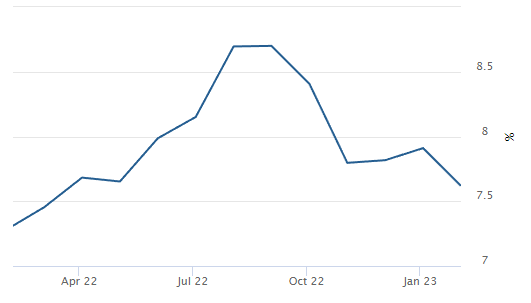
    MEXICO | Inflation slows. On 9 March, Mexico’s national statistics institute (Inegi) released the latest figures for the consumer price index (INPC), which shows that prices rose 0.56% in February as compared to January. This brings annual inflation to 7.62%. This compares to monthly inflation of 0.68% in January, when annual inflation stood at 7.91%.

    MEXICO | US escalates dispute over GM ban. On 6 March, the Office of the US Trade Representative (USTR) requested “technical consultations” with Mexico under the US-Mexico-Canada Agreement (USMCA) regarding “Mexican measures concerning products of agricultural biotechnology”. The announcement comes amid a dispute over Mexican plans to halt imports of GM corn for human consumption. US Agriculture Secretary Tom Vilsack stated the US believed “Mexico’s current biotechnology trajectory is not grounded in science, which is the foundation of USMCA”.

    MEXICO | Tourism ministry optimistic for 2023. On 5 March, Mexico’s tourism ministry (Sectur) announced that it expects income from international visitors to total US$31.17bn in 2023. Tourism Minister Miguel Torruco Marqués said that this would be an 11.3% increase on 2022 and a 26.8% increase on 2019. Torruco stated that it was estimated that the tourism sector would account for 8.6% of Mexico’s GDP in 2023 – up from 7.5% in 2021 and 6.8% in 2020.

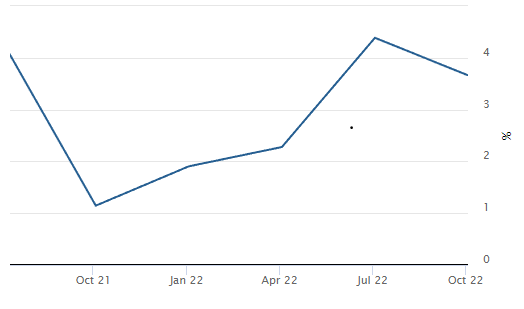
    MEXICO | Banxico cuts growth forecast. On 1 March, Mexico’s central bank (Banxico) released its latest quarterly report (October-December 2022) in which it cut its growth forecast for Mexico to 1.6% in 2023, down from 1.8% forecast in its November report. Banxico noted that economic activity continued to grow in Q4 2022 (0.46%) compared with Q3, but it slowed down compared with the previous three quarters.

    Mexico: GDP growth
    Percentage variation (year-on-year)

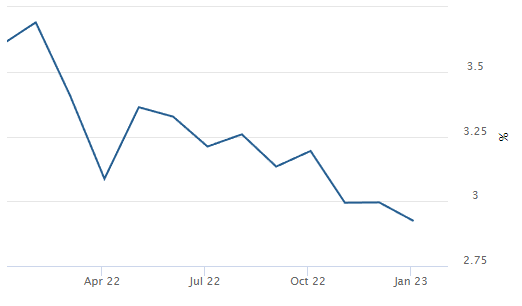
    Mexico: unemployment rate
    Economically active population

    Mexico: inflation rate
    Percentage variation (year-on-year)

  • CHILE: Boric reaffirms Chilean claim in Antarctica

    Abbi Dicker 07 February 2025 Hits: 4551

    President Gabriel Boric travelled to the US-run Amundsen–Scott South Pole Station on 3 January, making him the first Latin American president to visit the South Pole. Including Chile, seven countries have staked claims over parts of Antarctica. Furthering scientific cooperation was the ostensible reason for Boric’s Antarctica trip, but the visit of a head of state could signal a claimant country’s reaffirming of its interest over a piece of the White Continent, even though the territorial claims were effectively frozen in 1961, when the Antarctic Treaty came into force. 

    To reduce the risk of potential conflicts over Antarctica aggravating the geopolitical tensions between the US, the Soviet Union, and their allies during the Cold War period, 12 countries signed the Antarctic Treaty in 1959, which banned military activity on the continent. This turned Antarctica into scientific reserve where countries can set up research bases. The treaty, which took effect two years after it was signed, did not entail a renunciation of the previous claims, but it did block new claims from being made or the current claimants from demanding more land in Antarctica. In 1991, signatory countries agreed on new rules in Spain, which took effect in 1998. To stop countries from competing over the natural resources the continent is believed to hold, the Madrid Protocol prohibited mining for 50 years, unless the minerals are extracted for scientific purposes; from 2048, the protocol terms can be subject to re-negotiation.

    Although countries are prohibited from pursuing territorial claims, the advancement of scientific initiatives is not free from geopolitical considerations. Russia is not a claimant country, but it operates research bases in Antarctica. In 2020, Russian state-run geological exploration company Rosgeologia conducted surveys that suggested there could be reserves with over 500bn barrels of oil off the coast of Antarctica’s Queen Maud Land, a part of Antarctica claimed by Norway. Reports in the international press last year sparked more concerns that Russia might be planning more surveys for oil, as details emerged in the media about the Russian polar research ship that conducted the surveys in 2020; the vessel was sanctioned by the US last February, as part of the sanctions imposed on the two-year anniversary of Russia’s all-out invasion of Ukraine. In May last year, media attention on the issue arose again when a UK parliamentary committee discussed Russia’s activities in Antarctica, which concluded that there was no evidence that Russia was carrying out extractive activities, but that the situation should still be monitored.

    Boric took to social media last May to affirm that Chile firmly opposed any attempt to undermine the Antarctic Treaty by seeking to extract resources for economic gain rather than for purely scientific endeavours. Possibly due to the media reports about Russian activity, Boric also convened a meeting with the defence committee of Chile’s congress in one of the country’s Antarctic bases in May last year. A member of the committee, federal deputy Camila Flores, shared a video on social media on 23 May in which she described the meeting as “an act of sovereignty” in the face of threats “be they Russian or Argentine”. During Boric’s Antarctica trip this January, he did not mention the activities of other countries, instead highlighting Chile’s scientific projects, such as research on ice samples to study the effects of climate change. Boric’s trip to the South Pole come just under a year after Argentina’s President Javier Milei visited Antarctica to oversee research initiatives into the effects of marine pollution caused by microplastics. While neither president spoke about each other’s country’s claim, two visits from heads of state in a one-year period suggests the increasing interest in Antarctica of Chilean and Argentine authorities.

    Historical claims

    Chile and Argentina argue they have the oldest claims over Antarctic territory, with both countries invoking treaties and royal decrees from the 15th and 16th centuries that carved up South America between the Spanish and Portuguese empires. The Spanish created the Governorate of Terra Australis in 1539, which included Antarctica and the Tierra del Fuego archipelago, but the short-lived governorate was incorporated into the General Captaincy of Chile in 1555, a larger colonial administration which spanned modern-day Chile and Argentina.

  • POINTERS

    LatinNews 09 December 2011 Hits: 690

    HAITI | Army ‘reactivation’ delayed. On 8 November President Michel Martelly announced that it is his intention to recruit a new defence force, not simply reactivate the old army. He also said that the creation of this new force would not entail the dissolution of the national police (PNH); instead, he intended to strengthen the PNH. ‘One of the first things we will do before establishing the army,’ he said, ‘is to strengthen the police [...] Today I want everyone to know that there is only one force in the country — the police.’ He reiterated that he still intended to make an announcement regarding the proposed defence force, adding ‘What I will announce is not the remobilisation of former troops [but] just a calendar, a work plan to restore the force.’

    These statements came on the heels of reports that a core of about 2,500 future soldiers had already received basic training from the Coordination Nationale des Militaires Démobilisées (Conamid), the organisation that represents the past members of the Haitian army, disbanded in 1995. Conamid responded to Martelly’s announcement by accusing him of having reneged on his promise to reactivate the military.

    Martelly’s shift of emphasis appears to reflect growing evidence that major donors are unwilling to provide the funds to establish a new military force. On 16 November, responding to a media request, a spokesman for Canadian foreign affairs minister Diane Ablonczy said, ‘Canada fears that creating a second security force will significantly reduce resources available for Haiti’s other important priorities.’ The US government has also indicated that its priority is to help Haiti strengthen the police. On 18 November Martelly announced that he would be creating a civilian commission to draw up plans to restore the armed forces, in consultation with representative organisations, and that its recommendations would be presented on 1 January.

    TRINIDAD & TOBAGO | State of emergency relaxed. On 7 November Prime Minister Kamla Persad-Bissessar announced the lifting of the curfew established under the state of emergency imposed on 21 August and extended in September. She said, however, that the state of emergency would remain in place (including the joint army-police patrols) and that the government ‘reserves the right to impose limited curfews when and where necessary.’ She summed up the results of the state of emergency so far as, ‘It saved our nation. It redeemed all previous failed attempts. It has made Trinidad and Tobago safer than it has been for a very long time and it has given us a platform for moving forward purposefully.’

    The number of murders in August-October fell to 35, or 60% fewer than in the same period of 2010. There were also declines in the numbers of car thefts and burglaries, and there were more seizures of ammunition and cannabis than in the whole of 2010.  The police reported 5,826 arrests since 21 August, of which 1,405 on outstanding warrants and 463 on gang-related charges — most of the rest were detained from breaching the curfew. The director of public prosecutions, Roger Gaspard, put the number of [gang-related] arrests at 449, but noted that 236 of the detainees had to be released for lack of evidence to sustain the charges against them.