All Categories

Subcategories

  • REGION: Mercosur seeks more trade deals

    Abbi Dicker 11 December 2025 Hits: 455

    For decades the South American customs union Mercosur was busier preventing its collapse than promoting trade, internally or abroad. Political infighting, economic crises and ideological differences led to inertia. High external tariffs, albeit riddled with exemptions, protected sometimes inefficient domestic industries, while no meaningful trade accord was reached. That now seems to be changing, at least in part. In the wake of Washington’s tariff shocks earlier in the year, Mercosur is advancing on trade deals with several significant economies.

    Following the September signing of an accord with the European Free Trade Association (Efta), a group of European countries outside of the European Union (EU), Mercosur relaunched talks on 10 October toward a free trade deal with Canada. Negotiations with Ottawa began in 2018 but were suspended in 2021 amid political uncertainty, Covid, and disagreements between Mercosur governments. Talks are to follow the model that was used in deals reached with the Efta, EU, and Singapore, Brazil’s industry and trade ministry said. Fellow Mercosur members are Argentina, Uruguay, Paraguay, and, as of last year, Bolivia.

    With Mercosur negotiators having just wrapped up the fourth round of free-trade talks with the United Arab Emirates (UAE), Japan has emerged as the next candidate seeking negotiations with the South American bloc. Compared to the lukewarm reaction to a Mercosur trade overture as late as March, Tokyo now seems enthusiastic. The change of heart was prompted not only by US President Donald Trump’s tariff blitz, but also by Japan’s new prime minister, Sanae Takaichi, who took office in October. “When it comes to international economic policy, she is quite open and supports free trade,” Ryo Kuroishi, director of the South America division of Japan’s foreign ministry, said of Takaichi. “We are studying the content of the Mercosur-EU agreement. I believe it can also act as a stimulus for a possible deal,” Kuroishi told Brazilian newspaper Valor Econômico.

    EU-Mercosur

    The long-awaited trade pact with the EU is expected to be signed on 20 December, Brazil’s President Luiz Inácio Lula da Silva said during the G20 summit in South Africa. Despite ongoing resistance from France and Poland, authorities on both sides of the Atlantic are hopeful that the deal will obtain parliamentary approval. A last-minute agreement on safeguards for European farmers against a potential flood of Mercosur agricultural goods is seen as crucial to reduce ongoing resistance from France, even though the EU’s second largest economy alone cannot block the deal.

    “Mercosur is experiencing a historic moment of expansion in its network of trade agreements,” Tatiana Prazeres, Brazil’s secretary of foreign trade, told Bloomberg in November. “This is related not only to the fact that we are wrapping up negotiations with the EU, but also to a more challenging global context, in which countries seek partners committed to rules-based trade, who want to promote commerce, legal safeguards and stability.”

    UK Trade Minister Chris Bryant has also expressed interest in a trade pact with Mercosur. He told news outlet Politico in late September that a deal with Mercosur would be “a no-brainer” and that several chapters from its accords with Efta and the EU could practically be copied and pasted into a new agreement with the UK. “If we are excluded from that, then British businesses will really suffer. I think we only do something like 12 billion pounds worth of trade with Brazil. That is bonkers. It should be much bigger,” Bryant said.

    US-Brazil diplomatic thaw

    On 20 November US President Donald Trump removed the 40% additional tariffs on many Brazilian agricultural products. The decision followed a similar order the previous week to remove global reciprocal 10% tariffs on imports of agricultural products that are not grown in the US, including many products from Brazil. These 10% global tariffs, which were applied in April, together with the 40% tariffs applied in August to all Brazilian imports (with exemptions), brought the total tariff rate on many Brazilian products to 50%. Trump’s decision to remove the tariffs on agricultural products marks a boost for Brazil. While bilateral tensions escalated from July-September, Brazil and the US have signalled more willingness to negotiate a tariff deal in recent months.
  • HAITI: Is investment the way?

    Abbi Dicker 14 August 2026 Hits: 266

    Despite Haiti’s deep political and security crisis, a coalition of different groups is arguing that new investment may be the way forward.

    It was an unlikely event. On 29 June a group of Haitian government ministers, together with foreign diplomats, bankers, and business leaders gathered at the Palm Residence Hotel in Pétion-Ville, one of the areas of relative safety in the still largely gang-controlled capital. This was to mark the launch of Global Gateway, the European Union (EU)’s investment strategy, which aims to mobilise over €340m (US$387m) for Haiti by the end of 2027. It was arguably the first event of its kind since an international investors get-together in 2009, during the presidency of René Préval (1996-2001, 2006-2011).

    Prime Minister Alix Didier Fils-Aimé said his interim government intends to overcome security and economic challenges to create an environment conducive to investment, especially in infrastructure, ports, airports and logistics, agriculture and agribusiness. He said “The time has come to invest in Haiti’s resilience. The time has come to invest in its youth…[and] in its productive capacity.” Public works minister Joseph Almath Pierre Louis added that “Waiting for perfect conditions cannot constitute a development strategy”.

    Earlier the new approach was outlined in an interview with the Miami Herald by the EU ambassador to Haiti, Hélène Roos, which was published on 26 June. She said the EU was moving away from the old model of offering direct budget support to government departments. In its place it was offering support for public and private investment partnerships in areas such as climate resilience, infrastructure, seaports, and renewable energy. EU support is intended to attract additional loans from multilateral banks and private sources to leverage maximum benefits. She added “we shouldn’t wait. We should start now to put people in contact.”

    There are of course enormous obstacles to an investment-led recovery, primarily the continuing proliferation of gang violence across the country. Some recent positive developments remain small by comparison with the scale of the challenge. The government says it is aiming to hold elections this year with a new administration due to take office in 2027 – a necessary but not sufficient condition for pacification.

    • Violence

    On 15 June the United Nations high commissioner for human rights, Volker Türk, said gang violence in Haiti had resulted in at least 2,300 deaths, 1,100 injuries, and 99 kidnappings since the start of the year alone.

    The Caribbean Community (Caricom) has said it will support the renewal of the mandate for the 5,500 strong Gang Suppression Force (GSF), which was authorised by the United Nations Security Council last year. The GSF has regained control of some strategic roads and neighbourhoods in the capital. New judicial units are investigating mass crimes, including sexual crimes and corruption.

    Among those touting the contribution that investment can make to stabilise Haiti some are pitching tourism projects. Garry Muzeau, of travel agency toursinhaiti.com, says the development of south coast resorts could generate a major surge in revenues but will first require big infrastructure spending. Of concern, however, is that another existing resort on the northern coast at Labadee is to remain closed until June next year because its owner, US-headquartered cruise company Royal Caribbean, is concerned over the security risks. The US State Department continues to classify Haiti as a “Level 4 – do not travel” destination. While new investment can help play a positive role in Haiti’s recovery, the political risks remain a serious disincentive.

  • EL SALVADOR: Budget approved

    LatinNews 02 December 2011 Hits: 411

    On 23 November congress approved the budget for 2012. It set the budget at US$4.2bn, 9.2% up on the 2011 budget if the cost of paying off US$653m in bonds is discounted. Almost a quarter of the 2012 budget (US$926m) will go on capital projects.

    The right wing opposition Alianza Republicana Nacionalista (ARENA), did not support the budget which it said was not properly financed and would lead to the country becoming over-indebted.

    Subsidies (of US$215m) account for about 5% of the budget. It is not clear how, or if, congress has altered the allocation of subsidies which the government suggested when it submitted the budget to congress in September.

    The finance minister, Carlos Cáceres, claims that in the 2012 budget, the fiscal deficit will fall from 3.5% of GDP to 2.5% and foreign debt will come down from 52% of GDP to 50%. According to the central bank, foreign debt stood at US$6.4bn at the end of June 2011.

    Trade : In the first 10 months of the year imports were up by 21% at US$8.45bn while exports were up by 20% at US$4.5bn. The worry for policymakers is that non-traditional exports were up by only 16% at US$2.9bn while traditional exports (principally coffee) were up by 89% at US$535m. One big reason for the increase in the import bill was the jump in oil imports (by 37%) to US$1.4bn.

    Remittances: In the first 10 months remittances came to S$3.008bn, up 5.8% on the same period last year, according to the central bank. .

    GDP: President Mauricio Funes has announced that the GDP growth forecast for 2011 had been cut to 1.4% from 2.1% due to the recent heavy rains have cause damage estimated at US$840m or  4% of GDP. In 2010 GDP was US$21.79bn. The rains also killed 34 people.

    • In October inflation turned negative at 0.1% in the month. That brought the 12 month rate down to 5.4%.
  • Risk pointers

    LatinNews 21 November 2012 Hits: 499

    *** In praise of Kim Jong-un.  A new book has been published in North Korea praising the achievements of new leader Kim Jong-un.  The book describes the North’s third-generation leader as having been a child prodigy who is now an expert in international politics and military matters.  The book is following a long-established tradition.  Over 1,000 books in praise of the current leader’s grandfather, Kim Il-sung, were published, followed by a further 70 volumes praising his father Kim Jong-il.

    In another sign of a burgeoning cult of personality, senior government officials have been issued with badges bearing Kim’s image “to instil loyalty”.  This follows on from the issuing of commemorative stamps with Kim’s portrait in August.  The Rodong Sinmun, the organ of the ruling party, is also displaying a new slogan on its banner calling for people to rally round Kim Jong-un as their great leader.  This replaces a previous message referring only to the need to unite behind socialist goals.

    *** Increase in jamming of broadcasts.  A conference hosted by the BBC on 20 November heard that there has been a sharp increase in the jamming of broadcasts.  The satellite owner Eutelsat reported a doubling of jamming efforts between 2010 and 2011, followed by a threefold increase from 2011 to 2012.  A similar threefold increase in jamming between 2011 and 2012 was reported by Arabsat.  According to Eutelsat, the worst offender is Iran, which was responsible for between 30% and 50% of jamming incidents in 2010.  This year, Syria has been the worst offender.

    China was also fingered as an offender.  Access to BBC Chinese has been blocked in China since its launch in 1999.

    *** FARC ceasefire provides breathing space.  The Revolutionary Armed Forces of Colombia (Farc), has declared a ceasefire from 20 November to 20 January.  The purpose is twofold: to provide a breathing space for its guerrillas, which are under increasing pressure from the military, and to gain some international goodwill as it enters into talks with the government.

    However, Minister of Defence Juan Carlos Pinzon has expressed scepticism, saying: “The reality that history demonstrates is that this terrorist organization never honours anything; that’s why it is difficult to believe that they will stop killing children, that they will stop carrying out attacks against the civilian population as we have seen in recent weeks.”

    A similar ceasefire was declared by the Farc in December 1999, but the peace talks with the then Pastrana administration were a complete failure.

  • COSTA RICA: Corte-IDH ruling on gay marriage exposes divisions

    LatinNews 14 March 2018 Hits: 557

    Costa Rica is currently facing one of its most divided periods in modern history. On 9 January, in the middle of the 2018 general election campaign, the Costa Rica-based Inter-American Court of Human Rights (Corte-IDH) issued an Advisory Opinion on same-sex marriage which has exposed deep conservatism within the country.

    The Corte-IDH ruling states that all members of the Organization of American States (OAS) must guarantee same-sex couples the same civil rights as heterosexual couples, including marriage. It also mandates the recognition and regulation of procedures that provide for the right to change one’s name and have one’s personal identity information reflect the gender one prefers.

    This ruling has divided public opinion. On one side, civil-society organisations representing the lesbian, gay, bisexual, trans, and/or intersex community, such as Transvida, along with women’s rights groups such as Cefemina, hailed the ruling as a step forward in human rights for all. On the other, religious and conservative groups, including the Episcopal Conference of Costa Rica, claim this was a violation of Costa Rican self-determination and sovereignty.

    However, the divisions exposed by this ruling had emerged years earlier. Since the start of the term in May 2014 of the current centre-left Partido Acción Ciudadana (PAC) government led by President Luis Guillermo Solís, recognition of LGBTI rights has been controversial. In November 2014, the Costa Rican social security system (CCSS) allowed any homosexual couple (able to prove they were living in a domestic partnership) to extend their social insurance to their partner. This was done even when there was no legal recognition of a same-sex domestic partnership in place yet. In May 2015 President Solís signed an executive order banning any form of discrimination against people based on their sexual orientation in public institutions. In September 2017 the education ministry updated the sexual education curriculum in primary and secondary schools, to include subjects like recognising and respecting sexual diversity.

    This progress made by the government, which, in line with its professed commitment to LGBTI rights had filed the petition to the Corte-IDH in 2016, was met with criticism and protests from evangelical and conservative sectors. These groups began to “warn” the public about the intrusion of “gender ideology” and the “international LGBTI agenda” promoted by external organisations like the United Nations (UN) and OAS. When the Corte-IDH gave its ruling, these “warnings” about international intervention in favour of LGBTI rights became real for their followers, prompting an immediate reaction. The promise by Fabricio Alvarado Muñoz, an evangelical preacher and presidential candidate for the small opposition Restauración Nacional (RN), to remove Costa Rica from among the Corte-IDH’s member states, has been directly linked to his surprise surge in the polls in the final stages of the campaign, ultimately winning the first round. Yet in the 1 April second round, he faces the PAC’s Carlos Alvarado Quesada, one of the few candidates who from the start declared support for same-sex marriage, setting the stage for further polarisation in the run-off campaign. Regardless of the second-round result, in the legislative vote for the 57-member unicameral legislature, which took place also on 4 February, the RN secured 14 seats – already an unexpected win for the evangelical-conservative sector.

    Meanwhile, these divisions have already gone beyond politics. Since the Corte-IDH ruling, human rights groups are warning of a rise in attacks targeting the LGBTI community. On 14 February the Costa Rican ombudsman issued a statement warning that the atmosphere in the country had become “deeply polarised” with regard to the issue while civil-society groups have raised similar concerns.

    • Civil-society concerns

    On 21 February, a civil-society group Frente por los Derechos Igualitarios (FDI) complained that political campaigning ahead of the 1 April presidential second round had been marked by an increase in attacks targeting the LGBTI community following the 4 February first round election. FDI spokesperson Michelle Jones told Spanish newswire Efe that there were at least 26 cases of individuals who had suffered physical and verbal aggressions, claiming that prior to the electoral process such cases were rare.

  • BOLIVIA: Primary elections called off

    Abbi Dicker 22 August 2024 Hits: 2272

    There will be no primary elections in Bolivia ahead of next year’s general election, after President Luis Arce promulgated a bill to scrap the primaries so that the electoral authorities can prioritise the holding of long overdue judicial elections and a parallel referendum. Whilst there was a cross-party consensus in favour of calling off the primary elections, the move was heavily criticised by former president Evo Morales (2006-2019), who insists that he is eligible to stand for the ruling left-wing Movimiento al Socialismo (MAS) despite being barred due to presidential term limits.

    The bill to suspend the primary elections, which President Arce promulgated on 19 August, was supported by the right-of-centre opposition which joined forces with Arce’s faction of the MAS to override opposition from Morales’ ‘Evista’ wing of the party. Unusually, the bill had been submitted to congress by Bolivia’s supreme electoral court (TSE) following cross-party talks at which a consensus emerged in favour of scrapping the primaries.

    The justification for doing so is that the TSE needs to focus on holding overdue judicial elections which should have taken place in 2023. The failure to hold the elections on time sparked major protests at the start of the year which were backed by Morales, whose hopes for a presidential comeback are pinned on the election of a new constitutional court (TCP) which could then overturn the December 2023 ruling that imposed firm limits on presidential re-election [WR-24-01]. The delay in holding the elections, which have now been set for 1 December, is due to disagreements between Arce and Morales’ factions of the party over the shortlist of TCP candidates, with neither side willing to nominate judges who might boost the rival wing of the MAS.

    Morales was scathing in his response to the scrapping of the primary elections, accusing Arce on 20 August of being afraid to face him in a direct electoral contest. But, as well as the judicial elections, Morales has another route into contention after Arce announced early this month that a parallel referendum would be held to clear up the issue of presidential term limits [WR-24-31]. Morales expressed confidence that voters would vote to repeal the limits, and he drew parallels with the 2008 recall referendum that he won by a large margin as president.

    If Morales’ candidacy is authorised, either by the next TCP or by voters in the referendum, then the MAS is likely to move closer towards a formal rupture between those loyal to Arce and those who back Morales. With no primary elections to be held, it is unclear how their rival candidacies would be resolved. Both men appear loath to form a breakaway party or stand as independents, but they would be likely to do so if it was their only means of competing in the election.

    Of the two, Arce seems more likely to cleave away from the MAS. He is bitterly opposed by the party’s leadership committee, which is loyal to Morales, and an attempt by Arce’s allies to seize control of the party leadership was rejected by the TSE in May [WR-24-21]. Arce also has his own organisational structure – the Pacto de Unidad grouping of unions and social organisations – which could be upgraded into a political party.

    Arce unveiled the referendum questions, which need to be approved by the TSE, on 21 August. As well as being asked to settle the issue of presidential re-election, voters will also be asked whether they support cutting fuel subsidies and expanding the lower chamber of congress.

    Referendum questions

    The TSE is now assessing the referendum questions, which ask voters whether they support “allowing non-continuous [presidential] re-election”; whether they want to maintain petrol and diesel subsidies “despite their great cost”; and whether they support expanding the lower chamber of congress from its current 130 seats to provide greater representation for more populous departments.

  • GUATEMALA: Arévalo lifts minimum wage

    Abbi Dicker 09 January 2025 Hits: 5542

    Guatemala’s left-of-centre government led by President Bernardo Arévalo claimed on 6 January that a new minimum wage increase could provide an important boost to economic growth. However, the country’s leading private sector lobby Comité de Asociaciones Agrícolas, Comerciales, Industriales y Financieras (Cacif) argued that the increase represented an “important challenge for the country’s economic and social stability”.

    President Arévalo announced a 10% minimum wage increase in agricultural and non-agricultural sectors, along with a 6% minimum wage rise for maquila and export activities on 22 December. Both are well above the 1.70% annual inflation rate registered for December. This brings the minimum monthly wage rise for non-agricultural activities to Q3,723.05 (US$483), while the minimum monthly wage for the agricultural sector rose to Q3,593.55, both up by 10%. Arévalo described the increase as the “highest of the last two decades”. Meanwhile, for the maquila and export sector, the monthly minimum wage will rise to Q3,278.55, up by 6%.

    Cacif released a statement on 23 December highlighting concerns regarding the impact on micro, small and medium-sized enterprises (Mipymes), which account for four of every five companies accredited to Cacif. Cacif also argued that the increase would only benefit 30% of Guatemalans, who are employed in the formal sector, leaving the remaining 70%, who work in the informal sector, unaffected.


  • BRAZIL: Lula aims to fix INSS as election pressure mounts

    Abbi Dicker 21 May 2026 Hits: 2727

    For President Luiz Inácio Lula da Silva, few institutions carry as much weight – or as much baggage – as the Instituto Nacional do Seguro Social (INSS). The social security agency is far more than just a government branch that hands out retirement checks. It provides a host of benefits to millions of Brazilians and is a symbol of Lula’s idea of a generous welfare state. Going into an election year, the INSS needed to be in tip top shape, lest it foment voter dissatisfaction. And in good shape it was not. Following a massive corruption scandal at the INSS that had tainted the government’s social agenda, the institute was racking up significant waiting times that were beginning to turn into a political time bomb for Lula. 

    On 13 April, with general elections just six months away, Lula made a decisive move: he dismissed INSS president Gilberto Waller Júnior and appointed career civil servant Ana Cristina Viana Silveira to lead the institute. This leadership swap is more than a routine administrative adjustment. Waller, a federal prosecutor with a background in the comptroller general’s office (CGU), was initially brought in to clean house after a corruption scandal involving irregular deductions from retirement and pension accounts between 2019-2024. The failure of a congressional inquiry to agree on who was to blame for the scandal did little to alleviate Lula’s angst over the INSS.

    While Waller was seen as a rigorous legal mind, he did little to improve the operational aspect of the institution and frequently clashed with the minister of social security, Wolney Queiroz. The list of Brazilians waiting for pension approvals, maternity leave, and disability benefits swelled to alarming proportions. By February 2026, the number of pending requests was over 3m.

    “I want zero queues,” Lula reportedly told his cabinet during the announcement of the change. “We cannot accept that a worker, after contributing for thirty years, has to wait in a virtual line for a year to receive what is theirs by right. I told the new president: the priority is the people, not the bureaucracy,” Lula said, according to local media reports.

    The task will not be easy. The INSS faces a chronic shortage of personnel and insufficient digital infrastructure. Waller’s approach was seen as effective for auditing and stamping out fraud, but inadequate to provide efficient service, especially in an election year. In contrast, Viana Silveira is a career civil servant who joined the INSS in 2003. She previously headed the social security appeals council, where she was credited with improving the capacity for analysing appeals.

    By choosing Viana Silveira, Lula is putting the agency in the hands of someone who knows the cogs of the machine. Unlike a political appointee or an outside prosecutor, she understands the internal bottlenecks, from the outdated software systems to the lack of health examiners needed to process requests for a medical leave, for example.

    Viana Silveira’s mandate to cut through red tape and improve services includes the use of artificial intelligence and digital simplification to process standard pension claims, as well as the reopening of physical agencies that were shuttered or understaffed during the previous administration. She will also have to ensure she remains in sync with the minister of social security and the presidency to avoid the communication breakdowns that plagued Waller’s term.

    Declining popularity

    The Lula government’s popularity has declined in recent months while public disapproval has ticked up, with various polling firms releasing survey results in March-May which showed disapproval ratings hovering above 50%. He plans to run for re-election in the presidential race and his main rival in the October election is expected to be Senator Flávio Bolsonaro, the eldest son of far-right former president Jair Bolsonaro (2019-2023). Most pre-election opinion polls in recent months have indicated that the race could be very tight, with Lula and the younger Bolsonaro technically tied in voter intentions.

  • PANAMA: New Panama Canal administrator assumes post amid challenges

    Sarah Sheldon 20 October 2026 Hits: 63

    Ilya Espino de Marotta has taken over as administrator of the Panama Canal Authority (ACP) at a time when the Canal is facing myriad challenges, mitigated in the short-term by increased revenues due to high transit prices.

    Espino de Marotta took up her post on 7 September, becoming the first woman to hold the position after previously serving as chief sustainability officer and deputy administrator during a four-decade career at the ACP. She took over from Ricaurte Vásquez Morales and will serve until 2033. She will be in charge of implementing the 2025-2035 strategic roadmap, which aims “to ensure water security, strengthen the reliability and resilience of Canal operations, diversify its services, and consolidate Panama’s position as a global logistics, maritime, and energy hub,” according to an ACP press release.

    Reliability and resilience refer to ongoing concerns around the future viability of the Canal after prolonged periods of drought have led to repeated transit restrictions in recent years. One way that the ACP is attempting to do that is by securing more water supplies by building a new reservoir on the Río Indio basin. During her inaugural speech, Espino de Marotta called the reservoir “the most important project” in the country, and identified water supplies as the most significant issue facing the Canal and Panama more widely. “The biggest challenge we are facing today is securing future water supplies for more than 2m Panamanians, the functioning of the Canal, and the most important economic and commercial activities of the country,” she said.

    As well as working to increase water availability, the ACP is also trying to drive down water use by building an energy corridor, which will allow the movement of liquified petroleum gas (LPG) and other products through pipelines, rather than by ship, as well as by building new port terminals at either end of the Canal to facilitate transfers. The aim is to maintain the Canal zone’s strategic position in interoceanic trade while reducing its exposure to changing weather patterns.

    While the strategy appears sound, these projects will require billions of dollars in investment and take many years to come online, at a time when climate change is intensifying and its effects are becoming increasingly apparent. From May-August rainfall in the Canal watershed was 34% lower than average, and the ACP already announced tightening restrictions from an average of 35 daily transits as of 30 June FY2026, to 32 in September. On 28 September it announced that the cap would be raised to 33 from 15 October. However, risks remain as forecasts suggest that the El Niño climate phenomenon, which is associated with drought conditions in Panama, is expected to be particularly strong this year. The US National Oceanic and Atmospheric Administration (Noaa) is predicting a more than 90% probability that El Niño will reach a very high intensity during the northern hemisphere’s fall and winter 2026-2027, likely intensifying the annual reduction in water levels at the lakes during the December-April dry season and increasing the likelihood that stricter restrictions will be reimposed as water levels in the lakes that feed the Canal locks diminish. 

    Nonetheless, demand for Canal transits is high, as conflict in the Middle East disrupts shipping routes in the region. This has pushed up prices, providing something of a windfall for the Canal, and by extension the Panamanian government. Toll revenue from the Canal was up by 13.6% in the first six months of 2026 compared with the same period in 2025, according to figures from Panama’s comptroller general’s office published on 16 September. If this disruption persists, it will give the Canal some breathing room to implement its infrastructure plans, both in terms of time and by boosting income. 

    However, there are other important considerations that affect the outlook for the Canal, including the effects of great power competition between the US and China for influence over the strategic waterway. President José Raúl Mulino has so far acquiesced to Washington’s demands to reduce Beijing’s perceived influence at the Canal. And in January, Panama’s supreme court struck down port concessions operated by Hong Kong-headquartered CK Hutchison Holdings, eliciting a strong response from Beijing, which has promised to punish Panama for the move. Chinese authorities have reportedly told state firms to pause talks on infrastructure investment in Panama, for example, which will make it more difficult to secure the necessary financing and execution partners.

    Increased sensitivity around security at the Canal has also led to heightened military cooperation between the US and Panama, including a delivery of advanced surveillance drones worth US$6m in mid-September and the creation of a new special economic fund for the “security and protection of specific areas of the Panama Canal”, under the administration of the aeronaval service (Senan) and the supervision of the security ministry (Minseg). The fund, paid for by the ACP, is linked to a new joint command (CCSCP) announced in August. However, the fact that all information, documentation, plans and accounts linked to the execution and operations of the special fund are to remain confidential to “protect national security” has sparked concerns around transparency. The fund has been criticised by opposition deputies such as independents Betserai Richards and Luis Duke, and Grace Hernández and Ernesto Cedeño, both from Partido Movimiento Otro Camino, who could help maintain scrutiny of its activities. This increases the likelihood that questions around the fund and its role will intensify, particularly as legal questions around the mechanism by which a ministry can draw on the ACP budget have so far gone unanswered.

    Even if the necessary funds can be found, there are other factors at play including the potential for protests and social unrest. For example, there are considerable hurdles to completing the planned Río Indio reservoir, including a court challenge from local families that would have to be resettled. Some sectors of Panamanian society have also shown a willingness to take to the streets to protest large development projects, such as the Cobre Panamá copper mine, which was shuttered in 2023 following mass protests. Even if these concerns around Río Indio can be resolved swiftly, the ACP doesn’t expect construction works to start until 2028 and has previously said it expects the project will take six years. As a result, the Canal won’t be adding any new water resources from this source until 2034 at the very earliest, and delays to the timeline are certainly possible. 

    Looking ahead, ACP financial controller David Sedda was cited by local media in mid-September as telling  business lobby Asociación Panameña de Ejecutivos de Empresas (Apede) that El Niño may cost the Canal up to US$400m in lost revenue, with higher transit prices partially offsetting a lower number of transits. This means that financial losses may be relatively small, but Sedda has pointed out that there is a long-term risk in a growing perception that the Canal is unreliable or prohibitively expensive. “If this route becomes unstable, shippers won’t plan in the medium- or long-term to cross Panama if they know that it’s not certain that they’ll be able to transit,” he said. 

    Other routes

    Amid the Canal’s various challenges, alternative shipping routes, such as interoceanic corridors in other parts of Central America and Mexico, may become increasingly attractive to shippers, at least until the Canal can secure sufficient water supplies and build enough alternative infrastructure to reduce the number of transits while still moving products from coast to coast. One saving grace for Panama is that overland routes will struggle to compete with the Canal at scale, unless significant infrastructure projects such as interoceanic railways and pipelines are built in other parts of the region.

  • Rangel swears loyalty to the revolution

    LatinNews 18 January 2012 Hits: 1128

    Development: On 17 January General Henry Rangel Silva was sworn in as Venezuela’s new defence minister.

    Significance: President Hugo Chávez defended Rangel Silva as a “tremendous general” and said that the various accusations against him - centred on his links to Colombian guerrilla leaders - are an attack on the Bolivarian Armed Forces (FANB) and the people”.

    Chávez happily used the controversy surrounding Rangel Silva to launch one of his customary tirades against the opposition, warning that the “bourgeoisie, subordinated to the yankee empire” would never again be able to “destroy the homeland”.  The president takes every opportunity to paint his opponents as imperial lackeys.

    The best thing the US government and other external commentators could do is to keep quiet. As one commentator put it in a recent piece entitled ‘Shut up Obama’, “[There is] nothing better for Chavez but to tense the cord so as to make [people] believe that the electoral dispute in October is not between a bad government and a promise of a better one, is not between autocracy and democracy, between decline and progress, between civilisation and barbarity; but between the motherland and the empire”.

    Key points:

    • The message to the armed forces was clear - loyalty is rewarded. Rangel ratified his compromise with the national (Chavista) constitution and the Venezuelan people “to defend and construct the new homeland under the leadership of our commander in chief Hugo Chávez Frías”. In a ceremony attended by some 4,500 soldiers, he added, “Comrades in arms, from here I speak to you as a soldier and as a man of this country, I promise you again that this soldier will never cede to slander or pressure of any sort”.

    • Along with Rangel, two major generals, Juan Romero Figueroa and José Pérez Escalona, were appointed the new commanders of the national guard and the air force, respectively.  Another Chávez loyalist, General Wilfredo Figueroa Chacín, became head of the military intelligence directorate (DGIM) in the New Year. The outgoing defence minister, Carlos Matos Figueroa, will seek election for the ruling Partido Unido Socialista da Venezuela (PSUV) as mayor of the state of Nueva Esparta in the December 2012 regional polls.

    • This week the Colombian newsweekly ‘Semana’ published a story alleging that President Chávez’s controversial decision in 2007 to play host at the presidential palace in Caracas to Iván Márquez, a senior member of the Fuerzas Armadas Revolucionarias (Farc) was a direct result of Rangel Silva’s personal relationship with Timochenko, then a member of the Farc secretariat and now its commander-in-chief. The story is not new, but the timing was clearly very deliberate.

    • On 12 September 2008 the US Department of the Treasury's Office of Foreign Assets Control (OFAC) designated Rangel Silva along with Hugo Armando Carvajal Barrios and another former official, Ramón Rodríguez Chacín, “for materially assisting the narcotics trafficking activities of the Revolutionary Armed Forces of Colombia (FARC), a narco-terrorist organization”. At the time Rangel Silva was the director of Venezuela's Directorate of Intelligence and Prevention Services (DISIP), while Carvajal was head of the military intelligence service, DGIM.  The US alleged that Rodríguez Chacín, the recent interior minister (to 8 September 2008), was the Venezuelan government's “main weapons contact for the FARC”.

    • In November 2010 Rangel raised eyebrows when he commented that the Venezuelan army was “wed” to President Chávez’s socialist project and suggested that the army would “find it difficult” to accept an opposition government.

  • ARGENTINA: Public finances improve but weaknesses remain

    LatinNews 18 July 2019 Hits: 3588

    Argentina posted a primary fiscal surplus for the first half of 2019 for the first time since 2011. This has been held up as a sign that the economic adjustment undertaken by the government led by President Mauricio Macri is producing results and restoring macroeconomic stability. But other economic indicators show that the economy continues to exhibit imbalances and remains weak. Even the International Monetary Fund (IMF), which helped to devise the government’s adjustment plan and has provided significant financial support, has warned of the latent risks surrounding the economy, which could conspire against Macri’s re-election in October.

    Finance Minister Nicolás Dujovne presented the mid-year financial results on 12 July. These showed that there was a primary fiscal surplus of Ar$30.2bn (US$707.7m), or 0.1% of GDP. This contrasts with the Ar$105.8bn fiscal deficit registered in the first half of 2018, showing that the Macri administration’s efforts to cut spending and increase the tax take have delivered. Dujovne noted that the surplus was the result of a 48.2% year-on-year increase in the tax take, adding that Argentina is on course to meet the fiscal deficit reduction targets set out in the US$57bn Stand-By Agreement (SBA) with the IMF.

    Dujovne argued that consolidating Argentina’s public finances would lead to the much-awaited economic recovery that the Macri administration has been promising. Dujovne even said that economic indicators suggest that the domestic economy is “slowly recovering” after falling into recession last year and posting further negative growth in economic activity in the first four months of 2019.

    But while the improvement in public finances was corroborated by the IMF, the lender has warned that Argentina’s economy remains fragile. After conducting a fourth review of the SBA agreement, on 12 July the IMF said the government had met and even surpassed the fiscal objectives set out under the agreement for March-June. The IMF executive board announced that it has approved the disbursement of an additional US$5.4bn from the SBA requested by the government but, on 15 July, the IMF released a new staff report on Argentina in which it warned that the Argentine economy still faces “elevated” risks.

    The report says that the electoral campaign could produce volatility in the local financial market, adding that Argentina’s financial needs remain high. It said that any loss in confidence in the markets between now and October could severely compromise the country’s ability to secure its financing needs. In addition, the report points out that Argentina’s debt is now of shorter maturity than before as a result of the government’s debt restructuring programme. The report also revised its GDP growth projection down from -1.2% to -1.3% this year, while its growth projections for next year were reduced from 2.2% to just 1.1%.

    The report also said that the inflation rate “remains high”. It forecast that year-end inflation will be around 40%, higher than the 30.5% forecast in the previous review and well above the 23% rate envisioned by the Macri administration. It is the high cost of living that most impacts voter mood in Argentina. The Macri administration’s failure to fulfil its promises to deliver lower inflation and sustained economic growth have been highlighted by Alberto Fernández, the presidential candidate of the main opposition Frente de Todos coalition, who in a 15 July interview accused Macri of “lying” to Argentines during the 2015 electoral campaign by making false promises. Fernández also warned that if Macri is re-elected “I fear we will have no country left”.

    • High inflation

    A day after the release of the IMF Staff Report, Argentina’s national statistics institute (Indec) released its latest inflation figures. These show that the inflation rate increased by 2.7% month-on-month in June, with a 12-month inflation figure of 55.8%. The June inflation result may have been lower than the 3.1% monthly rate (57.3% annual rate) registered in May and mark the fourth consecutive month of falling monthly inflation, but it brings the accumulated inflation rate for the first six months of the year to 22.4%. The Indec data confirm that the government’s inflation target for the year is now unattainable and that it may not fall quickly enough for Argentines to notice a difference before the October polls.

  • Energy

    LatinNews 03 December 2019 Hits: 459

    López Obrador was strongly opposed to the liberalisation of the energy sector that was carried out by his predecessor, the PRI’s President Enrique Peña Nieto (2012-2018), arguing that it undermined the country’s sovereignty. Scrapping the sector’s reform of 2013 was therefore one of his main campaign promises.

    The announcement that Rocio Nahle, a former Morena legislator totally opposed to the reform, would be appointed as energy minister fuelled concerns that it would be reversed, but shortly after the election, on 10 July 2018, she confirmed that the reform would not be cancelled. However, in practice the reform has been side-lined as the government has focused on increasing energy production through state-owned companies that it considers key engines of growth for the country and avoiding any energy price rises beyond inflation.

    However, the national oil company Mexican Petroleum (Pemex) is in crisis due to its exorbitant debt levels, plummeting production, and widespread theft of fuel through thousands of illegal taps, known locally as ‘huachicoleo’. The state-owned Federal Electricity Commission (CFE) is similarly indebted and also faces huge non-technical losses, partly due to theft.

    López Obrador’s strategy to rescue Pemex is to inject public funds into the company and limit private participation in the oil sector. The government seeks to boost Pemex’s current production of 1.7 million barrels of oil per day (mbd) to reach 2.6 mbd by 2024, which would be facilitated by reactivating its existing six refineries and the construction of an additional one in Dos Bocas, in his native Tabasco state. The 69% increase in resources allocated to SENER under section 23 of the 2020 budget relative to 2019 is largely explained by this project. The government also seeks to reduce the tax burden on the company, which currently amounts to 65% of its total income. Additional income will come from service contracts signed with private companies. However, there are concerns about the effectiveness of this approach, particularly because restricting private investment (which led to the cancellation of scheduled auctions and farmouts) actually concentrates the risk of unsuccessful exploration attempts on Pemex.

    Pemex’s budget for 2019 was 20% higher than its resource allocation the year before. The 2020 budget illustrates that the company remains a priority for the government as its budget increased by 8.8% in real terms relative to what it was allocated in 2019. Moreover, for every 100 pesos that the government has allocated to spend in infrastructure during 2020, 50 are for Pemex.

    With regards to the CFE, López Obrador promised to “revitalise and rescue” the company to boost power production. Thus, the 2019 budget provided a 16% increase to the CFE relative to the resources it was allocated for 2018, though the increase of the 2020 budget is more modest at 1.4% in real terms. However, the 2020 budget also includes a 20% increase for energy expenditure destined for electricity subsidies.

    The National Programme of Electric Energy, which was presented in December 2018, focuses on reaching self-sufficiency and reducing purchases of electricity from the private sector, which generates around 50% of the electricity consumed in the country. In order to achieve this, the government aims to rehabilitate the CFE’s 60 existing hydroelectric plants to cut down on natural gas imports to produce power. The regime has largely shunned the development of renewable energy – such as solar and wind – arguing that hydro is not only the CFE’s competitive advantage, but it is also clean energy. This explains the cancellation of clean energy auctions as early as December 2018.

    However, the most serious development in the sector since López Obrador took office was the announcement made on 22 February by the CFE’s director, Manuel Bartlett, another strong opponent of the energy reform and controversial former PRI politician, that CFE was unable to fulfil its obligation to compensate companies that had been forced to suspend the construction of natural gas pipelines to supply the CFE’s plants due to circumstances beyond their control (as is common practice worldwide). He accused them of having signed abusive contracts with CFE and called for the contracts’ renegotiation.

    The dispute was seen as a particularly worrying case by investors, but it was eventually settled when the government on 27 August announced that it had reached a mutually beneficial agreement with three of the four gas pipeline companies involved. An agreement was reached with the final company on 11 September. According to industry specialists, the administration realised that its position was unsustainable as if the case had reached international arbitration it would have lost. In addition, the government would have also undermined its chances of attracting much needed investment at a time when the economy is clearly slowing down. The outcome of the case demonstrated that despite his rhetoric López Obrador can act pragmatically.

  • Economic Highlights

    LatinNews 24 January 2020 Hits: 1201

    Interest rate cut: On 19 December 2019 Mexico’s central bank (Banxico) cut its benchmark interest rate by 25 basis points to 7.25%, the fourth cut in interest rates in 2019. The decision was not unanimous; one member of Banxico’s monetoary policy board wanted it cut to 7.0%. As well as the domestic economic slowdown, Banxico’s report cited reduced headline inflation which closed at 2.97% in November 2019, just below Banxico’s target of 3% as one of the factors that led to the slashing of the interest rate. The report also highlighted concerns that the recent increase in the minimum wage could drive up inflation.

    International bond issue: On 7 January Mexico’s finance ministry (SHCP) reported that it had placed US$2.3bn worth of bonds in the international markets. This is Mexico’s first international bond issue of the year, which the SHCP said had been 6.4 times oversubscribed as 350 institutional investors took part in the operation. An SHCP statement said it managed to place US$1.5bn in bonds maturing in April 2030 offering an annual return of 3.25% and US$800m in bonds maturing in January 2050 offering a yield of 4%. The statement notes that the interest rate for the 2030 bond is the lowest ever offered by Mexico for US-dollar denominated bonds. It adds that thanks to the operation and the swap offered to holders of bonds maturing in 2022 and 2028 for the new 10-year bonds Mexico has now achieved its objective of refinancing its debt and securing 58% of the external funding needs projected for the year.  

    FDI: On 19 November 2019 Mexico’s economy ministry (SE) reported that inward foreign direct investment (FDI) increased 7.8% in the first nine months of 2019, compared with the same period in 2018. The SE figures show that between January and September Mexico received around US$26.1bn in FDI, compared to the US$24.2bn received for the same months in 2018. The FDI for the first three quarters of 2019 came from 3,759 companies with foreign capital participation, 2,814 trust contracts, and 19 foreign legal entities. However, in contrast to the increase in FDI, Mexico’s national statistics institute (Inegi) reported on 9 December 2019 that gross fixed investment in the country was down 4.8% in the first nine months of 2019 compared with the same period in 2018. The figures also show that for the month of September 2019 fixed gross investment was down 6.8% compared with the same month the previous year.

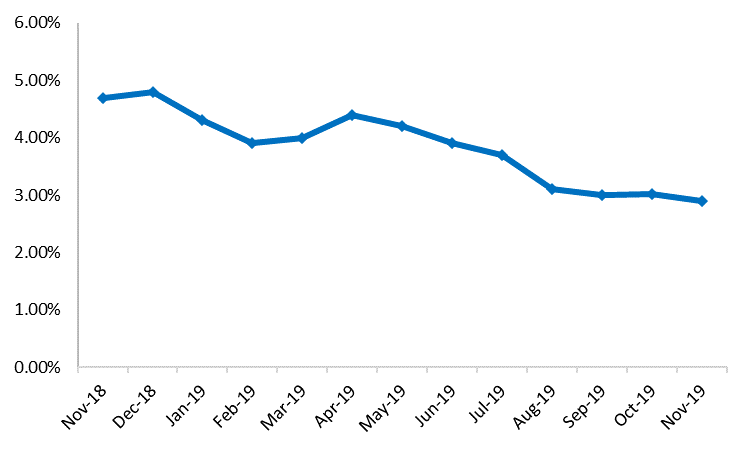
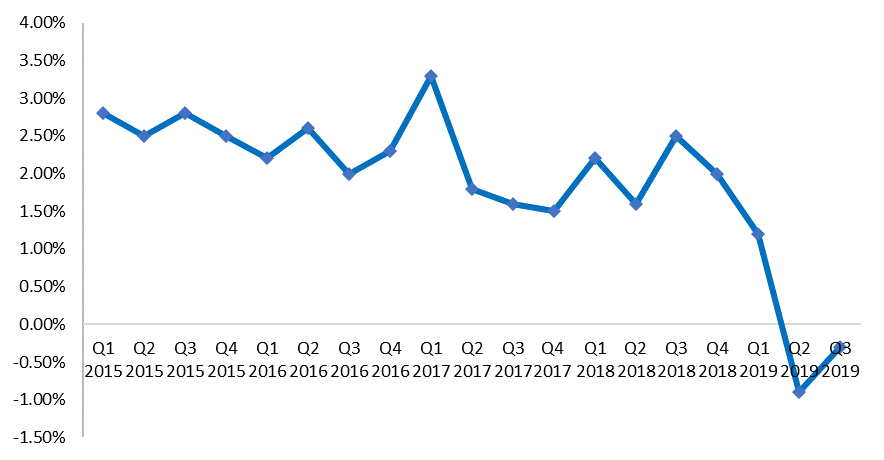
    Mexico: GDP Growth
    Percentage variation (year-on-year)

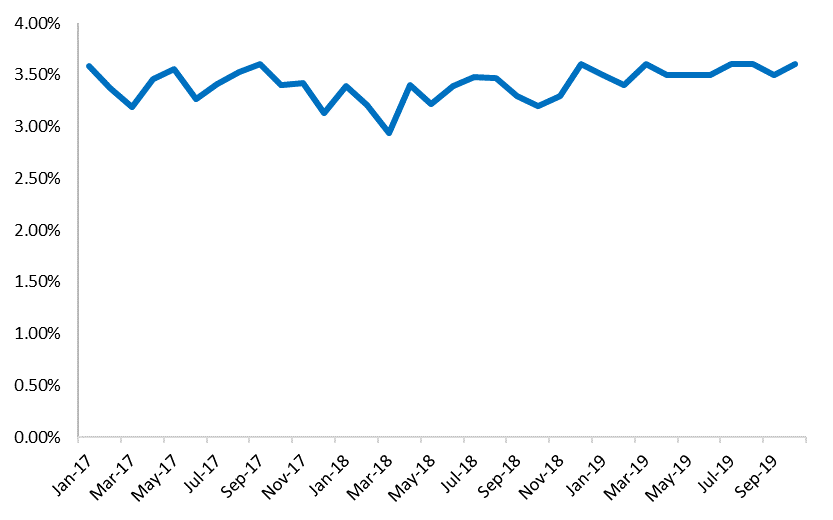
    Mexico: Unemployment Rate
    Econimically active population

    Mexico: Inflation Rate
    Percentage variation (year-on-year)

  • URUGUAY: Marine murders cause commotion

    LatinNews 04 June 2020 Hits: 3674

    The defence minister, Javier García, relieved the commander of the navy, Marcos Saralegui, of command on 3 June after a triple homicide which shocked Uruguay. On 31 May the bodies of three Uruguayan marines were discovered in a naval outpost in Montevideo, each with bullet wounds to the head.

    García appeared before the defence committee of the lower chamber of congress on 2 June to discuss the crime, the most serious against members of the armed forces since the return to democracy in 1985. He said there had been “flagrant procedural failings”, especially a lack of communication. He noted that the three marines, who were carrying out the night watch at an old naval radar base near Fortaleza del Cerro overlooking the Bay of Montevideo, had been murdered overnight but their bodies had not been discovered until the morning when colleagues came to relieve them. Saralegui was replaced at the helm of the navy by Rodolfo García.

    President Luis Alberto Lacalle Pou condemned the atrocities, declared two days of national mourning, and promised that the perpetrators would be apprehended.The police set to work on two main lines of inquiry around the executions: an internal feud within the navy or a warning from drug trafficking organisations (DTOs) to the Lacalle Pou administration, which has taken tougher action against organised crime and in cracking down on micro drug trafficking (see sidebar).

    • Drug gang threat

    The interior minister, Jorge Larrañaga, described an explosion outside the headquarters of the interior ministry’s counter-narcotics agency, Dirección General de Represión al Tráfico Ilícito de Drogas (DGRTID), on 9 May as “a narco warning”. “It is not criminal gangs but the rule of law that is going to prevail in Uruguay,” Larrañaga insisted. Brazil’s most powerful criminal gang, Primeiro Comando da Capital (PCC), has become more active in Uruguay, which has become a drug trans-shipment country in recent years.

    The homicides do not appear to have been the work of DTOs, however, after the police made three arrests upon raiding various houses near the Fortaleza del Cerro outpost. One of those arrested was a 26-year-old former marine, who lost his position in March after failing to report for duty for five days; three Glock pistols that had been carried by the murdered marines were also found. The fingerprints of the former marine, accused of being the material author of the homicides, were found at the scene of the crime. It is believed he managed to gain entry to the outpost because he knew the marines on duty, but the motive for the crime is unclear.

  • ECONOMIC HIGHLIGHTS

    Abbi Dicker 21 February 2025 Hits: 4318

    ECUADOR | Banana exports up. Ecuador’s banana exports increased by 1.57% in 2024 compared with 2023, to total 364.73m crates (1 crate = 18.14kg), according to a new report released on 27 January by the Asociación de Comercialización y Exportación de Banano (Acorbanec), Ecuador’s largest umbrella group of banana exporters. The Acorbanec report highlights that the European Union (EU) remains the main export market for Ecuadorean bananas, accounting for 29.06% of total exports. This is followed by Russia (19.01%), the Middle East (13.39%), and the US (11.83%). Other key markets include the Southern Cone (6.93%) and East Asia (6.31%).

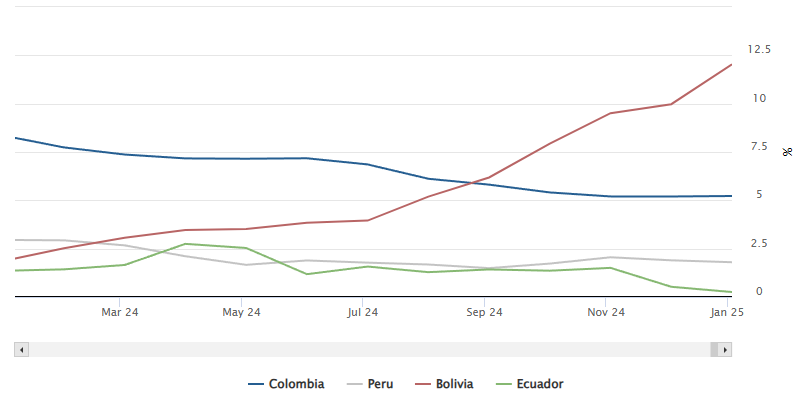
    PERU | Interest rate held. Peru’s central bank (BCRP) announced on 13 February that it was holding its benchmark interest rate at 4.75%, following a cut of 25 basis points in January, as well as other cuts of the same size towards the end of last year. In a statement explaining the decision, the BCRP noted that there was monthly deflation of 0.09% in January, down from inflation of 0.11% the previous month, while annual inflation was 1.90%, down from 2.00%. Annual inflation is now near the centre of the BCRP’s target range of 1%-3%. The BCRP lowered its annual inflation forecast for 2025 to 2.37%, down from its January forecast of 2.45%. It added that economic activity has increased in recent months and remains on a positive trajectory, although in an allusion to the tariffs being introduced by US President Donald Trump it highlighted “uncertainty about the impact of trade policies”.

    VENEZUELA | Gov’t claims oil production milestone. The Organization of the Petroleum Exporting Countries (Opec) published its latest monthly oil market report on 12 February, in which Venezuela claimed to have produced 1.03m barrels of oil per day (bpd) in January, up from 998,000 bpd in December 2024. Opec’s own estimate, based on secondary sources, put Venezuelan oil production in January at 892,000 bpd, down from 910,000 bpd the previous month.

    Andean countries: inflation rate
    Percentage variation (year-on-year)

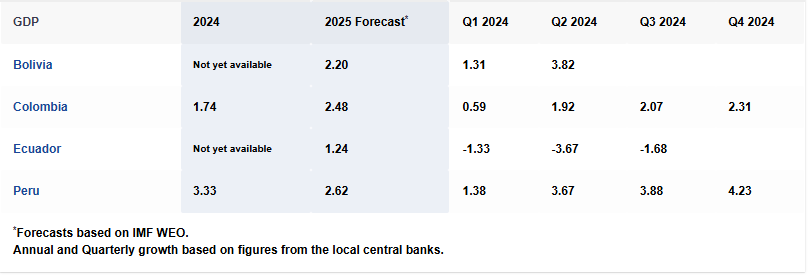
    Andean countries: GDP growth (%)
    Quarterly figures are year-on-year growth

  • RASTREANDO TENDENCIAS

    LatinNews 05 November 2012 Hits: 404

    ECUADOR | Decae el crecimiento económico en el segundo trimestre. El banco central reveló el 24 de octubre que el crecimiento económico año en año en el segundo trimestre fue del 5,2%, continuando con la tendencia declinante que comenzó en el último trimestre del 2011, cuando registró un crecimiento del 9,2%. En todo el último año, la economía ecuatoriana registró un crecimiento año en año del 8%. Sin embargo, en el primer trimestre de este año, esta cifra ha caído al 6,3% al experimentar una caída en la actividad del sector clave del petróleo.

    De acuerdo con el último informe del banco central, aunque la actividad económica en el segundo trimestre se incrementó un 1,2% comparado con el primer trimestre respaldado por un incremento en la actividad económica no relacionada con el petróleo, que se incrementó un 1,48%, la actividad en el sector petrolero continuó declinando, contrayéndose un 0,14%.

    El petróleo es el principal producto de exportación de Ecuador pero, de acuerdo con el banco central, en el segundo trimestre la producción en general continuó decayendo  incluso aunque en los primeros ocho meses del año, las firmas petroleras propiedad del estado elevaron su producción un 2,2%. El banco central explicó que este incremento en las firmas conducidas por el estado fue en gran medida contrarrestado por el decrecimiento del 1,2% en la producción registrada en las firmas petroleras privadas.

    Más positivamente, el banco central señaló que a pesar de la baja producción petrolera, en el segundo trimestre las exportaciones se incrementaron un 5,1% año en año gracias al mejor de lo esperado desempeño en el sector de la acuicultura. Además, hubo también significativos incrementos en la inversión pública y privada (13,2%) y el consumo interno (5,4%), todo lo cual ayudó a reducir el impacto negativo de la caída en el sector petrolero.

    En verdad, mientras que la tasa de crecimiento del segundo trimestre confirma que la economía está declinando, aún está por encima del pronóstico del banco para fin del año 2013, del 4,8%. De hecho, la difusión del informe del banco hizo que la agencia de ratings, Fitch, cambie su perspectiva sobre Ecuador de ‘estable’ a ‘positiva’ como resultado de su desempeño económico.

    Fitch señaló que el alto nivel actual de la inversión pública podría ayudar a mejorar el potencial de crecimiento del país. Sin embargo, la agencia agregó que el crecimiento a mediano plazo también dependerá de la capacidad del gobierno de promover un crecimiento económico “más sustentable”, que sea menos dependiente de la producción de petróleo y permita que el sector privado juegue un rol mayor.

    PERÚ | El riesgo país llega a su más bajo nivel histórico. El 18 de octubre, el riesgo país de Perú llegó a los 91 puntos básicos, el más bajo en la historia, anunció el banco central del país (BCRP) la semana pasada. Según el BCRP el rating, el más bajo desde junio del 2007, cuando el riesgo país de Perú estuvo en 95 puntos básicos, fue registrado por el EMBI+ (emerging markets bond index) compilado por el banco de EU, JPMorgan Chase. El EMBI+ mide el promedio de cuotas de bonos de varias economías emergentes de América Latina, Asia y Europa Oriental.

    Dado que cada 100 puntos básicos de diferencia en el rating de riesgo país es equivalente a un punto porcentual de incremento en el rendimiento de los bonos de un país, comparado con una emisión de bonos similar del Tesoro de EU, esto significa que los bonos peruanos ahora están valuados marginalmente menos que un bono del Tesoro de EU y pueden ofrecer un rendimiento de menos de un punto porcentual más alto.

    Actualmente, los bonos del Tesoro de EU ofrecen un rendimiento anual del 0,75% lo que significa que si Perú fuera a emitir una nueva serie de bonos ahora podría ofrecer un bajo rendimiento del 1,75% por año. De hecho, el BCRP destacó que el rating de Perú era actualmente el rating más bajo para cualquier país en América Latina, seguido por Colombia (96), Chile (117) y Brasil (133). En contraste, en el otro extremo del ranking están situados Venezuela (907), Argentina (862) y Ecuador (766).

    De hecho, el rating es menor que un tercio del promedio regional de 336 puntos básicos. El BCRP dijo que esto confirma aún más que a pesar del ambiente económico internacional  incierto, las perspectivas de los inversionistas sobre la economía peruana continúan siendo positivas lo que ha hecho que el riesgo país cayera 127 puntos básicos desde el comienzo del año.

    “Perú continúa mostrando que tiene sólidos fundamentos macroeconómicos, creciendo a cerca de su potencial, la inflación más baja en la región, un sistema financiero estable, un buen nivel de reservas internacionales y una sólida posición fiscal,” declaró el BCRP.

    • Crédito chino

    Los créditos chinos a Venezuela totalizan más de US$40mm, reveló el ministro de finanzas de Venezuela, Jorge Giordani. Según Giordani unos US$23,84mm del fondo conjunto creado en el 2007 han sido usados para financiar 201 proyectos diferentes en los sectores de la agricultura, electricidad, transporte, industrial, y petróleo &  minería. Por otra parte, Giordani agregó que una línea de crédito a largo plazo creada en el 2009 ha sido provista con un monto inicial de US$20mm, que será usado para financiar 40 nuevos proyectos adicionales que serán puestos en marcha en los próximos seis años. Él dijo que China y Venezuela han desarrollado una “relación estratégica en todos los frentes”.

  • RASTREANDO TENDENCIAS

    LatinNews 24 November 2013 Hits: 188

    ARGENTINA | Una devaluación gradual. El 18 de noviembre la tasa oficial de cambio en Argentina, determinada por el gobierno, llegó a Ar$6/US$1, una caída en el valor de la moneda de más del 20% desde el inicio del año, cuando se comercializaba a Ar$4,92/US$1. Como parte de sus heterodoxas políticas económicas, desde el 2011 el gobierno liderado por la Presidenta Cristina Fernández ha impuesto crecientemente estrictos controles de divisas, en un intento por mantener los productos internos competitivos en el mercado internacional. Sin embargo, inevitablemente, tal estrategia ha resultado en altos niveles de inflación. También ha atizado la demanda interna por los cada vez más escasos dólares, haciendo crecer un mercado negro del dólar (conocido localmente como ‘blue’) que opera basado en una tasa de cambio paralela que tiende a ser mucho más alta que la tasa oficial. Esta situación ha creado un círculo vicioso en el cual los controles de divisas engendraron una creciente demanda por la moneda extranjera, alimentando la inflación, elevando aun más la demanda por moneda extranjera.

    El creciente nivel de la tasa del dólar ‘blue’ (que se cree que está mucho más cerca del valor real del peso que la tasa oficial) ha forzado al banco central (BCRA) a intervenir en los mercados de divisas local a fin de controlar la ampliación de la brecha entre las tasas oficial y ‘blue’. Esto ha diezmado las reservas internacionales del BCRA, que ya han llegado a su punto más bajo en seis años [IL-13-42] después de que la tasa ‘blue’ alcanzó el nivel de Ar$10/US$1 (el doble de la tasa oficial) en mayo. Esto hizo que el gobierno despliegue (al ahora ex) secretario de comercio interior, Guillermo Moreno, quien se reunió con representantes del sector financiero con quienes concretó un acuerdo bajo el cual el gobierno acordó permitir una depreciación controlada de la tasa oficial de cambio si el sector acordaba mantener controlada la tasa ‘blue’ (ver abajo).

    • Tasas oficial y ‘blue’

    Guillermo Moreno había dicho que las tasas oficial y ‘blue’ en Argentina deberían converger hacia Ar$6/US$1 para fin de año. Sin embargo, la reciente convalecencia de 40 días de la Presidenta Fernández, y la incertidumbre política que esto ha creado, de nuevo ha hecho que la tasa ‘blue’ se eleve por encima de la marca de Ar$10/US$1 para el 15 de noviembre y desde entonces la tasa a rondado esa cifra.

  • RASTREANDO TENDENCIAS

    LatinNews 17 October 2014 Hits: 380

    PARAGUAY | La creciente relevancia del turismo. El 10 de octubre el vicepresidente de la asociación de agencias de viajes y operadores de turismo del Paraguay (Asatur), Osvaldo Morínigo, dijo que el sector del turismo local ahora contribuye unos US$350m al año a la economía interna del Paraguay, convirtiéndolo en el séptimo sector económico más importante del país.

    La creciente prominencia del sector del turismo es una noticia alentadora para la economía paraguaya, que tradicionalmente ha sido fuertemente dependiente de los sectores agrícola-ganaderos y de la generación de energía. Esta dependencia significa que el desempeño económico del país es fuertemente dictado por estos dos sectores, que pueden experimentar un bajo desempeño de tiempo en tiempo. De hecho, la semana pasada, el Banco Central del Paraguay (BCP) decidió revisar hacia abajo su pronóstico de crecimiento económico para todo el año, del 4,8% al 4% como resultado del desempeño más débil de lo esperado en estos dos sectores, como resultado de la menor proyección de producción de energía en las dos principales plantas hidroeléctricas del país, Itaipú (compartida con Brasil) y Yacyretá (compartida con Argentina); y menores precios internacionales para la soja, la principal exportación agrícola del país. La revisión hacia abajo del pronóstico del BCP lo puso en línea con la del Fondo Monetario Internacional (FMI), que también redujo su pronóstico de crecimiento  para Paraguay en su informe del Panorama Económico Mundial (PEM) de la semana pasada.

    Sin embargo, en la apertura de la Feria Internacional del turismo Paraguay 2014 (Fitpar), Morínigo, quien encabeza el comité de organización de la Fitpar, dijo que el sector del turismo ha estado creciendo consistentemente en años recientes, convirtiéndolo en una actividad económica crecientemente importante. Según Morínigo, actualmente unos 600.000 turistas llegan directamente a Paraguay cada año, mientras que unos 2,5m de visitantes adicionales toman una “excursión” corta al Paraguay desde los países vecinos, eligiendo quedarse en el país por uno o dos días.

    Morínigo dijo que el objetivo de Asatur es seguir trabajando con la secretaría de turismo del país (Sectur) para continuar promocionando al país como un destino turístico. Este año, Fitpar fue atendida por representantes de 10 países diferentes, incluidos EU, México, Chile, Cuba, República Dominicana, y Uruguay. El viceministro de turismo de Uruguay, Antonio Carámbula, visitó la Fitpar. Señalando que ahora unos 45.000 paraguayos visitan Uruguay cada año, Carámbula agregó que el mercado paraguayo es “uno creciente, y esta feria es importante para nosotros”.

    • Alas Uruguay

    El 14 de octubre, Alas Uruguay, la aerolínea creada por el personal de la recientemente liquidada aerolínea nacional del Estado Uruguayo, Pluna, fue lanzada formalmente en un evento en el aeropuerto internacional de Carrasco, en Montevideo. Alas Uruguay fue formada después de que un grupo de trabajadores de Pluna obtuviera el apoyo y el respaldo financiero del gobierno liderado por el Presidente José Mujica, para establecer una nueva aerolínea nacional que sirva a los mercados internos y regionales, asegurando los vínculos aéreos de Uruguay. Una declaración de la compañía dice que Alas Uruguay “llega para cubrir las necesidades de conectividad de la región […] y para contribuir con el desarrollo económico, turístico y social del país”. Y agrega que la firma, que actualmente emplea a 225 personas y posee cuatro aviones Boeing 737-300, en poco tiempo comenzará a volar a destinos en Argentina, Brasil, Chile y Paraguay.

  • TRACKING TRENDS

    LatinNews 07 February 2019 Hits: 2550

    PERU | Exports. On 5 February Peru’s foreign trade & tourism ministry (Mincetur) released new figures which show that the country’s exports in 2018 totalled close to US$48bn, up 7.5% on 2017. Mincetur head Edgar Vásquez stated that the 2018 export figure had exceeded the country’s previous record – set in 2012 with US$46.3bn. Vasquez attributed the unprecedented growth to increases in non-traditional exports (+12.6%), particularly in the agricultural (+15%), fishing (+26%), chemical (+12%), and metalworking (+12%) sectors. The non-traditional products which registered the highest growth were squid (+60%), blueberries (+49%), grapes and avocado (+26%), fine hair products (+20%), plastics and their manufactures (+16%), and cotton garments (+13%). Vásquez stated that blueberries “surpassed all expectations”, with US$554m-worth of exports. Similarly, grapes (US$815m) and avocados (US$793m) reached record levels. In the case of avocados, Vásquez argued, “Peru is now the second-largest world exporter, after Mexico”. On the other hand, traditional exports recorded an increase of 5.6% – principally driven by high sales in natural gas (+35%) and oil and its derivatives (+16%). Traditional fishing exports (fishmeal and fish oil) also increased by 8.3%, while mineral exports increased by 4%.

    ECUADOR | Export growth does not improve trade balance. According to a report by Ecuador’s exporters’ association (Fedexpor), released on 2 February and based on data from the central bank (BCE), Ecuador’s exports totalled over US$44bn in 2018, up 16% on 2017. The Fedexpor report, however, notes that despite the increase in exports the trade balance for 2018 closed with a deficit of US$508m – with imports still representing 51% of the trade balance. Non-oil products accounted for the majority of trade, representing 59% of total exports and 80% of imports. Ecuador’s top-five exports products were shrimps (+5%), bananas and plantains (+5%), canned fish (+8%), flowers (-3%), and cocoa (+9%). Exports to the European Union (EU) recorded a growth of around 3%, becoming the main commercial block to which 26% of non-oil exports are destined. Exports to the US fell by 1%, a figure equivalent to US$13m. The US is still the main destination (by country) for non-oil exports, with a 20% share. Regarding oil, there is evidence of a recovery in external sales with an export growth of 30% in 2018 but offset by a 38% increase in imports of refined petrol fuels.

  • Uruguay government to miss fiscal target

    LatinNews 09 August 2019 Hits: 756

    Uruguay will not hit its fiscal deficit target of 2.5% of GDP in 2019 and faces a complicated economic situation in the run up to this year’s elections on 27 October.

    According to figures from the economy and finance ministry, the fiscal deficit reached 4.8% of GDP in June, its worst level in 30 years. It has been increasing since 2011, and GDP growth has slowed in recent years to further darken the panorama. Danilo Astori, minister of economy and finance, blamed slowing growth for the increasing deficit, and told lawmakers that boosting growth will be “fundamental” to improving fiscal performance. Astori believes GDP will grow 0.7% this year, rising to 2.6% in 2020 thanks to several opportunities, including the construction of a new wood pulp mill by Finnish pulp and paper maker UPM.

    In April, international credit ratings agency Moody’s Investors Service said it thought the government would miss its 2.5% target, warning that continued weak economic growth continues and increasing fiscal deficit could threaten the country’s credit profile due to a higher debt-to-GDP ratio. However, Moody’s recognised that mitigating factors, such as the government's broad liquidity buffers and maturity profile, could limit the effects of exchange rate volatility and higher interest rates caused by international financial conditions.

    While the national economy has grown consistently for 16 years under a string of Frente Amplio (FA) coalition governments, the situation has become more complicated in recent times and economic policy is a key part of the political debate in the lead up to elections. Astori said “austerity will be necessary” whoever wins the elections because of the size of the fiscal deficit, but ruled out any new taxes.

    The political opposition has become increasingly critical of the way in which successive FA governments have managed the domestic economy, and they accuse the government of failing to reduce the fiscal deficit, boost falling investment levels, or catalyse subdued growth. Azucena Arbeleche, who would become minister for economy and finance if presidential candidate Luis Lacalle Pou, of the centre-right Partido Nacional (PN), comes to power, has floated the idea of reducing the deficit by cutting the number of civil servants. Arbeleche has spoken of the need for more efficient spending and promised to generate savings in the first year of a prospective government, but Astori called her plans “unworkable”. For its part, the International Monetary Fund (IMF) called on Uruguay to reduce its debt in order to contain fiscal risks. “A reduction in the government’s overall budget deficit, which should come from reducing the elevated level of current expenditures, would help to put debt on a firm downward path,” wrote the IMF in February.

    Another explanation came from former FA minister of economy and finance (2013-2015) Mario Bergara, who attributed the domestic economic slowdown to the difficult economic situation faced by its regional neighbours and to the trade spat between the US, China, and Europe, all of which has undermined international trade. In particular, Bergara said that Argentina and Brazil, Uruguay’s main economic partners in the Southern Common Market (Mercosur), have had “a poor economic performance” for the past seven years and that this has affected the Uruguayan economy as result of the high level of economic integration between the three. Yet Bergara argued that despite this adverse scenario it was commendable that Uruguay has continued to post positive economic growth thanks to the authorities’ prudent management of the economy. 

    Local consultancy firm CPA Ferrere has warned that the Uruguayan economy appears to have reached its ‘economic growth ceiling’ under the existing framework, and that more growth could only be achieved via significant economic reforms (fiscal, pension, and labour). The firm called on the opposition to formulate an alternative plan for the economy. Following party primaries on 30 June, three major parties nominated their candidates for the October elections. Former mayor of Montevideo Daniel Martínez will run for the FA, while the aforementioned Luis Lacalle Pou will run for the PN, and the centrist Partido Colorado will be represented by economist Ernesto Talvi. 

    Each will have to formulate sound economic policies to triumph in what looks set to be a close-run race. Lacalle Pou has been strong on the fiscal deficit, claiming that a failure to lower it will make it hard to carry out other electoral promises, while Martínez is known for job creation and public works. He is also seen as a business-friendly voice in the left-leaning FA, which could be a boon, although rising crime rates could push voters to the opposition. Talvi’s vast experience as an economist could make him an appealing choice for those concerned about the economy, but his lack of name recognition as a new political force could work against him.