All Categories

Subcategories

  • HONDURAS: Castro government establishes ties with China at the expense of Taiwan

    Sarah Sheldon 24 April 2023 Hits: 1076

    On 27 March, President Xiomara Castro announced that Honduras had formally established ties with China and severed relations with Taiwan.

    Honduras and China have agreed to cooperate on issues of mutual interest and to promote the signing of agreements in areas such as finance, trade, infrastructure, energy, technology, culture, tourism, education, and health, according to a statement from the Honduran foreign ministry. The move means that Castro has fulfilled an election pledge, although the president herself has said little about the motivations behind the decision, with foreign minister Eduardo Reina taking the lead. Reina said that Honduras was “up to its neck” in financial challenges and debt, emphasising that economic considerations were paramount.

    One issue appears to be the fact that Taiwan was unwilling or unable to fulfil Honduran demands. For example, Taiwan’s national news agency, Central News Agency (CNA), reported that since taking office in January 2022, Castro’s government had asked Taiwan for US$45m for a hospital, US$350m for a dam, and help to pay back US$2bn of national debt. The source added that Taiwan’s foreign ministry received a letter from Reina asking Taiwan for US$2.5bn for various projects on 13 March. Reuters cited Reina as saying that the US$2.5bn figure was “not a donation” but rather “a negotiated refinancing mechanism”.

    And trade is also a consideration. For example, a report by Honduras’s central bank (BCH) released last month showed that China was a significant trading partner even before relations had been formalised, accounting for 14% (US$2bn) of Honduras’s imports and US$10.6m of exports last year. This compares with Taiwan which accounted for US$92.7m of imports and US$120.5m of exports. 

    Speaking on television on 15 March, as cited by Salvadoran media outlet El Faro, Reina said that he wanted to evolve the relationship with Taiwan from one based on foreign aid payments of US$50m per year to one based on trade. “We have nine million pounds of frozen shrimp that we can’t move. And people from the shrimp industry have urged us to seek new markets,” he said.

    • Coffee exports

    Reina also raised concerns over falling exports of coffee, which decreased from 7.66m 46kg sacks in 2020/21 to 6.13m sacks in 2021/22, according to figures from the national coffee institute Ihcafe.

    Taiwan unsurprisingly criticised the switch in allegiance, and the country's foreign ministry alleged that Castro and her administration “have always harboured illusions concerning China” in a statement published 26 March. “Our government expressed its willingness to assist Honduras to the best of our ability in promoting infrastructure development, and that our government reminded the Honduran government to be wary of unrealistic promises from China,” said the office of President Tsai Ing-wen in a separate statement published 26 March. The government was also cited by the media as accusing Honduras of pushing for billions of dollars in aid payments, rather than millions. “We will not engage in a meaningless contest of dollar diplomacy with China,” said President Tsai.

    However, Reina said the switch in allegiance “isn’t an ideological move” and claimed that Honduras is not “naive” about dealing with China. One key aim appears to be to secure Chinese investment in the energy sector. Under the previous Honduran government of Juan Orlando Hernández (2014-2022), China provided funding of US$300m for the Patuca III hydroelectric dam in the department of Olancho. Honduran officials say there have been recent discussions of further Chinese financing for the Patuca II project. The idea is to boost renewable energy generation and strengthen the Empresa Nacional de Energía Eléctrica (ENEE), both key stated aims for the government, which is devoting a lot of resources to the energy sector.

    Another aim is to secure help in dealing with the parlous state of the national finances. According to Guatemala-based think tank Instituto Centroamericano de Estudios Fiscales (Icefi), Honduras’ public debt will be worth the equivalent of 54.6% of GDP by the end of the year, with a fiscal deficit reaching 6.3% of GDP. This “could be considered dangerous in terms of fiscal sustainability in the long term,” said Icefi, with Honduras “the only country in the region whose fiscal deficit could explode in the next few years”. On 24 March, deputy foreign minister Tony García acknowledged that Honduras had asked Taiwan for US$2bn to help restructure its debt. Further evidence of Honduras’ motivations came in the shape of reports that diplomats had asked Beijing for a US$6bn cash injection as part of the plan to switch allegiances. 

    Reina returned from a trip to China on 31 March and emphasised that he wanted to reach an agreement for Honduran products, such as prawns, coffee, and melons, which were previously exported to Taiwan, to now be sent to China. With President Castro expected to make an official state visit to China soon, more details of cooperation between the two nations may come to light. Previously, Central American nations that have switched allegiances have seen a raft of deals such as phytosanitary agreements to encourage exports to China; free trade agreements; and funding for infrastructure projects, such as a new national library in El Salvador.

    However, some argue that results have been limited, even in those countries that linked up with China years ago. On 31 March, Manuel Flores, a Salvadorean politician and former lawmaker for the leftist Frente Farabundo Martí para la Liberación Nacional (FMLN) party, who lobbied for the country to formalise relations with Beijing, told Salvadorean media outlet El Faro that Chinese investments in the region have been limited, and he questioned why Honduras would expect things to be different in their case. However, after deciding that relations with Taiwan were not giving good enough results, Honduran officials would argue that rolling the dice on an emerging superpower is a decent bet for the future.

    Taiwanese president visits Guatemala and Belize

    Shortly after Honduras announced its decision to switch allegiance to China, Taiwan’s President Tsai Ing-wen travelled to Guatemala and Belize. The two nations are the only remaining Central American countries to maintain relations with Taiwan after Costa Rica, Panama, the Dominican Republic, El Salvador, and Nicaragua all switched allegiances to China in recent years, and the three-day visit provided an opportunity to respond to Honduras’ decision. “External pressure won’t stop our determination from moving toward international society,” President Tsai told reporters, and Guatemala’s President Alejandro Giammattei said that there were plans to sign cooperation agreements in areas such as agriculture, health, and education.  On 2 April, Tsai visited a hospital in Chimaltenango department, central Guatemala, which was built in cooperation with Taiwan, before traveling to Belize later that day. In a statement published on 3 April, Tsai said that members of Taiwan’s purchasing mission had explored opportunities in the coffee sector in Guatemala, and would do the same for cacao in Belize.

    However, Taiwan’s relations with Guatemala and Belize face similar issues that led Honduras to switch allegiances to China. For example, Guatemala’s exports to Taiwan totalled US$112.3m in 2022 out of a total US$15.7bn, while imports totalled US$234.9m out of a total of US$32.1bn. These figures are tiny in comparison with trade with Beijing, despite the lack of formal relations between the two countries: Guatemala’s exports to China totalled US$440.7m in 2022, while imports totalled US$4.4bn. Guatemala’s Giammattei apparently sees some political benefits in maintaining relations with Taiwan, but his term is due to end in January 2024. Whether or not his successor makes the same calculation remains to be seen, but it is apparent that Taiwan faces a serious fight to maintain its diplomatic foothold in the region.

    Gulf of Fonseca

    Interestingly, now that Honduras, Nicaragua, and El Salvador have all formalised ties with China there will be opportunities for Chinese-funded cross-border infrastructure projects in the Gulf of Fonseca, a 162-mile bay on the Pacific Ocean, which is shared between the three countries.
  • URUGUAY: Heads roll over Marset scandal

    Patrick de Courcy 16 November 2023 Hits: 1928

    Several hundred protesters gathered in Montevideo on 13 November to demonstrate against corruption in government and denounce a serious political crisis and ongoing damage to Uruguay’s state institutions. The protest was organised by the country’s main trade union organisation Plenario Intersindical de Trabajadores-Convención Nacional de Trabajadores (PIT-CNT), supported by the left-wing opposition coalition Frente Amplio (FA), in response to a scandal involving the Uruguayan drug trafficker Sebastián Marset, which compelled President Luis Alberto Lacalle Pou to reshuffle his cabinet.

    The PIT-CNT protest, dubbed ‘In defence of democracy and against corruption’, accused the Lacalle Pou administration of fabricating “a genuine web of lies and concealment”. Gustavo González, the secretary general of the Federación Uruguaya de Cooperativas de Vivienda por Ayuda Mutua (FUCVAM), accused the government of having “lied to congress…and hidden information from the judiciary”, damaging Uruguay’s credibility on the international stage. The secretary general of the PIT-CNT, Elbia Pereira, demanded answers from the government.

    President Lacalle Pou reshuffled his cabinet on 4 November two days after Francisco Bustillo resigned as foreign affairs minister in the wake of the revelation of compromising audio recordings involving Marset, who was able to obtain a Uruguayan passport from the country’s consulate in Dubai in November 2021, two months after he was detained there for seeking to travel on a false Paraguayan passport [WR-22-34]. Lacalle Pou also replaced another big hitter in his cabinet: the interior minister, Luis Alberto Heber. Heber has been the face of his government’s efforts to improve public security, a major campaign promise, and come down hard on drug traffickers.

    Heber’s deputy at the interior ministry, Guillermo Maciel, also resigned after the weekly current affairs magazine Búsqueda published a piece on 1 November claiming that the government was trying to conceal from the judiciary messages exchanged between Carolina Ache, the former deputy foreign affairs minister, and Maciel over Marset. Bustillo suggested that Ache, who resigned last December over the Marset case, should ‘lose’ her phone to erase any evidence of text messages exchanged with Maciel.

    Lacalle Pou appointed Omar Paganini, who had been serving as industry, energy & mining (Miem) minister, to replace Bustillo as foreign minister; Elisa Facio, a specialist in software engineering who held a senior position in the Miem as secretary of administrative affairs, replaced Paganini. He also named Nicolás Martinelli and Pablo Abdala to take over as interior minister and deputy interior minister.

    Lacalle Pou expressed his confidence that all of the cabinet ministers leaving his government would be absolved from blame in any legal process, and he denied that there was any “institutional crisis” in Uruguay. This did not go down well with the FA, which insisted that the ministerial resignations, which the opposition coalition had demanded, amounted to very little without any acceptance of responsibility.

    Fernando Pereira, the president of the FA, maintained on 5 November that there were many points that needed clarification and accused the government of obfuscation. “The president is convinced that he has turned the page on the matter, but for us the page has just been started,” Pereira said.

    FA keeps pressure on

    It is in the interests of the FA for the Marset scandal to run and run. Presidential and congressional elections will be held on 27 October 2024, and it would damage the ruling multi-colour coalition if more revelations came out. The FA is particularly interested in establishing what role President Lacalle Pou had in a meeting on 25 November last year when Roberto Lafluf, the adviser to deputy interior minister Guillermo Maciel, called for ministerial WhatsApp chats about the matter to be deleted. “Lafluf says [as part of an investigation by the attorney general’s office] that he convened this meeting at the president’s behest,” Fernando Pereira, the president of the FA, said. Pereira added that the meeting took place two weeks after a judicial order, following a freedom of information request by the FA, for the WhatsApp chats to be handed over.

  • CUBA: Diesel travels by tank

    Abbi Dicker 19 March 2026 Hits: 704

    Amid Cuba’s intensifying energy crisis an unglamorous piece of everyday transport equipment, the ISO tank, has jumped into the centre of attention.

    ISO tanks are stainless steel insulated containers which can be used to carry gases and liquids. A 20-foot container can carry 6,900 gallons of diesel fuel (about 26,100 litres). They can be transported on water by container ships or hauled by trucks on land. They are particularly useful in the current stage of Cuba’s economic crisis, where small private sector companies use diesel-powered trucks to transport food and other supplies from the port of Mariel in Havana to restaurants and small grocery stores in various parts of the country.

    According to the Miami Herald, amid reports that the US administration led by President Donald Trump is prepared to allow the Cuban private sector to import diesel from US companies, everyone is talking about how to obtain and use ISO tanks. In theory such use of ISO tanks by Cuba’s small private sector could attract additional, vitally needed foreign exchange, and take some pressure off the wider state-controlled economy.

    The background is that the island’s energy crisis is grinding on relentlessly. Since the US seized and extracted Venezuela’s former president Nicolás Maduro (2013-2026) in early January, and then threatened Mexico’s President Claudia Sheinbaum with increased tariffs, both countries have cut off their oil supplies to Cuba. Cuba needs 110,000 barrels per day (bpd), with low domestic production covering only around 40,000 bpd of that according to state mouthpiece Granma. That leaves a gap of around 70,000bpd, normally supplied by Venezuela. But now, with Venezuela out of the picture for conventional shipments, and with no-one else willing to step in, Cuba is forcibly rationing and reducing its consumption.

    It shows. At the beginning of March there was another massive electric power failure triggered by breakdowns at various diesel-burning power plants. The outage also affected water pumps, shutting down residential water supplies. The government has acknowledged an “acute fuel shortage” and taken measures to restrict fuel sales to the public, impose a four-day week in the public sector, cut school hours, reduce university attendance, and limit regional bus and train services. Various commercial airlines have suspended flights to Cuba after the authorities said they could not guarantee aviation fuel supplies.        

    The energy crisis has had a mixed impact in the dominant public sector. While most state enterprises suffer cutbacks, an elite group of military-controlled companies, known as Grupo de Administración Empresarial SA, (Gaesa) benefits from special treatment. Gaesa has interests in tourism, petrol stations, supermarkets, money transfers, and the Mariel Special Development Zone. An investigation of its finances last year by the Miami Herald found that at one point it had at least US$18bn worth of hard currencies in its accounts – more than the foreign reserves of a number of Latin American countries. The conglomerate appears to be tax-exempt; its 2023 profits are said to have been equivalent to 40% of Cuban GDP according to a January 2026 report by the Herald.

    While it may reasonably be argued that state-owned Gaesa could do more to tackle the energy crisis, the spread of ISO tanks seems to be opening another potentially more modest private sector pathway to recovery. At the end of February, the US Treasury Department said it would authorise companies seeking licences to re-sell Venezuelan oil to the Cuban private sector. Such transactions, it said, would need to “support the Cuban people, including the private sector”.

    Political manoeuvring

    The US government is keen to stress that the private sector could play a key role in opening up wider negotiations with regard to the situation in Cuba. Richard Herrero of the non-partisan Washington-based Cuba Studies Group was cited by the New York Times as saying “The strategy here is to show the Cubans and the world that the only lifeline Cuba has left is the United States.”

  • PARAGUAY: El referéndum tendrá un gran impacto electoral

    LatinNews 17 October 2011 Hits: 537

    Los paraguayos fueron a las urnas el 9 de octubre para aprobar un referéndum que tendrá serias repercusiones en las elecciones futuras. Ellos pudieron no haber asistido en masas –en verdad, solamente el 12,5% de los 3m de paraguayos elegibles para depositar sus votos en las urnas– pero los votantes crearon el segundo más grande distrito electoral después de Asunción: el mismo estará en suelo extranjero. Los paraguayos que viven en el exterior ahora son elegibles para votar –y ellos serán cortejados asiduamente por futuros candidatos presidenciales– asumiendo que el congreso no plantee objeciones al referéndum. De golpe, la magnitud del electorado se incrementará en 25% a 3,76m.

    El referéndum enmienda la constitución de 1992 para otorgar el voto, y el derecho a presentarse para cargos electivos, a los paraguayos expatriados fue aprobado por 78% de aquellos que decidieron votar en el referéndum. El referéndum fue el primero celebrado desde que Paraguay retornó a la democracia en 1993 y solamente el segundo en los últimos 70 años. Ahora deberá ser aprobado por el congreso, aunque habiendo permitido que se realice, es improbable que los diputados o senadores buscarán bloquearlo ahora.

    Los paraguayos que viven en el extranjero podrán votar en las elecciones generales desde 2013, y las autoridades electorales comenzarán a registrarlos en embajadas y consulados en el exterior. Ahora también son elegibles para competir por la presidencia y la vicepresidencia, y competir para convertirse senadores nacionales o diputados en el parlamento del Mercosur (Parlasur). Una reforma más sería requerida, sin embargo, antes que puedan competir para convertirse en diputados nacionales, o para gobernador o posiciones municipales.

    Irónicamente, sólo poco más de la mitad se presentaron a votar (unos 350.000), que el número adicional que ahora se agregará al padrón electoral (más de 700.000). El tribunal electoral estima que hay unos 722.000 paraguayos expatriados  elegibles para votar que viven en el extranjero, la vasta mayoría en Argentina, seguido de España (87.000), EU (50.000) y Brasil (29.000). Los candidatos presidenciales ahora necesitarán apelar a este significativo nuevo distrito electoral. Eso podría cambiar la dinámica de las relaciones con Argentina, que después de Asunción ahora será el más grande distrito paraguayo.

    ¿Revés para Lugo?

    Fue la más baja asistencia para una elección desde que se mantienen registros (hay que admitirlo, eso solamente comenzó en 1996). La participación en las elecciones municipales el año pasado fue de 55% y en las elecciones generales de 2008, fue de 66%. La siguiente menor participación fue de 50%, en las elecciones municipales de 2006. La baja participación es casi un revés para el gobierno del Presidente Fernando Lugo. Mientras la enmienda constitucional aún deberá tener efecto (no hay un umbral mínimo requerido), la baja participación parece burlarse del objetivo de Lugo a menudo declarado de incrementar la participación ciudadana en la democracia paraguaya. Eso sugiere que hay poco apetito público por involucrarse más.

    Al menos esa es una lectura posible, favorecida por la oposición política. Otra lectura es que este particular referéndum no logró motivar al público debido a que no se sentía de mucho significado para aquellos que viven en el Paraguay (aunque es un significativo número de votantes extra que podrían cambiar el resultado de una elección sin tener que vivir en el país y sentir los efectos de la política del gobierno). El congreso ha frustrado los esfuerzos  de la administración Lugo para celebrar referendos que podría provocar mucho mayor interés, como la de calibrar públicamente el desempeño del congreso y de la justicia y, más recientemente, un intento de la coalición de Izquierda de Lugo, el Frente Guasú, para obtener la aprobación para un referéndum para permitir la reelección presidencial.

    El Frente Guasú tendrá la esperanza de ganar más del referéndum que da el derecho al voto a paraguayos que viven en el exterior, sobre la base que algunos de ellos son exiliados (o sus familiares) de los años de la dictadura de Stroessner, aunque en años recientes aquellos que viven en el exterior han sido migrantes económicos cuya afiliación política es menos clara.

    • Exportaciones

    Las exportaciones de carne fresca, enfriada y congelada en la primera mitad de 2011 totalizaron US$445,5m, llegando a 16% de las exportaciones de la industria primaria de Paraguay. Las exportaciones de porotos de soja lideran en este periodo con US$1,24bn, de acuerdo con el ministerio de industria y comercio.

    •  Lugo intenta reprimir a las guerrillas

    El Presidente Fernando Lugo ha promulgado el estado de excepción por 60 días en los departamentos norteños de Concepción y San Pedro el 10 de octubre para localizar a miembros del Ejército del Pueblo Paraguayo (EPP). El congreso aprobó la medida la semana pasada.

         Lugo designó al Brigadier General Félix Pedrozo, para encabezar las fuerzas armadas desplegadas en el área y al General Aldo Pastore, para encabezar la fuerza policial antiterrorista, en la fuerza de tarea conjunta militar-policial. Ambos dirigirán el comando operacional. Ellos necesitarán mejorar considerablemente la coordinación entre las dos fuerzas: en mayo de 2010, durante el último estado de excepción declarado en cinco departamentos norteños, los soldados se enzarzaron en un intenso cruce de fuego con la policía en Concepción en una fallida operación para atacar una supuesta fiesta de cumpleaños de un líder del EPP, y poco progreso se hizo contra las guerrillas.

         “Este es un gobierno que no cierra sus ojos ni sus oídos ante los problemas reales que enfrenta el país,” dijo Lugo. El ministro del interior, Carlos Filizzola, dijo que las fuerzas armadas apoyarían a la policía, que está a cargo de la seguridad interna.

         El congreso ejerció presión sobre la administración Lugo por la declaración de un nuevo estado de excepción, luego que dos oficiales de policía fueron muertos a tiros en un ataque nocturno del EPP sobre una subestación de policía en Horqueta, en el departamento de Concepción el 21 de setiembre. Dos días antes fue lanzado un artefacto explosivo fue lanzado contra la oficina del fiscal del estado en Horqueta.

         A pesar de esas acciones, la amenaza más grande a la administración Lugo en esos departamentos no proviene de las guerrillas sino de un potencialmente devastador brote de aftosa. Las autoridades paraguayas anunciaron esta semana que ellos habían vacunado contra la aftosa a 27.602 cabezas de ganado para contener el brote, que fue informado por primera vez el 18 de setiembre, en San Pedro [IL-11-38]. Ellas también ordenaron la matanza selectiva de 819 cabezas de ganado infectadas o susceptibles de serlo, y aplicaron medidas de cuarentena sobre establecimientos ganaderos como también restricciones para el movimiento de ganado en la región.

         Las exportaciones de carne, que llegaron a US$881m el año pasado (no lejos detrás de Argentina) jugaron una gran parte en la estelar cifra de crecimiento económico de 14,5%, han sido suspendidas, en tanto Brasil y Argentina prohibieron las importaciones desde Paraguay. El último brote de aftosa en Paraguay fue en julio de 2003.

  • Risk pointers

    LatinNews 21 December 2011 Hits: 176

    *** Israel’s largest-ever missile-defence exercise planned for the spring.  It has been reported in Israel that last week the commander of the US’s Third Air Force based in Germany, Lt-Gen Frank Gorenc, visited Israel to discuss the anti-missile exercise which could involve the deployment of “several thousand” US troops to Israel.  The exercise will reportedly combine the US’s Terminal High Altitude Area Defence (THAAD) and its ship-based Aegis ballistic missile defence system with Israel’s own missile-defence systems: the Arrow, Patriot, and Iron Dome.  Separately, Israel is moving ahead with plans to deploy the David’s Sling missile-defence system from Rafael, which is designed to counter medium-range rockets and cruise missiles.  The Jerusalem Post has reported that the first David’s Sling interception test will be in mid-2012.

    *** Assad looks to the Kurds.  According to Turkish sources, President Bashar al-Assad of Syria has agreed that a Kurdistan Workers’ Party (PKK) affiliated television station, Roj TV, that may be banned in Denmark, could move to Damascus.  Assad seems to be courting the PKK as a means of getting at Turkey for its support for the Syrian opposition and as a possible prop for his regime.  Turkey is concerned that Assad may have agreed to the establishment of PKK camps in Aleppo governorate.  In return for allowing the camps, the PKK has, it is said, agreed to help prevent anti-regime demonstrations in the Kurdish regions of Syria.  The case against Roj TV in Denmark was initiated in August 2010 after years of Turkish pressure.  It is charged with helping to promote the PKK.

    If these reports are correct, two points arise.  The first is that it will make Ankara even more determined to bring about the overthrow of Assad (it will be recalled that Turkey nearly went to war with Syria in 1998 over its support for the PKK, and Assad’s father was forced to expel PKK leader Abdullah Ocalan).  The second point is that it may in any event be too late for Assad.  According to Israeli reports, over 10,000 Syrian soldiers have deserted, and even if the higher levels of the military remain loyal there is growing dissatisfaction among the rank-and-file and lower officer corps.  In another indication, it is said that the top leaders of the Palestinian Hamas group have left Damascus.

    *** Indian president spells out naval ambitions.  India’s President Pratibha Patil undertook a ‘Presidential Fleet Review’ on 20 December.  The ceremony is performed once in every presidential term.  She reviewed a fleet of 81 ships and 44 aircraft and proclaimed: “The Indian Navy is one of the most capable in the region, and with its well thought out moderation plans it is destined to grow even further.”  She added: “I am confident that our fleet is fully prepared to meet any challenges that may threaten the maritime security of our nation in the future.”


  • ARGENTINA: Moreno enfrenta acusación

    LatinNews 29 September 2013 Hits: 374

    El encargado de hacer cumplir las disposiciones económicas del gobierno, también conocido como el secretario de comercio interior, Guillermo Moreno, enfrentará cargos por abuso de su cargo público. El presidente de la firma consultora Finsoport, Jorge Todesca, presentó una queja después de que su empresa fue multada Arg$500.000 (US$90.000 a la tasa oficial de cambio) por publicar tasas de inflación que contradecían las cifras de la agencia oficial de estadísticas, Indec.

    De acuerdo con el juez Claudio Bonadío, Moreno, junto con otros dos funcionarios actuaron “ilegalmente” y “arbitrariamente” al sancionar a la compañía de Todesca, así como también a otras firmas consultoras acusadas por el gobierno por diseminar cifras de inflación casi tres veces más elevadas que las cifras oficiales difundidas por el Indec. Bonadío dijo que eso constituyó un “abuso de autoridad”.

    Moreno está apelando contra las acusaciones. Su abogado, Alejandro Rúa, dijo que la apelación se basaba en el hecho que la resolución judicial de Bonadío era “arbitraria y no debe tener efecto”. Rúa ha dicho que Moreno había enfrentado cargos similares en el 2012 por “abuso de autoridad”, que habían sido desestimados.

    Hay cierta especulación de que Moreno finalmente podría ser enviado a pastar y tranquilizarse por la Presidenta Cristina Fernández. El programa de TV, Periodismo Para Todos, presentado por el periodista investigativo Jorge Lanata, difundió un audio el 22 de septiembre en el cual puede escucharse a Moreno sugiriendo que los empresarios contribuyen con un “fondo de solidaridad” para las víctimas de las serias inundaciones en La Plata, la capital de la provincia de Buenos Aires, el 2 y 3 de abril pasado. Lanata afirmó que ninguna de las víctimas había recibido ningún dinero de ese fondo.

    Presupuesto aprobado

    Después de un debate de 17 horas en la cámara de diputados, el 25 de septiembre, el presupuesto 2014 del gobierno, que asume un crecimiento del 6,2% y una inflación de 9,9%, fue aprobado.

    La votación siguió líneas predecibles: con 134 votos, el FPV y sus aliados lograron aprobar el proyecto de ley; 113 políticos de la oposición votaron en contra. Así como el presupuesto, el congreso también aprobó la extensión de dos impuestos que debían expirar a fin de año.

    Los líderes de la oposición visitaron los estudios de radios inmediatamente después de la aprobación para criticar los datos presentados en el presupuesto. La mayoría piensa que el 6,2% de crecimiento es exageradamente sobre-optimista, mientras que los economistas del sector privado ubican los niveles actuales de la inflación en alrededor del 25%.

    • Inflación

    El gobierno de Argentina está prediciendo una inflación del 11,2% para el 2013. las firmas consultoras privadas afirman que la inflación es probable que esté cerca del 26%.

  • COLOMBIA: Pessimism spreads about peace talks

    LatinNews 07 May 2015 Hits: 1126

    Even though the Colombian government and the Fuerzas Armadas Revolucionarias de Colombia (Farc) guerrillas agreed to continue the peace negotiations after the 14 April guerrilla attack that claimed the lives of 11 soldiers and - more tellingly - that the government’s military delegation, led by the head of the joint chiefs of staff, General Javier Flórez Aristizábal, resumed talks on ‘de-escalation’ with its Farc counterparts in Havana, the episode has made an adverse impact on public opinion. A majority of Colombians now do not believe that a peace agreement will be signed between the government and the Farc negotiating teams in Cuba.

    A survey conducted by Cifras y Conceptos for Caracol Radio and Red + Noticias, published on 30 April, showed that over the previous month the number of respondents who were optimistic about the outcome of the peace negotiations fell from 46% to 32%, while those who are pessimistic rose from 48% to 56%.

    The change of mood is further illustrated by the finding that the proportion of those who believe that the best way to end the conflict is by political negotiation with the Farc has fallen from 43% to 28%. The only counterbalancing development is that there has not been a rise in the number of those who believe that it would be better to defeat the Farc on the battlefield. This fell slightly, from 23% to 22%.

    Items that may affect the political outcome of the talks, even if successful, include:

    ▪ 55% of respondents are against granting President Juan Manuel Santos special powers to sign a peace agreement.

    ▪ 57% say any peace agreement would have to be approved by a referendum.

    ▪ 38% want approval to come from a constituent assembly.

    ▪ 62% are against allowing the Farc leadership to run for electoral posts.

    ▪ 32% favour a ceiling of eight years of imprisonment for guerrillas who choose to demobilise (as was established for Colombia’s paramilitary groups).

    ▪ 26% favour alternatives to prison for demobilised guerrillas.

    In the field the government was able to make some gains last week. On 1 May the commander of the army’s Omega force, General Luis Fernando Navarro, announced that one of the Farc’s most vital units, the 27th ‘front’ (F27), which operates in the central department of Meta, has been “irreversibly weakened”. The F27, also known as the ‘Frente Isaías Pardo Leal’, is believed to have been responsible for obtaining funds for the Farc’s Eastern Bloc from trafficking in cocaine base and extortion.

    Over the past year and a half the strength of the F27 is estimated to have shrunk from 229 guerrillas to fewer than 95: 47 guerrillas have been captured and another 45 chose to demobilise. General Navarro claimed that this prevented the F27 from carrying out plans drawn up by the Farc secretariat, the guerrilla groups’ leadership committee, such as fostering “mass mobilisations” by coercing locals into taking part in “peasant marches”.

    • Bilateral ceasefire

    Colombia’s Left and social organisations comprising the Frente Amplio por la Paz released a report this week calling on both the government and the Fuerzas Armadas Revolucionarias de Colombia (Farc) guerrillas to agree to a bilateral ceasefire. The Farc has long insisted on a bilateral ceasefire but the government has resisted it for fear that the guerrillas will use the respite afforded by it to regroup militarily. Days earlier President Juan Manuel Santos said that a bilateral ceasefire was unlikely to happen during the peace negotiations due to “complex” conditions, but would take effect after the talks conclude.

  • ECONOMIC HIGHLIGHTS

    LatinNews 24 April 2020 Hits: 1252

    PERU | Economic stimulus. On 29 March Peru’s economy & finance minister, María Antonieta Alva, outlined plans for a US$26.4bn economic recovery package intended to mitigate the impact of the coronavirus (Covid-19) pandemic on the country’s economy. Alva reported that this package, equivalent to 12% of Peru’s GDP, will be divided into three parts: a first stage, to support containment efforts; then, to provide credit guarantees to companies affected by the quarantine measures adopted to contain the spread of the virus; and finally, to re-activate economic production after the health emergency has passed. The second stage was encompassed by the ‘Reactiva Perú’ loan programme announced on 6 April, providing US$8.69bn in credit to help businesses fulfil payment obligations to employees and suppliers during the quarantine period. Production Minister Rocío Barrios emphasised the importance of maintaining the “chain of payments”, so that one company’s insolvency doesn’t have knock-on effects for its business partners, or prevent its employees from receiving wages owed to them.

    COLOMBIA | Emergency credit. On 7 April, Colombia’s finance minister, Alberto Carrasquilla, told the country’s congress that the government had submitted a request to the International Monetary Fund (IMF) for a US$11bn emergency loan, to help tackle the coronavirus (Covid-19) pandemic and the related economic challenges. Carrasquilla reported that the government has already added a total of Col$18.3trn (US$4.6bn) to the annual state budget (which now totals Col$290trn) in response to the emergency, but said that the approval of IMF funding will allow further action to be taken. The Colombian government also secured a US$250m emergency loan from the World Bank. Ulrich Zachau, the World Bank director for Colombia and Venezuela, said that the ‘Catastrophe Deferred Drawdown Option’ (Cat DDO) loan provides immediate credit during a state of emergency for countries that have previously complied with the World Bank’s disaster risk management requirements.

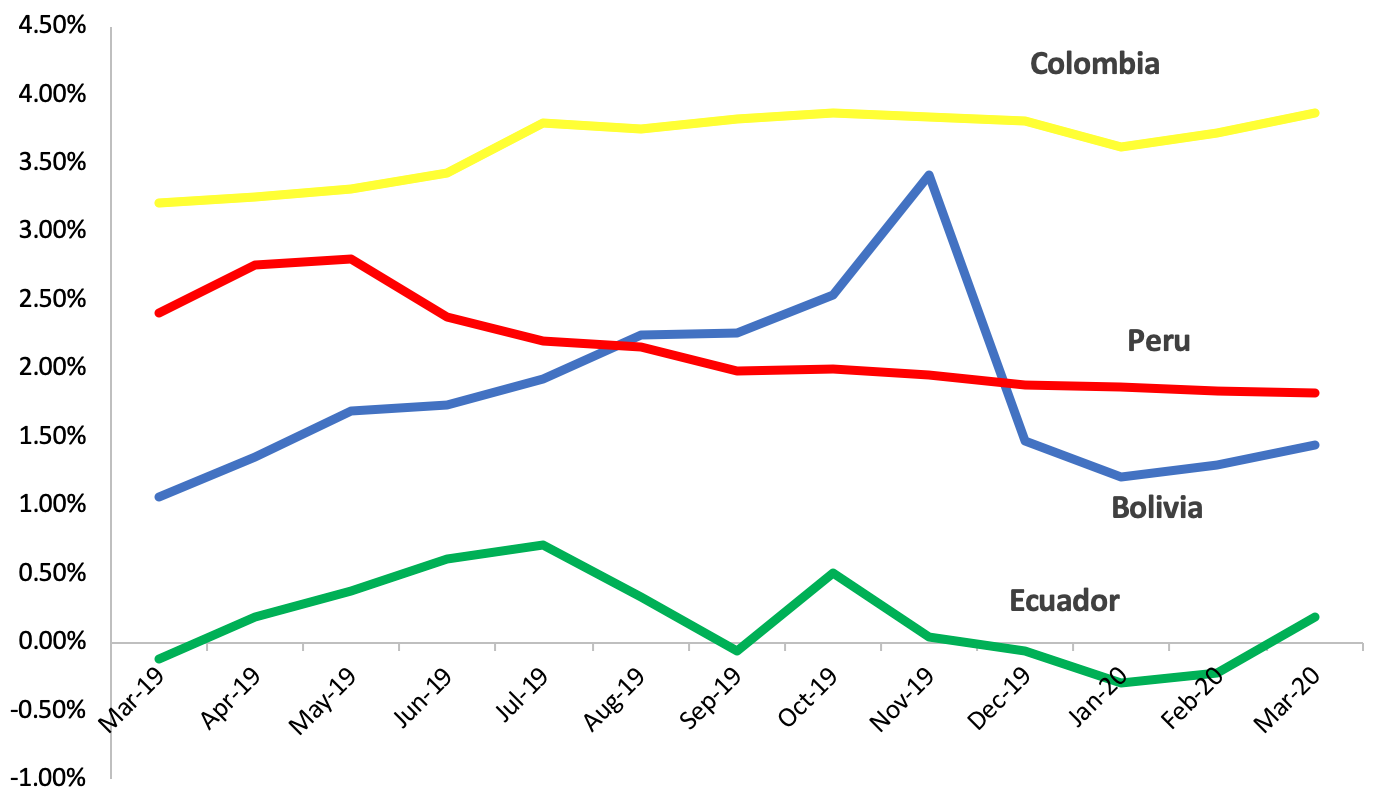
    Andean Countries: Inflation
    Monthly year-on-year figures

     Andean Countries: GDP growth (%)
    Quarterly figures are year-on-year growth
    GDP  end 2019* 2020 forecast* Q1 2019 Q2 2019 Q3 2019 Q4 2019
    Bolivia 3.0 3.0 3.4 2.8 2.3 Not yet available
    Colombia 3.2 3.5 3.2 3.3 3.5 3.4
    Ecuador -0.2 0.1 1.1 0.5 -0.3 -1.0
    Peru 2.3 3.2 2.4 1.2 3.2 1.8
    Venezuela -25.5 -14.0 No data No data No data No data
    *Figures from the United Nations Economic Commission for Latin America & Caribbean Dec 2019
    Quarterly growth based on figures from the local central banks
  • BARBADOS: IMF emphasises importance of sticking to reforms

    LatinNews 23 September 2020 Hits: 768

    As a country that is heavily dependent on tourism, Barbados is inevitably one of the worst affected by the coronavirus (Covid-19) pandemic. On the tourism-dependency index, Barbados is ranked 14 out of 166 countries, with tourism’s contribution to GDP calculated at 39%. Tourism is also responsible for 39% of employment. To make matters worse, the crisis comes at a time when Barbados has been struggling to reduce debt under the terms of the International Monetary Fund (IMF)-supervised Barbados Economic Recovery and Transformation (Bert) programme introduced in June 2018. An IMF team conducted a ‘virtual’ staff visit from 25-28 August “to discuss implementation” of Bert.

    At the conclusion of its virtual staff visit, the IMF issued a statement acknowledging the difficulties faced by Barbados, with “a double-digit decline in economic activity projected for 2020”. The statement said: “In this very challenging environment, Barbados continues to make good progress in implementing its ambitious and comprehensive economic reform programme, while expanding critical investments in social protection. International reserves, which reached a low of US$220m (5-6 weeks of import coverage) at end-May 2018, are now in excess of US$1bn. All indicative targets for end-June under the EFF [Extended Fund Facility] were met. The targets for international reserves, net domestic assets and the primary balance were met with some margin, which bodes well for meeting the end-September EFF targets…Good progress also continues to be made towards implementing structural reform under the EFF. The two structural benchmarks for end-June 2020, related to tax and customs administration, were both met. A revised central bank law is expected to be ready to be sent to Parliament in September”.

    This staff visit, and the relatively positive statement, follows on from the third review of the EFF conducted in June when it was reported that “all performance criteria for the review were met”. However, it was agreed that “resetting” of benchmarks for future reviews as a result of the pandemic would be required – and a “programme augmentation” of US$90m was proposed “to help the authorities accommodate the external Covid-19 related shock with a lower primary surplus”.

    The structural benchmarks to be reset, include moving the target dates for the achievement of a new central bank law to end-December 2020 (it was originally scheduled for end-December 2019); for an actuarial review of civil service pensions from end-June 2020 to end-September 2020; for the achievement of a new public pension law from end-September 2020 to end-December 2020; for the development of plans to recapitalise the central bank and “address the medium and long-term challenges” for the National Insurance Scheme (NIS - originally scheduled for March/April 2020) “to a date yet to be defined”; and for the designing of a new fiscal rule with the help of an IMF mission, originally planned for March/April 2020, “to a date yet to be defined”.

    One of the main achievements noted in the review was that the primary surplus target of 6% of GDP for FY2019/2020 was achieved even though tax revenues fell short of budget projections by close to 1% of GDP due to lower corporate tax receipts from financial institutions following the public-debt restructuring in December 2019.

    The IMF believes that the restructuring agreement will still enable the government to bring debt down to 60% of GDP by FY2033/2034, however, the path to that goal has necessarily become less straightforward. Due to the collapse in tourism revenues, the primary surplus for FY2020/2021 is now targeted at 1% of GDP. According to the IMF: “The Covid-19 induced fiscal accommodation will need to be compensated by higher primary surpluses in the medium term to reach the 60% medium term anchor in FY2033/2034, while delaying by two years the achievement of the interim target of 80%, which will now be achieved in FY2029/2030”.

    A two-year delay in reaching the interim debt target of 80% of GDP doesn’t seem too serious, but the IMF adds that a further deepening and lengthening of the Covid-19 crisis would jeopardise this. Indeed, it warns that “the debt trajectory could become unsustainable”. On the other (more optimistic) hand, the IMF points out that “the large share of domestic debt reduces rollover risks”, and it says “if growth turns out higher than projected, this would allow for more rapid debt reduction than is envisaged under the baseline, so long as the authorities preserve the savings”.

    One area of reform that the IMF has been keen to re-emphasise as key is the reform of Barbados’ state-owned enterprises (SOEs). In FY2017/2018, the SOEs were consuming close to 8% of GDP and (in the words of the IMF) “had become a significant burden on the budget, and a major contributor to fiscal risks”.

    Unfortunately, due to the Covid-19 shock, grants to SOEs will increase further during this financial year due to one-off expenditures mainly in health, tourism, and social assistance. Thereafter, the IMF says they should decline to 6% of GDP by FY2021/2022 “by a combination of: (i) much stronger oversight of SOEs supported by improved reporting and tighter control over SOE borrowing; (ii) cost reduction, including reduction of the wage bill; (ii) revenue enhancement, including an increase in user fees; and (iv) mergers and divestment”.

    There has already been some progress with SOEs, including reducing the numbers from 60 to 52 through mergers and closures, the renegotiation of supplier contracts, an increase in some tariffs (bus fares and water rates), and new levies on sanitation, health services, and tourism. There has also been a strengthening of oversight. However, the IMF admits, “with the authorities fully focused on handling the coronavirus crisis” discussions over further reform of SOEs will have to be delayed until the next review.

    Another area that the IMF is discussing with the Barbados’ authorities is the need for structural reforms “to unlock Barbados’ growth potential”. In its review paper, the IMF emphasised that these would “need to be accelerated” once the Covid-19 crisis recedes. Areas of concern will include improving the business climate by “(i) streamlining the process for setting up new businesses, (ii) eliminating the requirement to use a company seal, (iii) introducing a single business administration number, (iv) amending the company law to strengthen protection of minority shareholders, (v) reforming customs administration to facilitate trading across borders, and (vi) digitising property records in the land registry”.

    Despite the generally positive tone of the review, there is no hiding the IMF’s concerns over the difficulties confronting programme implementation going forward. Obvious risks to the programme include a longer and/or larger than expected impact of the pandemic and slower than expected global recovery. The IMF also points to “limited implementation capacity and untested ability to maintain high primary surpluses over a sustained period required in the future to achieve the 60% debt anchor”. Concerns about “limited implementation capacity” also apply to the structural reform agenda.

  • ECONOMIC HIGHLIGHTS

    Patrick de Courcy 15 September 2022 Hits: 1746

    PERU | Growth forecast lowered. On 25 August, Peru’s economy & finance ministry (MEF) reduced its GDP growth forecast for Peru this year to 3.3%, down from 3.5% back in April. According to the MEF, the economy has been affected by temporary supply shocks that have had an impact on the performance of primary sectors in the first half of the year, while external conditions are unfavourable due to the slowdown in external demand, the adjustment of commodity prices, and inflationary pressures. However, the MEF stated that there are factors that will help counteract the negative effects in 2022 and sustain economic growth in 2023. These include: 1) the dissipation of social conflicts in the mining sector; 2) the implementation of measures (as yet unveiled) to boost private and public spending, and investor confidence; 3) increased dynamism in economic sectors that were badly affected by the coronavirus (Covid-19) pandemic, such as trade, hospitality and transportation; and 4) the recovery of domestic demand driven by the stimulation of investment and the resilience of private consumption.

    COLOMBIA | Monómeros to be handed back to Maduro. Colombia’s new ambassador in Venezuela, Armando Benedetti, said on 31 August that control over the Colombia-based Venezuelan state petrochemicals company Monómeros will be handed to the Venezuelan government led by President Nicolás Maduro. Monómeros has been under the control of a board appointed by Venezuelan opposition leader Juan Guaidó since 2019, when Colombia’s former president Iván Duque (2018-2022) recognised him as Venezuela’s legitimate president. In an interview with Spanish newswire EFE, Benedetti said that Colombia’s new president, Gustavo Petro, “recognises Maduro, recognises that the owner [of Monómeros] is the Venezuelan government”. He said that this “has caused some complications with the US”, but that Petro “always told the US…that Monómeros will be returned to Venezuela, in line with our regulations.”

    Andean countries: inflation rate
    Percentage variation (year-on-year)

    Andean countries: GDP growth (%)
    Quarterly figures are year-on-year growth

  • Case study 2: Brazil

    Patrick de Courcy 16 May 2023 Hits: 1687

    As far as the available evidence is concerned, Brazil is likely to be the ‘number 2’ destination for nearshoring investments in Latin America in the next 5-10 years. As we have seen, the IDB estimates the that the potential expansion of exports across Latin America resulting from nearshoring is of the order of US$64.1bn in goods (excluding exports of services). The biggest share of that expansion will come from Mexico, with US$35.3bn or 55% of the total. Brazil comes in second place with US$7.84bn or 12.2%, followed by Argentina in third place with US$3.9bn (6.1%) and Colombia in fourth with US$2.6bn (4.0%).

    However, the pattern of nearshoring in Brazil is likely to be very different when it is compared to Mexico. It is worth considering some of the key contrasts between the two economies.

    Size matters: Brazil’s population and economy is significantly larger than Mexico’s. According to the World Bank data the total Latin America and Caribbean (LAC) population in 2021 was 654.9mn. Brazil was the top country in the region by population size with 214.3m inhabitants or 32.7% of the total. This means that one in every three Latin Americans lives in Brazil. Mexico followed in second place with a population of 126.7m (19.3% of the LAC total). One in every five Latin Americans therefore is a Mexican. As far as the economic output is concerned nominal LAC GDP in 2021 stood at US$5.454trn. Brazil was also the top economy with a GDP of US$1.608trn or a 29.5% of the regional total. Mexico followed with US$1.272trn or 23.3% of the regional total. Further down the ranking came Argentina in third position and Colombia in fourth. Together, Brazil and Mexico account for more than half the Latin American economy.

    Put crudely, Brazil on its own has a larger consumer market and economy than Mexico and therefore might be expected to attract a larger share of inward foreign direct investment (FDI). International companies might favour Brazil both as an investment destination to access the sizeable domestic market, and for nearshoring/export purposes. However, that is far from the whole story. Brazil can be seen as a gateway, offering preferential access to the Mercosur common market (population c 270m), and the rest of South America. However, Mexico is arguably a more attractive gateway offering preferential access to the larger and significantly wealthier USMCA market (population nearly 500m).

    Geography matters. Mexico’s location – as the only Latin American country sharing a long land border with the United States – is a unique advantage and a trump card in the race to capture nearshoring investments. As we have seen, geographic contiguity radically reduces the cost of transporting goods to the United States. Exports from Brazil, in contrast, need to physically be taken across oceans to get to the country’s main markets, whether they be China, the US, or Europe. An additional consideration is that Brazil is a vast country with limited domestic infrastructure. Although São Paulo is the top manufacturing region, operations are also spread across Paraná, Minas Gerais, Rio de Janeiro, Rio Grande do Sul, and Espírito Santo. There is no single well-connected manufacturing hub comparable to Mexico’s industrial corridor of US-connected northern states.  

    The net result is that Brazil has additional transport costs which are significant and tend to limit its exports to profitable agro-industrial and mining commodities, and to some niche products where, despite extra transport costs, the country has a clear competitive advantage. They make it harder for Brazil to move beyond commodities into manufacturing, thereby incorporating greater value-added products in international supply chains. 

    Pre-existing trade performance is relevant. Globalisation has always been something of a two-edged sword. Latin American countries benefit from the removal of tariff and non-tariff barriers, gaining much wider access to export markets around the world. But the more challenging quid pro quo is that they must also open up their domestic economies to competition from other countries. In a worst-case scenario, domestic manufacturing could be swamped, losing market share to a surge in more cheaply priced foreign imports. A critical issue then becomes how the opening up is managed, whether it is abrupt or gradually phased in, and whether businesses focused on the domestic market are given time and the practical support needed to become more competitive in wider regional and global markets. This is where there is a sharp contrast between Mexico and Brazil.

    First with Nafta (1994) and then with USMCA (2020), Mexico has had nearly three decades to develop its ability to compete within one of the world’s largest free trade areas. This has involved both job losses and job gains. To survive, companies operating in Mexico have had to ruthlessly pursue competitive advantage. The costs and benefits of Nafta/USMCA are still debated, but it is clear that Mexico has become much more closely integrated with the North American market. In contrast, Brazil’s opening up experience has been much more limited. Admittedly Brazil was a founder member of the Mercosur common market (1991), but it was the dominant player in what remains a smaller and less dynamic regional market formed with Argentina, Paraguay, and Uruguay. To date Mercosur membership has failed to leverage significant pressures to reduce ‘Brazil cost’ – the costs associated with poor quality infrastructure and red-tape. In addition, Mercosur retains a very high common external tariff, up to 35% ad valorem, and, apart from progress in some limited areas such as automobile industry integration, it has failed to significantly reduce internal trade barriers. Crudely, Mercosur has offered little incentive for Brazil to become more competitive.

    Partly because of the policies followed over the last three decades, Brazil therefore remains a largely inward-looking economy. In 2020/2021 Brazil’s total trade (exports plus imports) as a proportion of GDP was 39.2%. In contrast, Mexico’s trade-to-GDP ratio stood at 83.6%. In other words, as an economy, Mexico is twice as open as Brazil. Also over the last 30 years the pathway of manufacturing value added seems to have diverged in the two countries. In 1990, according to World Bank data, Brazilian manufacturing represented 23% of the country’s GDP, while the figure for Mexico was 19%. By 2020 the positions had swapped around completely. Brazilian manufacturing had dropped to only 10% of GDP, while Mexican manufacturing stayed more or less static at 18% of GDP. Brazilian business leaders have lamented this state of affairs, noting that the country’s export commodities boom seems to have been largely extractive and to have gone hand-in-hand with a failure to achieve greater value added in global supply chains. Some business groups identify one of Brazil’s major problems as de-industrialisation.

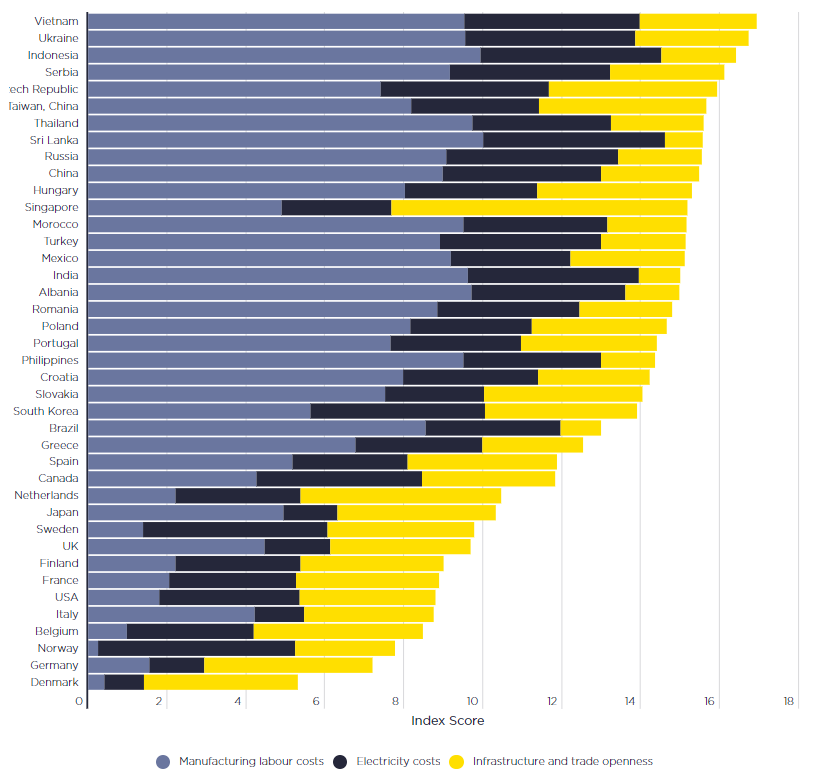
    It also needs to be stated that Brazil and other Lain American nearshore destinations have to date lagged behind other countries and regions. The Savills Nearshoring Index scores countries by the competitiveness of their manufacturing wages and electricity costs, along with their infrastructure and trade openness. Of a total of 40 destinations the most competitive tend to be Asian and European. Brazil comes in at 25th position, lagging behind the only other Latin American jurisdiction in the table, Mexico in 15th position.

    Savills Nearshoring Index
    Manufacturing nearshoring potential of countries that are, or are in close proximity to, major consumer markets

    Source: Savills Research

    Semi-conductors: an opportunity for Brazil nearshoring? There is reason to believe that amid increased super-power rivalry Brazil may be able to attract significant nearshoring investment in semi-conductors (also known as chips). The background is that the US wants to reduce its dependence on Asian chip manufacturers and resolve post-pandemic global chip shortages which have caused bottlenecks in automobile, mobile phone, and other IT device production. The CHIPS Act passed by the US Congress offers subsidies of up to US$39bn to local companies that increase their chip fabrication capacity. Similar legislation tabled in the European Parliament offers funding of up to EUR43bn (US$46.6bn). Parts of the manufacturing process could be conducted through investment in nearshoring fabrication plants. Chinese chip manufacturers on the other hand, are also interested in overseas chip production, and may be similarly prepared to invest.

    In early April 2023 the Brazilian government awarded a US$19m loan to HT Micron, a South Korea-owned chip manufacturer based in Rio Grande do Sul state, to help it develop a UFS-based multi-chip package (uMCP) and to phase out its embedded multichip package (eMCP). uMCPs are newer technology: they take up less space in smartphones and tablets and offer increased data transfer speeds.  HT Micron supplies chips to mobile phone, computer, and smart TV manufacturers, such as Samsung, Lenovo, and LG. Aloizio Mercadante, head of BNDES, the state-owned National Development Bank that provided the loan, said there could be investment opportunities in Brazil for “the encapsulation phase of microchips or in the manufacture of components that use semi-conductors for the automotive sector”. He also noted that during President Lula’s January visit to the White House, officials had said they were “intensively seeking” semi-conductor investment opportunities.

    As the largest economy in Latin America, with a well-developed auto industry, Brazil is potentially attractive to semi-conductor producers. However, the sheer cost of the latest technology chip fabrication plants (fabs) could be a disincentive. Intel expects its two new fabs in Arizona to require capital spending of around US$15bn each. The company, along with other western–aligned electronics manufacturers such as TSMC (Taiwan semi-conductor) and Samsung, would need convincing that Brazil could be a competitive location for nearshoring all or part of such a costly long-term investment.

    Industry analysts have expressed worries over poor infrastructure and political instability. The Brazilian Association of the Semiconductor Industry (ABISEMI) says that existing local chip manufacturers have annual sales of over US$700m with a third coming from the sale of memory boards. There are now around 14 local companies in the semi-conductor sector employing 2,500 people. Tax and other incentives introduced in the 1990s largely explain the growth in the local industry. Despite this, the country still imports around 90% of the chips it uses in cars, mobile phones, and other electronic devices. Existing plants in Brazil tend to be focused on low value-added activity within the chip industry.

    A study by consultancy KPMG said a major problem is the lack of skilled workers, which would require a decades-long training programme integrated with national universities. According to KPMG specialist Marcio Kanamuru, “We have something of a perfect storm of growing demand and the opportunity to reindustrialise the country in a relevant way, creating a pool of talent, demanding things in return with regard to sharing technology and knowledge. But we are seeing this train leave the station without taking any concrete measures.”   

    Despite Washington’s suggestion that Brazil-China collaboration in microelectronics would not be welcome, Brazilian officials have also considered looking at the alternative possibility of partnering with China to build local chip capacity. Beijing might be willing to offer a package deal including infrastructure development and generous financing support. However, China does not have access to the latest US technology, such as extreme ultraviolet (EUV) lithography and its immediate predecessors.

    Companies that try to supply the technology to China face the possibility of US sanctions. Under Lula the government has signalled that it will try to pursue economic self-interest and not ‘take sides’ in the US-China rivalry. The clearest statement of this position came from Lula’s top foreign policy adviser, Celso Amorim, who said “If the US wants to, they can propose bigger and better conditions [for a fab plant], and that’s it, we will choose theirs,” adding: “We have no preference for a Chinese semiconductor factory, but if they offer good conditions, I don’t see why we would refuse.” Brazil is already using 5G technology supplied by China’s Huawei. 

    EU Mercosur deal: first step to nearshoring? Almost 20 years of on-off negotiations on a free trade agreement (FTA) between Mercosur and the European Union culminated in mid-2019 when the two sides finally reached agreement on a single text. However, almost immediately the prospect of the deal being ratified by the national legislatures of the two trade blocks was put on hold. At the time Brazil was in the early stages of the far-right presidency of Jair Bolsonaro (2019-2023), and his climate-sceptic position, favouring uncontrolled economic development of the Amazon and rapid deforestation, went down badly in Europe, particularly with President Emmanuel Macron of France. The Brazilian president also made it known he favoured an FTA with the US over one with the EU (no significant progress was made on that front, in any case). France and other EU members in turn refused to ratify the Mercosur agreement until environmental protection guarantees were strengthened.

    Since Lula took office as president once again in January 2023, prospects that the EU-Mercosur agreement may finally come into law have improved. In April Márcio Elias, executive secretary for the ministry of development, industry, trade, and services, said that the Lula administration was seeking for the agreement to be fully ratified before the end of the year. He said that EU calls for stronger environmental and labour protections had been met. Lula has traditionally been critical of unrestricted globalisation, but he appears supportive of the FTA with the EU, casting it as an opportunity for Brazil to become a global leader in renewable energy and green hydrogen.

    Some EU members, such as Austria, remain opposed to ratifying the agreement. But the important point is that an FTA of this type can be seen as a necessary prior step to attracting a wave of nearshoring investments. Most importantly, the agreement provides a kind of road map for Brazil to gradually integrate with EU supply chains and become more internationally competitive. If eventually approved, the FTA will create a market of around 700m people, representing close to 25% of global GDP.

    At the heart of the FTA is a process of mutual tariff reductions affecting merchandise trade between the two blocks. Nearly 100% of bilaterally traded EU products and 90% of Mercosur products will come under the FTA. In 2021 Mercosur exported EUR32.9bn (US$36.1bn) of products to the EU, primarily agricultural and livestock but including some manufactures. It imported EUR33.9bn (US$37.7bn) worth of European goods, mainly manufactures and agri-food products. Under the terms of the agreement tariff reductions are to be phased in over 5 to 15 years. European exporters will benefit from reductions in existing Mercosur tariffs levied on cars (currently 35% ad valorem), machinery (14%-20%) chemicals (up to 18%), and pharmaceuticals (up to 14%). Mercosur tariffs on European-made chocolate, confectionery, wines, and cheese will also be slashed. Overall, it is calculated that EU exporters will save EUR4bn (US$4.4bn) in reduced tariff payments. Mercosur on the other hand, will benefit from the reduction over five years of EU tariffs levied on just over 80% of currently traded agricultural goods. Most of the remainder will come under a preferential quota system. Brazilian exporters of orange juice, instant coffee, sugar, poultry, and fruit will benefit. Brazilian beef exporters will get a 99,000-tonne annual quota on sales to the EU, on which a 7.5% tariff will be payable.  

    The FTA is primarily about merchandise trade. There are also various commitments to ease barriers to e-commerce and trade in services. Mercosur suppliers will be able to participate in EU public auctions and procurement processes. While the agreement provides a relatively long adjustment period, Brazilian industrialists remain concerned over increased competition from imports. The FTA offers a gradualist approach, but it will still be difficult for local industrialists to shake off a long history of protectionism. The government will also be under pressure to carry out tax and fiscal reforms that will reduce the ‘Brazil cost’ and allow companies to compete more effectively.

  • ECONOMIC HIGHLIGHTS

    Abbi Dicker 18 July 2025 Hits: 3098

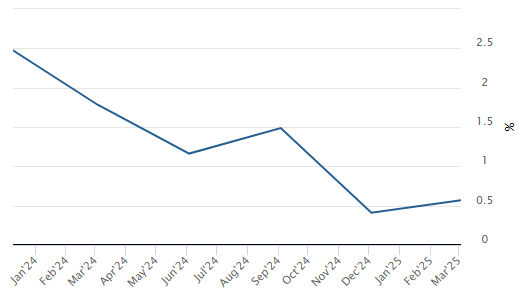
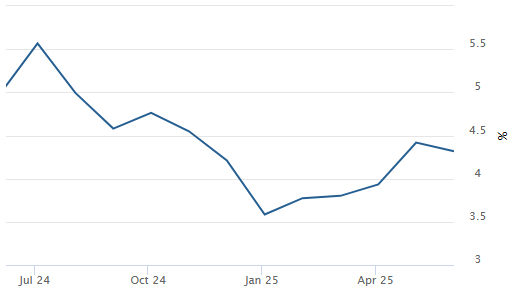
    MEXICO | Headline inflation slows as core rates rises. On 9 July Mexico’s national statistics institute (Inegi) released the consumer price index (INPC) for June, reporting that monthly inflation stood at 0.28%, bringing the annual rate to 4.32%. This compared to monthly inflation of 0.28% in May and 0.33% in April and to annual rates of 4.42% and 3.93% in May and April respectively. Core inflation, which excludes volatile items like food and fuel, stood at 0.39% in monthly terms and 4.24% in annual terms, up from a monthly core rate of 0.30% and an annual core rate of 4.06% in May.

    MEXICO | Vehicle exports, production up while sales decline in June. On 7 July Mexico’s national statistics institute (Inegi) reported that production and exports of light vehicles had increased year-on-year in June 2025, while sales were down. Exports were up 14% at 331,517 units, following yearly declines in April and May, while production increased by 4.9% compared to June 2024, with a total of 361,047 units manufactured. However, domestic sales declined 5.9% to 116,062 units in June. Cumulative production from January to June rose slightly by 0.5% year-on-year to 2.0m units. Exports over the same period fell 2.83% to 1.7m units, while sales were also down 0.25% to 709,344.

    MEXICO | GFCF continues to fall. Mexico’s national statistics institute (Inegi) released its latest figures on gross fixed capital formation (GFCF) on 3 July, announcing that investment in April 2025 was down by 7.7% in annual terms, with a monthly drop of 1.7%, on seasonally adjusted figures. This followed an annual decrease of 5.7% and monthly rise of 0.2% in March, according to the latest figures. The results represent the eighth consecutive month of annual decreases. The annual decline in April was the result of a 5.5% decrease in investments in construction, and a 9.1% drop in investments in machinery and equipment.

    Mexico: GDP growth
    Percentage variation (year-on-year)

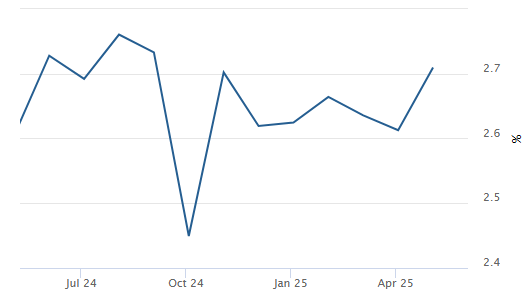
    Mexico: unemployment rate
    Economically active population

    Mexico: inflation rate
    Percentage variation (year-on-year)

    Source (all graphs): National Statistics Institute (Inegi)

  • RASTREANDO TENDENCIAS

    LatinNews 09 July 2012 Hits: 599

    CHILE-ARGENTINA | Ponen fin al acuerdo sobre doble imposición. El 2 de julio la prensa chilena informó que las autoridades argentinas habían notificado a sus pares chilenos el 29 de junio que daban por terminado el actual acuerdo sobre de doble imposición que fue firmado por los dos países en 1976. El acuerdo, que cubre la recaudación de impuestos sobre capital, patrimonio neto, y otros aspectos, incluye una cláusula que permite que cualquiera de los países participantes lo pueden dar por terminado en cualquier momento entre el 1 de enero y el 30 de junio de cada año para que las nuevas normas puedan ser aplicadas el año siguiente. Esto significa que el acuerdo ya no estará vigente a partir del 1 de enero del 2013.

    Las autoridades chilenas expresaron su pesar sobre la decisión de Argentina. El embajador de Chile en Argentina, Adolfo Zaldívar, dijo que en su opinión la decisión sería “negativa para las inversiones chilenas y para la promoción de una mayor integración entre los dos países”. Zaldívar dijo que él había dicho todo esto a las autoridades de Argentina y ellos lo habían ignorado, alegando que ya habían decido “terminar todos los acuerdos sobre doble imposición en vigencia”.

    Zaldívar dijo que Argentina ya había puesto fin a similares acuerdos con Suiza, Austria y España, debido a su preocupación de que los ciudadanos argentinos los usen para la evasión fiscal. El canciller de Chile, Alfredo Moreno, también lamentó la decisión de Argentina, describiéndola como una “mala noticia” para ambos países. Sin embargo, Moreno señaló que el objetivo de Chile ahora será renegociar un acuerdo actualizado sobre doble imposición con Argentina.

    ARGENTINA | Crece la toma fiscal. De acuerdo con datos proveídos por la autoridad fiscal de Argentina, Afip, la toma fiscal total del país para junio fue de US$12,30mm, 20,6% más que en el mismo periodo del año pasado. La figura lleva la toma fiscal acumulada para los primeros seis meses del año a un record de US$69,96mm, 25% más que en el mismo periodo del año pasado. En el 2011, la toma fiscal de Argentina fue un record de US$540,13mm, un incremento del 31,8% sobre el 2010, pues la Afip comenzó a aplicar controles estrictos sobre la evasión fiscal y el gobierno introdujo nuevos impuestos e incrementó las tasas sobre las existentes.

    El presupuesto del gobierno del 2012 pronostica una toma fiscal de US$147,2mm, que ahora ciertamente luce dentro del alcance. Sin embargo, lejos de estar en una sólida posición financiera, el gobierno de Argentina aún está bajo presión financiera para pagar sus deudas, en particular su deuda externa. La semana pasada, el 26 de junio, el gobierno ordenó al banco central (BCRA) que transfiera US$2,17mm de sus reservas extranjeras al tesoro nacional a fin de que estos fondos sean utilizados para el servicio de la deuda que el gobierno tiene con organizaciones financieras internacionales. El decreto ejecutivo, firmado por la Presidenta Cristina Fernández, declaró que el BCRA debe “reasignar los recursos restantes del año financiero 2011 para la cancelación de la deuda como parte del proceso de reducción de la deuda externa”. Argentina ha estado usando su “superávit en reservas extranjeras” para hacer pagos de deuda desde el 2010, pero en marzo el congreso aprobó un proyecto de ley reformando las regulaciones del BCRA, eliminando su obligación de mantener suficiente reservas extranjeras para respaldar el monto total de dinero circulante en el país. Esto liberó grandes sumas de reservas extranjeras del BCRA a las cuales ahora el gobierno tiene acceso, y las está usando de manera creciente, para reforzar las frágiles finanzas del país.

    • Moody´s considera reducir de grado a Paraguay

    El 27 de junio la agencia de ratings Moody’s anunció que por el momento mantenía el rating de B1 para el riesgo soberano de Paraguay, pero advirtió que podría ser rebajado si la crisis política derivada del juicio político al presidente Fernando Lugo (2008-2012) empeora. De acuerdo con Moody’s la “abrupta decisión de enjuiciar al presidente destaca la debilidad institucional del país y su alta tendencia hacia eventos de riesgo”. Y agrega que el rating B1 de Paraguay “captura esos dos factores”. Sin embargo, también señaló que como resultado del evento, el país es ahora “vulnerable a impactos externos” y que su rating podría ser bajado de grado si el “malestar socio-político socava la gobernabilidad” o si las relaciones regionales giran “de una manera que el crecimiento económico y las perspectivas comerciales para el país se deterioran”.

  • BRASIL: Rousseff encabeza la delegación para las Olimpiadas de Londres

    LatinNews 30 July 2012 Hits: 627

    La Presidente Dilma Rousseff estará en Londres hasta el 28 de julio, en una visita oficial de cuatro días, acompañada de un grupo de altos miembros del gabinete, incluyendo el Canciller Antonio Patriota; el Ministro de Finanzas Guido Mantega; el Ministro de Deportes Aldo Rebelo; el Ministro de Turismo Gastão Vieira; el Ministro de Educación Aloizio Mercadante; y el Ministro de Ciencia y Tecnología Marco Antonio Raupp. La delegación también está acompañada por el presidente del banco central, Alexandre Tombini; el líder de la cámara federal de diputados, Marco Maia; y Sérgio Cabral, el gobernador aliado al gobierno federal, de Río de Janeiro, el estado que será anfitrión de la Copa Mundial de fútbol del 2014 y de los Juegos Olímpicos del 2016.

    Afuera de 10 Downing Street, el Primer Ministro de Gran Bretaña, David Cameron, dijo que la conexión Olímpica proveía una “gran oportunidad” para la cooperación entre Brasil y Gran Bretaña, agregando que el Reino Unido (UK) quiere profundizar los lazos comerciales con el gigante del Cono Sur. El comercio bilateral llegó a US$8,6mm en el 2011, subiendo 10% sobre el 2010. El canciller británico William Hague lideró una delegación comercial a Brasil en enero, donde él prometió elevar al doble el comercio entre ambos países para el 2015.Con mucho trompeteo, Brasil sobrepasó a UK a principios de este año para convertirse en la sexta mayor economía del mundo (en términos nominales del PIB) y por tanto, Rousseff llegó a Londres como una líder a la que se debe reconocer como tal, no menos debido a su posición anti-austeridad ante la crisis económica global.

    El contraste entre los múltiples paquetes de estímulo económico interno del gobierno brasilero, por un valor de más de US$50mm desde que Rousseff asumió el poder en enero del 2010, y la dogmática austeridad fiscal del gobierno Cameron, difícilmente podría ser más marcado. En efecto, horas antes de recibir a Rousseff, el asediado Ministro de Hacienda de Cameron, George Osborne, quedó bajo renovado fuego por su posición de política conservadora después de que emergiera que la economía de UK se había deslizado de nuevo en la recesión en el segundo trimestre. Y aunque incluso Brasil mismo está sufriendo este año, esta posicionado para resurgir en el 2013 asumiendo que en China ocurra lo mismo) dada la depreciación de su moneda y una acomodadiza posición en política monetaria. Cameron admitió que su gobierno necesita “arremangarse y hacer todo lo posible para poner en marcha los negocios, la construcción de viviendas y los empleos en Gran Bretaña”. Él bien podría consultar con Rousseff para recibir algún consejo.

    Según una declaración de Downing Street, Cameron y Rousseff también discutieron la crisis de la zona Euro y la economía global. Cameron podría tener una aliada en Rousseff con relación a la zona Euro; ella regularmente ha hecho pedidos para que el Banco Central Europeo actúe como prestamista de última instancia, como parte de una solución a la crisis sistémica financiera en los estados periféricos de la zona Euro. UK y Brasil también se ven generalmente frente a frente en foros multilaterales sobre temas blandos como el medioambiente y el calentamiento global.

    Sin embargo, el punto polémico, es el Oriente Medio. Con el Presidente de EU, Barack Obama preocupado con su intento de reelección en noviembre, Cameron y Hague han estado haciéndose cargo de Siria. Esta semana, UK presionó para que el Consejo de Seguridad de las Naciones Unidas (ONU) apruebe una resolución elaborada por UK para imponer sanciones al gobierno liderado por el Presidente Bashar Assad. Dos miembros del Consejo de Seguridad, China y Rusia, rechazaron firmemente la propuesta, temiendo que sirva de pretexto para una intervención militar. Rousseff dijo en Londres que la situación en Siria es preocupante y enfatizó que Brasil condena la violencia. Ella también admitió que el país está en una guerra civil y por primera vez declaró que el gobierno de Assad “ha perdido legitimidad”. Sin embargo, ella también fue clara en que la comunidad internacional no debería adoptar la misma estrategia aplicada en Irak y Afganistán.

    Curiosamente, en vez de enmarcar la oposición de Brasil en el usual terreno de los derechos humanos, ella alegó que una intervención militar en Siria y/o Irán, crearía una crisis  regional y en los precios del petróleo, que podrían echar a perder todos los esfuerzos hechos en EU, UK y Europa, para restaurar el crecimiento y la estabilidad económica. Insistió en que el diálogo y la cooperación internacional era la única manera de hacer frente a las situaciones en ambos países. “La militarización no da resultado”, repitió después el canciller de Brasil, Patriota. Sin embargo, Patriota admitió que Brasil estaba “preocupado” por la falta de consenso en el Consejo de Seguridad de la ONU.

    Brasil ha reafirmado repetidas ocasiones su pleno apoyo por el plan de paz de seis puntos para Siria propuesto conjuntamente en marzo por el ex Secretario General de la ONU, Kofi Annan, y la Liga Árabe, que pide un cese del fuego seguido de conversaciones internas entre el gobierno y los rebeldes. Sin embargo, el tercer veto de Rusia y China a la resolución del Consejo de Seguridad amenazando con sanciones a Siria hace una semana, fue el toque de muerto para el plan de Annan, de acuerdo con la mayoría de los diplomáticos. Considerando sus aspiraciones de poder global, Brasil ha sido visto como no dando la talla por EU y UK cuando se trata de política dura, como la del Medio Oriente, y las últimas declaraciones de Rousseff y Patriota, que en Washington y Londres serán percibidas como una continuación de la actitud de Brasil de mirar desde la muralla, no ayudará.

    Celebración en Caracas

    El Presidente Hugo Chávez y su canciller, Nicolás Maduro, recibieron el 26 de julio a una gran delegación de Brasil liderada por el izquierdista radical asesor presidencial en relaciones exteriores, Marco Aurélio García. Los brasileros llegaron en su condición de presidentes pro témpore del Mercado Común del Sur (Mercosur). El ánimo era de celebración, sin signos de ninguna clase de dudas legales planteadas por Paraguay (y también Uruguay) acerca de la legitimidad del ingreso de Venezuela al Mercosur por la puerta trasera, que fue acordada en una cumbre presidencial trilateral el 28 de junio, en la que el temporalmente suspendido cuarto miembro y último oponente que resta a la membrecía de Venezuela, Paraguay, no fue invitado.

    En lo que concierne a Chávez y al gobierno brasilero, se trata de un acuerdo políticamente ya finalizado, con los detalles económicos y técnicos que seguirán más adelante. No por primera vez los críticos se quejan que el Mercosur, un tratado de libre comercio y bloque de integración económica, está siendo rehén de la fraccional política regional. Alessandro Teixeira, vice-ministro de desarrollo, industria y comercio de Brasil, declaró: “El ingreso de Venezuela en el Mercosur durante la presidencia pro témpore de Brasil es causa de celebración, es una importante estrategia para el bloque [...] Tengo la certeza en las palabras de la Presidenta Dilma [Rousseff], quien dijo que el [ingreso] es estratégico para la consolidación de la integración latinoamericana”.

    Chávez dijo que la delegación llegó para acelerar los procedimientos formales de adhesión. Entre otras cosas, estos requerirán que Venezuela adopte dentro de cuatro años (la más alta) tarifa externa común del Mercosur, algo sobre lo cual Caracas se mostraba previamente poco dispuesta, pese a su petición de ser miembro. En la agenda también estaba el desarrollo agrícola, telecomunicaciones, y comercio. Chávez declaró: “Nicolás Maduro me ha dicho que más de 230 productos podrían ser exportados a Brasil pronto; es un mercado gigantesco”. Citó específicamente aluminio, carbón y fertilizantes, también enfatizó la necesidad de construir la “complementación entre Petrobrás y Pdvsa” (las compañías petroleras estatales de Brasil y de Venezuela).

    La retórica política es una cosa, la realidad económica es algo muy diferente. Brasil tiene un masivo superávit comercial con Venezuela (US$3,3mm en el 2011) y éste solamente podrá incrementarse una vez que las tarifas de importación de Venezuela se reduzcan bajo el Mercosur. Irónicamente, esto le servirá al fuertemente dependiente de las importaciones gobierno de Chávez, que pasa dificultades para proveer a la reprimida demanda interna en Venezuela. Notablemente, Venezuela avanzó parcialmente la semana pasada para liberar sus controles sobre el mercado de cambios, permitiendo que algunas compañías se asocien con el estado para abrir cuentas en moneda extranjera (es decir, dólares) en bancos locales. Esto facilitará las importaciones y podría también ser precursor de una devaluación de la moneda post-elecciones que apuntalaría los ya exigidos cofres fiscales del gobierno. El gobierno de Chávez probablemente calcula que el acceso a importaciones más baratas dentro del Mercosur ayudará a mitigar las presiones inflacionarias que provendrían de una devaluación.

    Por el otro lado, todo, excepto el 5% del valor de las exportaciones de Venezuela está compuesto del petróleo crudo y, como el gran esquema de Chávez de construir una refinería conjunta de petróleo crudo con Brasil (la refinería Abreu e Lima en el estado norteño de Pernambuco, en Brasil), sus planes para exportar minerales y fertilizantes a Brasil probablemente también necesiten de inversión brasilera para instalarse y comenzar a funcionar. Todo es potencialmente una gran ganancia para el sector privado de Brasil, que, irónicamente, no simpatiza con su vecino Socialista.

    • Sin azúcar agregada

    La Organización General para el azúcar, la importadora estatal de azúcar de Siria, dijo el 25 de julio que quería comprar 25.000 toneladas de azúcar en bruto brasilera de las oficinas centrales en EU de el operador comercial Bunge, pero que los problemas financieros podrían obstaculizar el acuerdo. Un vocero de Bunge con base en Ginebra declaró: “Aunque no hacemos comentarios sobre, ni confirmamos los contratos comerciales, Bunge exporta materias primas agrícolas a Siria, de acuerdo con todas las leyes de sanciones económicas aplicables, que autoriza la venta de alimentos a estos países por razones humanitarias.”

    • Cabral mete la pata de nuevo

    El gobernador del estado de Río de Janeiro, Sérgio Cabral, de nuevo ocupó los titulares por las peores razones en Londres, cuando hizo un pedido abiertamente político en una cena con líderes empresariales del Reino Unido y brasileros por la reelección del alcalde de Río, Eduardo Paes (un colega compañero de partido) en las elecciones municipales de octubre. La oposición en Río dijo de inmediato que presentaría una queja con la autoridad electoral. El normalmente efusivo Cabral ha mantenido recientemente un perfil muy bajo en un esfuerzo por eludir una serie de alegatos de corrupción, centrados principalmente en los contratos irregulares de obras públicas, pero que también incluye alegatos acerca del despilfarro en sus viajes al exterior financiados por los contribuyentes, acompañado de amigos y socios de negocios, como parte del esfuerzo de Río para obtener los Juegos Olímpicos. Cabral, junto con Rousseff, serán huéspedes de honor en la ceremonia de apertura de las Olimpiadas en Londres.

  • TRACKING TRENDS

    LatinNews 09 May 2013 Hits: 1609

    PERU | Aiming to become world’s second largest copper producer. On 6 May Peru’s energy & mining minister, Jorge Merino Tafur, revealed that the Peruvian government hopes that the country will double its current level of copper production in the next few years to become the world’s second largest copper producer by 2016.

        Merino Tafur said the various new copper mining projects which have already been approved in the country, such as Las Bambas (Cusco Region), Antapaccay (Cusco), Toromocho (Junín) and the expansion of the Antaminas mine (Ancash) to name but a few, would help to increase Peru’s current annual copper production level of 1.3m tonnes (t) year to 2.8m t a year.

        Incidentally, Merino Tafur made this revelation as he visited the facilities of the latest major copper mine that is scheduled to come on-stream soon, the Cerro Verde mine in Arequipa Region.

        According to Merino Tafur, the US$4.4bn Cerro Verde mine, owned by a local firm that shares the same name, is expected to start producing up to 550,000t of copper a year by 2015 making it the “world’s second largest production site”. Moreover Merino Tafur said that the Cerro Verde project will also include the construction of a copper processing plant with the capacity to process 360,000t of the metal, the largest of its kind in the world.

        Peru is currently the world’s third largest copper producer behind China and its regional neighbour, Chile.  

    VENEZUELA | Trade with US plummets. On 2 May the Venezuelan-American chamber of commerce (Venamcham) announced that, according to its figures, Venezuela-US bilateral trade had decreased by 17.2% to US$11.3bn in the first quarter of the year. Venamcham’s figures, presented in a conference in Caracas, showed that this was the result of a sharp fall in Venezuelan oil exports to the US.

        According to Venamcham, Venezuela’s total exports during the period fell by 24.21% to US$7.84bn, driven by a 23.98% fall in oil exports (to US$7.5bn). Meanwhile non-oil exports fell by an even larger 29.51% to just US$294m, highlighting the general slump in Venezuela’s trade with the US.

        Worryingly for Venezuela, although overall US exports to the country fell by 6.99% to US$3.46bn, the amount of refined oil exports experienced a sharp increase of 123.32% to US$877m. It is important to note that for all its anti-US rhetoric and rising animosity between the two countries, the US is still by far Venezuela’s main trading partner, to which it sells approximately 60% of all its oil exports- the country’s main source of revenue.

        Yet as Venamcham figures show, increasingly the US is becoming less dependent on Venezuelan trade while Venezuela looks increasingly dependent on it.

    ECUADOR | Positive forecast. On 8 May Ecuador’s central bank (BCE) released its economic growth forecast for the year: 4%. The forecast was presented by the BCE’s president, Diego Martínez, who said that the figure was “a good one” given that the Ecuadorean economy is experiencing a soft landing following the 8% GDP expansion it recorded in 2011.

        Martínez pointed out that last year the economy posted “an extraordinary” growth rate of 5% following its strong performance in 2011 and that this cooling down has continued this year with a “robust growth based on domestic consumption and better export figures”.

        Indeed, according to Martínez, it is expected that the overall level of Ecuador’s exports including oil and non-oil should increase this year. As for inflation, Martínez said that the BCE was forecasting that the year-end figure would be around 4.4%, slightly higher than the 4.16% registered last year.

        This led Martínez to conclude that Ecuador’s economy is in “good health” and improving. He pointed out that the 4.4% growth forecast puts the country above the average regional growth forecasts of 3.7%.  

    • Colombia prepares to head Pacific Alliance

    On 6 May the Colombian government said that nine heads of State had confirmed their attendance at the next Pacific Alliance summit to be held in Cali, Colombia, on 23 May. As the host of the first summit, Chile was the first pro-tempore president of the bloc, and now Colombia is scheduled to take over. The Colombian government has said that it wants to consolidate the bloc by pushing for more trade integration among current members as well as advances in the incorporation of others. According to the government, in addition to the three other Pacific Alliance heads of state, those of Spain, Guatemala, Costa Rica, Panama and Canada, all of which have expressed an interest in joining the bloc, have confirmed their attendance.    


  • ARGENTINA: An economic policy heading for the exit – but without a ‘Big Bang’

    LatinNews 09 July 2013 Hits: 3161

    Although there are of course a wide range of views, the consensus outlook for the Argentine economy over the next couple of years is not particularly encouraging. Here we look at some of the arguments.

    At one level there was good news for President Cristina Fernández in June. The national statistics institute (Indec), reported stronger-than-expected real GDP growth of 3.0% year-on-year for the first quarter of 2013. This shows a recovery on the low 1.9% growth rate achieved in 2012. Ahead of mid-term elections in October, the Fernández government is particularly keen to get the economy moving. While independent analysts caution that the Indec’s data is much less reliable nowadays than in the past, most agree that the economy will see some bounce-back this year. The Spanish bank BBVA, for example, is predicting real annual GDP growth of 3.0% in 2013 on the back of good agricultural harvests.

    The bad news for the government is that an ever larger group of analysts believe that irrespective of short term ups and downs, the current government’s economic model is now bust. In a recent seminar, Sergio Berensztein of Poliarquía, a local consultancy, said that Argentina is caught in a transitional phase where “the old hasn’t died yet, and new hasn’t been born”. In his view, the record growth rates of 2010 and 2011 can no longer be repeated, and all the symptoms of an exhausted economic policy are present. Speaking at the same event, Carlos Melconian of M&S Consultores argued that existing policies cannot solve Argentina’s economic problems; but on the other hand he did not think the Fernández government would exit the scene amid a big economic crisis. The end of her presidential term in 2015, he suggested, would be rather like the end of Carlos Menem’s second term in 1998, marked by exhausted policies and high inflation, but without rioting on the streets. As he put it “Cristina Fernández will hang on until 2015”.

    Melconian explained that the current administration is protectionist and needs to accumulate foreign currency cash flow to pay massive energy subsidies. It has managed to keep some growth going because of high soya prices and a relatively strong automobile industry. Foreign exchange controls have become a liability, leading to a drop in reserves (from US$46.1bn in 2007 to US$38.55bn in May 2013), and the government has responded by printing money and increasing the fiscal deficit. In 2008-13 exports achieved “zero volume growth”, he noted. A 58% increase in nominal subsidies in the first four months of 2013 was “historically unprecedented”. Actual (rather than officially-recognised) inflation is running at 25% and accelerating by 0.3-0.4% a month, Melconian said. While the overall policy is unsustainable, he foresaw not one big crisis but a series of forced adjustments over the next two years: perhaps a bigger devaluation here, a lurch back towards more price controls there, perhaps a salary boost to buy some social peace, perhaps an adjustment of excessively low utility tariffs.

    The analyst team at Fundación de Investigaciones Económicas Latinoamericanas (FIEL) has a rather similar view. Juan Luis Bour says the economy is underperforming because of distortions caused by the controlled exchange rate regime and the government’s use of inefficient ‘nominal anchors’ to control prices and wages. FIEL predicts only 1% GDP growth this year and warns there could be an increased number of labour conflicts in the second half of this year. Santiago Urbiztondo, another FIEL economist, says the government has sought to impose “command and control” discretionary policies. Against a background of high inflation, tariffs have been kept artificially low and regulated prices have remained frozen. The resulting growth in government subsidies since 2005 has been “explosive” and is now equivalent to 4% of GDP

    • Finally Daniel Artana, another member of the FIEL team, noted that much of the deterioration in the Argentine economy has occurred while the country has enjoyed a commodity boom. As he put it, and according to FIEL data, external conditions are more favourable for Argentina than they have been in the past 40 years. While in such conditions governments have usually enjoyed a fiscal surplus, Argentina is currently running a fiscal deficit equivalent to 4.5% of GDP.
  • RASTREANDO TENDENCIAS

    LatinNews 09 September 2013 Hits: 446

    CHILE | Cosechando los beneficios del TLC con China. Las exportaciones de Chile a China se han incrementado dramáticamente durante los últimos siete años, de acuerdo con un informe difundido el 3 de septiembre por la Dirección General de Relaciones Económicas Internacionales (Direcon) de Chile cubriendo el periodo 2005-2012.

    En el 2005 Chile se convirtió en el primer país latinoamericano en tener un Tratado de Libre Comercio (TLC) con China, lo que significó que la experiencia de Chile provee un punto de referencia importante para otras economías de la región. En este sentido es interesante que las cifras de la Direcon muestran que mientras que predeciblemente, las exportaciones fueron lideradas por el cobre, las exportaciones no-mineras también han registrado un significativo incremento anual promedio del 19,5% desde el 2005.

    En su informe, la Direcon destaca que el rol jugado por las exportaciones no-minerales en incrementar el comercio bilateral por un promedio anual del 21% (a US$35,6mm en el 2012) “no ha sido menor”. El informe señala que el desempeño de las exportaciones de las frutas frescas ha sido notable, con una tasa de crecimiento anual promedio del 83,3% para el periodo. Esto permitió a las exportaciones de frutas frescas de Chile incrementar su porción relativa dentro del sector de las exportaciones no-mineras (que representó US$2,4mm en exportaciones en el 2012) en casi veinte veces.

    Comentando sobre este aspecto el director de la Direcon, Álvaro Jana, explicó que el “fuerte incremento observado cuando se compara el 2012 con el año anterior a que entrara en vigencia el TLC, podría explicarse primariamente por el desempeño de las uvas, ciruelas y cerezas”. Jana agregó que el “2012 fue un año histórico para las [exportaciones de] frutas, que registraron la más alta tasa de crecimiento anual del 109,1% para llegar a una cifra record de US$365m”. Esto a pesar del hecho de que mientras las ciruelas y las cerezas actualmente no pagan tarifas, las uvas deben pagar aún un 3,9% en tarifas para poder tener acceso al mercado interno de China.

    El extraordinario incremento en las exportaciones de frutas frescas ha contribuido al incremento de productos chilenos exportados a China, que fue de 290 en el 2005, a 506 en el 2012. Quizá lo más significativo de todo esto es que esto a su vez ha contribuido a doblar el número de firmas que exportan productos a China, que fue de 921 en el 2012.

  • ECONOMIC OVERVIEW: GUATEMALA

    LatinNews 15 January 2014 Hits: 2419

    New finance minister: On 9 January President Otto Pérez Molina promoted the deputy minister for financial administration, María Castro, to finance minister. Castro replaces Pavel Centeno who stepped down on 16 October 2013. A co-founder of the ruling Partido Patriota (PP), Centeno was a key architect of the president’s February 2012 fiscal reform, passed a month after his PP government took office. Centeno’s departure was seen as a victory for the conservative business elite, which fiercely opposed the tax reform and which has lodged various challenges to it, leaving its efficacy in considerable doubt.  Centeno also had frequent run-ins with the legislature. He offered his resignation (which was not accepted) in March 2012 in protest at the opposition’s attempts to summon him for questioning, a tactic he slammed as an attempt to sabotage the executive’s legislative agenda [RC-12-05]. While Centeno this time round cited ‘health reasons’ as grounds for his decision to step down, the local media was quick to fan rumours that he had a run-in with Pérez Molina over the president’s decision, announced on 15 October, to intervene in five customs posts, with military support, as part of efforts to combat organised crime and boost Guatemala’s notoriously low tax take.

    While Centeno reportedly supported the proposal, the media suggested that the two men differed over as to how best to implement the customs intervention, last invoked in 1996 under the Álvaro Arzú government (1996-2000). The latest figures from Guatemala’s tax authorities (SAT), released on 13 December, estimated annual tax receipts in 2013 of Q$46.5bn (US$5.89bn). This is 5.3% less than the Q$49.1bn target for 2013. On 20 December, Pérez Molina said the target for 2014 would be Q$51bn (US$6.5bn).  He said the tax take as a percentage of GDP would reach 11.6% in 2013, up from 10.9% in 2012 and 2011, but less than the 12% minimum target established in the 1996 Peace Accords.

    Inflation: On 8 January Guatemala’s national statistics institute (INE) reported that monthly inflation for December 2013 was 0.31%, bringing the accumulated rate to 4.39%. The latest (11 December 2013) report by the United Nations Economic Commission for Latin America and the Caribbean (Eclac) put Guatemala’s annual GDP growth at 3.4% in 2013, up from 3.0% in 2012. Eclac expects this to rise to 3.5% in 2014.

  • ECONOMIC OVERVIEW: EL SALVADOR

    LatinNews 14 September 2016 Hits: 447

    Moody’s downgrade. On 11 August, international credit ratings agency Moody's downgraded El Salvador's issuer and debt ratings to B1 from Ba3 and placed the ratings on review for further downgrade.

    A Moody’s press release cites the key driver as the continued inability of the authorities to arrest the upward trend in government debt amid persistently high fiscal deficits and low economic growth. The latest (July 2016) figures from the United Nations (UN) Economic Commission for Latin America & the Caribbean (Eclac) put El Salvador’s GDP growth for 2015 at 2.5%, the lowest in Central America and is forecasting 2.3% growth for 2016.

    The same Moody’s press release notes that El Salvador's government debt ratios have reported an upward trend since 2009, driven by fiscal deficits of around 3.6% of GDP, which, in addition to pension-related expenditures, have been due to an expanding wage bill and untargeted subsidies. Moody's expects debt-to-GDP to surpass 60% by year-end 2016.

    Highlighting that if current fiscal and economic trends continue, without a fiscal or pension reform, Moody’s projects the gradual rise in the debt-to-GDP ratio to continue and to approach 70% by 2020.

    Remittances. On 22 August, El Salvador’s central bank (BCR) issued its latest report on remittances which showed that remittances inflows reached US$2.59bn in the first six months of the year, up 6.2% on the same period the previous year. The BCR press release notes that in July alone, remittances reached US$373.4m, up 5.2% on the same month in 2015.

  • GUYANA: CCJ orders new elections

    LatinNews 27 June 2019 Hits: 1479

    Guyana’s President David Granger suffered a sharp reverse on 18 June as the Caribbean Court of Justice (CCJ) upheld a parliamentary vote of no confidence in his A Partnership for National Unity (Apnu) coalition government last December, triggering fresh elections. Granger had received a lifeline in March, when Guyana’s Court of Appeal overturned the vote of no confidence but the opposition People’s Progressive Party/Civic (PPP/C) appealed to the CCJ, whose ruling is final. Granger accepted the outcome but is now engaged in a political tussle with the leader of the PPP/C, long-serving former president Bharrat Jagdeo (1999-2011), over when the general elections should be held.

    The CCJ rejected the verdict of Guyana’s Court of Appeal that the 33-32 parliamentary no-confidence vote was invalid because 34 rather than 33 votes were necessary for an absolute majority in the 65-seat national assembly. The CCJ concluded that 33 votes were sufficient and that, as such, fresh elections would need to be held. Precisely when that might be is not clear. But President Granger’s Apnu government will not serve out its five-year term which would have concluded in August 2020.

    In theory the date for elections should be set within three months but the Guyana Elections Commission (Gecom) says that the electoral roll needs to be updated by means of a house-to-house registration process and, in an address to the nation after the CCJ verdict, Granger said it would not be ready to stage elections before December. Jagdeo insists this is unnecessary and unacceptable. He is adamant that elections must be held within three months of a no-confidence vote, and accused Granger of “acting above the constitution”.

    Complicating matters is that the CCJ also ruled that Granger’s appointment of retired Justice James Patterson as chairman of Gecom in October 2017 was unconstitutional. Granger had rejected 18 nominees on three separate lists proposed by Jagdeo. The CCJ ruled that “the President should only find a nominee unacceptable for some good reason on objective grounds”. Patterson resigned on 24 June. Jagdeo said he would be happy to meet Granger “any time, and, on a daily basis” to appoint a new chairman of Gecom.