All Categories

Subcategories

  • AGRICULTURE: BSE outbreak threatens Brazilian beef exports

    LatinNews 31 December 2012 Hits: 1436

    On 18 December the Brazilian government announced that Egypt and Saudi Arabia had temporarily suspended Brazilian beef imports following the confirmation by Brazilian authorities of an outbreak of Bovine Spongiform Encephalopathy (BSE), or ‘Mad Cow’ disease, dating to two years ago.

    The Middle Eastern countries followed the lead of Japan, South Africa and China, all of which adopted similar measures a week after the Brazilian authorities confirmed (on 7 December) that the cause of death of a heifer in the southern state of Paraná in 2010 was a case of non-classic BSE.

    The decision by some of Brazil’s main beef export markets came despite confirmation by local and international zoosanitary authorities that a case of non-classic BSE meant that there was no risk of an outbreak of the disease, or of it representing an “imminent human health risk”.

    The Brazilian government has been in contact with all the countries to which it exports beef in an attempt to deter others from adopting further trade restrictions. Brazil is the world’s top beef exporter, with 1.02m tonnes sold abroad in 2011, and the sector is important for its economy.

    Contentious pig farm closed in Chile

    One of Chile’s most successful businesses, Agrosuper, in December announced the definitive closure of its main pork production plant in Freirina, in the northern Atacama region.

    The largest domestic provider of pork, supplying 50% of the market, Agrosuper had been forced earlier in the year to temporarily suspend operations at the US$540m site, which housed over 500,000 live pigs, after local residents complained of air pollution and the smell coming from the farm. Back in December 2011, Agrosuper admitted to problems with the plant’s aeration system, which affected its biological waste management processes.

    In May, the case made international headlines after Agrosuper’s general manager, José Guzmán, announced that as the pigs at the plant could not be transferred to any other sites, the company had decided to sacrifice the entire herd as quickly as possible. The company subsequently tried to resolve the issues at the plant, investing some US$54m in environmental management, but this proved insufficient and on 11 December Agrosuper announced the closure of the plant for good, stating that new environmental legislation rendered it “economically unviable”.

    The decision meant the loss of 1,000 jobs. The centrer-right government led by President Sebastián Piñera has sought to distance itself from the fiasco, laying the blame squarely on the former leftist administration led by Ricardo Lagos (2000-2006), which approved the construction of the plant in 2005. Piñera ‘s labour minister Evelyn Matthei complained that the process had not been handled properly and claimed that the orginal plans had been approved by the authorities without proper consideration of the environmental impact.

  • In Brief - Venezuela

    LatinNews 24 September 2013 Hits: 1802

    SECURITY | Another big drugs seizure as Venezuelan opposition bemoans a ‘narco state’. Over 540 kilos of cocaine were seized by the Bolivarian national guard (GNB, military police) in Venezuela’s western state of Zulia (bordering Colombia), Venezuela’s national anti-drugs office (ONA) announced on 23 September. News of the seizure came just days after the GNB was implicated in a massive cocaine smuggling operation busted by French authorities in Paris. An ONA statement said that the drugs were being transported hidden in a tanker lorry en route to Falcón state, which sits on the Caribbean. Yesterday Venezuela’s opposition leader, Henrique Capriles Radonski, led a chorus of opposition calls for the government to go after ‘the big fish’ and accused the interior & justice ministry of hiding behind “pompous declarations” over the Paris case. Rhetorically, Capriles asked whether Venezuela was a narco state. “Is this a narco state? Some people are saying we are a narco state. Here, vox populi holds that narco trafficking is having a ball in our country”, he tweeted.

  • HONDURAS: Hernández intervenes in the name of security

    LatinNews 13 March 2014 Hits: 1999

    On 10 March the national defence and security council (CNDS), headed by President Juan Orlando Hernández, launched an intervention in the public transport sector, citing the need to stamp out massive extortion by organised crime that generates almost US$28m annually.

    Bus and taxi companies are the main targets of so called ‘war tax’ (impuesto de guerra). Extortion generates an estimated HNL25m (US$1.29m) a month in the capital Tegucigalpa and its sister Comayagüela alone, according to calculations by the national security secretariat. That amounts to HNL300m (US$15.5m) a year. In the country’s second main city and main business hub, San Pedro Sula, located in the violent and drug-gang afflicted northern part of the country, extortion amounts to an estimated HNL20m (US$1.0m) a month, or HNL240m (US$12.4m) a year. Combining the two cities (where some 15,200 buses operate), that’s a whopping HNL540m (US$27.9m) a year.

    In the past four years, some 350 public transport workers, including bus and taxi company owners, drivers and other workers have been murdered, on official estimates. According to the national human rights commissioner, Ramón Custodio, 153 taxi drivers (and 32 passengers) were assassinated in 2012-2013, with impunity in 90% of cases. Last year alone there were 114 fatalities (between taxi drivers and passengers), with firearms used in 87% of cases, making taxi driving a “high risk” job, the commissioner noted. Custodio added that some of the extortion could be linked to corrupt police.

    Extortion carries a tough prison sentence of 15-20 years in Honduras, although given the widespread impunity, that’s no deterrent. The new Fuerza Nacional Antievasión (FNA), set up in January at the request of the president, will lead the intervention to combat the crime. President Hernández said that transport and security authorities had been ordered to come up with an integral security plan for the sector “within a week”, to include the use of “appropriate technology” to monitor the circulation of buses, as well as the installation of closed circuit security cameras at all main bus stations and principal taxi ranks. He added that among other things, the procedures for extending operating permits for bus companies provided by the Dirección General de Transporte (DGT) would also be modified (presumably to crack down on corruption there), while all urban and inter-urban bus routes would also be subject to revision, for security reasons.

    “I want to send a message to transport workers, to those I listened to on the campaign trail, who called for decentralisation, for transparency, that they could make their payments via banks, this proposal includes all that. And to those that have been delinquenting, we know already and we are going to take actions”, he declared.

    A week previously, on 3 March, the proactive new president ordered that the country’s 17 customs posts be intervened “immediately” in a bid to crack down on irregularities. At a press conference the minister of the presidency, Reinaldo Sánchez, expressed full government support for the head of the national tax agency (Dirección Ejecutiva de Ingresos [DEI]), Miriam Guzmán, who also heads up the new FNA. Guzmán was one of the very first appointments announced by Hernández after his election in November 2013 and appears to be a key figure in the new administration. Calling on Hondurans to report “any kind of irregularity”, Sánchez warned that any customs agency staff found to be “confabulating” with tax evasion would be sacked and brought to justice. President Hernández stressed that the government intended to do what was necessary to return “peace, tranquillity and transparency, and Hondurans should know that every cent in tax is going to be used as it should be”.

    The previous week the government had ordered airports intervened as part of the fight against drug trafficking and other criminal activity, including money laundering. On 26 February, a newly constituted inter-agency force, Fuerza Interagencial de Seguridad Aeroportuaria (Fisa), took over the country’s four main airports - Toncontín (Tegucigalpa), Ramón Villeda Morales (San Pedro Sula), Golosón (La Ceiba) and Juan Manuel Gálvez (Roatán) - be taken over.

    President Hernández ordered the creation of that new unit in early February, after Panamanian airport authorities seized eight suitcases from three Hondurans en route from Toncontín stuffed with almost US$7.2m in hidden cash. The Honduran authorities later suspended 25 police agents, two anti-drug agents and five security staff at Toncontín over the incident.

    The Fisa unit comprises some 300 officers drawn from the national police and the army, as well as civil aviation and migration officials. The national police spokesperson, Julián Hernández, told reporters that the unit would be “in charge of luggage inspections, both incoming and outgoing, and any security-related situation”. Rubén Martell, director of the police special investigations unit (Servicios Especiales de Investigación de la Policía), said the Fisa would be stationed “permanently” at Honduran airports so as to “counterattack crime in its various manifestations”. He added that it would carry out “monitoring, controls and inspections” to “identify and combat crime”, which suggests that it has a fairly broad mandate.

    Relatedly, on 10 March the head of the Honduran armed forces, General Freddy Díaz, said that the military had destroyed around 75 illegal narco strips to date in 2014, saying the aim is to raze three to five strips a week. The elimination of these clandestine landing strips will help the armed forces ensure that all planes flying across Honduran airspace have a registered and pre-authorised flight plan, Díaz noted. Honduras shortly takes delivery of three radars purchased from Israel, which will provide intelligence on unauthorised flights liable to be intercepted by the air force under the new ‘shootdown’ law that came into effect on 3 February.

    In its latest (February 2014) edition, our sister publication, Latin America Security & Strategic Review suggested some differences of opinion between Honduras and the US , its main security cooperation partner, over the latest tactics in the war on drugs, with the US Assistant Secretary of State for International Narcotics and Law Enforcement Affairs William Brownfield, commenting during a visit to Tegucigalpa (on 11 February) that the authorities ought to focus more on the increased use of sea routes by drug traffickers. Brownfield made the point that an estimated 80% of the illegal drugs (mostly cocaine) entering Honduras does so by sea, with the rest by air and land.

    Violence against women continues to worsen

    While local and international media jumped on latest homicide figures indicating that 14 people were murdered in Honduras a day on average in 2013, less attention is paid to the fact that Honduran women increasingly are the victims of horrific violence in the country. Seventy women were officially registered as murdered in the first two months of this year alone; the true figure probably higher because of underreporting.  Coinciding with International Women’s Day on 8 March, a local NGO, Centro de Derechos Mujer, released figures according to which an estimated 2,139 women were murdered in the country between 2010 and 2013.  Gilda Rivera of the NGO said that the number of women registered as murdered had gone up 65% in that period, from 385 in 2010 to 636 in 2013. The government tends to argue that more such crimes are being reported and registered, but Rivera was dismissive. Femicide in Honduras carries a prison sentence of 30-40 years under a February 2013 reform to the penal code, but local NGOs say there is insufficient political, police and judicial will to deal with the issue, which is closely linked to domestic violence and the entrenched ‘machista’ attitude in the country. The Honduran problem with femicide is not isolated in the region; in Guatemala 650 women were registered as murdered last year.

    • Clawing back precious tax revenues - On official estimates, tax evasion costs the Honduran treasury about US$1.1bn in lost annual revenues. The fiscal deficit in 2013 widened to 7.7% of GDP, from 5.9% in 2012, the ratings agency Moody’s Investors Service suggested in a statement accompanying its latest (27 February) downgrade of the country’s credit rating to B3 (from B2). The cash-strapped Tegucigalpa government is in talks with the International Monetary Fund about a new stand-by loan agreement; a delegation is due in Washington DC on 17-18 March for discussions about conditions. The last US$212m loan expired in March 2012.
    • Remittances - Family remittances, originating mostly in the US (home to an estimated 1.0m Hondurans, both legal and illegal), rose 3.76% in the first two months of 2014 to US$454.9m, from US$438.4m in the equivalent year-earlier period, according to the central bank of Honduras (BCH). In calendar 2013, remittances totalled US$3.12bn, up 7.9% on 2012’s US$2.98bn. The BCH expects an inflow of US$3.2bn in 2014, as the US economy (and employment) recovers. Remittances are a key source of foreign exchange for Honduras, which ended 2013 with total international reserves of US$3.0bn, up from only US$2.5bn at end-2012.

  • CUBA: Donohue leaves Havana smiling

    LatinNews 05 June 2014 Hits: 1263

    “Why is Tom Donohue shilling for Cuba?” was among the irate reactions to the news that the president of the US Chamber of Commerce, arguably the world’s most powerful business lobby group, had met Cuba’s President Raúl Castro at the end of his controversial three-day trip to Cuba.

    Donohue, whose obvious enjoyment in Havana at times seemed almost deliberately aimed at the fuming anti-Cuba lobby back home – before leaving he cheekily suggested he might snap up some waterfront property – did not reveal too much but told journalists that “We talked about steps forward that might be taken by both countries to improve US-‪Cuba relations”.

    “It was positive and we expect to talk again […] I think he’s a hopeful man,” Donohue added, after his unscheduled meeting with Castro and the foreign trade and investment minister, Rodrigo Malmierca, on 29 May, in a last-minute addition to his three-day trip to the country.

    Donohue, long an opponent of the US trade embargo on Cuba and who was accompanied on his trip by representatives of the US agri-giant Cargill, among others, also addressed a conference at the University of Havana in which he urged Cuba to accelerate and extend market-friendly economic reforms, saying that international investors would respond and suggesting that it might be the best way to improve relations with the US.

    “We deeply believe that countries with strong private sectors, free of excessive government control and ownership, will have the most successful and productive economies […] The more Cuba can do to demonstrate its commitment to reform, and the more it can do to address and resolve disputes in our relations, the better the prospects will be for changes in US policy,” he said. He cited Vietnam and China as pointers.

    Welcoming Cuba’s new foreign investment law, Donohue noted the specific need for legislation on the protection of intellectual property rights and an independent arbitration mechanism.

    • Donohue responds to critics

    “Those of us who oppose the embargo are often accused of excusing or ignoring the Cuban government’s record on human rights and personal freedom,” Tom Donohue said, addressing his critics back home. “In fact they need to be addressed by our governments in a constructive and ongoing dialogue.”

  • Cuba: Market experiment on a (smaller) island

    LatinNews 26 June 2014 Hits: 2948

    At the beginning of June, the Cuban government started another liberalisation experiment, by allowing the creation of a private agricultural wholesale market, where farmers can buy and sell agricultural supplies. Initially, the experiment is confined to Isla Juventud, a small island off the south-west coast, with a population of 60,000. Depending on the results, it may then be rolled out nationally.

    Although there has been some liberalisation of the agriculture sector nationally with farmers allowed to grow their own crops, the authorities clearly think more needs to be done. Agricultural output has not increased significantly since liberalisation began six years ago. Cuba still has to import 60% of its food. And farmers must still buy inputs such as fertilisers and fuel from the state, usually at subsidised, centrally-controlled prices.

    The Reuters news agency has reported that the Isla Juventud pilot programme is allowing farmers to buy and sale inputs freely, in effect creating Cuba’s first agricultural wholesale market since the 1959 Revolution. It cited local economist Armando Nova, who noted that, “agriculture is cyclical. You need to close the cycle for reforms to work and that now means the inputs”. But initial reactions have been sceptical, with one farmer noting drily, “nothing works like they say it will”. Another was impressed with the first price lists for fertilisers and herbicides, but noted that “they didn’t include the most important agricultural input, diesel fuel”.

    The experiment coincided with an unusual event: a three-day visit to Cuba by a delegation from the US Chamber of Commerce. The first since 1999, it was billed as a chance to assess the pace of Cuban private sector growth and the development of foreign investment opportunities. The delegation included senior executives from Cargill, the giant US commodity trading company. Cuba already sources much of its food imports from the US under a special provision in the economic embargo; the US agri-lobby is one of the strongest advocates on Capitol Hill for an end to the half-century old embargo.

  • URUGUAY: Vázquez pulls out of Tisa

    LatinNews 10 September 2015 Hits: 2307

    President Tabaré Vázquez announced on 7 September that Uruguay was pulling out of international negotiations on a trade in services agreement (Tisa). The decision, which was prompted by a vote in the ruling left-wing Frente Amplio (FA) coalition, has dismayed the country’s business community.

    Uruguay’s broadly successful experience with left-leaning governments – now over a decade long – has worked on the basis that there is a degree of autonomy between the government, on the one hand, and the ruling FA political coalition of Communists, Socialists, and many other political currents, on the other hand. Precisely how much autonomy works best is open to debate. But in the space of the last 10 days President Tabaré Vázquez may be asking himself whether, in the early days of his second presidency, he has got it right.

    Teachers’ strike

    On 3 September a messy teachers’ strike supported by FA-aligned trade unions came to a conditional end. During the strike over wage and other demands, the government had declared education an essential public service (a decree which forbids industrial action) only to be ignored by many teachers who continued their strike anyway. In an embarrassing climb-down, the government then lifted the decree.

    It was only when it threatened to cancel this year’s planned salary increase and spend it on education infrastructure instead (the government has offered phased salary increases over the next five years) that the teachers went back to work. Officially, the teachers’ unions are still opposing the government’s salary offer, and there is therefore a danger that the dispute could flare up once more.


    Trade in services

    Hardly had the dust settled on the teachers’ dispute when the government suffered another setback. Meeting on 6 September the plenum of the FA voted by an overwhelming majority (117 votes in favour to 22 against) to recommend that Uruguay withdraw from negotiations on an international trade in services agreement (Tisa).

    Withdrawal was supported among others by the Partido Comunista de Uruguay (PCU) and Partido Socialista (PS), the Movimiento de Participación Popular (MPP – linked to former President José Mujica [2010-2015]), and Lista 711 (loyal to Vice-President Raúl Sendic). Opponents of withdrawal included Asamblea Uruguay (of which Economy Minister Danilo Astori is a prominent member) and Alianza Progresista (linked to Foreign Minster Rodolfo Nin Novoa).

    Many on the Left have viewed Tisa with particular suspicion. In June this year Wikileaks released documents suggesting that draft versions of the agreement might force signatories to consult with multinational corporations in a way that could be seen as restricting national sovereignty.

    The government had previously defended taking part in the Tisa talks on an exploratory basis, but President Vázquez chose to accept the FA position and withdraw from the negotiations. The decision did not go down well with either the political opposition or the private sector (see sidebar). The former accused the government of elevating partisan concerns above the national interest; the latter, of handing an advantage to Uruguay’s competitors.

    • Private sector speaks out

    Carlos Caetano, president of the Cámara Uruguaya de Tecnologías de Información (Cuti) said, “as an economy we are expensive and we have some competitiveness problems. There are countries like Costa Rica which remain in the Tisa talks and are already exporting more software per capita than we are”. Uruguay’s software sector is made up of around 500 companies with annual sales of around US$1bn.

  • TRACKING TRENDS

    LatinNews 15 February 2018 Hits: 755

    COLOMBIA | Flower exports. The Colombian association of flower exporters (Asocolflores) reported on 12 February that Colombia’s floriculture sector exported a total of 246,000 tonnes (t) in 2017, a 5% year-on-year increase.

    Colombia is the world’s second largest flower exporter behind the Netherlands, and Asocolflores said that the increase in the volume of exports last year brought total exports to US$1.4bn, a record high. Asocolflores attributed the increase in exports to the opening of new markets such as Saint Lucia, Antigua & Barbuda, Ethiopia, Nigeria, Thailand, the Maldives, and Ethiopia. However, data from Colombia’s agriculture ministry shows that the US remains the main export market for Colombian flowers accounting for 78% of all exports, followed by the United Kingdom (4%), Japan (4%), and Canada (3%).

    Meanwhile, in a sign that Colombia’s floriculture sector is poised to have another positive year in 2018, Colombia’s flagship airline Avianca reported, also on 12 February, that its air cargo arm transported 11,853t of flowers from Colombia and Ecuador (the world’s third largest flower exporter) to overseas destinations ahead of Valentine’s Day. According to Avianca this represents a 4.35% increase in the volume of flowers it shipped from the two countries to foreign destinations last year. Avianca operated 190 flights with flower shipments between 16 January and 7 February.

  • TRACKING TRENDS

    LatinNews 04 October 2018 Hits: 738

    BRAZIL | Successful pre-salt sale. On 28 September Brazil successfully completed its fifth production sharing bidding round for the concession of four pre-salt oil blocks (Saturno, Titã, Pau-Brasil, and Sudoeste de Tartaruga Verde). Under the established production sharing agreements (PSA), the winning bidder is the company that offers the Brazilian state the highest portion of ‘profit oil’, from a set minimum percentage of production.

    Brazil’s state-owned oil company Petrobras acquired the right to operate in the Sudoeste de Tartaruga Verde bloc, while consortiums led by Shell Brasil, ExxonMobil Brasil, and BP Energy acquired the Saturno, Titã, and Pau-Brasil blocs respectively.

    According to Brazil’s national petroleum agency (ANP), the sale raised R$6.82bn (US$1.73bn) in signing bonuses and R$1bn (US$253.7m) in planned investments. The portion of profit oil pledged by the winning consortiums exceeds the minimum by 170.58%, with the ANP expecting the Brazilian state to collect R$240bn (US$60.9bn) in royalties and taxes during the 35 year-concession, a much higher figure than initially expected.

    CHILE | GDP growth. The Chilean government has revised GDP growth for 2018 up to 4.1%, from 3.8% projected in July, Finance Minister Felipe Larraín said on 2 October in a presentation to the congressional budget commission. This is in line with the central bank’s forecast of between 4% and 4.5% GDP growth for this year.

    Larraín noted that the Chilean economy is growing robustly in spite of external turbulence, thanks to an upturn in investment, growth in the non-mining sectors, and more job creation, amongst other factors.

    URUGUAY | Exports fall. Uruguayan exports fell by 10% in September compared to the same month last year, according to the country’s investment promotion agency, Uruguay XXI. Exports totalled US$760m in September, sustained by sales of cellulose, beverage, and rice. Soya exports decreased dramatically, shrinking by 62% year-on-year.

    Uruguay XXI lists China, Brazil, and the European Union as the country’s three principal export destinations, followed by Argentina.

    Accumulated exports for the first nine months of 2018 totalled US$6.85bn, which represents a slight 0.3% decrease on the value of exports for the same period last year.

  • ECONOMIC HIGHLIGHTS

    LatinNews 11 December 2020 Hits: 810

    ARGENTINA | Government launches gas production plan. On 16 November, the Argentine government launched the so-called ‘Plan Gas.Ar’, a four-year programme aimed at increasing domestic gas production. According to the government, the aim is to produce 30bn cubic metres of natural gas over the next four years; producing this gas domestically rather than importing it would represent real savings of US$9.3bn, as well as fiscal savings of US$2.5bn. The energy secretary, Darío Martínez, described the launch of the plan as the start of a phase of import substitution allowing for foreign currency savings, reductions in public spending, and higher royalties for the country’s provinces.  

    REGION | Calls for ratification of Mercosur-EU deal. On 26 November, representatives from the business sector in the European (EU) and the Common Southern Market (Mercosur), which comprises Argentina, Brazil, Paraguay, and Uruguay, issued a joint statement calling for the ratification of the trade agreement reached last year between the two groups. The ratification of the EU-Mercosur trade deal has remained uncertain amid pushback from certain European countries, ostensibly over concerns with Mercosur countries’ – and Brazil’s in particular – commitment to environmental protection. The joint statement was signed by BusinessEurope, a business group which represents 40 European business confederations, and the main industrial groups in the four Mercosur countries: the Unión Industrial Argentina, Brazil’s Confedereção Nacional da Indústria (CNI), the Unión Industrial Paraguaya, and the Cámara de Industrias del Uruguay. Expressing their support for the agreement and their commitment to working with authorities to advance ratification, the business lobbies’ statement read: “The deal offers very good opportunities to both Parties’ economies and societies and it is crucially important not only for strategic and economic reasons, but also from a sustainability perspective”. Calls for ratification have been growing from other sectors also, with Uruguay’s foreign minister, Francisco Bustillo, visiting Europe in November, and the EU’s foreign policy chief, Josep Borrell, giving assurances on 2 December that he is working for the ratification of the deal.

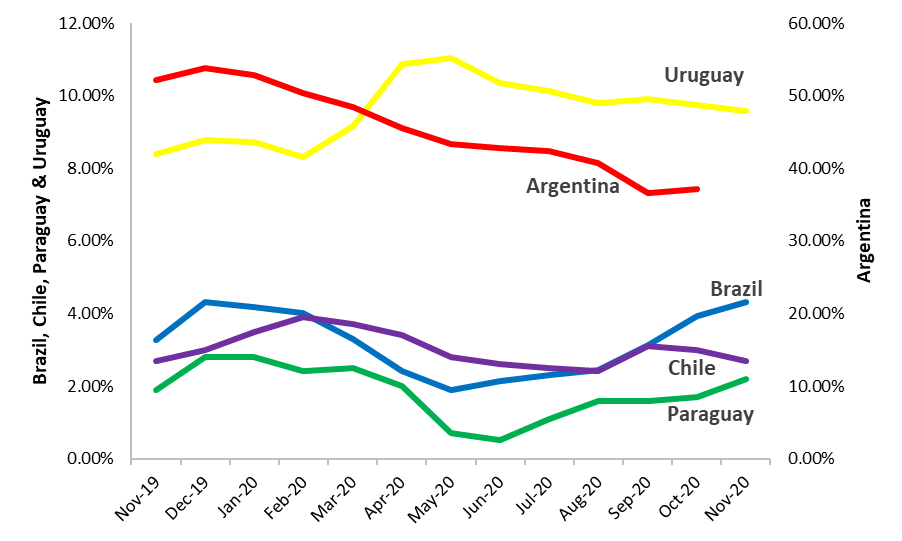
    Brazil & Southern Cone: Inflation
    Monthly year-on-year figures

    Brazil & Southern Cone: GDP growth (%)
    Quarterly figures are year-on-year growth
    Country End 2019  2020 forecast * Q1 2020 Q2 2020 Q3 2020
    Argentina -2.2 -10.5 -5.4 -19.1 not available yet 
    Brazil 1.1 -9.2 0.9 -11.4 -3.9
    Chile 1.1 -7.9 0.4 -14.1 -9.1
    Paraguay 0.0 -2.3 3.5 -6.5 not available yet 
    Uruguay 0.2 -5.0 -1.4 -10.6 not available yet 
    *Figures from the United Nations Economic Commission for Latin America & Caribbean Jul 2020
    End 2019 and quarterly growth based on figures from the local central banks


  • ECONOMIC HIGHLIGHTS

    LatinNews 21 May 2021 Hits: 1829

    MEXICO | Trade deficit. On 27 April Mexico’s national statistics institute (Inegi) released new trade statistics, which show that Mexico recorded a US$3bn trade deficit in March, compared with a US$3.34bn trade surplus in March 2020. Exports in March totalled US$43bn, up 12.2% on a year earlier, but this was offset by a 31.4% increase in imports to US$46bn. The value of trade in oil-related products increased markedly, with the value of oil-related exports growing 70.8% (compared with 10.2% for non-oil exports); meanwhile oil-related imports surged 104.7%. In seasonally adjusted terms, total exports grew 4.3% in March compared with February, while imports increased by 18.35%. In January-March this year, Mexico recorded a US$1.56bn trade deficit, with exports growing 3% year-on-year while imports increased 8.3%. Despite the March deficit, Mexico’s deputy minister for foreign trade, Luz María de la Mora, has highlighted that the country remains the US’s number trade partner. Citing figures from the US Census Bureau, De la Mora noted that trade between the two neighbours amounted to US$153.9bn in the first quarter of the year, equivalent to 14.8% of US foreign trade. This puts Mexico head of Canada (14.5%) and China (14.3%) as the US’s leading trading partner. According to US Census Bureau data, Mexican imports to the US amounted to US$89.9bn in the first quarter.

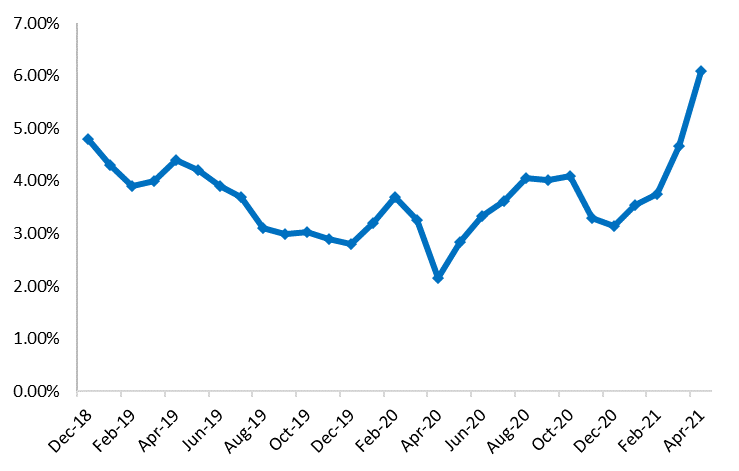
    MEXICO | Inflation. On 7 May Mexico’s national statistics institute (Inegi) reported that the national annual inflation rate reached 6.08% in April, the highest rate in the country since the end of 2017. April saw a month-on-month inflation increase of 0.33%, the biggest monthly increase seen since 2009, making this the fourth consecutive month of increasing inflation. Inflation data for the same month last year showed a decrease of 1.1%, at the start of the coronavirus (Covid-19) pandemic. The headline inflation figures were driven by a 2.61% increase in the price of agricultural products compared to the previous month, while energy tariffs set by the government fell by 1.49%. Core inflation increased by 0.37% month-on-month and by 4.13% year-on-year, with the price of goods increasing by 0.44% monthly and 5.59% annually; and the price of services increasing by 0.28% and 2.53% respectively.

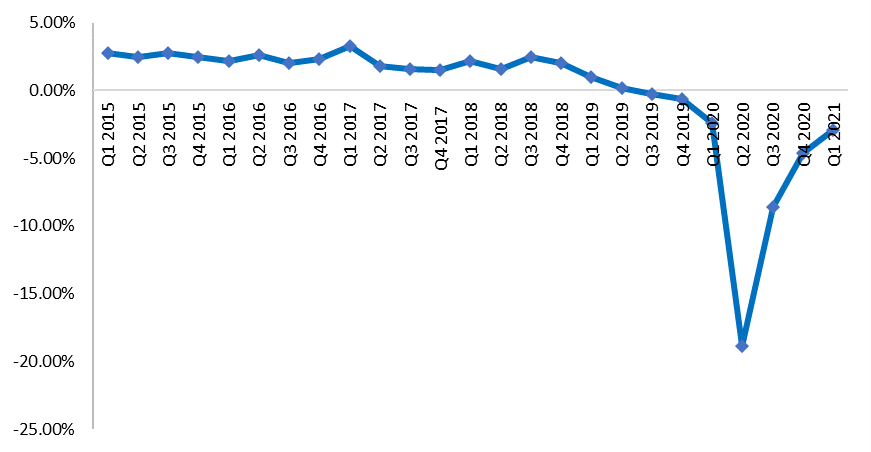
    Mexico: GDP Growth
    Percentage variation (year-on-year)

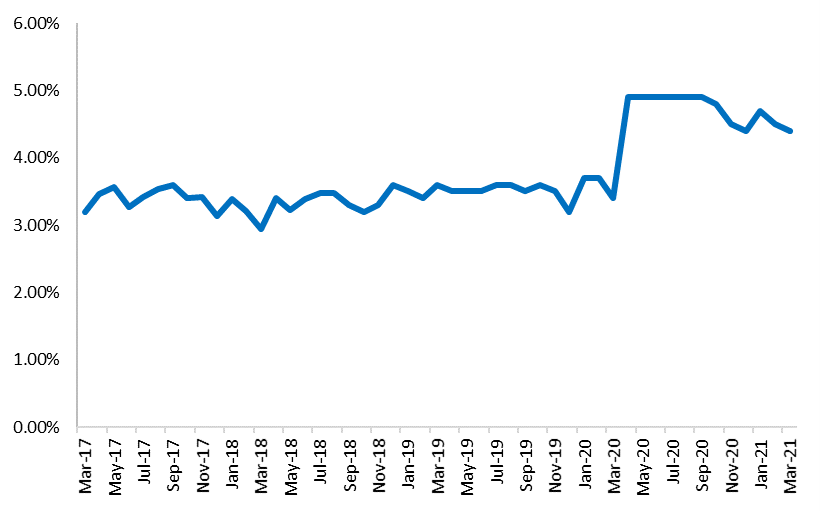
    Mexico: Unemployment Rate
    Econimically active population

    Mexico: Inflation Rate
    Percentage variation (year-on-year)

  • ECONOMIC HIGHLIGHTS

    Patrick de Courcy 17 June 2022 Hits: 1446

    ARGENTINA| Government formalises extension agreement with Paris Club. On 31 May, a publication in Argentina’s official gazette confirmed that the government led by President Alberto Fernández reached an agreement to postpone the repayment of US$2bn that Argentina owes the Paris Club of creditors. The payment has now been deferred until 30 September 2024, or until “there is a new framework agreement” to replace the original deal signed in 2014. The confirmation of the extension formalises an agreement announced in March to defer repayment of the debt. Although the extension allows Argentina to avoid being declared in default of its debt to the Paris Club, it is only a temporary fix. The country has committed to making partial repayments to Paris Club creditors, proportional to payments it will make to other bilateral lenders, for the duration of its 30-month deal with the International Monetary Fund (IMF).


    BRAZIL| Per capita income plunges, inequality grows. Brazil’s national statistics institute (Ibge) released figures on 10 June showing that the average per capita income in Brazil last year was the lowest since current records began, in 2012. The average monthly income per capita stood at R$1,353 (US$272) in 2021, a 6.9% drop on the previous year. Across the country, the average per capita income varies between R$843 in the Northeast region, the poorest, and R$1,656 in the South region, the wealthiest. Even though employment has picked up as the Covid-19 pandemic has receded, average salaries in Brazil have been falling, while other sources of income have also been decreasing, according to the Ibge. Figures also show deepening inequality. The average income amongst the lower-earning half of the population fell 15.1% year-on-year to R$415 in 2021, the lowest number on record. Last year, Brazil’s richest 1% earned 38.4 times more than the average monthly income of the poorest 50%. 

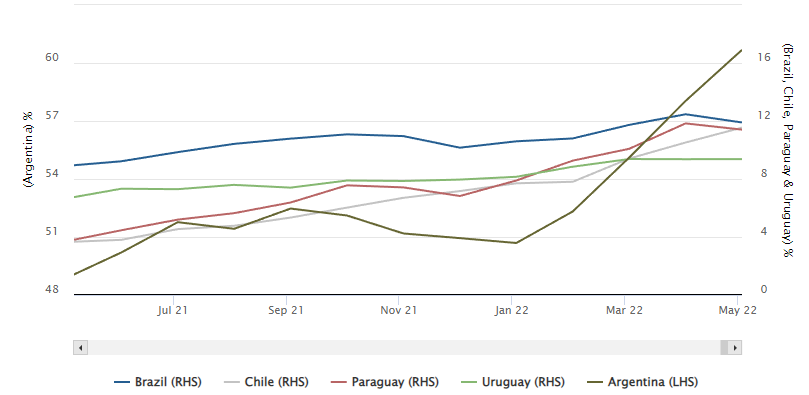
    Brazil & Southern Cone: inflation rate
    Percentage variation (year-on-year)

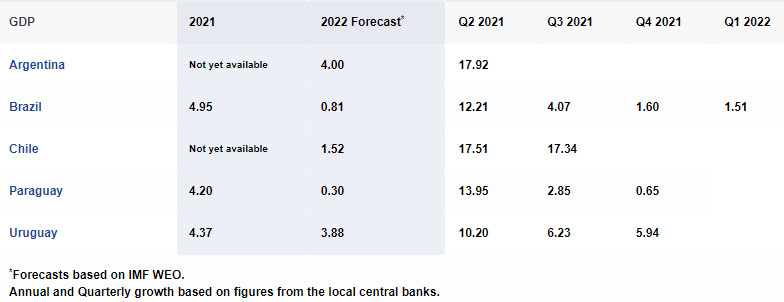
    Brazil & Southern Cone: GDP growth (%)
    Quarterly figures are year-on-year growth

  • Risk pointers

    LatinNews 06 September 2011 Hits: 320

    *** Kurdish civil disobedience. The Turkish authorities are concerned that Kurdish dissidents will step up their civil disobedience campaign in eastern and south-eastern Turkey, launched on 23 March, ahead of the 12 June parliamentary elections. The pro-Kurdish Peace and Democracy Party (BDP) is seeking to extend this campaign into mosques by asking people not to stand and pray behind state-appointed imams. The BDP says these imams are spying for the state and the ruling Justice and Development Party (AKP). The authorities say that the guerrilla Kurdistan Workers Party (PKK) is trying to plant ‘militant imams’ in mosques in south-east Turkey.

    The Kurdistan Communities Union (KCU) is said to have trained about 1,000 imams to replace state-appointed imams in the east and south-east. The move appears to have been devised by the PKK to undermine the appeal of the Islamist-oriented AKP among religiously-minded Kurds. The PKK is Marxist-Leninist in origins.

    *** Hamas preconditions. The Islamist-oriented Palestinian Hamas group, which controls the Gaza Strip, has set preconditions for reconciliation talks with the secular Fatah group that controls the West Bank. According to Turkish diplomats involved in mediation efforts, Hamas will only meet with Fatah officials if Hamas is promised the presidency in any Palestinian unity government.

    *** Beijing continues to buy favour with Europe. A key strategic consequence of the global financial crisis, or more particularly of the sovereign debt crisis in Europe since 2009, is the extent to which China has helped support the eurozone.

    In the latest move, on 12 April China’s Premier Wen Jiabao told Spain’s Prime Minister Jose Luis Rodriguez Zapatero : “China will continue to buy Spain’s government debts and play a part in supporting the Spanish savings bank restructuring bond.” Zapatero thanked Wen for helping to ensure “The stability and development of Spanish and European economies.” EU diplomatic sources do not deny that this support will come with a diplomatic price tag.

    *** China in new crackdown on churches. The arrest of more than 160 Christians on 11 April seems to be part of the largest Chinese crackdown on unofficial churches in years. The 160 members of the 1,000-strong Shouwang Protestant Church were arrested after trying to hold an outdoor service following the loss of their rented premises in a film studio. The landlord had been pressured by the authorities into evicting the church.

  • In Brief - Central America & Caribbean

    LatinNews 02 February 2012 Hits: 1241

    Dominican Republic| Sinaloa presence. On 1 February the Dominican Republic’s ambassador to the US, Aníbal de Castro, told a US Senate Caucus on International Narcotics Control that a Mexican national recently arrested in the DR had confessed that the Sinaloa Drug Trafficking Organisation (DTO) is looking to establish a “route to Europe though the DR”. According to de Castro, the DTO could be operating in Santiago, La Vela and Jaracoba in the northern Cibao region, where they may be receiving assistance from local criminal gangs to secure precursor chemicals.

  • RASTREANDO TENDENCIAS

    LatinNews 19 November 2012 Hits: 320

    ARGENTINA |  Nuevo hallazgo de petróleo y gas de esquistos bituminosos. Petrobrás Argentina, la subsidiaria local de la firma petrolera del estado de Brasil, Petrobrás, anunció el 12 de noviembre que había descubierto un nuevo depósito comercialmente viable de petróleo y gas de esquistos bituminosos, en su bloque de exploración de Puesto Peter en la provincia del sur de Santa Cruz.

    En una declaración oficial, la compañía dijo que el depósito fue descubierto después de perforar en un pozo de 3,2kms de profundidad en la formación rocosa Springhill, en la parte norte del bloque Puesto Peter, localizado a 140kms de Río Gallegos, la capital provincial.

    El yacimiento, ‘Estancia Campos x-1’ podría contener el equivalente a unos 11m de barriles de petróleo. Está situado cerca del yacimiento existente de Petrobrás Argentina en el bloque Puesto Peter, que actualmente está produciendo 78 barriles petróleo y 240.000 metros cúbicos de gas por día. Este es el segundo descubrimiento de ese tipo en este año que hace Petrobrás Argentina en Santa Cruz. En junio, la firma anunció el hallazgo de un depósito de hidrocarburos de esquistos bituminosos en el pozo de La Cancha x-1 en el bloque Agua Fresca, también ubicado en la provincia de Santa Cruz.

    BRASIL | Indonesia adquiere equipamiento de defensa. El 13 de noviembre, Avibrás Indústria Aeroespacial (Avibrás) de Brasil, una compañía de industria de defensa especializada en la manufactura de sistemas de defensa de aviones, artillería, cohetes y misiles, anunció un acuerdo de US$360m con el gobierno de Indonesia para la provisión de 36 plataformas de lanzamiento múltiple (tierra-aire) de misiles MRLS Astros II.

    Una declaración de Avibrás dijo que el acuerdo había sido concretado durante la feria militar internacional Indo Defensa celebrada en Yakarta, Indonesia, el 7-10 de noviembre. La declaración explica que después de a una visita de especialistas de las fuerzas armadas de Indonesia a Brasil, en octubre, que incluyó una demostración sobre cómo funcionan las unidades MRLS Astros II, las industrias de manufacturas militares del Estado de Indonesia, PT Pinad y PT Dirgantara, expresaron su interés en firmar un memorándum de entendimiento sobre cooperación e intercambio tecnológico con Avibrás y el instituto nacional aeronáutico y del espacio de Brasil, un prerrequisito para contratos de provisión con las fuerzas armadas indonesias. Después de que fue completado el memorándum, el ministerio de defensa de Indonesia se dirigió formalmente a Avibrás, buscando adquirir las unidades MRLS Astros II.

    El acuerdo final incluye la provisión del mismo número de vehículos de transporte de lanzadores de misiles, mecanismos de control de fuego, mantenimiento de equipos, y la provisión de entrenamiento.

    CHILE | Chuquicamata no cumplirá meta de producción este año. El 12 de noviembre, Gerardo Jofré, el presidente de la firma estatal minera de cobre de Chile, Codelco, anunció que Chuquicamata, la mayor mina de cobre a cielo abierto, no podrá cumplir con su meta proyectada de producción para el 2012. Según Jofré, Chuquicamata no alcanzará su meta de producción de 390.000 toneladas (t) de cobre, debido en parte a “problemas técnicos” en el proceso de convertir la mina en una operación completamente subterránea.

    Jofré rehusó dar una cifra sobre los niveles finales de producción de Chuquicamata, pero los expertos pronostican una cifra final de unas 322.000t. El año pasado, la producción en Chuquicamata, que ha venido declinando en el último par de años, fue de 440.000t.

    Codelco, de hecho, ha mudado la operación para hacerla subterránea, en un intento por estimular los niveles de producción. Sin embargo, esto conlleva un plan de inversión  de US$3,8mm, que Codelco ha retrasado a favor de inversión en algunas de sus minas más nuevas.

    Comentando sobre la situación, Jofré dijo: “Sabíamos que la producción en Chuquicamata este año sería menor de la esperada. Esto es inevitable [...] también tenemos problemas en que los proyectos estructurales y las inversiones que Codelco necesita hacer, han sido retrasados y ahora están mezclados con otros”.

    Jofré dijo que, de todos modos, Codelco espera que la declinación en la producción en Chuquicamata sea compensada por un incremento en la producción en algunas de las otras minas de Codelco, tales como Gaby, Andina y Teniente, que en años recientes han recibido más inversiones.

    • Río de Janeiro tendrá la primera tienda de Apple de la región

    El 14 de noviembre el gigante multinacional de computadoras de EU, Apple Inc., anunció que abriría la primera tienda Apple en Río de Janeiro, Brasil, aunque no especificó una fecha precisa. En una declaración a sus distribuidores oficiales, la compañía dijo: “Estamos aguardando con impaciencia la apertura de nuestra primera ‘Apple Store’ en Brasil, donde ya tenemos clientes desde hace algún tiempo y donde esperamos obtener muchos otros en el futuro. No podemos esperar para ofrecer nuestra exclusiva experiencia en ventas a la gente de Río de Janeiro y a todos nuestros clientes a través de la región”, expresa la declaración. El (fallecido) ex presidente de Apple, Steve Jobs, se había rehusado a abrir una tienda de Apple en Brasil, citando sus onerosos impuestos, trámites y papeleo.

  • TRACKING TRENDS

    LatinNews 24 January 2013 Hits: 1007

    ECUADOR | New broom at central bank. Acting president Lenín Moreno swore in the new head of the central bank, Diego Martínez, this week. Martínez replaces Pedro Delgado, President Rafael Correa’s cousin, who tendered his resignation last December after admitting that he had lied about obtaining an economics degree in order to study for an MBA at the Incae Business School in Costa Rica 22 years ago. Delgado made the admission in response to accusations by the opposition. Martínez had been serving as deputy minister of planning and development.

    Delgado is still in Miami, where he travelled after handing in his resignation. Earlier this month, President Correa said that Delgado had informed him before he left for Miami that he was going to the city to attend the wedding of his son but would return to Ecuador after Christmas (see sidebar).

    Sidebar: Delgado

    On 8 January Ecuador’s attorney general, Galo Chiriboga, called for the preventive imprisonment of Delgado, and President Correa requested that the US withdraw his visa as he had not returned to Ecuador as promised. Correa also accused Delgado of “a tremendous betrayal of the president’s confidence [and] a big embarrassment for the citizens’ revolution”.

  • RASTREANDO TENDENCIAS

    LatinNews 27 May 2013 Hits: 833

    ARGENTINA | Se eleva el desempleo. El 20 de mayo, el instituto nacional de estadísticas de Argentina (Indec) reveló que la tasa de desempleo del primer trimestre del año fue del 7,9%, después de que la tasa trepará 0,8 puntos porcentuales sobre mismo periodo el año previo. El resultado no sólo representa el más alto incremento comparable desde el 2009, cuando Argentina aún estaba sufriendo los efectos de la crisis económica global y registro una insignificante tasa de crecimiento del PIB del 0,9%, sino que también parece confirmar una tendencia de creciente desempleo en el país desde el año pasado. De hecho, la tasa de desempleo del primer trimestre del 2013, fue significativamente más alta que la del trimestre final del 2012 (6,9%) y sorprendió a los analistas locales quienes habían pronosticado  un incremento mucho menor, con la tasa de consenso puesta en 7,1%.

    Igualmente problemático para el gobierno de la Presidenta Cristina Fernández, la tasa del subempleo (aquellos que trabajan menos de ocho horas por día) también se ha incrementado por un comparable 0,6 puntos porcentuales para llegar al 8%. Los analistas locales señalan que esto es el resultado de las políticas económicas internas, incluyendo la falta de inversiones y la imposición de estrictos controles sobre el cambio de divisas, que han severamente afectado los niveles de actividad en el sector de la construcción –una importante fuente de empleo. La hipótesis parece confirmada por los datos del Indec, pues estos muestran que en el primer trimestre del año, unas 25.000 personas perdieron sus empleos, la mayoría (192.000) en el área del Gran Buenos Aires (GBA), que comprende la capital y las municipalidades adyacentes en la provincia del mismo nombre y que tradicionalmente han sido el centro del sector de la construcción del país. De hecho, las cifras del Indec para el GBA muestran que la cifra de desempleo del 9,4% es más alta que la tasa nacional, lo que significa que 561.000 personas en el GBA solamente están actualmente sin trabajo.

    La situación parece ser incluso peor en algunas otras ciudades del país, como Córdoba, Paraná, Salta, y Ushuaia –todas las cuales tienen tasas de desempleo de más del 10%. Todo esto será causa de preocupación para Fernández, quien en el pasado ha podido señalar a consistentemente crecientes niveles de empleo como evidencia de que las políticas económicas aplicadas por ella y su desaparecido esposo y predecesor, Néstor Kirchner (2003-2007), estaban produciendo resultados positivos.

    CHILE | Crecimiento más lento. El 20 de mayo el banco central de Chile informó que el crecimiento del PIB para el primer trimestre del año en el país fue del 4,1%, menor que el 5,1% registrado en el mismo periodo del año pasado. La cifra es la más baja registrada por la economía chilena desde el primer trimestre del 2011, cuando fue del 3,2%. También es menor que las predicciones del índice mensual de la actividad económica (Imacec) medido por el banco, del 4,4%, y de la meta oficial del banco para el trimestre (de entre el 4,5% y el 5,5%).

    De acuerdo con las cifras del banco, mientras la demanda interna permanece fuerte, con una tasa de crecimiento del 6,8%, apoyada por el incremento en el de consumo y en la inversión, al parecer, la actividad exportadora se ha estado quedando atrás, reportando un incremento de solo el 1% en el periodo. Esto ha sido usado para explicar la caída de la actividad en sectores productivos como la pesca (-9,4%), agricultura (-1,8%), y manufactura (-0,6%), todos los cuales son sectores orientados hacia la exportación.

    En su última reunión de política monetaria el 16 de mayo, el banco central votó por mantener su de la tasa de interés de referencia en el 5%, donde ha permanecido desde enero del 2012 a pesar de sufrir algunas presiones para implementar recortes, debido a la preocupación de  que el ambiente económico internacional menos que favorable pudiera negativamente afectar el robusto crecimiento económico de Chile. Después de los últimos resultados, es probable que el banco central sea persuadido a hacerlo.

    BRASIL | Recortando gastos. El 20 de mayo el ministro de finanzas de Brasil, Guido Mantega, anunció que habría recortes de gastos de alrededor de R$28mm (US$13,7mm) en el presupuesto federal del 2013, a fin de cumplir con la meta del gobierno de un superávit primario de R$155,9mm (US$76mm). Mantega dijo que las secciones del presupuesto reservadas para las inversiones en infraestructuras; programas sociales; y aquellos gastos relacionados con la Copa Mundial de Fútbol del 2014, no serán afectadas. En cambio, él dijo, que los recortes afectarían el presupuesto general de los ministerios de ciudades, de defensa, y de integración nacional.

    Según Mantega los "mínimos" recortes del gasto corresponden al hecho de que el gobierno tiene que adaptarse a la "realidad" de ingresos fiscales más bajos de lo esperado, como resultado de las variadas exenciones fiscales incluidas en sus paquetes de estímulo económico. Pese a todas estas medidas la expectativa es que la economía de Brasil continúe produciendo cifras de crecimiento decepcionantes este año. Mantega también anunció que el gobierno estaba proyectando un crecimiento anual del PIB del 3,5%, cayendo del 4,5% expresado en la ley del presupuesto 2013. Mientras tanto, la inflación se espera que llegue al 5,2%, subiendo de su proyección inicial del 4,9%.

    • Nuevo orden de los exportadores de carne del Mercosur

    El 20 de mayo el instituto de estudios económicos de la sociedad rural de Argentina (SRA), el lobby de agricultura local, difundió un informe que compila los cifras de la exportaciones de carne vacuna de los cuatro miembros fundadores del Mercado Común del Sur (Mercosur), que muestra que en el 2012, por primera vez en su historia, Argentina está en el último puesto del grupo. El informe indica que el principal exportador de carne en el Mercosur fue Brasil con 1,3m de toneladas (t) exportadas, seguido por Uruguay con 350.000t, luego Paraguay con 210.000t, mientras que Argentina se encuentra en último lugar con 182.000t. Tan recientemente como en el 2005, Argentina era el mayor exportador de carne del Mercosur (y tercero en el mundo) con 771.000t exportadas, mientras que en ese entonces Brasil era un importador neto de carne. El informe alega que este es el resultado de las "malas e intervencionistas políticas" perseguidas por el gobierno de Argentina, que han conducido a la declinación del sector.

  • ARGENTINA: Putin y el Papa serán anfitriones de Fernández en sus viajes finales

    LatinNews 10 April 2015 Hits: 658

    Aunque la Cumbre de las Américas esta semana en Panamá podría darle a la Presidenta de Argentina, Cristina Fernández, la oportunidad de construir algunos puentes con sus socios de Suramérica y Norteamérica, sus viajes finales como jefa de estado demuestran el grado de aislamiento en la cual Argentina ahora se encuentra, después de 12 años de Kirchnerismo. A fines de abril, Fernández visitará Rusia para una reunión bilateral con el Presidente Vladimir Putin. De momento, su último viaje al exterior como Presidenta será al Vaticano, para reunirse con el Papa Francisco en junio. Será su quinta visita para ver al pontífice argentino.

    El Presidente Putin visitó Argentina el pasado julio; en parte al parecer para agradecer a la Presidenta Fernández por sus comentarios en apoyo de las acciones de Rusia en Crimea. En marzo, Fernández acusó al Reino Unido y otros, de hipocresía por avalar los resultados del referéndum en las Islas Falkland/Malvinas (que mostraron que el 99,8% votó a favor de apoyar su estatus como territorio Británico de ultramar); mientras que rechazaron de plano una votación demostró que una igualmente abrumadora mayoría, de alrededor del 96,7% de los votantes en Crimea apoyaban la unión con Rusia.

    De acuerdo con la chancillería argentina, el propósito de la visita de Fernández es tomar parte en un foro de negocios Ruso-Argentino y promover el comercio bilateral. De acuerdo con Clarín, durante la visita presidencial se espera firmar acuerdos de infraestructura por un valor de US$10mm que se destinarán para la construcción de una planta de energía nuclear y una represa en la Argentina. En años recientes, el gobierno de Fernández ha preferido tratar con los gobiernos no-occidentales de China y Rusia, pues las relaciones con los más tradicionales aliados de Argentina se han deteriorado.

    La última visita de un alto funcionario de EU fue en el 2010, cuando Hillary Clinton viajó a Buenos Aires como Secretaria de Estado. Desde entonces, el Presidente Barack Obama no se ha sentido inclinado a ofrecerle a Fernández una invitación de retorno. Las relaciones con EU están en un punto bajo por ahora, debido al manejo del gobierno argentino de su disputa con los tenedores de bonos ‘holdouts’, la mayoría de los cuales están basados en EU. El juez de distrito de EU, Thomas Griesa, quien preside sobre el caso, también es como una especie de bête noir para la administración de Fernández.

    A pesar de la fuerte ascendencia europea de Argentina, ningún presidente italiano o jefe de gobierno ha visitado el país en los últimos 12 años; igualmente, el último alto representante español en visitar el país fue el entonces Príncipe, ahora Rey, Felipe VI cuando éste asistió a la segunda asunción de Fernández al cargo de Presidenta en el 2011.

    Ahora es China la que invertirá en dos plantas de energía nuclear en el país sudamericano, y Rusia en una tercera. China está haciendo masivas inversiones en Argentina en la actualidad, ayudando a estabilizar el peso con un canje de  monedas para ayudar al país suramericano a apuntalar sus menguantes reservas internacionales. China también está ayudando a construir la infraestructura ferrovial de la Argentina. Cuando Fernández visitó Beijing en febrero, ella firmó 15 acuerdos con el Presidente de China, Xi Jinping, cubriendo visas de viajes, tecnología de la información, medios de comunicación, energía, y tecnología espacial.

    Un reciente ensayo del columnista, Joaquín Morales Solá, alega que la política exterior de Argentina parece estar motivada por una “nostalgia por los setenta, cuando China y Rusia eran los bastiones de la izquierda internacional”. Solá también alega que el “excepcionalismo” de Argentina a menudo la deja aislada y desconfiada incluso entre sus inmediatos vecinos latinoamericanos. “Solamente las necesidades de la política interna y su destino personal pueden ayudar a explicar la política exterior de Cristina Fernández. Con la muerte de [Hugo] Chávez y con Fidel Castro al final de su vida, quizá la presidenta argentina puede imaginar que ella se convertirá en el siguiente punto de referencia para la Izquierda de América Latina. La dimensión de sus ambiciones siempre ha sido proporcional a sus fracasos”, concluye Solá.

    • ¿Reelección?

    Hablando aparentemente en broma el 8 de abril, la Presidenta Cristina Fernández dijo que ella esperaba no sentirse obligada a buscar la presidencia de nuevo en el 2019. “Después de mi [espero que] alguien vendrá quien continuará haciendo más y mejores cosas y por lo tanto no me necesitarán en el 2019. Ese es el país que yo deseo”, Fernández dijo.

  • TRACKING TRENDS

    LatinNews 05 July 2018 Hits: 550

    HONDURAS | IMF visit. On 3 July, the International Monetary Fund (IMF) published a statement after concluding an Article IV consultation with Honduras. The statement notes that Honduras successfully concluded its 2014-2017 Fund-supported program, which it says was “instrumental in restoring investor confidence and reducing macroeconomic imbalances”. The statement notes that the Honduran economy grew by 4.75% in 2017, well above expectations and boosted by “domestic demand, mainly private consumption supported by record remittances inflows and public investment”. It adds that headline inflation picked up to 4.75% from 3.25% in 2016 on the back of strong demand and rising oil prices, while the fiscal deficit increased slightly from 0.5% of GDP in 2016 to 0.75% of GDP in 2017.

    As regards predictions for 2018-2019, the IMF expects growth to hover around 3.75% reflecting worsening external conditions. Highlighting that Honduras is “vulnerable to domestic political polarisation and potential deterioration in the institutional framework”, the IMF cites as key risks, tighter global financial conditions, due to the normalisation of the US monetary policy, and more restrictive US immigration policies.

    GUATEMALA | FDI down. According to recent figures from Guatemala’s central bank (Banguat), foreign direct investment (FDI) to Guatemala in the first quarter of 2018 was US$293.2m, down 7% on the US$313.5m received in the same period of 2017. Total FDI in 2017 was US$1.147bn on Banguat figures, of which the US was the biggest source, accounting for US$208.5m of the total. This was followed by Mexico (US$204.1m) and Colombia (US$160.2m).

    • Guatemala extends state of emergency

    On 3 July, President Morales extended the state of calamity in three departments (Chimaltenango, Escuintla, and Sacatepéquez) following the eruption of Volcán de Fuego on 3 June. The move, which suspends procedures under the public procurement & state contracting law for the contracting of government suppliers, has the objective of re-establishing essential services and infrastructure.

  • TRACKING TRENDS

    LatinNews 08 October 2020 Hits: 3551

    DOMINICAN REPUBLIC | Proposed tax rises spark concern. On 2 October President Luis Abinader was compelled to reassure the Dominican public that “any tax rises would be agreed with the population, and if some have to be eliminated, they will be eliminated, and other sources of income will be sought”. His remarks followed an outcry stemming from his government’s 2021 budget proposal, submitted to congress the previous day, which included various temporary tax rises aimed at addressing the impact of the coronavirus (Covid-19) pandemic.

    Among other things, these include a temporary 3% tax on credit and debit cards that would also apply to those who make payments outside the country, which could indirectly affect internet purchases, as well as a tax on Christmas bonuses, which are exempt from tax as per the country’s labour code. The proposed budget is for RD$1.04trn (US$17.75bn), RD$172bn less than that approved the previous year.


    EL SALVADOR | GDP plummets in first half of 2020. El Salvador’s GDP shrank by 9.3% in the first half of 2020, compared with the same period in 2019, due to the coronavirus (Covid-19) pandemic, according to new figures released by the central bank (BCR) on 30 September.

    The main impact of the pandemic was felt in the second quarter, in which GDP contracted by 19.2% year-on-year, after the first quarter registered 0.8% growth. The BCR is forecasting El Salvador’s GDP will contract by a total of between 6.5% and 8.5% this year.

    The most affected sectors were artistic activities, entertainment, and recreational activities, which contracted by 31.2% in the first half of 2020, followed by accommodation & food services (-28.3%); professional, scientific, and technical activities (-20.3%); manufacturing (-18.3%); construction and construction services (-17.5%); retail (-15.7%); transport and storage (-14.9%); and mining and quarrying (-13.8%).

    Sectors to have registered positive growth were financial activities and insurance (up 6.1%); supply of water, sewerage and sanitation (3.1%); and supply of electricity, gas, and air conditioning (2.1%), among others.

  • CARIBBEAN POINTERS

    Sarah Sheldon 15 October 2021 Hits: 1168

    *** GUTERRES PROPOSES DEBT PLAN. On 4 October, United Nations (UN) Secretary General António Guterres presented a four-point debt crisis action plan to the 15th session of the UN Conference for Trade and Development (Unctad) held in Barbados. Making his presentation, Guterres described four “glaring challenges” which he named as “debt distress, systems starved of investment, unfair trade, and a climate emergency” and said that if left unaddressed would “make any notion of prosperity for all a distant dream”.

    Of these, Guterres listed debt distress as the most pressing, calling it a “dagger through the heart of global recovery”. Ensuring extra liquidity was immediately essential, he argued, and could be provided through “a substantial re-allocation of unused SDRs [International Monetary Fund Special Drawing Rights]”.

    After that, Guterres argued, must come “an extension and expansion of the G20’s Debt Service Suspension Initiative into next year”. However, he went on to argue, that may not be enough for many countries which “will need effective debt relief involving both public and private creditors”. He called for “a comprehensive strategy around reforming the international debt architecture – including debt restructuring or reduction, especially for middle-income countries – to help them avoid deadly cycles of debt waves”.

    Separately, the UN Economic Commission for Latin America and the Caribbean (Eclac) has proposed the creation of a Caribbean Resilience Fund to alleviate 12% of the region’s total debt in a policy brief entitled “Liquidity and Debt Solutions to Invest in the SDGs [Sustainable Development Goals]: The Time to Act is Now.”

    *** TOUGH START FOR NEW BAHAMAS GOVERNMENT. The day after the general election held on 16 September, won by the Progressive Liberal Party (PLP), whose leader Philip Davis became the new prime minister, international credit ratings agency Moody’s downgraded The Bahamas from Ba2 to Ba3 with a negative outlook.

    Explaining its move, Moody’s said: “The combination of rising debt burden and a decline in revenue contributed to a further worsening of debt affordability, with the interest-to-revenue ratio increasing to 23% in FY2020/21 compared with 16% in FY2019/20.”

    The agency expects the interest-to-revenue ratio to peak in FY2021/22 “but to remain above 20% over the subsequent three years, and significantly higher than rated peers”. The debt burden is expected to remain close to 80% of GDP by the end of FY2022/23, which is “well above the Ba3-rated median of 60%”.

    Moody’s is forecasting 8% growth for The Bahamas this year, with 7% next year, which (along with the ending of pandemic-related spending) should allow for “fiscal consolidation”.

    *** BELIZE PM UPBEAT ON ECONOMIC RECOVERY. On 21 September, during Independence Day celebrations, Belize’s Prime Minister John Briceño said that agriculture was leading an “economic resurgence”, with nearly 25% growth in the second quarter, and that tourism was “not far behind”, growing by 20% in the second quarter.

    The prime minister added: “Overall, our economy is now headed in the right direction, experiencing an overall growth of 22% in the second quarter and over 6% in the first six months of the year – more than triple what our…partners like the IMF expected.”